All posts by Light of Truth

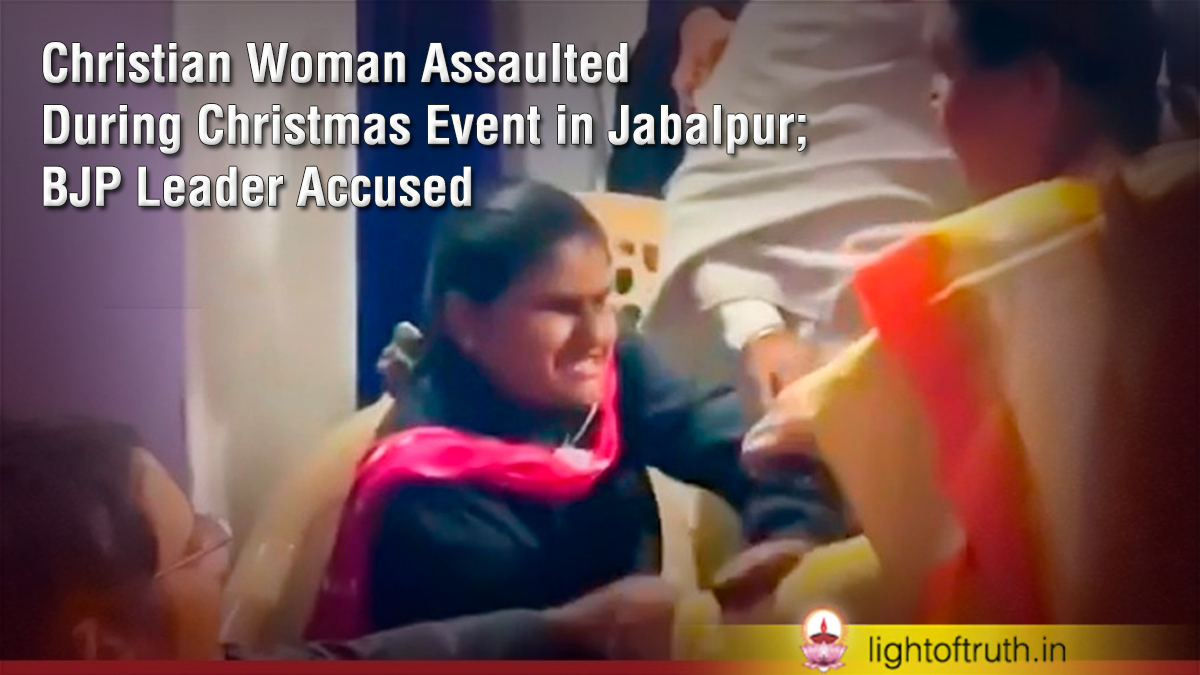
Christian Woman Assaulted During Christmas Event in Jabalpur; BJP Leader Accused

            A Christmas gift distribution programme for Christians in Madhya Pradesh descended into controversy after a BJP district vice-president allegedly assaulted and verbally abused a visually impaired Christian woman in Jabalpur, accusing her of facilitating religious conversion. Video footage circulated on social media shows Anju Bhargav, a district vice-president of the Bharatiya Janata Party (BJP), confronting and striking the woman during the event. Witnesses said the woman, a member of the Christian community, was targeted while participating in Christmas-related activities organised for local Christians.

According to those present, the confrontation erupted when Christians questioned the BJP leader over the distribution of Christmas gifts. During the altercation, Bhargav allegedly accused the visually impaired woman of enabling religious conversion. A police officer was present at the scene but is seen in the footage standing by without intervening, prompting sharp criticism from rights groups.

The visuals, first reported by Mathrubhumi News, went viral on social media, drawing widespread condemnation. Christian organisations and civil rights activists described the incident as an attack on a vulnerable Christian woman and a disturbing example of intimidation against the Christian minority during the Christmas season. Activists said the assault reflects a growing pattern of harassment of Christians in the state, particularly during religious celebrations. They have demanded immediate action against those responsible and sought an explanation from the police over their inaction. As of the time of reporting, there has been no official response from the BJP leadership or the district administration, and it remains unclear whether any legal proceedings have been initiated.
Rajasthan Education Department Warns Schools Against Forcing Students to Dress as Santa

            The education department in Sriganganagar, Rajasthan, has issued a warning to schools against forcing students to attend school dressed as Santa Claus, stating that strict action will be taken against any institution found violating the directive. According to the order, schools must not compel students to participate in such activities or place undue pressure on parents. “Action will be taken under rules if any school is found forcing students,” the order clearly stated, emphasising that compliance with the instruction is mandatory.

The directive was issued on December 22 by Ashok Wadhwa, Additional District Education Officer, who cautioned schools against imposing unnecessary obligations on students or their families. The order underlined that participation in festive activities should remain voluntary and free from coercion. The education department further clarified that if any student is compelled or if parents are pressurised to ensure their child’s participation, the responsibility will rest solely with the concerned school management. In such cases, disciplinary action will be initiated in accordance with existing rules and regulations. The move follows a representation submitted by the Bharat-Tibet Sahyog Manch to the district education authorities. In its complaint, the organisation alleged that some schools in recent years have compelled children to dress up as Santa Claus during Christmas-related activities, leading to resentment and discomfort among parents. The representation claimed that such practices have caused unease within sections of the parent community, prompting calls for administrative intervention to prevent schools from enforcing participation in activities perceived as unnecessary or insensitive. Officials indicated that the order aims to prevent avoidable disputes and ensure that schools adhere strictly to educational norms without imposing additional social or cultural expectations on students. The department has warned that violations will invite strict action under the applicable rules.

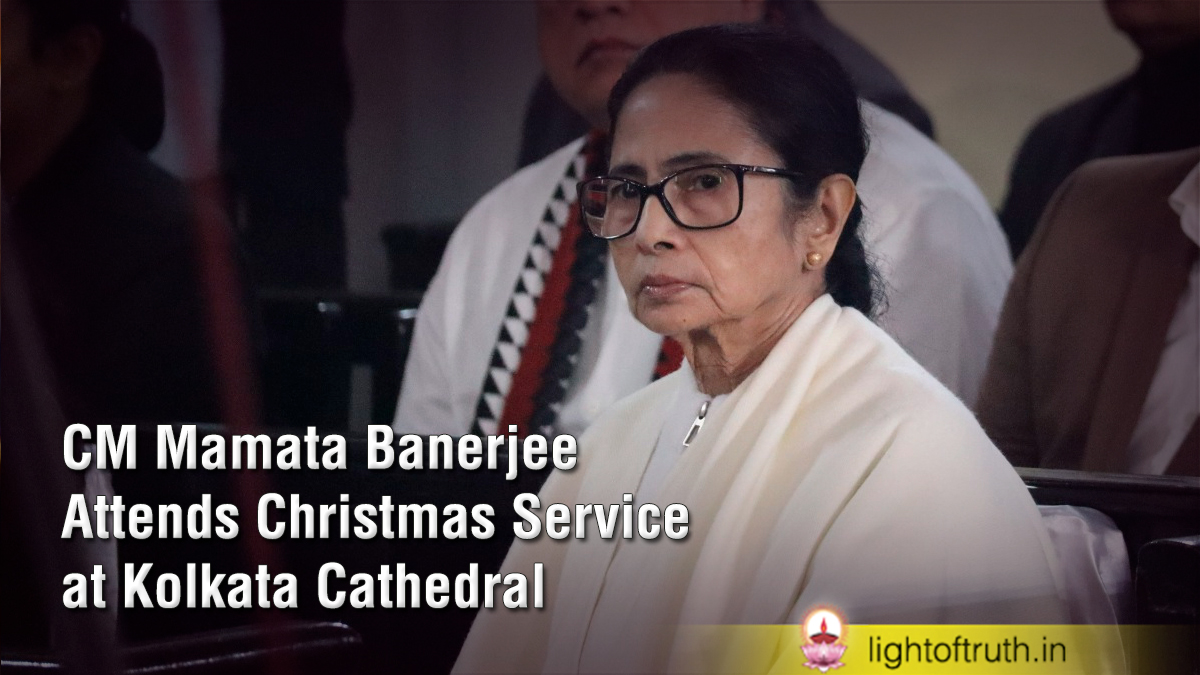
CM Mamata Banerjee Attends Christmas Service at Kolkata Cathedral

West Bengal Chief Minister Mamata Banerjee joined the Christmas Eve service at the Cathedral of Our Lady of the Most Holy Rosary, marking her continued presence at the annual celebration in the city. The solemn liturgical service was presided over by Archbishop Dr Elias Frank of Calcutta. On her arrival at the cathedral premises, the Chief Minister was received by the Archbishop and senior clergy. She inaugurated the Christmas crib set up at the cathedral before proceeding inside the church. Security arrangements restricted entry to parishioners, invited dignitaries and members of the media.

The service included a carol session featuring hymns in Bengali and English, creating a prayerful atmosphere inside the historic cathedral. The Chief Minister, along with other dignitaries, including Member of Parliament Derek O’Brien, participated in the service with reverence. During the celebration, a Christmas message reflecting on the spiritual significance of the season was delivered, drawing attention to the central message of faith, hope and peace associated with the birth of Christ. The Chief Minister was later invited to the sanctuary, where the Archbishop offered a special blessing and she greeted the congregation.

Ms Banerjee also extended her greetings to the Missionaries of Charity sisters present at the service, acknowledging their contribution to society through service to the poor and marginalised. The Holy Eucharistic celebration continued in a solemn and prayerful manner, with the faithful joining in the observance of Christmas, commemorating the birth of Jesus Christ. The Chief Minister’s participation once again underscored the tradition of communal harmony and interfaith respect associated with Christmas celebrations in Kolkata.

The Kerala Story: Against the Noise of Hate

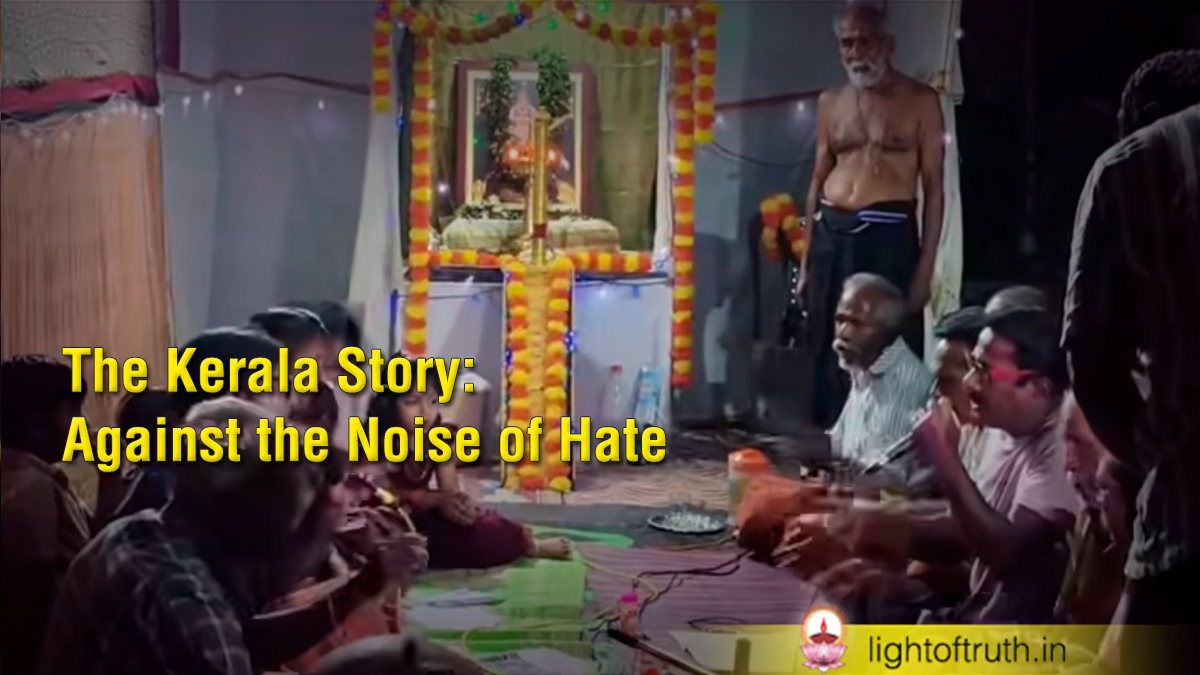
At a time when incidents of hostility toward Christmas carol groups have been reported from several parts of North India, Kerala has offered a contrasting picture marked by interfaith warmth and everyday coexistence. Across the state, Christian carol groups moving through neighbourhoods were received with openness and goodwill by Hindu and Muslim families, reflecting a social culture rooted in shared living rather than religious suspicion.

In many localities, Hindu households welcomed carol singers, listening attentively and offering tea, sweets, or traditional payasam. In some instances, Hindu devotees singing bhajans in praise of Lord Ayyappa paused their prayers and spontaneously joined in Christmas carols, treating the songs as part of the festive season’s shared joy rather than a religious intrusion.

Muslim neighbourhoods also witnessed similar gestures of harmony. Carol groups stopping outside Muslim homes were greeted with smiles and encouragement, with residents stepping out to listen or record the moment. Several families offered refreshments and exchanged Christmas greetings, echoing the mutual respect traditionally shown during festivals such as Eid. These interactions appeared natural and unforced, shaped by long-standing familiarity among communities.

In parts of northern Kerala, carol groups were welcomed near temples and by groups of Hindu devotees. The exchange of sweets and greetings turned religious expressions into neighbourhood celebrations, highlighting a spirit of inclusiveness. Set against rising communal tensions elsewhere, these scenes from Kerala challenge narratives that portray religious celebrations as sources of conflict. Instead, they underline a social reality where faith does not lead to exclusion and celebration does not require division. Through simple, everyday interactions, Kerala’s streets offered a quiet reminder that communal harmony can remain strong when it is lived naturally.

Bajrang Dal Members Protest Outside Bareilly Cathedral in Uttar Pradesh

          Around 15 to 20 Bajrang Dal members gathered outside the gate of St. Alphonsus Cathedral on December 24 following objections raised over a Christmas programme held on the cathedral campus. The group remained outside the premises, raised slogans and recited religious verses outside the church gate. Bishop Ignatius D’Souza of Bareilly said the incident stemmed from a programme held on the campus that addressed contemporary social causes. According to him, the programme—organised by a school—highlighted social issues and values.

However, he said certain individuals made assumptions that the presentation was intended to belittle Hindus, an allegation he said was not supported by facts. The Bishop said a complaint was subsequently taken to the police station seeking the registration of an FIR against the school management. He stated that police officials asked for factual evidence to support the allegations, but as no such material was produced, no FIR was registered. He added that the police acted in a cooperative manner throughout and informed the Church in advance about a proposed protest, while also deploying personnel to ensure safety.

Fr. John Stany D’Silva, Parish Priest of. St. Alphonsus Cathedral, said the group arrived in the evening and stayed for about 20 minutes. He said slogans such as “Jai Shri Ram” and “Vande Bharat” were raised, following which the Hanuman Chalisa was recited, and the group dispersed without interacting with anyone. He further said that Christmas celebrations at the cathedral continued the following day, with over one lakh people visiting the cathedral, and the celebrations proceeded without any incident.

After journey across Asia, WYD Cross begins Korean pilgrimage 

During its pilgrimage in Asia, this cross has given many people love and peace, consolation and hope, shining the true light. Now, through the pilgrimage to Seoul, we ask the Lord that the true light of Christ may spread widely in Seoul and throughout the world, so that the love, mercy and consolation of Christ may reach all humanity.’

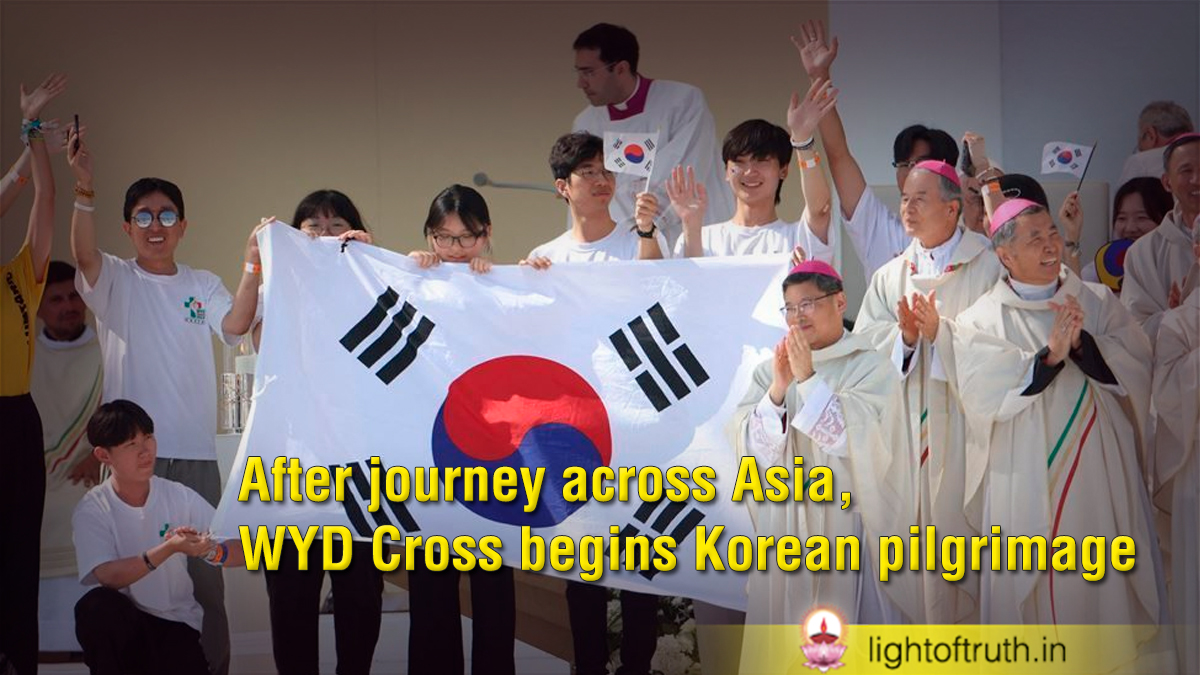
With these words – reported by the Korean Catholic Times – the organising committee of World Youth Day Seoul 2027 gave thanks for the arrival of the World Youth Day Cross and the Marian icon – gifted by St John Paul II to young people – at the Chapel of the Holy Family in Myeongdong Cathedral, on 20 December last. The celebration marked the beginning of the Korean stage of the World  Youth Day symbols pilgrimage following their journey across Asia.

During the celebration, 60 participants formed a ‘community rosary,’ becoming the beads of the rosary themselves, and offered this prayer in remembrance of their brothers and sisters who are suffering in various parts of the world for different reasons. The participants prayed for those who suffer from poverty, war, the climate crisis and ethnic conflicts, and for those who, immersed in the values of the world, have forgotten the love of Christ.

The auxiliary bishop of the Archdiocese of Seoul, Monsignor Job Koo Yo-bi, who presided over the celebration, encouraged the young people by saying, ‘I invite you to contemplate these symbols often and to prepare for World Youth Day in Seoul with the strength that comes from prayer.’

The pilgrimage to the Asian Churches began in Bangladesh and continued through Japan, the Philippines, Taiwan, East Timor, Thailand and Indonesia, ending in Australia. To organise the pilgrimage, the Committee coordinated the countries visited and the calendar through the Federation of Asian Bishops’ Conferences (FABC), also sending young Koreans to create a network with young Asians. The pilgrimage of the WYD symbols in the Korean Church will begin in January 2026 in the Archdiocese of Seoul, pass through dioceses throughout the country, and conclude in May 2027 in the Diocese of Jeonju.

Cardinal of Tehran: “God is the source of peace” to heal hostilities between Israel and Iran

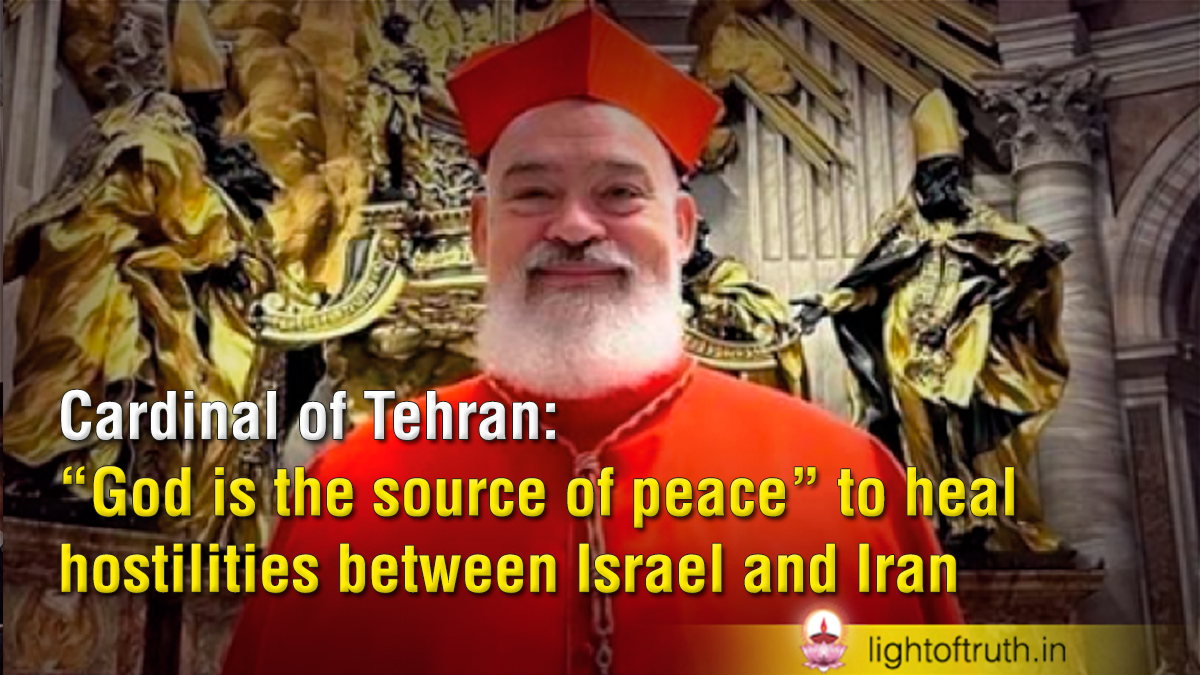
The ceasefire that ended the ‘twelve-day war’ between Israel and Iran ‘has not dispelled the spectre of renewed hostilities’, so much so that ‘the belligerents are preparing for the worst’ and the question seems to be ‘not if, but when’. This is what Cardinal Dominique Joseph Mathieu, Archbishop of Tehran-Isfahan of the Latins, writes in a reflection sent to AsiaNews on the theme of peace in view of World Day on 1 January, from a region ravaged by ‘tensions and conflicts’ that could soon erupt again.

‘Peace should not be reduced to a simple opposition to war, just as disarmament is not reduced to the antithesis of armament,’ observes the cardinal, while winds of (a new) war with the Jewish state are blowing in the Islamic Republic. And even within the country, there is no shortage of repression and imprisonment, as shown by the recent sentence of over 50 years for five Christians “guilty” of practising their faith, or the escalation of executions, the number of which in 2025 more than doubled compared to the previous year. More than 1,900 death sentences have been carried out, according to data from the Iranian-Norwegian NGO Iran Human Rights (IHR), well above the 975 in 2024.

Nevertheless, it remains an ideal and a goal, even more so, the cardinal observes, when one thinks of the ‘equivalents in Hebrew, shalom, and Arabic/Persian, salam. They indicate fullness, integrity, well-being, prosperity, health, security and harmony – not only the absence of war, but the presence of a fully realised life’. In this context, the warning at the end of the reflection becomes even more urgent: that peace may be real “in our hearts, in our communities and in our world”.

Thailand and Cambodia sign truce to halt deadly border clashes

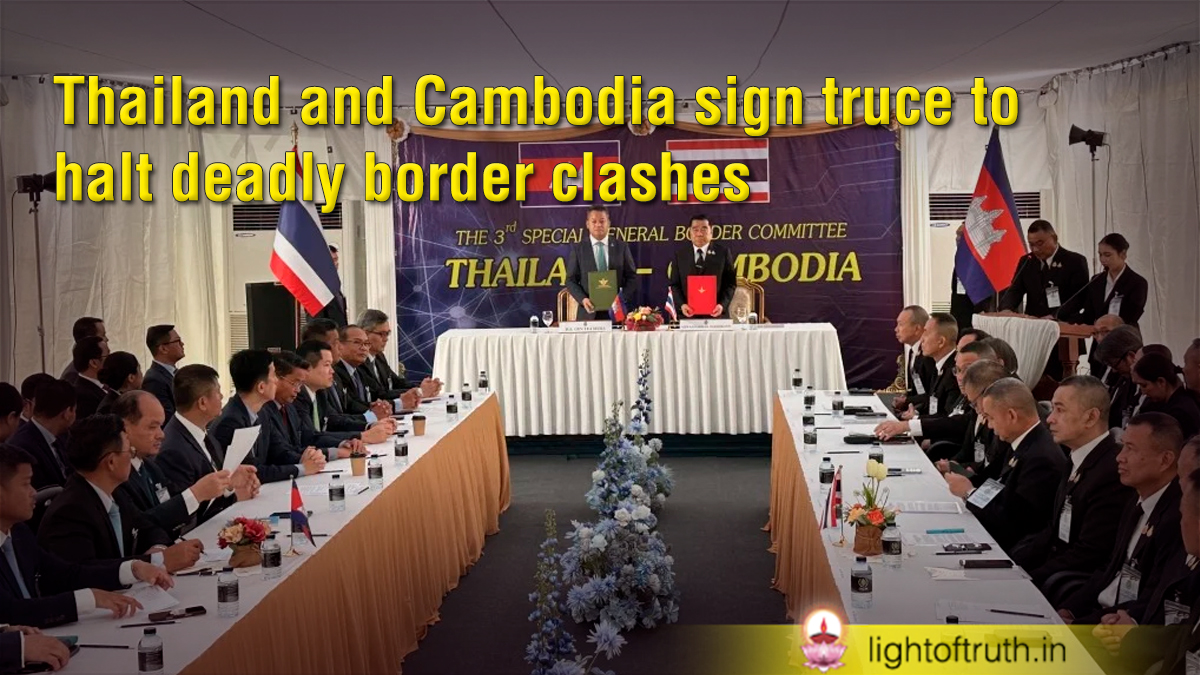
Thailand and Cambodia have signed an agreement to implement a ceasefire to stop weeks of border hostilities. The truce, signed by Thai and Cambodian Defence Ministers, puts on hold the worst conflict in years between the two countries. In 20 days of armed clashes, just over 100 people have been killed and more than half a million displaced.

In addition to ending fighting, the accord commits each party to no further military actions and to no breaches of the counterpart’s airspace for military purposes.

Only Thailand had conducted air raids during combat, striking locations in Cambodia.

Renewed fighting broke out early December after the collapse of a ceasefire that U.S. President Donald Trump and Malaysian Prime Minister Anwar Ibrahim had helped negotiate to halt a previous round of clashes. Mr Trump pushed through the first deal, threatening to deny Thailand and Cambodia trade privileges unless both countries agreed. The U.S. President named the agreement the “Kuala Lumpur Peace Accords”. It ordered each party to withdraw its artillery from the contested territory and to set up an interim panel of observers to oversee the process. However, Thailand stopped complying with it in November after Thai soldiers suffered mine blast injuries.

An observer team from the Association of Southeast Asian Nations will monitor the new ceasefire and both countries will provide direct coordination. Under the new terms, the return of people displaced from affected border ‌zones will be guaranteed and neither side will use any force against civilians. Thailand will also free 18 Cambodian soldiers in its custody since the July clashes if the truce is fully upheld for 72 hours, according to the deal. Since the fighting began, hundreds of thousands of people have fled from stricken areas on both sides of the border. Each side accused the other of inciting the clashes and declared that they were acting in self-defense. December 27th  pact, however, will not affect any boundary-setting activities in progress between the parties and the assignment of contested territories will be left to bilateral negotiations.

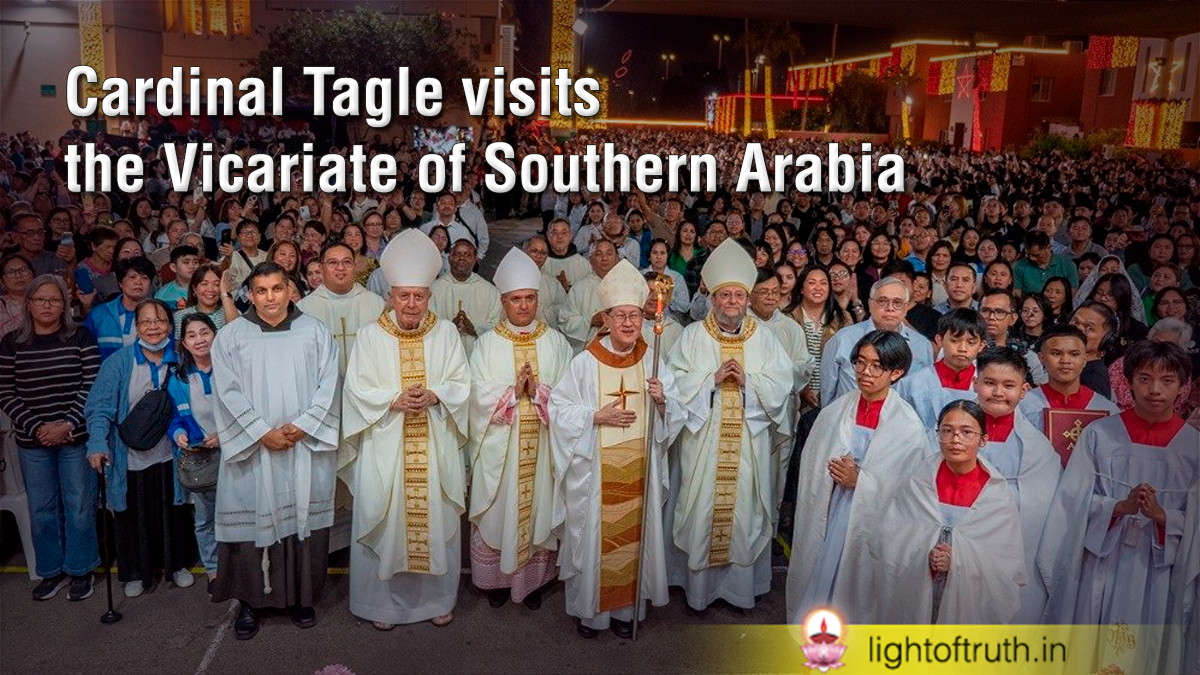
Cardinal Tagle visits the Vicariate of Southern Arabia

From 16 to 18 December 2025, Cardinal Luis Antonio Gokim Tagle, Pro-Prefect of the Dicastery for Evangelization, visited the Apostolic Vicariate of Southern Arabia, bringing with him the greetings and blessing of Pope Leo XIV. It was a short but highly meaningful journey, understood by the local Church as a concrete sign of the Pope’s closeness to a community made up largely of migrants and situated within a complex multicultural and interreligious context.

Central to the visit was participation in the Simbang Gabi celebrations, the Filipino Christmas novena held from 15 to 23 December, which in the Vicariate represents one of the moments of greatest ecclesial participation. Cardinal Tagle presided over Masses in Dubai and Abu Dhabi, attended by more than 30,000 and 18,000 faithful respectively. These numbers reflect not only the vitality of the Filipino community, the largest in the Vicariate, but also the role of the Church as a place of belonging and spiritual support for workers and families far from their countries of origin.

Alongside the liturgical moments, ample space was devoted to pastoral meetings. Cardinal Tagle met with the Apostolic Vicar, Bishop Paolo Martinelli, with priests, office directors, and leaders of the linguistic communities, reflecting together on the challenges of a Church called to safeguard unity within diversity.  A recurring theme was interculturality. Cardinal Tagle encouraged the faithful of different languages and traditions to take part together in ministries, learning to “walk together” and to place the richness of their cultures at the service of the entire ecclesial community. This invitation echoes the image of the “joyful polyphony of faith,” dear to recent Church teaching and especially meaningful in a migratory context such as that of the Arabian Peninsula. During the visit there were also moments of direct listening, particularly with representatives of the Filipino community and with the pastoral council of Saint Mary’s Church in Dubai, considered the largest Catholic parish in the world.

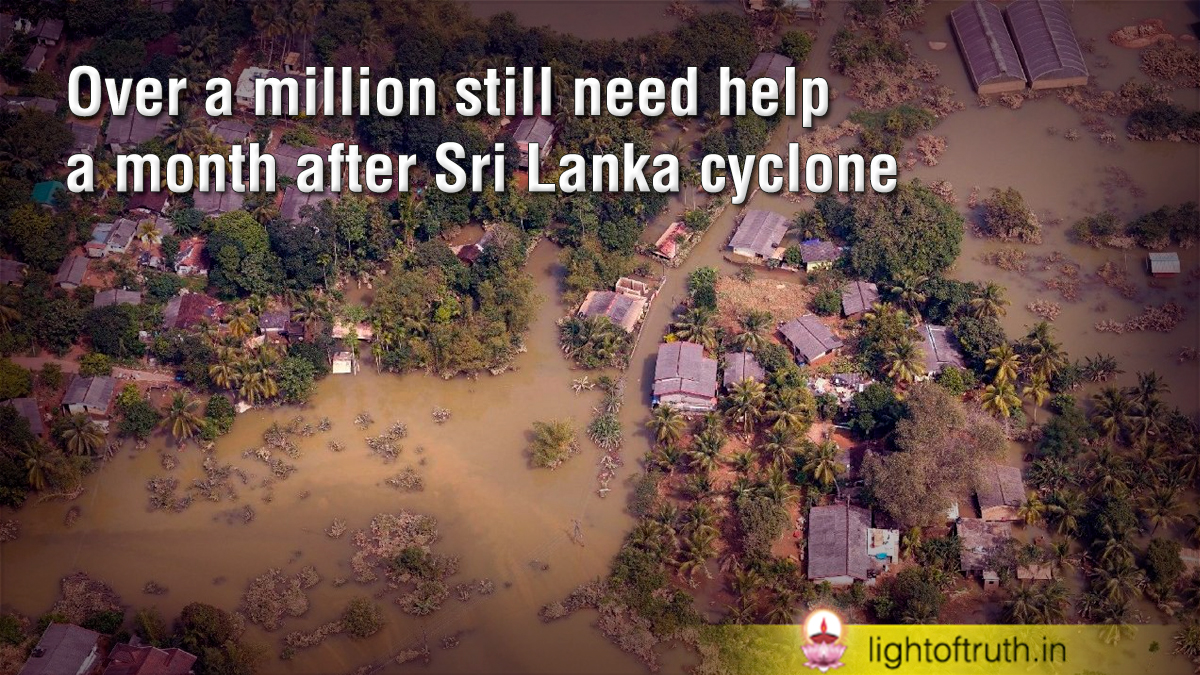
Over a million still need help a month after Sri Lanka cyclone

Nearly a month after Cyclone Ditwah devastated Sri Lanka, over a million people still require urgent help, as inundations and prolonged rain continue to aggravate the situation. The cyclone struck the country’s eastern coast on 28 November, causing 643 deaths and 183 people missing.

As of today, the UN warns that about 1.8 million Sri Lankans are still dealing with the consequences of the disaster, with two-thirds of them in need of humanitarian assistance, including nearly half a million children. Local authorities and relief workers confirmed widespread destruction across all nine provinces, with significant disruption to public services and increased risks for the most vulnerable.

In addition, about 30 per cent of families are reportedly reducing their food intake as hunger looms. According to recent World Bank estimates, property damage could reach nearly $4.1 billion — around 4% of the country’s GDP. Yet, post-disaster recovery and needs are expected to be much higher.

As reported by the UN Children’s Fund (UNICEF), serious shortcomings in child protection, education, and nutrition are becoming evident. There are also difficulties in using water, sanitation, and hygiene (WASH) services. Numerous children are still displaced in temporary shelters or are living with host families, where they lack adequate lighting, privacy and hygiene.

The International Organisation for Migration (IOM) calculates that nearly 300,000 people are currently unable to live in their own properties. Some of them are hosted by locals, while others are taking shelter in schools, places of worship and temporary dormitories. Humanitarian agencies stress that without sufficient financial backing and constant support, the road to recovery will be long.