Voices of laity ‘indispensable’ part of Church governance

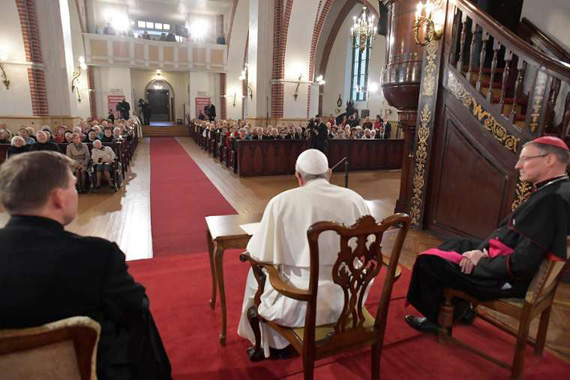
The voices of ordinary Catholics are an “indispensable” part of Church governance while canon law should be updated to make it compulsory for parishes to have councils that consult the laity, according to an important theological body which helps establish official Catholic teaching.

“Synodality in the Life of the Church,” published by the International Theological Commission and released on its website on 3 May, has the approval of Pope Francis and aims to flesh out his vision of using Synods to address the major questions facing the Church.

One of the most important tasks for the Church, the commission’s document explains, is to consult the faithful as an integral part of what it calls a “Synodal Church” prepared to undertake a collective discernment.

“The participation of the lay faithful is essential,” the document states.

“They are the immense majority of the People of God and we have much to learn from their participation in the various expressions of the life and mission of church communities, of popular piety and of general pastoral care, as well as from their specific expertise in various fields of cultural and social life.”

It goes on: “This is why consulting them is indispensable in starting the processes of discernment within the framework of Synodal Structures. It is therefore necessary to overcome obstacles represented by a lack of formation and recognised forums in which the lay faithful can express themselves and act, and from a clerical mentality that risks keeping them at the margins of ecclesial life.”

Throughout his pontificate, Francis has placed a strong emphasis on the Synod of Bishops as tool of governance calling the world’s hierarchy to Rome to discuss marriage and family life in 2014 and 2015 while this October will see a gathering focussed on young people, faith and vocational discernment. Both Synods have included a wide-ranging consultation of lay Catholics beforehand.

Crosses on public buildings causing division in Bavaria

The announcement of the Minister President of Bavaria that crosses are to be displayed at the entrances of public buildings is causing upheaval in an already tense electoral context. “First win for Markus Söder” was the May 2 headline in the regional Bava-rian newspaper, Mittelbayerische.

“A poll shows that many Bavarians are pleased that crosses will be displayed. However, this will not be enough to gain a majority.”

In a few words, the paper summarizes the political implications of an announcement that is causing upheaval. On April 24, the Minister President of Bavaria, Markus Söder, mandated that a crucifix should be displayed at the entrance of every public building in the state from 1 June.

The Bavarian state government’s new requirement that all entrances to state buildings display a Christian cross was criticized by Cardinal Reinhard Marx, but welcomed by Bishop Rudolf Voderholzer.

The head of the German Bishops’ Conference has sharply criticized the premier of the southern German state of Bavaria for ordering Christian crosses to be hung in all state buildings.
The Austrian nuncio, Archbishop Peter Zurbriggen, has lambasted the German bishops who criticised.

Bishops warn of ‘growing genocide’ in Cameroon

“They are hunting us,” mur-murs a secondary school teacher, turning his back to the camera and asking not to be named. “The Cameroon government security forces were entering villages and killing unarmed people. Bodies have been found in forests, they used every method and means to kill. It’s a huge number of fatalities.”

Nearly 26,000 people, four-fifths of them women and children, have fled into Nigeria from Southern Cameroon. The number has doubled since January, according to Caritas Internationalis and the UN High Commissioner for Refugees (UNHCR). More are arriving daily, while an estimated 40,000 people are displaced inside Cameroon. Political upheaval is provoking an under-reported humanitarian crisis in both countries, with refugees flooding into Nigeria’s border states carrying nothing but their children and the clothes on their backs. The refugees tell the same story over and again, of a brutal crackdown by the Cameroon military against anyone suspected of sympathising with the secessionist movement of the English-speaking minority. Known as the Anglophone crisis, Cameroon’s English-speaking Catholic bishops have described it as “a growing genocide,” although there are no reliable data on how many have died.

Mexican priest proposed as possible human rights chief

Andres Manuel Lopez Obrador will appoint Father Alejandro Solalinde as human rights director if he wins election.

The front-runner in Mexico’s presidential election has said that if he wins on July 1, he will appoint an activist priest as his human rights director.

Andres Manuel Lopez Obrador told a gathering of victims of violence on May 8 that he would appoint to Father Alejandro Solalinde to the human rights position and name Catholic poet Javier Sicilia – whose son was kidnapped and killed in 2011 and later organised the families of those suffering atrocities – to form part of a commission for finding the thousands of disappeared people in Mexico.

Father Solalinde, who started a shelter in southern Oaxaca State for protecting Central American migrants traveling through Mexico, accepted the offer.
“Of course I will, because it’s for Mexico and provided it’s without a salary,” Father Solalin-de said. “I don’t need a salary. I’m a missionary. It would be an honour to serve Mexico in this manner.”

Patriarch Kirill: True faith defeats terrorism. Hilarion: Unity with Catholics impossible

The head of the Russian Orthodox Church, Patriarch Kirill (Gundjaev), went on an official visit to Albania from April 28 to 30, where he was welcomed by the Archbishop of Tirana Anastas (Janullatos), leader of the Orthodox in the Land of Falcons. Kirill and Anastas, who has long been an Orthodox missionary in Africa, have also been close friends for over 50 years, and the visit took place in a particularly relaxed atmosphere. The Russian Patriarch said he was “impressed” by the growth of the Church in Albania, which reaches about 7% of the population. The same April 29, in an interview with Russia 24 television, his main collaborator, Metropolitan Hilarion (Alfeev) said that unity with the Catholic Church, on the other hand, is practically impossible. “Although the foundations of our faith are the same, and the symbol of faith is almost identical, Catholics have another conception of the procession of the Holy Spirit,” said the prelate.

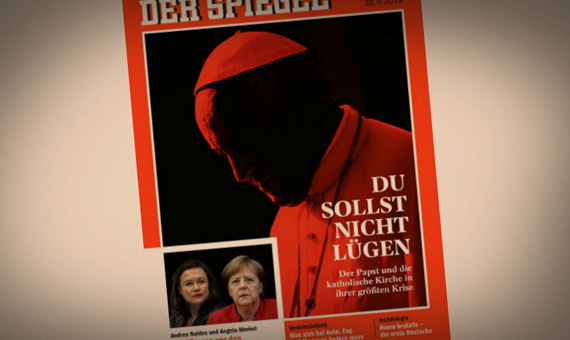
Catholic politician touted as Germany’s next leader says women should be ordained as priests

A Catholic politician who is being touted as Angela Merkel’s successor has said she hopes for the ordination of women to the priest-hood. Annegret Kramp-Karrenbauer, who was appointed general-secretary of the Christian Democratic Union (CDU), Germany’s ruling party, in February, said it was “perfectly clear” that it would be an “immense break” with tradition, but argued that “the Catholic Church would not perish.”

“I wish that the priestly ordination [of women] would come,” she told Christ & Welt, a supplement of Die Zeit, a German newspaper.

She said she could have imagined herself as a priest, but knew it was impossible. A more realistic goal, she suggested, was female deacons. “What do women not bring with them, except that they are women?” she said. “What are they missing, that they cannot receive this consecration? That they are not allowed to become deaconesses? Apart from the fact that they are women, nobody could answer me that positively! Kramp-Karrenbauer, who is a member of the Central Committee of German Catholics (ZdK), an influential lay group, stressed the importance of women in the Church, saying that if you “close your eyes and think away all the women,” it would leave “only a small remnant.” She suggested quotas for women in leadership positions. “Women determine the daily work in the church, which must also be reflected in offices,” she said. “Much of what we see today as a set of rules has evolved over the centuries, and was shaped by institutions, not by Jesus,” she said.

Cardinal Jozef De Kesel backs prayer ceremony for gay couples

Cardinal Jozef De Kesel, archbishop of Malines-Brussels and primate of the Catholic Church in Belgium, is open to reflecting on a ‘pray celebration’ for gay couples.

Cardinal Jozef De Kesel of Malines-Brussels met with a small delegation from a local gay working group which had requested an audience.

Following the meeting, Cardinal De Kesel “expressed his concern for their well-being and conveyed his respect to them,” Geert De Kerpel, the Dutch-speaking spokesperson for the Archdiocese of Malines-Brussels said on May 5.

In his effort to answer questions from the working group, “the cardinal also spoke of their relationships as couples, distinguishing these from Christian marriage between a man and a woman,” De Kerpel said.

“However, it does involve a personal encounter,” he said.

At least 15 people, including priest shot dead during Mass

At least 15 people including a priest were killed and scores wounded in Central African Republic’s capital Bangui on May 1 when unidentified gunmen attacked a church, a morgue official and rights groups said.

The attack occurred on the border of the predominantly Muslim PK 5 neighbourhood where 21 people were killed when a joint mission by U.N. peacekeepers and local security forces to disarm criminal gangs descended into open fighting. Nine dead bodies were taken to Bangui’s Community Hospital, a morgue official said, while aid agency Doctors Without Borders said six people had died and 60 were wounded at other hospitals where it operates.

It is not clear if they were all killed in the church attack itself or during skirmishes that occurred afterwards in the surrounding area. Retaliation killings followed by “anti-balaka” armed groups, drawn largely from Christian communities, and Muslim “self-defence” groups sprang up in PK 5, claiming to protect the Muslim civilians concentrated there against efforts to drive them out.

World’s best high jumper has low-profile meeting with pope

Despite holding the world record in the high jump, Javier Sotomayor kept his feet on the ground and didn’t try to clear the waist-high wooden barricade between him and Pope Francis. The now-retired 50-year old Cuban track-and-fielder was part of a small athletic delegation from Cuba greeting the Pope at the end of his May 2 general audience in St Peter’s Square.

The delegation included Luis Enrique Zayas, gold medalist at the World Under-20 Championships in the high jump in 2016, and coach Barbaro Diaz Castro.

Sotomayor is the only person to ever have cleared 8 feet in the high jump with his world record jump of 8 feet 1/2 inch (2.45 meters) set in 1993. Considered the best high jumper of all time, he has set many records and won numerous records throughout his nearly 20-year career. He took the gold medal in the 1992 Olympics and silver in 2000 before retiring the next year. Cuba boycotted the 1984 and 1988 Summer Olympic Games.

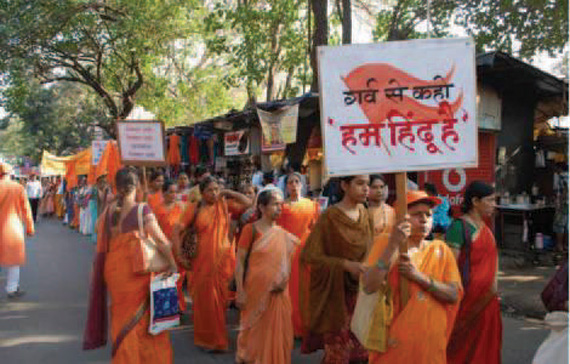
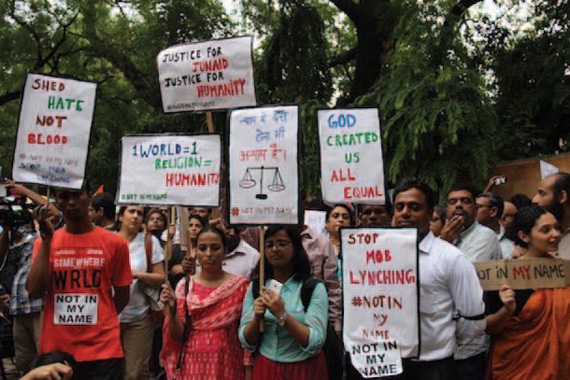
Ranchi, beheaded pastor was a tribal, a ‘peripheral’ being

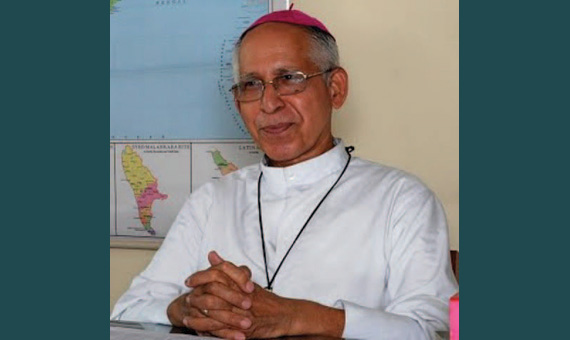
The Pentecostal Christian pastor beheaded near Ranchi, in Jharkhand, was a tribal, informs Msgr. Paschal Topno, Archbishop emeritus of Bhopal, in Madhya Pradesh. According to the prelate, the real reason for the reverend’s murder is to be found in his aboriginal origins. “Being a tribal Christian in India – he says – means being peripheral. Tribal Christians face the greatest challenges.” Meanwhile, police investigations continue to identify the perpetrators of the murder of the Rev. Abraham Tigga Topno, kidnapped on the night of May 1, beaten and beheaded.

Official Website

Exit mobile version