Goan priest-turned-activist buried after three years

The body of a Catholic priest-turned-activist was buried in western India after a three-year wait by his family and friends who suspect he was murdered for his strong stand for environmental protection.

Some 60 priests and 2,000 admirers of Jose Bismarque Desidor Dias joined the Nov. 6 burial service in his village of Sao Estevam in Goa State, a former Portuguese enclave.

The burial of Dias, a former Blessed Sacrament priest, was delayed after his friends and family sought a detailed probe into the mysterious circumstances surrounding his death.

Dias, 51, went missing on Nov. 5, 2015, after he went for a swim in a river near his home with friends. His body was found floating two days later. Local police claimed it was a case of drowning.

However, his family and associates delayed burial and demanded an investigation, suspecting that he could have been murdered by those who were angry with his campaign against mining and unbridled property development.

Following pressure, the Bombay High Court that also covers Goa in April 2017 ordered the state’s specialized Crime Branch police to probe the case, considering it a murder.

In March 2018, however, investigators submitted a closure report to the court asserting it was a case of drowning.

“Only the body of Dias is laid to rest, not the concept of justice. The fight for our fallen comrade will go on,” said Sudip Dalvi, an associate of Dias who was among those pressing for court intervention.

Dalvi told ucanews.com a review petition has been filed in court. “But all connected with him thought it was time to give him a decent burial” and decided to do it on his third death anniversary, he added.

Dias’ parish priest Eusico Pereira highlighted Dias’ childhood wish for priesthood.

“He lived for others,” he said. Pope Francis’ on May 2015 encyclical Laudatosi’ made him overjoyed because he felt he had the mandate of the Pope.

Dias was a “fearless witness to Christ in truth,” Father Pereira added.

Dias mobilized people through music, rallies and meetings against large government and private projects including a golf course of a seven-star hotel and Goa’s second airport.

Indian Muslims upset over Taj Mahal prayer restrictions

The Archaeological Survey of India (ASI), which is tasked with the monument’s management, said in a Nov. 5 order that only Muslims living around the Taj Mahal can pray on Fridays in the mosque adjacent to the mauso-leum. Muslims from other areas are barred, Vasant Swarankar, super-intending archaeologist at the ASI’s Agra chapter, told media. Namaz (prayers) can only be offered on Fridays. Imams and staff can enter the mosque only from noon to 2 pm, according to the order.

The world-renowned mausoleum was built by Mughal emperor Shah Jahan in memory of his wife in 1658.

The UNESCO-designated world heritage site receives more than 200,000 overseas tourists and some 4 million local tourists every year. But Friday is a holiday when no tourists are allowed. The ASI said it was only implementing a July Supreme Court order that only residents of Agra should be allowed to enter the mosque for congregational prayers as unregulated entry could adversely affect the monument.

However, leaders of Muslims, who comprise 14 percent of India’s 1.2 billion people, say the order is unnecessary.

Warriors for women’s dignity

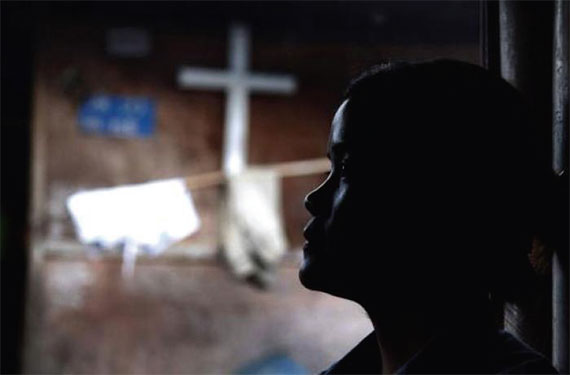
Six years ago, at the age of 26, Laila Talo Khuder Alali was sold as a sex slave eight times to men of different nationalities by militants of Islamic State in Iraq and Syria (ISIS).

Standing in a hotel auditorium in India’s commercial hub of Mumbai to receive an award in the name of St Mother Teresa, she told of how her husband and a child were still missing.

Several of her family members had been killed, but eight were rescued.

Those missing are among more than 3,000 people known as ‘Yazidis’ still in ISIS captivity, Alali said when receiving the Mother Teresa Memorial Award for Social Justice on Oct. 21.

The militants of ISIS are accused of perpetrating genocide against the Yazidi, a religious minority group in northern Iraq.

Yazidism combines elements of Islam, Christianity, Judaism and Zoroastrianism. ISIS, also known simply as Islamic State, seeks to wipe out their faith. “We faced torture, sexual slavery and unimaginable acts,” the 30-year-old woman recounted at the award ceremony in Mumbai.

Indian deaths in Persian Gulf: Nun endorses NGO analysis

A Catholic nun working among migrant workers agrees with a voluntary group’s finding that at least 10 Indians die every day in the Persian Gulf countries. “I am not surprised. The number could be more,” Sister Josephine Amala Valarmathi told Matters India on November 7.

The member of the Missionary Sisters of the Immaculate Heart of Mary was responding to the findings of the Commonwealth Human Rights Initiative. The 43-year-old nun, based in Chennai, has addressed the problems of Indians working in the Persian Gulf countries, Malaysia and Singapore, for the past 16 years.

She says she is quite familiar with the problems of Indians working overseas as she often gets such distress calls from them.

The Commonwealth Human Rights Initiative released early November its analysis of the deaths of Indian workers in Bahrain, Oman, Qatar, Kuwait, Saudi Arabia and the United Arab Emirates from January 1, 2012 to about mid-2018. Venkatesh Nayak of the voluntary group provides the figures for six years from 2012.

“Available data indicates, at least 24,570 Indian workers died in the six Gulf countries between 2012 and mid-2018. This number could increase if the complete figures for Kuwait and UAE are made available publicly. This amounts to more than 10 deaths per day during this period,” Nayak told reporters.

He said he had got those figures through the Right to Information data from External Affairs Ministry.

Nayak’s data was provided by Indian missions in Bahrain, Oman, Qatar and Saudi Arabia but the embassy in the UAE refused to give information. The Indian embassy referred to data on their website which was only 2014 onward.

In order to fill gaps, Nayak used data provided in Parliamentary questions in LokSabha and RajyaSabha.

Sister Valarmathi shared another list compiled by an unnamed person on the number of Indian workers who died in the Persian Gulf countries between 2005 and 2015.

Her list has a total of 31,810 deaths reported from Bahrain, Iran, Iraq, Kuwait, Oman, Qatar, Saudi Arabia and the United Arab Emirates during the 11-year-period. This accounted for 8 deaths daily.

The nun’s list gives the number of bodies repatriated to India between 2005 and 2015.

Oman expatriated bodies of all 5,402 Indian workers who died there, Qatar sent all 2,396 bodies, Bahrain 1,493, Iran 52, Iraq 123 and UAE 384.

However, no data is available for the number of repatriation in Saudi Arabia where 13,248 Indian deaths occurred. Kuwait had 5,249 deaths, but repatriated only 4,021.

Christians in Indian state seek religious freedom

Chhattisgarh Christian Forum presents charter of demands to political parties before election.

Christian leaders in India’s poll-bound Chhattisgarh State have presented a charter of demands to major political parties seeking to end discrimination and violence. The charter prepared by leaders of the ecumenical Chhattisgarh Christian Forum expressed concerns over the security of the miniscule Christian community in the central state, now ruled by the pro-Hindu Bharatiya Janata Party (BJP).

It also calls on the next government to ensure freedom to practice religion.

“We have already handed over the charter to all major political parties,” Arun Pannalal, president of the forum, told ucanews.com on Nov. 7.

The state of 25 million people, where Christians make up barely 2 percent of the population, is scheduled to elect its 90-seat legislative house in two phases on Nov. 12 and Nov. 20.

Prime Minister Narendra Modi’s BJP, which has ruled the state for 15 years, is aiming to prevent the Indian National Congress party, its archrival, from gaining power. The smaller Bahujan Samaj Party and Aam Aadmi Party are also in the fray.

Good politics is at the service of peace, says pope

Pope Francis delivers his message as he celebrates Mass to mark the World Day of Peace, in St Peter’s Basilica at the Vatican on Jan.

The world will not have peace without people having mutual trust and respecting each other’s word, the Vatican said as it announced Pope Francis’ 2019 World Peace Day message would focus on “good politics.”

“Good politics is at the service of peace” will be the theme for the Jan. 1 commemoration and for the message Pope Francis will write for the occasion, said a Vatican communique published on Nov. 6.

The Pope’s full message for World Peace Day, traditionally released by the Vatican in mid-December, is sent, through Vatican diplomats, to the leaders of nations around the world.

The Vatican said Pope Francis’ message will underline how political responsibility belongs to all citizens, especially those given the mandate “to protect and to govern.”

“This mission consists in safeguarding law and in encouraging dialogue among stakeholders in society, between generations and among cultures,” the Vatican said.

“There is no peace without mutual trust. And the first condition for trust is respecting one’s word,” it said.

Political involvement is one of the loftiest expressions of charity, it said, and it brings with it a concern for “the future of life and the planet, of the young and the least, in their thirst of fulfillment.”

When people’s rights are respected, then they will start to feel their own “duty to respect the rights of others,” the Vatican note said.

The rights and responsibilities of each person help foster people’s awareness of belonging to the same community with others and with God, it added.

“We are thus called to bring and proclaim peace as the good news of a future where every living being will be respected in its dignity and rights.”

Pope Thanks Race of Saints Participants for Beautiful Initiative

Pope Francis gave a special greeting to participants in the Race of Saints, promoted by the Missioni Don Bosco Foundation, to offer the dimension of a popular feast to the religious celebration of All Saints.

“Thank you for your beautiful initiative and for your presence!” the Holy Father said on Nov. 1, 2018, in remarks following the Angelus in St Peter’s Square on the Feast of All Saints.

The “Race of Saints” on November 1, 2018 was held in Rome under the aegis of the Congregation for the Laity, the Family and Life, and of its Prefect, Cardinal Kevin Farrell. The event consists of a 10-kilometer course for four categories of runners and one of 3 kilometers for the less experienced. Athletes and simple amateurs came from all over Italy to attest their link to their Patron Saint, or that of their parish or city.

The Salesians launched the idea in the streets of Rome on All Saints 2008, a “Race of Saints,” then to help street children of the Democratic Republic of the Congo.

In Rome, places of saints are numerous, beginning with those marked by the presence of the Eternal City’s Patron Saints, Peter and Paul, but also the great saints that fashioned them, in particular, the holy Popes that embellished them and quenched them with their fountains, of saints who came from elsewhere and now rest there, such as Basque Saint Ignatius of Loyola; Florentine Saint Philip Neri; and Saint Benedict Joseph Labre, born at Amettes in the Pas-de-Calais, France. Funds collected thanks to the registration of participants will be allocated to works of charity. Therefore, it’s both a sports event – with true champions, marathoners, marchers – and a popular event. The organizers were challenged, in fact, by the fact that All Saints is one of the oldest liturgical feasts, but which up to now has not inspired very festive popular traditions.

The event’s other objective, after its inauguration at Rome, is to go beyond borders, to be able to celebrate the feast of All Saints simultaneously in other cities of the world, announced the promoters.

Catholic bishops welcome Ethiopia’s first woman president

Catholic bishops in Ethiopia’s have welcomed the election of the nation’s first female president, Sahle-Work Zewde, and said they were pleased that women are getting their rightful place in the country.

The Catholic Church in Ethiopia is optimistic that Zewde’s election will inspire women and girls to reach their full potential as influential actors in society, Vatican News reported.

Zewde, 68, had earlier served as Ethiopia’s representative to the United Nations, and as director-general of the U.N. offices in Nairobi met Pope Francis in 2015. “The Ethiopian Catholic Church believes that President Sahle-Work Zewde, who has years of impressive diplomatic experience, will further strengthen the leading role Ethiopia is playing in the region and further enhance the soft power of the country at an international level,” according to a statement from the Ethiopian Catholic Secretariat.

People unable to give are slaves to possessions, pope says

Life is for loving, not amazing possessions, Pope Francis said. In fact, the true meaning and purpose of wealth is to use it to lovingly serve others and promote human dignity, he said on Nov. 7 during his weekly general audience. The world is rich enough in resources to provide for the basic needs of everybody, the Pope said.

“And yet, many people live in scandalous poverty and resources – used without discernment – keep deteriorating. But there is just one world! There is one humanity.”

“The riches of the world today are in the hands of a minority, of the few, and poverty – indeed, extreme poverty, and suffering – are for the many,” he told those gathered in St Peter’s Square.

The Pope continued his series of talks on the Ten Commandments, focusing on the command; “You shall not steal,” which reflects respect for other people’s property.

However, he said, Christians should also read the commandment in the light of faith and the church’s social doctrine, which emphasizes the understanding that the goods of creation are destined for the whole human race.

The Catechism of the Catholic Church teaches that the “primordial” universal destination of goods does not detract from people’s right to private property, he said.

However, the need to promote the common good also requires understanding and properly using private property.

“No one is the absolute master over resources,” he said, which reflects the “positive and wider meaning of the commandment, ‘Do not steal.’

“Owners are really administrators or stewards of goods, which are not to be regarded “as exclusive to himself but common to others also, in the sense that they can benefit others as well as himself,” the Pope said, citing the catechism.

OCEANIA/SOLOMON ISLANDS – Historic event for the diocese of Auki

Msgr Peter Houhou is the first native Solomon Islander to be appointed as Bishop in the Solomon Islands. As Agenzia Fides learns, the diocese of Auki, Malaita province, has in fact been the protagonist of a historical event: in the Cathedral of St Augustine the ordination of the first Catholic Bishop of the nation was celebrated in recent days. An important step forward for the local church.

The celebration was presided over by Abp Kurian Mathew Vayalunkal, Apostolic Nuncio of Papua New Guinea and Solomon Islands and concelebrated by Abp Christopher M. Cardone OP, of the Archdiocese of Honiara and Abp Douglas Young SVD, of the Archdiocese of Mount Hagen, in Papua New Guinea.

“The Holy Mother Church entrusts you with three important responsibilities: teaching, sanctifying and governing the people of God,” said Archbishop Vayalunkal, addressing the new Bishop during the homily. The Apostolic Nuncio also thanked Msgr Houhou’s family of origin and the whole local community “for the precious gift of this son” and invited everyone to “pray and support Bishop Houhou”.

Official Website

Exit mobile version