Philippine clergy, advocates say human rights dying under Duterte

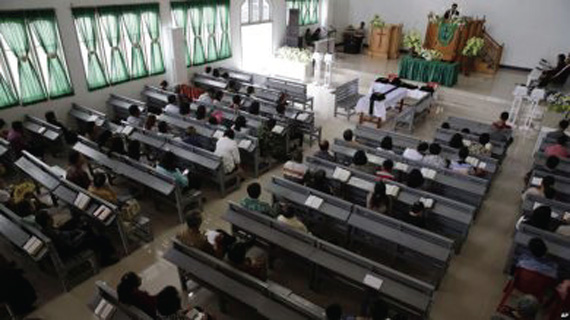
Philippine President Rodrigo Duterte warned the public during his third State of the Nation address July 23 that his two-year war on drugs would become even “more chilling” in the coming days. Earlier that day, a group of human rights advocates attended Mass before taking to the streets of Manila armed with banners and placards calling for an end to extrajudicial killings, rallying for “democracy, justice, and freedom,” and demanding Duterte step down from office.

During the Mass, the bishop who delivered the homily reminded parishioners that some 23,000 people have been slain as part of Duterte’s brutal campaign against narcotics pushers and users, ucanews.com reported.

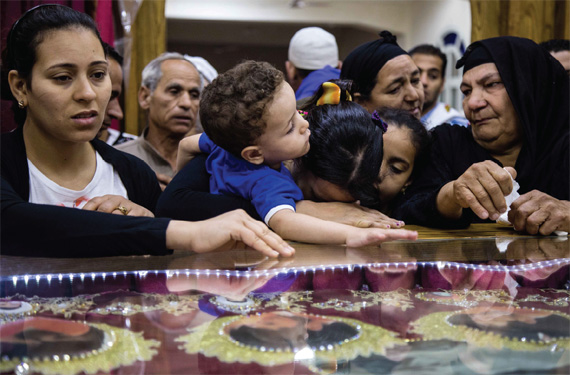
Some didn’t need reminding; they already had lost family members to what critics see as a campaign of state-sanctioned murder, with many suspects gunned down before being able to defend themselves in court.

Nanet Castillo is a case in point. Her son was killed during the first wave of the war on drugs in 2016. “We continue to seek and wait for justice to be served,” she said. Father Gilbert Villena, a member of Rise Up, a group formed by the relatives of those killed by security forces, said it was time to demand that Duterte fulfill his promises of “change for the greater good.”

Human rights groups have described the past two years as the “worst years for human rights” in the Philippines since the declaration of martial law in September 1972.

Indian state accused of harassing Christians

A Catholic leader has sought Indian Prime Mini-ster Narendra Modi’s inter-vention to stop harassment of Christians after Jharkhand State ordered a probe into the funding of more than 80 Christian organizations.

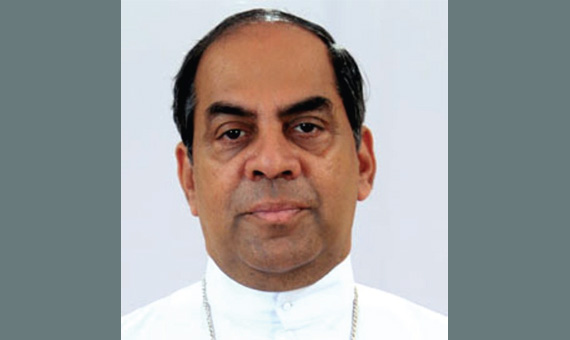
The eastern state on July 19 asked police to probe foreign donations received by non-governmental organizations managed by dioceses and religious congregations such as Jesuits, Salesians and several groups of nuns, accusing them of diverting the money for religious conversion. “This is another sign of how the Jharkhand government is harassing Christian institutions,” Bishop Theodore Mascarenhas, secretary-general of the Catholic Bishops’ Conference of India, told ucanews.com.

“We appeal to Prime Minister Narendra Modi to keep the state government under control. We hope that the prime minister will intervene and stop this harassment.”

Modi’s pro-Hindu Bharatiya Janata Party, which has run Jharkhand’s government since 2014, has been accused of moving against the Christian community, with police arresting nuns, priests and lay Christians on trumped-up charges.

Dalits, minorities victims of organized killing: Amartya Sen

Nobel laureate Amartya Sen is known worldwide of making sense in his arguments. Taking this further about his previous argument on ‘India taking a quan-tum leap in the wrong direction after 2014’, he stood by his point and added that ‘Dalits and minorities have become victims of organised killing’ at a televised face-off with NITI Aayog Vice-Chairman Rajiv Kumar on a television channel recently.

In the face-off, televised on NDTV, Sen said, “Dalits and minorities have become victims of organised killing” and the government has to take responsi-bility. Mobocracy and despotism make people live in fear. It is a terrible thing to happen, whether or not it affects the economy. The central issue is that of liberty and democracy.”

However, Sen’s comments were not welcomed by Kumar and he responded back saying that the Nobel laureate has not done any good by ‘spreading this talk of living in fear, because you are the one who is quoted’. To which Sen replied, “India is a great country. There are people in India who feel that government action is not adequate, that the government has not done enough to make minorities and Dalits to feel comfortable, then India will cease to be a great country.” But, with impeccable knowledge on economics, Sen reverted back saying that demonetisation was a despotic decision.

Ecumenism needs renewed interfaith outlook: Asian theologian

“The ecumenical movement needs renewed interfaith orientations when conflicting theological assumptions and presuppositions are posing challenges to authentic gospel values and Christian witness,” said internationally renowned ecumenical theologian Dr S. Wesley Ariarajah at the Asian Ecumenical Institute (AEI) of the Christian Conference of Asia (CCA) being held at the Payap University in Chiang Mai, Thailand.

Delivering a series of lectures on topics related to the theme of the AEI-2018, ‘Wider Ecumenism in a Pluralistic Asia’ at the month-long ecumenical formation and leadership development training, Ariarajah, an emeritus professor of Drew University in the U.S.A. enthused the prospective ecclesiastical and ecumenical leaders.

“Inter-religious dialogue is an attempt to understand people of other faith, not as people opposed to us or competing with us, but as partners within a pilgrimage. It is in the course of the pilgrimage and in the spirit of partnership that we share the message of Christ with copilgrims,” Ariarajah said.

“Dialogue challenges us to change and renew. It beckons us to a whole new world of relationships. It urges us to re-examine our theology. It calls us not to give up our faith but to grow in our faith by living it with humility,” he reminded the participants.

Women activists ask Pope to remove Jalandhar bishop

Leaders of various national women’s organizations and human rights activists in India have requested the Vatican to advise Pope Francis to remove Bishop Franco Mulakkal of Jalandhar from his post at least until an investigation was on his alleged sexual harassment of a nun. The women leaders on July 25 submitted a memorandum to Apostolic Nuncio to India Archbishop Giambattista Diquattro.

A member of the Missionaries of Jesus congregation in June filed a police complaint against the bishop alleging that he had sexually abused her several times during 2014-2016.

One of the women leaders, Annie Raja, general secretary of the National Federation of Indian Women, said an impartial inquiry could be conducted only if the bishop stepped down. The activists have already taken up the matter with the National Women Commission, which has assured all help to the aggrieved nun.

Attacks, harassment against Christians high in India: Priest

During a recent visit to the headquarters of Aid to the Church in Need (ACN), Father Ajay Kumar Singh of the Odisha Forum for Social Action advocated for the suppressed Christians of his eastern Indian state. “After 10 years there is hardly any justice for these communities,” said Father Singh.

The Catholic priest declared that the attacks of 2008 were the worst the country has seen in 300 years. “The violence claimed 101 lives, more than 350 churches were destroyed, 7500 houses were reduced to ashes, scores of convents, presbyteries, dispensaries and 13 humanitarian organisations were also attacked and vandalised. The riots spread to 450 villages in Kandhamal district alone.”

As time moves on buildings are rebuilt; the news headlines change, memories fade. But what is the state of the Christian community in Odisha and around India 10 years on?

In 2014, six years after the Kandhamal attacks, the “secularist” Indian National Congress party was voted out of power, in favour of the nationalist party the Bharatiya Janata Party.

2.52 cr minority students availed scholarships: Naqvi

As many as 2.52 crore minority students, half of them girls, availed three scholarship schemes being offered by the government, Minority Affairs Minister Mukhtar Abbas Naqvi said today. Naqvi said in Lok Sabha that scholarships are being given for the education empowerment of minority students, including girl students all over the country.

All the three scholarship schemes are implemented through the National Scholarship Portal and the disbursement of scholarship is made under the Direct Benefit Transfer mode, which eliminates duplication and leakage, he said during the Question Hour.

Naqvi said so far 2.52 crore students belonging to minority communities have availed the scholarships, 50% of whom were girls.

Minister feting lynch mob? India recoils in disgust

Jayant Sinha is a Celtics fan. He graduated from Harvard. He worked for McKinsey. Born and raised in India but minted in the United States, he found wealth and success in the Boston area. His American friends say his politics were moderate, maybe even progressive.

Then he returned to India.

He ditched the suits he had worn as a partner at McKinsey & Company, an elite management consulting firm, in favour of traditional Indian kurtas. He joined the governing Hindu right political party and became a member of Parliament and then a minister, leading Hindu parades and showering worshipers with flower petals from a helicopter.

This month, he also feted and garlanded eight murderers who were part of a Hindu lynch mob that the authorities said beat an unarmed and terrified Muslim man to death. His embrace of the convicted killers has become the political stunt that Indians can’t stop talking about.

Across the country, the images of Mr. Sinha draping wreaths of marigolds around the men’s necks have started a conversation about whether the state of Indian politics has become so poisoned by sectarian hatred and extremism that even an ostensibly worldly and successful politician can’t resist its pull.

Archbishop slams controversial Bangladeshi author’s tweet on Mother Teresa 

Abp Thomas D’Souza of Calcutta on Sunday reacted strongly to author Taslima Nasreen’s controversial tweet criticising Mother Teresa and the Missionaries of Charity founded by her. Missionaries of Charity spokesperson Sunita Kumar told PTI that such comments “hurt her.” “I will not speak anything on this but it hurts me to hear such things,” Ms Kumar told PTI. The controversial Bangladeshi author had tweeted, saying “Mother Teresa charity home sells babies, it is nothing new.

Adoptive parents nervous after raids of Missionaries of Charity homes

Theodore Kiro held 13-month-old Navya on her return to his family after they were separated for a week. The crying baby happily clung to Kiro, whom she knows as her grandfather.

Navya is one of the four babies whose fate became entangled in the recent child trafficking scandal broke at Rachi’s Nirmal Hriday (Tender Heart) home, run by the Missionaries of Charity. A five-member district child welfare committee decided it was not fair for the foster mother and the child to be separated for long and ruled they should be united conditiona-lly. The welfare committee asked the foster parents to take the child before the committee every week and keep it informed of the child’s schedule.

“The child and the mother were in trauma after separation, so the committee members decided compassionately to unite them. But this status has been fixed for the next two months only,” said Kiro, a local political leader using his clout to prepare legal papers for adoption of the toddler. Navya was brought to their home in Ranchi just after her birth and was reclaimed by the child welfare committee as one of the babies who allegedly was sold illegally by an employee of the Missionaries of Charity home.

Though the parents confess that there was no exchange of money yet, the officers are investigating the process of adoption without proper paperwork. This makes Anuka Tigga, another adoptive mother of a 4-year-old, jittery.

Official Website

Exit mobile version