
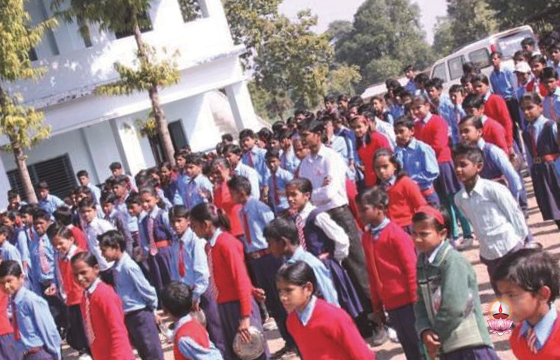
A report by India’s Ministry of Education highlights the high dropout rate among students from Dalit and tribal backgrounds. The data released by former federal education minister Ramesh Pokhriyal Nishank is contained in the Unified District Information on School Education (UDISE) 2019-20 report.

Midday meals leave a long-lasting impact: study
Girls who had access to the free lunches provided at government schools, had children with a higher height-to-age ratio than those who did not, says a new study on the inter-generational benefits of India’s midday meal scheme published in Nature Communications this week.
Using nationally representative data on cohorts of mothers and their children spanning 23 years, the paper showed that by 2016, the prevalence of stunting was significantly lower in areas where the mid scheme was implemented in 2005.
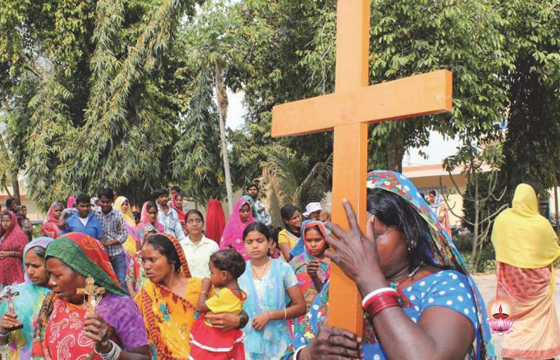
Some 30 Christians arrested under Uttar Pradesh’s anti-conversion law
Police recently arrested nine Christians in Uttar Pradesh for allegedly violating the state’s controversial anti-conversion law, which criminalises religious conversion and denies bail to those accused.
The case is cited in a study by International Christian Concern (ICC), a Christian advocacy group, which reports a recent rise in anti-Christian complaints.
The document quotes one of the Christians, Sadhu Srinivas Gautham, who said that about 25 Hindu radicals stormed a prayer meeting last Sunday in Gangapur town, accusing those present of forcibly converting Hindus to Christianity.
“They raged against me,” Gautham said. “It was as if they wanted to kill me on the spot. However, police arrived and escorted us to the police station” where he and six other Christians were charged with violating the anti-conversion law. “They told us we should renounce our Christian faith and go back to Hinduism.”
According to the anti-conversion law, approved last February, “Ghar Wapsi” (homecoming), the reconversion to Hindu-ism, is not forced conversion, even if it is often accompanied by threats and intimi-dation.
According to the ICC, 30 Christians were arrested so far this month; that is up from previous months.

Tripura Church celebrates first World Day of Grandparents
Many parishes of Agartala diocese in the north-eastern state of Tripura on July 25 celebrated the first World Day of Grandpa-rents, declared by Pope Francis.
“Our parishes have traditionally been celebrating the Senior Citizens Day on the Sunday prior or after the feast of Saints Joachim and Anna, the grandpa-rents of Jesus. This year we are celebrating it as World Day of Grandparents and elderly people as suggested by the Holy Father, Bishop Lumen Monteiro of Agartala told Matters India.
Pope Francis instituted the world day for the elderly through a letter dated May 31. The Pope wants the annual celebration on the fourth Sunday in July, close to the feast of the Blessed Virgin’s parents.
Assuring the senior citizens, the Pope said, “I am well aware that this Message comes to you at a difficult time: the pandemic swept down on us like an unexpected and furious storm; it has been a time of trial for everyone, but especially for us elderly persons.”
Pope also said he wanted to celebrate the day, in this particular year, as a long period of isolation ends and social life slowly resumes. “May every grandfather, every grandmother, every older person, especially those among us who are most alone, receive the visit of an angel.”

Catholic priest arrested in Tamil Nadu for hate speech
A Catholic priest in Tamil Nadu’s Kanniyakumari district was arrested July 24 for spreading hate and enmity between religious groups. Father George Ponnaiah, parish priest from Panavilai, triggered a row by allegedly making disparaging remarks about ‘Bharat Mata’ and Hindu religion. The Kuzhithurai diocese condemned his comments made on July 18.
Addressing a meeting at Arumanai in protest against the closure of churches, the ban on conducting prayers in houses and the denial of permission for renovating or constructing churches on private ‘patta’ lands, he alleg-ed remarked about Prime Minister Narendra Modi and Home Minister Amit Shah.
According to Father Ponnaiah, M.R. Gandhi, a Bharatiya Janata Party legislator from Nagercoil, was responsible for the Mandaikaadu communal riots in 1982. He said the DMK’s victory in the assembly election was the “alms given by the Christians and the Muslims.”
His speech was condemned, among others, by State Minorities Commission chairman S Peter Alphonse.

Muslim businessman aids church construction in Abu Dhabi
An Indian Muslim billionaire businessman, based in United Arab Emirates, has come forward to help build a Protestant church in its capital city of Abu Dhabi.
Yusuff Ali Musaliam Veettil Abdul Kader, popularly known as M A Yusuff Ali on July 23 donated 500,000 dirhams (US$136,147 or 10,138,771 Indian rupees) for the construction of a worshipping centre of the Church of South India in Abu Dhabi. Ali is the chairperson and managing director of Lulu Group International, a multinational conglomerate company that operates a chain of hypermarkets and retail companies. Church of South India parish in Abu Dhabi Father Lalji M Philip received the check from Ali.
The church will be built on 4.37 acres of land donated by Sheikh Mohamed bin Zayed Al Nahyan, the Crown Prince of the Emirate of Abu Dhabi, Deputy Supreme Commander of the United Arab Emirates Armed Forces and the de facto ruler of Abu Dhabi.

Indian bishop condemns Pegasus spying scandal
Media reports claim that Israel-made spyware Pegasus was believed to have been used to track more than 300 Indian phone numbers including those of journalists, politicians, government officials and rights activists.
The Israeli cyber weapon company NSO Group was also fined in 2019 for hacking phones of around 1,400 users around the world, including 121 Indians.
“It is completely unethical as we have the fundamental right to privacy given by the constitution of India and spying on someone’s private life is a threat to the citizens of a democratic country,” Bishop Salvadore Lobo of Baruipur, chairman of the Catholic Bishops’ Conference of India’s office of social communications, told. “We can understand when the government sometimes spies on some social elements when it thinks that they pose a threat to national security, but targeting only some particular group or person is unacceptable and the government should investigate the latest issue.

Delhi archdiocese gets new auxiliary bishop
Pope Francis on July 16 appointed Fr Deepak Valerian Tauro, rector of St Albert’s College in Ranchi, as the auxiliary bishop of the archdiocese of Delhi.
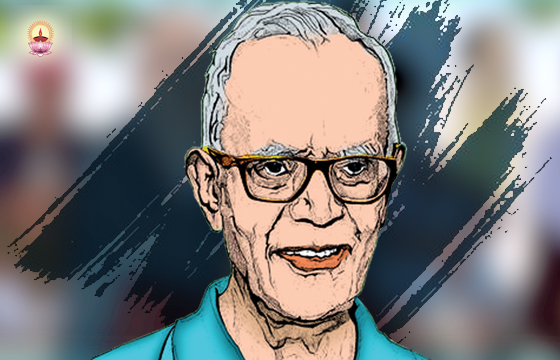
NIA objects: High Court withdraws appreciation for Fr Swamy
The Bombay High Court bench on July 23 withdrew its oral observations praising the late Father Stan Swamy and even appreciating his work for society.
The bench of Justices Sambhaji Shinde and Nijamoo-din Jamadar withdrew their co-mments after the National In-vestigations Agency (NIA) took strong objection to the “personal comments of the bench.”
The bench was hearing the pending plea of Jesuit Father Swamy by which he had sought interim bail on medical grounds before he died.
On July 23, senior counsel Mihir Desai appearing for Swamy told the judges that he seeks four prayers i.e. to allow Father Frazer Mascarenhas to participate in the Magistrate enquiry in Swamy’s custodial death, to direct the Magistrate to submit its report before the judges and to follow the guidelines of the National Human Rights Commission (NHRC) on custodial deaths.
The last request that Desai made was that the enquiry should be done by a Magistrate in Mu-mbai. However, the NIA through additional solicitor general Anil Singh opposed the request. The ASG said that the court shouldn’t give directions particularly to follow the NHRC guidelines and also to submit the enquiry report to the bench.
“Moreover, we think that the appeal should be abated as he (Swamy) is no more,” Singh argued.
Countering the submission, Desai pointed out that even if Swamy isn’t here but the HC does have it’s “supervisory po-wers” and thus the appeal cannot be abated.
Aruna Kamat-Pai, the chief public prosecutor for the state said she agreed with the submi-ssions of the ASG over guide-lines, monitoring the enquiry etc. “As far as enquiry in Mumbai is concerned the state will take care of it,” she submitted.

Chinese authorities raid Zoom church service
Police officers and Chinese Communist Party officials raided a church in Guangdong Province, which advocates for justice in China, while its pastor and elder were leading an online worship service on Zoom, forcing the two to stop preaching.
Security agents, police officers and other officials surrounded the Shenzhen Trinity Gospel Harvest Church in Shenzhen city and forced Pastor Mao Zhibin and Elder Chu Yanqing to stop preaching, the U.S.-based group China Aid reported.
The incident took place earlier on July 11, about three months after a church member, Shi Minglei, also known as Hope, fled to the United States. Hope was also attending the online service that was raided.
Pastor Mao and elder Shen Ling also recently signed “A Joint Statement by Pastors: A Declaration for the Sake of the Christian Faith,” led by Pastor Wang Yi of the heavily persecuted Early Rain Covenant Church. In April, several members of Early Rain Covenant Church were arrested for participating in an Easter worship service on Zoom and ordered to cease all religious activity.
Persecution watchdog group Interna-tional Christian Concern reported at the time that the Christians were participating in a Zoom worship service from their homes on Easter Sunday when six leaders were arrested and detained by the Public Security Bureau.
The 5,000-member Sichuan house church has not been able to gather in person since the communist regime shut down the church in 2018 and arrested their pastor and other leaders. Since then, it has opted to gather online. “At that time I was also in the Zoom call, but there was a long period of time where I did not hear a thing,” a member of ERCC was quoted as saying. “I thought it’s the network connection issue at first, but I soon heard a quarrel erupt. Our co-worker Wang Jun was questioning some people, [saying], ‘Who are you to do this [to us]?’”
Open Doors USA, which monitors persecution in over 60 countries, estimates that there are about 97 million Christians in China, a large percentage of whom worship in what China considers to be “illegal” and unregistered underground house churches.