
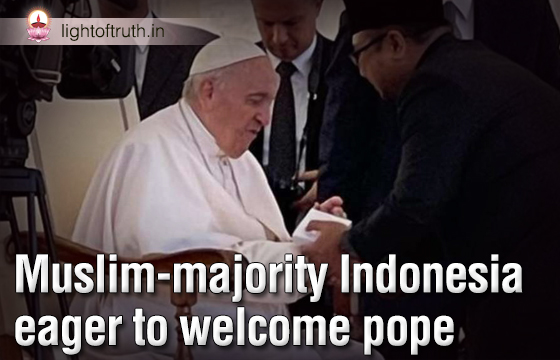
Indonesia has officially invited Pope Francis to visit the world’s largest Muslim-majority nation. Country’s Religious Affairs Minister Yaqut Cholil Qoumas met Pope Francis at the Vatican on Wednesday and deli-vered the invitation letter on be-half of President Joko Widodo.
Archbishop Yohanes Harun Yuwono, chairman of the Indonesian bishops’ Commission for Ecumenical and Interreligious Affairs, said Catholics are elated about the invitation as they are eager to see the Pope.
Christians make up 24 million of Indonesia’s estimated population of more than 270 million. Catholics account for about 7 million. The country has six organized religions— Buddhism, Catholicism, Confucianism, Hinduism, Islam and Protestantism — and around 200 traditional beliefs.
Pope Paul VI visited Indonesia in 1970 and Pope John Paul II in 1989. Pope Francis was supposed to visit Indonesia, Timor-Leste and Papua New Guinea in 2020 but cancelled the trip due to the Covid19 pandemic.
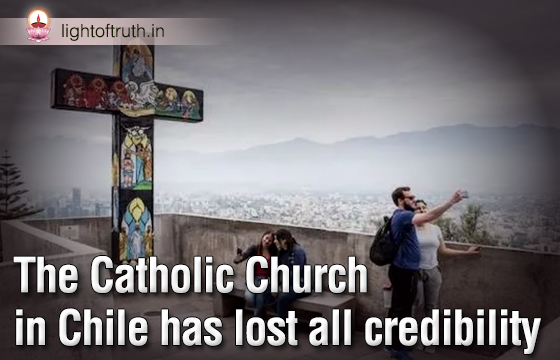
The Catholic Church in Chile has lost all credibility
When running an errand in the centre of Santiago, the capital of Chile, Gina always stops at the Catholic cathedral. She 67-year-old stays there for about 20 minutes, thanking the Lord for her health and entrusting her son who lives far away. She also prays every night at home. But she has not been to Mass for the past ten years.”After all that has happened, all the sexual abuse, we no longer trust. How can we go to Mass and confess before a priest?” she exclaims.” In Chile, all the indicators of trust in the Church are down, except for popular piety,” says Eduardo Valenzuela, a sociologist of religion at the Pontifical University of Chile.” What characterizes this piety is that it does not require the mediation of a priest,” he admits.
It is not a crisis of Christian faith, but a crisis of faith in the Catholic Church. A crisis with no end in sight Pope Francis’ visit to Chile in January 2018, and the weeks following it, caused an earthquake in the Chilean Church that really brought the sexual abuse crisis to light.
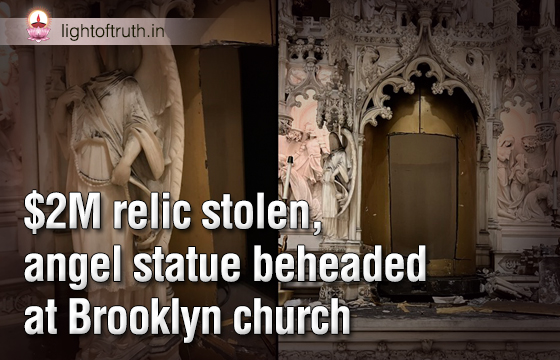
$2M relic stolen, angel statue beheaded at Brooklyn church
Police say someone busted into the altar at a New York City church, stole a $2 million gold relic and removed the head from a statue of an angel at some point late last week.
The incident happened between 6:30 p.m. Thursday and 4 p.m. on May 26th at St. Augustine’s Catholic Church, known as the “Notre Dame” of Brooklyn’s Park Slope neighbourhood.
The church was closed for construction at the time. Camera recordings from the church’s security system were also stolen, the church’s pastor said. The Diocese of Brooklyn called it “a brazen crime of disrespect and hate.”
The diocese said the thief or thieves cut through a metal protective casing and made off with a tabernacle dating to the church’s opening in the 1890s.
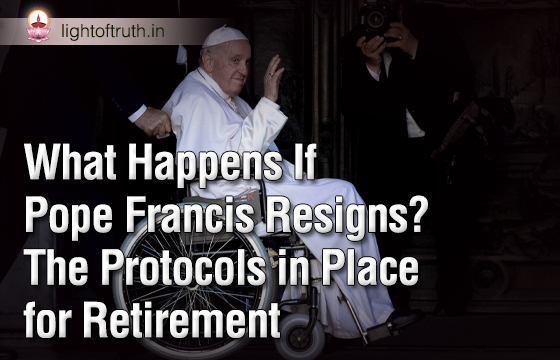
What Happens If Pope Francis Resigns? The Protocols in Place for Retirement
Speculation about Pope Francis’ future continues to grow as the Vatican announced June 10 he would not be going on a scheduled trip to the Democratic Republic of Congo and South Sudan this July.
“At the request of his doctors, and in order not to jeopardize the results of the therapy that he is undergoing for his knee, the Holy Father has been forced to postpone, with regret, his Apostolic Journey to the Democratic Republic of Congo and to South Sudan, planned for 2 to 7 July, to a later date to be determined,” said Matteo Bruni, the director of the Holy See Press Office, in a statement.
The knee problem has caused the pope, 85, to use a wheelchair at recent events. And, in July 2021, he underwent intestinal surgery, which kept him in the hospital for 10 days.
While rumours of the Pope being ill and ready to resign are common in Italian media, the speculations were renewed by the announcement that the Pope will travel to L’Aquila in central Italy in late August—similarly to previous (rare) popes who have retired.
But is that the protocol for a pontiff’s resignation News-week has found no protocols set in stone for such an occurrence as it is very rare. The only certai-nty if the Pope is to resign is that cardinals will gather together to name a successor. The College of Cardinals is made up of the Catholic Church’s most senior officials. They are appointed by the Pope and ordained by bishops.
The latest Pope to resign was Benedict XVI, who left the Holy See on February 28, 2013-the first pontiff to resign in around 600 years. He stated that his resignation came over concerns over his health. The Pope has not officially said that he will resign. As stated above, the rumours have been re-ignited due to the fact that Francis is set to visit the Italian city of L’Aquila in August for a feast.
The “Feast of Forgiveness” was inaugurated by Pope Celestine V, who abdicated in 1294.
Robert Mickens, editor of the English edition of La Croix, a Catholic daily newspaper, has stated: “it’s very odd to have a consistory in August, there’s no reason that he needs to call this [event] three months in advance and then go to L’Aquila in the middle of it.” Benedict XVI had also visited L’Aquila in 2009. He would retire four years later.

Brazil procession celebrates the Holy Spirit
Over the course of nine days, a religious procession known as the Folia of the Di-vine Holy Spirit brings messages of faith and song to farms and villages across the countryside of Brazil’s Goias state. Like a medieval caravan, the group framed by small red and white flags is comprised of more than 300 people, many of them on horseback.
The image of a dove decorates the pole of a banner during the culmination of the religious tradition, “Folia do Divino Espirito Santo” or Feast of the Divine, in the rural area of Pirenopolis, state of Goias, Brazil, Saturday, May 28, 2022 A mounted rider plays a Berrante, an ox horn musical instrument, during a parade culminating the religious tradition, “Folia do Divino Espirito Santo” or Feast of the Divine, in the rural area of Pirenopolis, state of Goias, Brazil, Saturday, May 28, 2022 Revelers take part in the grand dance of the night of the religious tradition, “Folia do Divino Espirito Santo” or Feast of the Divine, in the rural area of Pirenopolis, state of Goias, Brazil, Saturday, May 28, 2022.
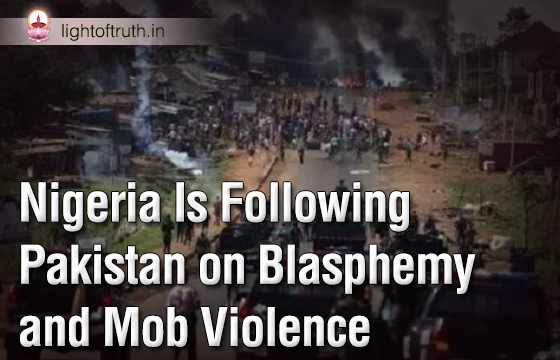
Nigeria Is Following Pakistan on Blasphemy and Mob Violence
On May 12, a Nigerian Christian student named Deborah Emmanuel Yakubu was stoned, beaten to death, and her body burnt in Sokoto, Nigeria, by her fellow classmates because of allegations of blasphemy. On May 16, protestors in Borno State, Nigeria, went to police headquarters in Maiduguri demanding the release of Christian woman Naomi Goni so that they could kill her for alleged blasphemy on social media. On May 20, rioters in Bauchi State, Nigeria, set Christian-owned homes and stores on fire based on allegedly blasphemous statements made online by Christian woman Rhoda Jatau.
While violent murders and riots over allegations of blasphemy have occurred sporadically in Northern Nigeria for decades, the recent string of attacks and the high-profile coverage of the murder of Deborah Emmanuel is a troubling indicator of what may become a new normal in Nigeria. The increase in mob violence related to blasphemy accusations resembles the reality in Pakistan, a country infamous for its harsh treatment of alleged blasphemers.
In February of this year, a mentally disabled man, Muhammad Mushtaq, was tortured and lynched after being accused of burning pages from the Quran inside a mosque in Pakistan. Ninety individuals have been killed in mob violence for blasphemy allegations in Pakistan since 1947.
Pakistan sees more mob killings related to blasphemy allegations than any country in the world. Joining them as one of the worst countries for such attacks is Nigeria, according to the U.S. Commission on International Religious Freedom. But while the U.S. sanctions Pakistan as one of the worst violators of religious freedom, Nigeria inexplicably had similar sanctions lifted in Dec. 2021.
Open Doors’ World Watch List tracks the worst places in the world to be a Christian and, often, any other religious minority. Pakistan was ranked the 8th worst country, in large part because of its blasphemy laws and the mob violence they inspire against Christians, Hindus, and others. But edging out Pakistan for the first time this year? Nigeria at 7th place.
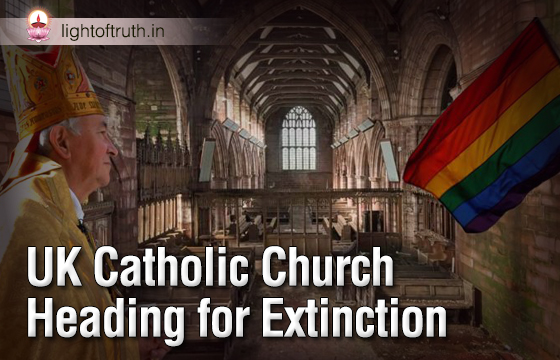
UK Catholic Church Heading for Extinction
A leading British mathematician is predicting the “exponential decline” of the Catholic Church in England and Wales by 2050, as it becomes increasingly woke in its embrace of progressive ideology.
Using epidemiological modeling, which is designed to calculate the number of persons infected with a contagious illness in a closed population over time, Dr. John Hayward computes that with a current “reproduction potential of 0.91,” the Catholic Church in England and Wales “will eventually become extinct.”
Noting that the decline in attendance at Holy Mass is “accelerating,” Hayward predicts that “in the worst-case scenario, the … church will be extinct by 2048.” Indeed, according to the visiting mathematics fellow at the University of South Wales, “The church’s future will likely lie somewhere between linear and exponential decline.”
Hayward argues that the critical factors hastening church extinction are a lack of enthusiasm in making converts and an openness to cultural Marxism, critical race theory, the sexual revolution and the LGBTQ+ agenda.
“To date, no growing church has adopted same-sex ‘marriage,’” Hayward writes, noting that all growing denominations hold firmly to historic Christianity and have statements affirming that marriage is between a man and a woman only.
Moreover, growing churches demonstrate a confidence in the authority of Scripture, which “enables them to stand against progressive ideology and drives their efforts in making disciples,” observes the statistician and founder of the Church Growth Modeling site.

Military members visiting Lourdes make prayer kits for Ukrainian soldiers
Participants in an annual pilgrimage to Lourdes, France, for U.S. active-duty military personnel and veterans assembled 3,000 prayer kits for Ukrainian soldiers.
The “Warriors to Lourdes” pilgrimage May 10-16 drew more than 175 participants and was co-sponsored by the U.S. Arch-diocese for the Military Services and the Knights of Columbus.
U.S. military personnel visit-ed the Shrine of Our Lady of Lourdes, which is where Mary appeared to St. Bernadette Soubirous in 1858. They attended daily Mass and had various opportunities for prayer, formation and fellowship. The prayer kits blessed by Archbishop Timothy P. Broglio, who heads the U.S. military archdiocese, and were then shipped to Ukraine for distribution to active-duty and injured Ukrainian soldiers.
Each kit included a rosary, an Our Lady of Lourdes prayer card, a vial of Lourdes holy water and a Blessed Michael McGivney prayer card.
McGivney, who was beatified Oct. 31, 2020, was a parish priest in New Haven when he founded the Knights of Columbus in 1882 to serve the needs of a largely immigrant Catholic community.
“What began as a small fraternal benefit society has since grown into one of the world’s leading international charitable organizations, with 2 million members in more than 16,000 local councils,” said a news re-lease about the pilgrimage.
The Knights also sponsored a Ukrainian delegation to be part of the Lourdes pilgrimage through the organization’s United in Charity initiative, offering them an opportunity for prayer and healing during this time of war in their nation.
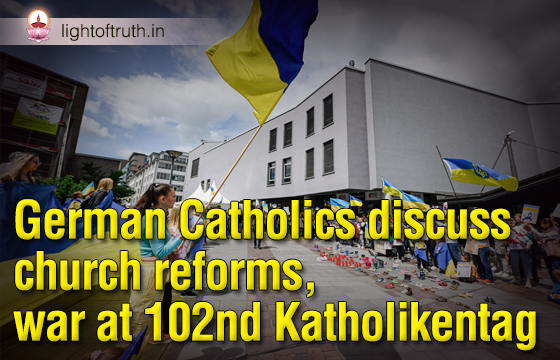
German Catholics discuss church reforms, war at 102nd Katholikentag
Peace, justice, climate justice, the war in the Ukraine and its global impact and the ongoing crisis in the German Catholic Church were some of the themes Catholic laity, bishops and politicians and activists discussed during the five-day 102nd Ger-man Katholikentag.
The biannual festival and meeting for German-speaking Catholic laity took place for the first time in four years May 25-29 in Stuttgart. Participants heard from political and church leaders.
Speaking May 27, German Chancellor Olaf Scholz said Russian President Vladimir Putin’s war in Ukraine is directed against “the values and convictions that unite us as a society.” Putin, he said, “must not be allowed to get away with his cynical, inhuman war.”
Scholz, who had just returned from a three-day trip to Senegal, Niger and South Africa, blamed the Russian president for an impending food crisis that is expected to hit the global south the hardest.
Scholz thanked the churches for their aid to Ukraine and for receiving refugees in Germany. He admitted that the war raises questions that are both political and ethical and that need to be discussed.
“At the heart of the matter is the question of whether violence can be fought with violence,” said the chancellor, who as a young man was a conscientious objector to compulsory military service.
About 200 demonstrators were chanting “Arm Ukraine now” in front of the hall where Scholz was speaking. On placards, they criticized that the arms deliveries were not arriving fast enough.
Bishop Gebhard Fürst of Rottenburg-Stuttgart, the diocese hosting the event, said he was in favor of arms deliveries to Ukraine.
“I observe that some things are delayed there, and it is, however, urgently necessary that much that is necessary for self-defense continues to be delivered. That’s a commitment to peace when you resist the aggressor,” he told the audience.
The president of the Catholic peace movement Pax Christi Germany, Bishop Peter Kohlgraf of Mainz, said in an interview with KNA, the German Catholic news agency, that he believed a reorientation and new reflection of Christian peace ethics is necessary. Situations like Russia’s current war of aggression against Ukraine are not usually foreseen in most of the peace ethics theories, books and debates, he said.
Also May 27, a rally for peace among participants found many Ukrainians joining in. A local radio station spoke to one of the participants, Father Roman Wruszczak, a parish priest of the Ukrainian Greek Catholic Church. “We suffer with Ukraine, we cry every day. Personally, I do too. There are days when I find it difficult to celebrate the liturgy,” he said during the interview.
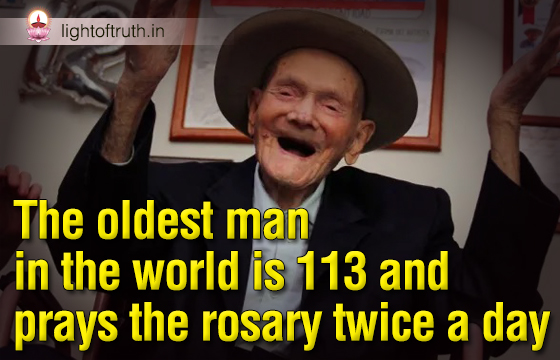
The oldest man in the world is 113 and prays the rosary twice a day
His name is Juan Vicente Pérez Mora, he’s Venezuelan, passionate about his faith, prays the rosary twice a day, and is in the Guinness World Records as the oldest man in the world.
Mora was born on May 27, 1909 and this year he turned 113 years old.
In an article published on May 17 on the Guinness World Records website, Mora said his secret to living a long life is to “work hard, rest on holidays, go to bed early, drink a glass of aguardiente (a strong liquor made from sugarcane) every day, love God, and always carry him in your heart.”
He says his family and friends are his greatest life companions and that the greatest thing he has learned in life is “the love of God, the love of family, and that we must get up early to work.”
According to the Guinness World Records, Mora was officially confirmed the oldest living man in the world on Feb. 4, 2022.