Stella Maris, global ship visiting network, has backed an urgent call from the Vatican for all seafarers to be granted shore leave immediately.
In a message ahead of Sea Sunday on July 10, the Vatican said that some governments and some shipping companies must no longer use the pandemic “as an excuse” for banning the crew from going ashore.

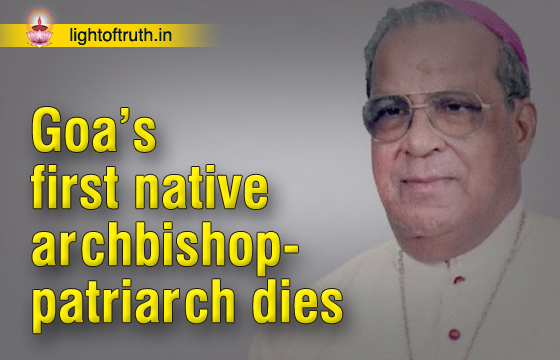
Goa’s first native archbishop-patriarch dies
Archbishop Emeritus Raul Nicolau Gonsalves, the first native to head the arch-diocese of Goa-Daman, died July 1 after ailing for the past ten days. The death occurred at 8:45 am at the JMJ Hospital in Alto-Porvorim, 8 km north of Panaji, the capital of Goa. He was 95.

Imphal’s first archbishop dies
Archbishop Emeritus Joseph Mittathani of Im-phal died July 11, a day before his 91st birthday.
A message from Fr G.P. Amalraj, deputy secretary of the North East India Regional Bishops’ Conference, says the funeral is on July 14 at St. Joseph’s Cathedral Imphal.
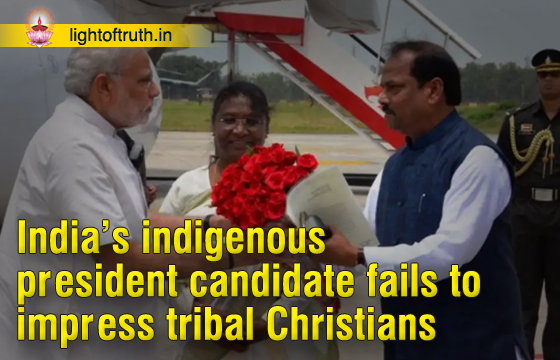
India’s indigenous president candidate fails to impress tribal Christians
Tribal Christians in the western state of Gujarat say they are not enthused by a forthcoming visit to their province by India’s first indigenous woman all set to become the nation’s president.
Draupadi Murmu is scheduled to be in the home state of Prime minister Narendra Modi on July 13 to pay homage to the late Sardar Vallabhai Patel, an iconic national leader from Gujarat credited with uniting India after independence.
Murmu is the candidate of the ruling alliance led by the pro-Hindu Bharatiya Janata Party (BJP) and is expected to sail through the July 18 contest against Yash-want Sinha, a former BJP veteran politician and ex-federal minister pitted against her by a united opposition.
India’s president is not elected directly but chosen by an electoral college comprising parliamentarians and legislators across the provinces.
The tribal people including Christians in Gujarat say they do “feel good that someone amongst them will become India’s first citizen.”
However, they say her visit isn’t of any interest to them because they will not be allowed to go near her because of VIP security protocols for important political figures.
Gujarat’s lone Christian legislator Punja Gamit says Murmu’s election as president may help the right-wing agenda of “delisting converts [to Christianity] from the list of Scheduled Tribes recognized officially across India.”
Gamit was referring to ongoing debates in India, pushed forth by Hindu right-wing groups, over attempted exclusion of tribal people who converted to Christianity from special education, job, social welfare and legislative quotas reserved for them.
Gamit said he and his Congress party will be endorsing Yashwant Sinha in the hope that he will refuse to be a “rubber stamp” and stall the anti-tribal Christian moves, such as the delisting of converts by Modi’s ruling BJP government.
Raj Vasava, a young tribal activist in Gujarat who recently joined the opposition Congress party, said Murmu’s nomination as a presidential candidate was a matter of pride but there was also fear.
She is known for projecting herself as pro-Hindu rather than as an indigenous person and had chosen to visit a temple after her nomination, he noted.
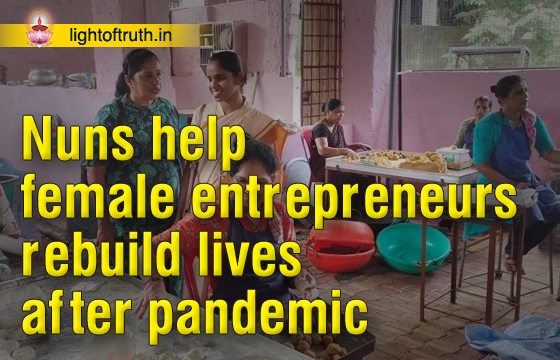
Nuns help female entrepreneurs rebuild lives after pandemic
Lucy D’Souza was desperate. She lost her husband to cancer in 2020, and the pandemic took away her job as a housemaid. However, she managed to rebuild her life with what she says is “timely support” from some Catholic nuns.
“Today, I make my living by selling pickles in the local market,” said the Catholic mother of two as she packed mango and pickled vegetables into small bottles.
D’Souza is among the more than 200 Christian, Hindu and Muslim women who through local self-help groups have ta-ken up trades and self-employment projects to overcome pandemic trauma in Mangaluru, a port city in the southern Indian state of Karnataka. Another 200 women have done the same in Bengaluru, the state capital, some 220 miles east of Mangaluru.
They all are assisted by four congregations of women religious.
“People suffered a lot with no jobs, business or any means of livelihood during the COVID lockdowns,” said Sr. Joel Lasrado, a member of the Missionary Sisters of the Queen of the Apostles who helped D’Souza start her business.
Other congregations that have helped people like D’Souza are the Sisters of the Little Flower of Bethany, Sisters of Charity of Sts. Bartolomea Capitanio and Vincenza Gerosa, and Sisters of St. Joseph of Tarbes.
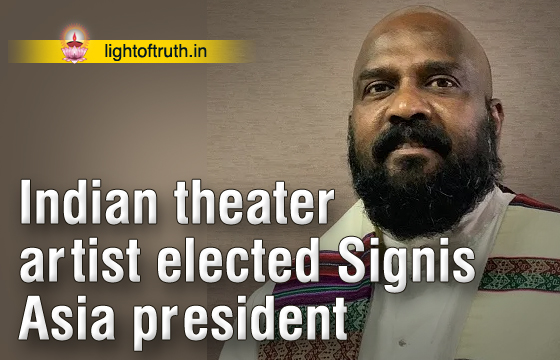
Indian theater artist elected Signis Asia president
Father Stanley Kozhichira, a Limca World Record holder for theatrical production, was on July 14 elected the Asian president of Signis, the global network of Catholic communicators.
“My personal thoughts are for working together as a team to build a strong Catholic communication network in the Asian region and to make Signis a brand among the youngsters,” the 50-year-old priest of the archdiocese of Delhi told Matters India soon after his election.
He also said he would like to bring into the organization a collective decision-making concept as a professional street theater person.
The online election was attended by delegates from all member countries of Signis Asia. Father Kozhichira, who is currently the president of Signis India, succeeds Father Joseph Anuch Chadeja of Thailand.
He has been in theater for more than 30 years. He has written and directed over 110 plays and street plays. An expert in street theater, he has conducted workshops in street theater for 22 years. He has produced documentaries and telefilms for Doordarshan, the national television network, and other production houses as director, assistant director, senior producer and script writer.
Indian Catholics applaud Pope’s “visionary” move
Catholics in India have applauded Pope Francis for nominating three women to the Vatican office that vets bishop appointments.
“Pope Francis is no doubt a visionary, who is treading gently to create space for women to become actively engaged in the life and mission of the Church,” Presentation Sister Dorothy Fernandes, national convener of the Forum of Religious for Justice and Peace, told Matters India July 14, a day after Pope named the women to the Dicastery for Bishops.
The Vatican office oversees the work of most of the Church’s 5,300 bishops, who run dioceses around the world.
The new members are Sister Raffaella Petrini, a member of the Franciscan Sisters of the Eucharist who already holds a high-ranking Vatican position as the secretary general of the Vatican City State, which runs the Vatican Museums and other administrative parts of the territory.
Also named was Sister Yvonne Reungoat, former superior general of the Daughters of Mary the Helper, also known as the Salesian Sisters. The lay woman is Maria Lia Zervino, president of a Catholic women’s umbrella group, the World Union of Female Catholic Organizations (WUCWO).
Sister Fernandes says the Pope is following Jesus, who was sensitive to women entrusted the Church to them beginning with Mother Mary. The Pope “is breaking new paths much to the opposition from within. Synodality is being unfolded, by inclusiveness by enabling women to take their rightful place,” she says.
Kochurani Abraham, a feminist theologian, says by naming the three women Pope Francis is apparently breaking the gendered glass ceiling of the Catholic Church.
Capuchin Father Suresh Mathew, editor of the Indian Currents weekly, sees these appointments as the sign of the Pope “going all out with his sweeping changes in the Church.”
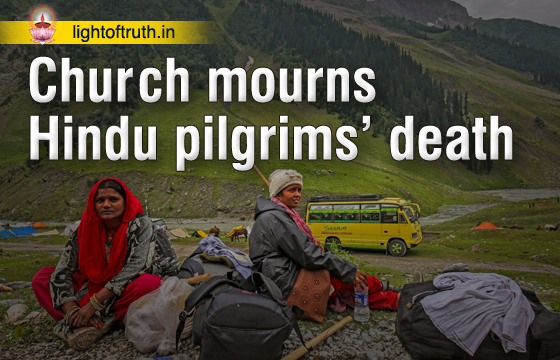
Church mourns Hindu pilgrims’ death
The Catholic Bishops’ Conference of India (CBCI) on July 13 mourned the death of devotees of a Hindu pilgrimage center.
“The CBCI mourns the loss of lives of the devotees and prays for their families left behind. It also prays for those injured and hopes that they may be healed quickly,” says a press release issued by conference of president Cardinal Oswald Gracias.
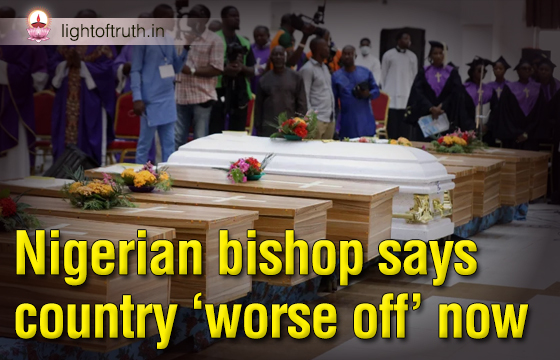
Nigerian bishop says country ‘worse off’ now
While the Catholic Church continues to play its part in helping people in Nigeria, the policies of the current government obstruct a clear path toward peace and reconciliation between Christians and Muslims, said Bishop Matthew Hassan Kukah of Sokoto, Nigeria. Addressing a virtual conference on peacebuilding, hosted by the Kroc Institute for International Peace Studies at the University of Notre Dame, Kukah said the rise of banditry and violence in Nigeria “has taken over and consumed a lot of the gains we have made” in building peace.
“Just to tell you how little progress we have made, we still have a military general as our president. And, therefore, it is little wonder that this journey has proven to be a challenge and a source of great difficulty for our people,” he said June 20. Attacks against Christians, especially Catholics, have been on the rise in the country. On June 5, gunmen entered St. Francis Xavier Church in Owo, killing at least 50 people and leaving dozens wounded.
Most recently, gunmen attacked churchgoers June 20 at St. Moses Catholic Church as well as a neighboring Baptist church in the northern state of Kaduna, killing three and kidnapping 40 people.

I Plant Secret House Churches Because I Was Saved into One
“I was raised in a Muslim family in Tehran, Iran. My mother was a teacher and the principal of an elementary school. She knew a lot about Islam and did her best to follow its teachings. She helped me learn to read the Qur’an, taught me to pray at least three times a day, and encouraged me to fast during Ramadan.” says Nathan Rostampour
“As a young Muslim, I had been taught that the Bible was corrupted, that the version we read today is a distortion of its original contents. But as I listened to this woman read from Scripture, I felt something of its power—and I felt sure that a book capable of grabbing my heart that intensely couldn’t be corrupted after all.”
Typically, my mother would get offended if someone disagreed with her Islamic values. On that day, however, something surprising happened. Instead of fighting back, she listened peace-fully and asked questions. There wasn’t a trace of defensiveness; it appeared that she simply wanted to know the truth.”
“One year after I gave my heart to Jesus, my father died of cancer. It was a great sadness for our family. But he had become a great believer, and in his last days, he was praising Jesus on his bed, even during the toughest moments of chemotherapy. I remember sitting by his bed and reading the Bible for him. Afterward, I would pray for God’s healing touch. And my father would raise his hands to show that he was praying and worshiping alongside me.”
“Meanwhile, my wife and I host a weekly Christian fellowship on Instagram for Persian-speaking people in secret house churches in places like Iran, Afghanistan, and Tajikistan. People tune in from all over the world, and we worship God together and pray for each other.” Nathan Rostampour is a church planting pastor and a leadership coach and serves with The Summit Church in Raleigh-Durham, North Carolina.