CZECH LAWMAKERS APPROVE TAXATION OF CHURCH RESTITUTION PLAN

The Czech Parliament’s lower house has approved a proposal drafted by Communist lawmakers to tax the compensation that the country’s churches receive for property seized by the former Communist regime.

On January 23, 106-56 vote shows the rising influence of the Communists. The party is not part of the centre-left ruling coalition led by Prime Minister Andrej Babis but helped the minority Cabinet survive a confidence vote.

The nation’s churches, including the Roman Catholic Church and the Jewish community, have had some property held by the state returned, and they are also to receive some $3 billion over 30 years.

FRANCIS EXPRESSES OPENNESS TO MARRIED PRIESTS IN PLACES WITH ‘PASTORAL NECESSITY’

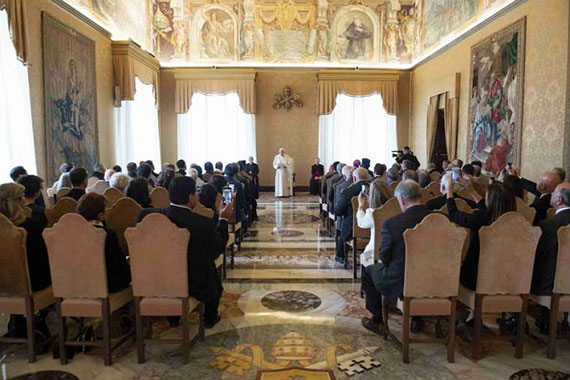
Pope Francis closed the door Jan. 27 on his making celibacy optional for all Catholic priests, but also expressed openness to allowing older married men to be ordained to the priesthood where there is a “pastoral necessity.”

In a press conference aboard the papal flight back to Rome after a five-day visit to Panama, the pontiff first stated firmly: “I am not in agreement with making celibacy optional.”

But the Pope then noted that there are areas of the world where Catholics are deprived of the Eucharist — mentioning specifically the Pacific Islands and the Amazon region — and said “it is a thing to think [about] when there is a pastoral necessity.”

“I believe that the issue must be open in this sense: where there is a pastoral problem because of the lack of priests,” said Francis. “I will not say that it must be done. Because I have not reflected, I have not prayed sufficiently over this. But the theologians must study.”

Francis spoke about priestly celibacy in a 47-minute press conference in which he also sought to downplay expectations for an upcoming February Vatican summit on clergy sexual abuse with the presidents of the world’s Catholic bishops’ conferences.

On celibacy, the pontiff was asked if he could imagine a future in which the Catholic Church would adopt the practice of Orthodox Churches, which allow priest candidates to choose during their formation period whether to marry or remain celibate.

The Pope referred to a phrase he attributed to Pope Paul VI: “I would prefer to give my life before changing the law of celibacy.” He noted that in the Orthodox tradition, priestly candidates must choose whether they will marry before they are ordained deacons.

“My decision is: optional celibacy before the diaconate, no,” said Francis.

“It’s personal, but I will not do it,” he said. “Maybe I am closed-minded, but I do not feel that I can place myself before God with this decision.”

“But where there is not the Eucharist … who will make the Eucharist?” Francis asked.

BEWARE OF ‘SPIRALS OF HATRED’ ON SOCIAL MEDIA: POPE

Pope Francis has warned against the increasing narcissism and “spirals of hatred” found on social media networks, encouraging people to cultivate community in their internet interactions. In his World Communications Day message, published on January 25, Pope Francis said that online discussion is “too often based on opposition to the other.”

“We define ourselves starting with what divides us rather than with what unites us, giving rise to suspicion and to the venting of every kind of prejudice (ethnic, sexual, religious and other),” Francis wrote.

This creates a digital environment that nourishes “unbridled individualism which sometimes ends up fomenting spirals of hatred,” he explained.

“As Christians, we all recognise ourselves as members of the one body whose head is Christ. This helps us not to see people as potential competitors, but to consider even our enemies as persons,” he said. “We no longer need an adversary in order to define ourselves” because in “the all-encompassing gaze we learn from Christ” our identity and our relationship in communion with others, he explained.

WELBY SAYS IT IS ‘WONDERFUL’ TO CONVERT TO CATHOLICISM

The Archbishop of Canterbury has said he is perfectly happy if members of the Church of England convert to Catholicism, and that it can even be “wonderful.”

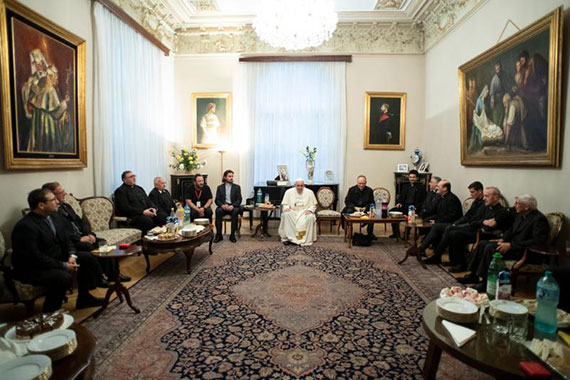
In an interview with Fraser Nelson, editor of The Spectator, the Most Rev Justin Welby says he does not mind at all that many of Church of England clergy defected to Rome after the ordination of women priests.

“Who cares?” he says. “I don’t mind about all that. Particularly if people go to Rome, which is such a source of inspiration. I had an email from a very old friend, an Anglican priest who has decided to go to Rome. I wrote back saying: how wonderful! As long as you are following your vocation, you are following Christ. It’s just wonderful.

“What we need is for people to be disciples of Jesus Christ. I don’t really care whether it’s the Church of England or Rome or the Orthodox or Pentecostals or the Lutherans or Baptists. They are faithful disciples of Christ.” The Spectator reports that Archbishop Welby has a Catholic priest, Fr Nicolas Buttet, as his spiritual adviser and that one of his closest friends is Cardinal Vincent Nichols, Archbishop of Westminster. He also goes see the Pope regularly and they talk about personal things.

His interview comes as Bishop Brian Farrell, LC, Secretary of the Pontifical Council for Promoting Christian Unity, suggests that after a difficult year for ecumenism, the churches might be at a new “turning point.”

NATIONAL CONSULTATION TO ADDRESS CHALLENGES, CRISES IN INDIAN CHURCH

A nation consultation, “We too are Church,” is being organized as a response to the various challenges and crises facing the Church in India.

The initiative by Catholic lay people is an attempt to implement “the far reaching teachings” of the Second Vatican Council, says a press note from consultation coordinator chhotebhai, a former president of the All India Catholic Union.

Renowned speakers and concerned participants from across the country are expected to attend the February 9-11 meeting to be held at Proggaloy Pastoral Centre, Kolkata.

The consultation will also stress the need for Christians to prepare for the forthcoming general elections in the country.

Among the topics to be discussed are: The Renewal of the Church according to Vatican II, The Current Political Scenario, The Role of the Media, Crisis Management and Leadership Skills, The Status of Women in the Church, Youth Aspirations and Expectations.

The speakers include Professor Maria Fernandes, vice chairperson, Bengal State Women’s Commission, Reverend Subhash Anand, emeritus professor, Papal Seminary, Pune and Percival Holt, a delegate to the recently held World Youth Synod in Rome and Holy Spirit Sister Tessy Jacob, a media researcher.

SOME 56 YOUNG PEOPLE FROM ACROSS INDIA IN PANAMA FOR WYD

The delegation of 56 Indian pilgrims who landed in Panama for the 34th World Youth Day come from across India: Agra, Karnataka, Kerala, Tamil Nadu. They left the country on 15 January.

The young people are accompanied by nine priests and a nun as well as Msgr Mar Joseph Pandarasseril, auxiliary bishop of the eparchy of Kottayam, and Fr Deepak Thomas, executive secretary of the Youth Commission of the Catholic Bishops’ Conference of India (CBCI).

The theme of this year’s WYD is “Behold, I am the handmaid of the Lord. May it be done to me according to your word” (Lk 1:38).

Fr Thomas spoke to Asia News about the first days in Panama, ahead of Pope Francis’s arrival.

“We arrived on 15 January, staying in the parish of Atalaya, Diocese of Santiago (de Veraguas). Here we took part in numerous social and cultural activities.” “On 17 January we celebrated a Eucharist of the meeting, during which we showed the culture of our country,” Fr Thomas said.

CHRISTIAN LEADERS IN KARNATAKA APPEAL FOR PARLIAMENTARY SEATS

Christian leaders of the southern Indian State of Karnataka are exploring the feasibility of fielding members from the community for the forthcoming general elections.

Christian Community Coalition, Karnataka, under the aegis of International Federation of Karnataka Christian Associations, met on January 26 at YMCA, Bengaluru, the state capital, to seek better re-presentation of the community in legislative bodies.

The federation is an organization of associations of all Christian denominations in Karnataka and abroad and has more than 60 branches in the state.

One leader, Rajshekar who travelled from Davangere, some 265 km northwest of Bengaluru, to attend the meeting, asserted that no political party should take the Christian community for granted.

“If due representation is not given for Christian candidates in the coming Lok Sabha elections, Christians would make their feelings felt by voting sensibly and it will have a cascading effect in the entire state where the Christians are a potential force to cause a swing for or against any political party,” he warned.

CHRISTIANS ACCUSED OF “FORCED CONVERSIONS”: THE GOVERNMENT OF MADHYA PRADESH BACKTRACKS

Kamal Nath, Prime Minister of the Indian State of Madhya Pradesh, a big state in central India, has assured Christian leaders that he will cancel the accusations of alleged “fraudulent conversions” initiated against Christians in the state. As Agenzia Fides learns, the government of Madhya Pradesh, led by the Congress Party, has declared that it will withdraw the “politically motivated” cases filed during the previous Hindu nationalist government of the Bharatiya Janata Party (BJP) in the state.

“We will review the cases of false accusations of conversion against Christians,” said the minister of justice, P.C. Sharma. BJP spokesperson Rajneesh Agrawal said the government’s move “will encourage Christian missionaries to engage in forced conversions,” announcing his party’s opposition.

On January 18, Fr Muttungal, former spokesman for the regional episcopal Conference of Madhya Pradesh, met Minister Sharma, highlighting the matter and the minister reassured him.

THE CATHOLIC POPULATION IN EUROPE HAS PLUMMETED, PEW FINDS

According to an analysis of Pew Centre surveys of 34 European countries, there are clear differences in religion from East to West and from North to South.

The further south and east one goes in Europe, in general, the more Catholic a country is. And the further east one goes, the more conservative it is as well.

In 1910, for example, the continent was home to 65% of the world’s Catholics. A century later, that number has plummeted, to 24%.

So where have all the Catholics gone? Latin America, Pew points out, now hosts more Catholics (39% of the world’s Catholics) than Europe or any other region. Sub-Saharan Africa has 16%, and the Asia-Pacific region 12%.

But the European countries with the largest shares of Catholics are mostly located in southern and central Europe. “For example, at least threequarters of adults in Poland (87%), Italy (78%) and Portugal (77%) identify as Catholic, as well as majorities in Spain (60%) and Hungary (56%),” Pew points out on its blog, Fact Tank. “But there are exceptions to this pattern: Ireland is 72% Catholic, and 75% of Lithuanians are Catholic. There are also sizable Catholic populations scattered throughout the rest of the continent, including in the United Kingdom and the Netherlands (19% each), as well as Ukraine (10%).”

Catholics in Central and Eastern Europe are more likely to say they attend church monthly (median of 44% vs. 33%), pray daily (36% vs. 13%), consider religion very important in their lives (31% vs. 13%), and believe in God (91% vs. 80%).

THOUSANDS PROTEST AGAINST CITIZENSHIP BILL IN MIZORAM

Thousands of people, including students, hit the streets across Mizoram on January 23 to protest against the Citizenship (Amendment) Bill.

Effigies of Prime Minister Narendra Modi and Union Home Minister Rajnath Singh were burnt as protesters took out rallies from Aizawl’s seven district headquarters and at over 50 other places.

Raising slogans and carrying placards, the agitators demanded the resignation of PM Modi and Home Minister Rajnath Singh, alleging that the controversial bill will endanger the very existence of the Mizos.

The rally was organised by the Mizo Zirlai Pawl (MZP) or Mizo students federation, which had also organised an 11-hour, state-wide bandh on January 8. MZP president said if the bill is passed, it would lead to the “total alienation of the Mizo people.”

The Citizenship (Amendment) Bill, passed by the Lok Sabha on January 8, seeks to provide Indian citizenship to Hindus, Jains, Christians, Sikhs, Buddhists and Parsis from Bangladesh, Pakistan and Afghanistan after six years of residence in India even if they do not possess any document.

Official Website

Exit mobile version