HENRY MARTYN INSTITUTE HONOURS JESUIT EDUCATIONIST, MUSLIM SCHOLAR

The Henry Martyn Institute in Hyderabad, a pioneering specialized institute of Islamic studies, has honoured a Jesuit educationalist and a Muslim scholar for their contribution to Muslim-Christian relations.

Church of South India Bishop Pushpa Lolita, vice-chairperson of Henry Martyn Institute, on March 18 conferred Doctor Litterarum on Jesuit Fr Thomas V Kunnunkal, the president of Islamic Studies Association of Delhi, and Akhtarul Wasey, professor emeritus, Islamic Studies and the president of Maulana Azad University, Jodhpur in Rajasthan.

CORONAVIRUS: TERESA SISTERS TO PROTECT ‘POOREST OF THE POOR’

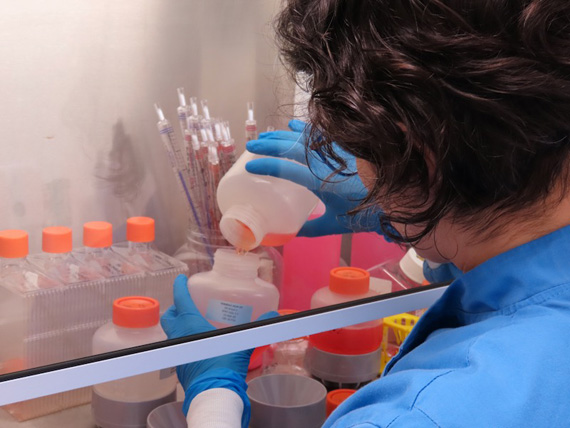
As the number of positive tests for corona virus in India topped 150, members of the Missionaries of Charity – the order founded by St. Mother Teresa of Calcutta to serve the poorest of the poor – are working to keep those cared for in their institutions safe. Over 200 people live or work in the Shanti Daan home, run by the Missionaries of Charity brothers in Mumbai. The home’s 175 residents suffer from physical and developmental disabilities. “We take people from the streets, the destitute, they are mostly challenged, both physically and mentally, we go and pick them up. Dying destitute in the streets, pavements, gutters, bus-stops, railway stations and public places,” said Brother Alexius. “The destitute is generally in a condition of malnutrition, chronic illness, suffering with open and festering wounds, often with infections of maggots, severe tuberculosis, pneumonia, etc, some are completely dependent on us, even for basic needs like bathing, etc.,” he told Crux.

GOVERNMENT SAYS NO INFO ON GABRIEL SENA: ARCHDIOCESE RELIEVED

The federal Ministry of Home Affairs (MHA) says the government has no information about the Church’s “Gabriel Sena.” The government declaration has brought relief to Tellicherry archdiocese in Kerala that was caught in a controversy after reports surfaced about it raising the sena, a unit of retired military and paramilitary men “for furthering the Church’s interests.”

Pope Francis announces a 2022 synod on synodality

The next ordinary Synod of Bishops will be a Synod on synodality, the Vatican announced on March 7. In October 2022, bishops from around the world will meet in Rome to discuss the theme: “For a Synodal Church: communion, participation and mission.”

The concept of “synodality” has been a topic of frequent discussion by Pope Francis, particularly during the previous ordinary Synod of Bishops on young people, the faith, and vocational discernment in October 2018.

Synodality, as defined by the International Theological Commission in 2018, is “the action of the Spirit in the communion of the Body of Christ and in the missionary journey of the People of God.”

The term is generally understood to represent a process of discernment, with the aid of the Holy Spirit, involving bishops, priests, religious, and lay Catholics, each according to the gifts and charisms of their vocation. Pope Francis told the Vatican Congregation for the Doctrine of the Faith’s theological commission in November that synodality will be key for the Church in the future. “Synodality is a style, it is a walk together, and it is what the Lord expects from the Church of the third millennium,” Pope Francis said on Nov. 29.

A Synod is a meeting of bishops gathered to discuss a topic of theological or pastoral significance, in order to prepare a document of advice or counsel to the Pope.

The Synod of Bishops was created in 1965 by Pope Saint Paul VI, who charted the Synod to encourage close union between the Pope and the world’s bishops and to “insure that direct and real information is provided on questions and situations touching upon the internal action of the Church and its necessary activity in the world of today.”

Ordinary Synods happen every three years on issues voted upon by Synod Delegates elected or appointed from each continent, and from certain Vatican offices. There have been 15 ordinary Synods to date. There are also extraordinary Synods and special Synods.

Pope Francis forms Child Protection Task Force

Pope Francis has established a task force “in order to assist the Episcopal Conferences in the preparation and updating of guidelines for the protection of minors.”

The intention to form such a group had already been announced by the Pope at last year’s Meeting for the Protection of Minors in the Church, which ran from February 21-24, 2019. One year later, after the details of the project had been worked out, Pope Francis has made the plan a reality.

In a statement released on February 28, the Holy See Press Office explained that the task force will be supervised by Archbishop Edgar Peña Parra, the Substitute for General Affairs of the Secretariat of State.

The other members of the organizing Committee for last year’s Meeting were: Cardinal Oswald Gracias, Archbishop of Bombay; Cardinal Blase Cupich, Archbishop of Chicago; Arch-bishop Charles Scicluna, Arch-bishop of Malta and Deputy Secretary of the Congregation for the Doctrine of the Faith; and Jesuit Father Hans Zollner, Dean of the Institute of Psycho-logy of the Pontifical Gregorian University and member of the Pontifical Commission for the Protection of Minors.

Women deacons possible after ‘Synodal Way,’ says German bishops’ chairman

The new chairman of the German bishops’ conference has said that calling for the ordination of women could be a conclusion of the two-year “synodal way” being undertaken by the Church in Germany. Bishop Georg Bätzing of Limburg said in a radio interview on March 9 for Inter-national Women’s Day that such a conclusion would require Roman approval.

In an interview with WDR5 on March 9, Bishop Bätzing answered questions on the role and future of women in the Church. He said that if the “synodal way” calls for the ordination of women to the diaconate, Rome would have to grant an indult to allow German bishops to begin ordaining women. In that event, he said, it would be important that the synodal assembly call for the change with “a very strong voice.”

Bätzing said that if bishops and laity united to present a “strong appearance,” Rome would be more likely to respond positively.

Speaking after his election, he said that the role of women “is the most pressing question we have concerning the future” of Church. “That is where the Church really has a backlog. We won’t be able to wait. Women must be given equal rights,” the bishop said on the ARD morning program.

Bätzing also said that Pope Francis “did not take a position” on the possibility of ordaining women to the deaconate, which last year’s Synod on the Amazon recommended for further consideration, and that the subject was open for further discussion.

Bätzing has said he “fully supports the synodal way,” calling it “at the center of our considerations” for the Church in Germany.”

Nicaragua’s Fr Ernesto Cardenal dies at 95

Fr Cardenal died on March 1 after a brief hospitalization.

His wake will be at the Mount of Olives funeral home, and a funeral Mass was said on March 3 Managua’s Immaculate Conception Cathedral.

Fr Cardenal was born on Jan. 20, 1925 in Granada, Nicaragua. He studied literature and was for a time at the Trappist’s Gethsemani monastery in Kentucky, but he returned to Nicaragua and was ordained a priest in 1965.

The following year he founded an artists colony on an archipelago in Lake Nicaragua.

When the Sandinista National Liberation Front ousted Nicaragua’s Somoza dictatorship in 1979, Fr Cardenal was named Minister of Culture in the new government.

He added: “The Bible is full of revolutions. The prophets are people with a message of revolution. Jesus of Nazareth takes the revolutionary message of the prophets. And we also will continue trying to change the world and make revolution. Those revolutions failed, but others will come.”

Coronavirus impacts Church worldwide

Italy has banned all religious ceremonies, including Masses and funerals, in a bid to contain the spread of the coronavirus.

The highly restrictive decision keeps the ban on public liturgies in place until 3 April and comes after the government quarantined 16 million people in the north of the country.

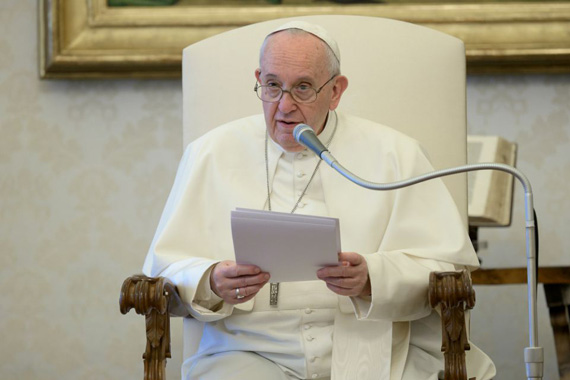
In the Vatican, Pope Francis’ public celebrations of the Angelus and Wednesday audience are taking place behind closed doors and live-streamed into St Peter’s Square. Francis’ private masses in the Casa Santa Marta have been closed off to guests but, for the first time, have been broadcast live online.

“In these days, I will offer Mass for those who are sick from the coronavirus epidemic, for the doctors, nurses, volunteers who are helping them, for their families, for the elderly in nursing homes, for prisoners,” the 83-year-old Pope, who has tested negative for the virus after suffering from a cold, said as he opened the liturgy on March 9 morning.

Meanwhile, the Holy See announced the closure of the Vatican museums until 3 April along with all the museums attached to pontifical basilicas and papal villas.

Elsewhere, the city of Bethlehem in the occupied West Bank has been placed in lockdown after the first cases of the coronavirus. The Church of the Nativity was closed on 5 March and, along with other sites, is expected to be shuttered for a month. This is just weeks ahead of the busy Easter holiday. All tourist buses to and from Bethlehem have been banned until further notice. French bishops who met with the Pope on March 9 during their “ad limina” visit to Rome sat in chairs that were placed one metre apart, and at a significant distance from Francis.

Official Website

Exit mobile version