

Catholic officials in the eastern Indian state of Jharkhand have accused the media of trying to tarnish Church-run institutions after a school was accused of forcing about 80 teenage girls to return home in their blazers without shirts. Media reports accused Carmel School in Digwadih city, Dhanbad district, of confiscating the shirts of the tenth-grade girls on Jan. 9 as they celebrated Pen Day, the final school day before board exams. They were supposedly taken from the girls because they were writing messages on each other’s shirts to mark the end of their academic year. The Sisters of the Apostolic Carmel congre-gation, which runs the school, denied the media reports.
Sister Maria Kirti, Councillor for Edu-cation of the congregation’s Northern Province, said an initial inquiry showed that the students were “wearing an extra shirt over their school uniform on which they were writing the messages.” “At the time of dismissal, the students were only requested to return [home] in their original uniform,” Kirti said in a statement on Jan. 13. The media reports said the school principal disapproved of the celebration and told them to remove their shirts autographed by friends to create lasting memories. Social media videos reportedly showed the girls in tears as the school authorities ignored their repeated pleas to keep the shirts, sparking a public outcry. The nun blamed a section of the media for publishing unverified and inaccurate reports that “do not fully reflect the facts” that triggered a public uproar and maligned the image of the reputed school. She said her religious order had asked the school to conduct an internal inquiry to ascertain the facts and recommend corrective measures. She said the school principal has been ordered to “stay away from all administrative responsibilities” until the inquiry is completed. Meanwhile, on Jan. 12, the parents of the students filed a complaint with the National Commission for Protection of Child Rights, prompting an official investigation.

Become Christ’s followers, not his fans: Indian bishops told
Apostolic Nuncio to India and Nepal Archbishop Leopoldo Girelli on January 28 urged India’s Latin rite bishops to become the disciples of Christ and not just his fans. When Jesus worked miracles, he had many fans watching him, but only a few chose to follow him generally, said the nuncio in his homily at the opening Mass of the 36th plenary assembly of the Conference of Catholic Bishops of India (CCBI).
The CCBI, the largest national episcopal conference in Asia and the fourth largest globally, represents 132 dioceses and 209 bishops in India. The January 28-February 4 plenary on the theme, “Discerning synodal pathways for mission,” is being held at the Xavier Institute of Management University in Bhubaneswar, the capital of Odisha state in eastern India. The plenary is poised to be a landmark event, fostering collaboration and renewal as the Church discerns its future path in mission and synodality, says a press statement issued by the conference’s deputy secretary general Father Stephen Alathara.
Reminding the bishops that that their episcopal mission in India, the nuncio urged them to pray to the Holy Spirit for a greater opening to respond faithfully to the tasks and responsibilities of the Church. The nuncio referred to the Gospel of the day, where Jesus denounces his sentimental attachments with his mother and embraces universal brotherhood, symbolically opening the door to people of all ethnicities and social statuses. He pointed out that unity comes from journeying together.
The nuncio applauded the Indian Church’s contribution towards the development of society. The current challenge of the Church is to engage with those who are deeply afflicted through climate change, poverty, and digital media, and those who remain excluded from our ecclesiastical structure, he said. Archbishop Girelli expressed his concern about the emerging challenges in India. He affirmed that India is a land of the young, but finding a job for all is a challenge, and that leads to migration. He stressed that the church has a role to play in addressing the causes of migration.

Indian Church decries anti-national tag on tribal Christians
An official of the Indian bishops’ conference has questioned a Hindu leader’s claim that former Indian president Pranab Mukherjee supported converting tribal Christians to Hinduism to save them from becoming anti-nationals. The Catholic Bishops’ Conference of India called the claim “fabricated” on Jan. 17, two days after the media published the statements of Mohan Bhagwat, the head of the powerful Hindu group Rashtriya Swayamsevak Sangh (RSS). In a statement, the bishops’ conference questioned the motive behind publishing a “fabricated personal conversation being attributed to a former president of India.” Bhagwat told a public function in central Indian Indore city on Jan. 13 that Mukherjee supported the campaign to convert Christians during a private conversation with him in 2017. Mukherjee died in 2020.
The bishops’ statement questioned the media ethics of “posthumous publication” of statements attributed to a pre-sident by “an organization with questionable credibility.” It also questioned why Bhagwat “did not speak” about this when Mukherjee was alive. “It is unfortunate” that RSS, which was banned thrice and often associated with violence in India “as seen over the past several decades, is allowed with impunity to call the non-violent, peace-loving and service-oriented Christian community as anti-nationals,” said the statement issued by the bishops’ public relations officer Father Robinson Rodrigues. The RSS is seen as the umbrella organization of all Hindu groups working to make India a nation of Hindu hegemony.
Hindu group Vishwa Hindu Parishad (VHP or World Hindu Council) spearheads a campaign called Ghar Wapsi (homecoming) in northern India to convert Christians to Hinduism, claiming Hinduism is the “home” religion of all Indians.

Growing violence ‘threatens’ Christian existence in India
Indian Christians face an existential threat if the government fails to act immediately to stop the spiralling incidents of hate crimes, says an ecumenical Christian group. Incidents of anti-Christian violence rose steeply from 127 in 2014 to 834 in 2024, revealed the latest report released by the United Christian Forum (UCF) on Jan. 24. “If the trend is not stopped immediately by political will and concerted government action, it will threaten the identity and existence of the Indian Christian community in their motherland,” the New Delhi-based body of several Christian denominations said in a statement. A.C. Michael, a UCF office-bearer, said practicing the Christian faith in the country is going to be a challenging task unless the government reins in the right-wing Hindu groups. “Chri-stians are being treated like they do not belong to this country,” Michael told. Michael, a former member of the Delhi state’s minority commission, said that the Church’s charitable works were falsely portrayed as “a façade for religious conversion through false narratives” by the right-wing organizations.
Michael Williams, president of UCF, said the attacks against the community have become “more frequent, brutal, and systematic.” “Christians who have long been a peaceful and integral part of India’s diverse society are now living in fear,” he said. Williams said the data collected by UCF wasn’t just numbers. “They are the stories of real people, individual lives shattered, families torn apart, and communities destroyed because of their faith,” he added. The findings of the latest report are “very disturbing” as there has been no let-up in violence against Christians in states like northern Uttar Pradesh and Chhattisgarh in central India.

Cardinal Koovakad is now head of Vatican’s Dicastery for Interreligious Dialogue
The Major Archbishop of the Syro Malabar Church has lauded the Vatican for appointing Cardi-nal George J. Koovakad as the new prefect of the Dicastery for Interreligious Dialogue. The Jan. 24 appointment of Koovakad is “a matter of great pride for his mother Church and the Indian Church,” said Major Archbishop Raphael Thattil. Koovakad becomes the second Indian cardinal to head a Vatican office after Cardinal Ivan Dias, who was Prefect of the Congregation for the Evangelization of Peoples from 2006 to 2011. Dias died in 2017. In his message, Thattil, said, “Koovakad will be able to promote harmony between different religions and accelerate dialogues for peace.” The dicastery is responsible for nurturing dialogue with Muslims, Buddhists, Hindus, Sikhs, and members of other world religions.
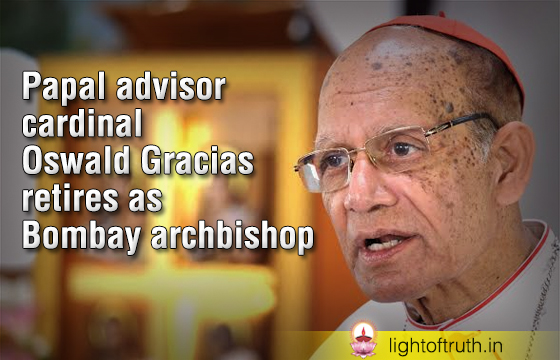
Papal advisor cardinal Oswald Gracias retires as Bombay archbishop
Pope Francis accepted the resignation of Cardinal Oswald Gracias as the Archbishop of Bombay on Jan 25 and elevated Coadjutor Bishop John Rodrigues as his successor in India’s largest diocese. Although retired from the archbishop’s office, Gracias continues serving on the Council of Cardinal Advisers. Gracias joined the Council of Cardinal Advisers in 2013 when Pope Francis established it and handpicked Gracias to be part of the nine-member team to advise him on revising the Roman Curia. Gracias “was a giant of a man, and now as his successor, I have mighty big shoes to fill,” Rodrigues, 57, said in a Jan. 25 statement. He thanked “Gracias for his dedicated service” to the archdiocese, the Church in India, and the Universal Church,” adding that they are proud of him. Rodrigues also urged his bishops, priests, religious men and women, and the Catholic community to work with the authorities and citizens “to further unity and true development in society.” Pope Francis appointed Rodrigues as coadjutor bishop on Nov. 30, and his installation took place only last week on Jan.23. Gracias said in a video message on Jan. 25 that Pope Francis “has accepted my resignation as the Archbishop of Bombay.” He said he submitted his resignation five years ago, when he turned 75, the canonical retirement age. However, the Vatican did not accept it then. He “reminded Rome about it recently,” Gracias said. His successor “comes with great knowledge, competence, experience and holiness of life,” he added.

Philippine bishops approve three new national shrines
The Catholic Bishops’ Conference of the Philippines (CBCP) has designated three churches as national shrines, says a report. The Mary Queen of Peace Shrine, popularly known as the EDSA Shrine, the Our Lady of Loreto Shrine, both in the Manila Archdio-cese, and the Shrine of Our Lady of Aranzazu, from the Diocese of Antipolo, were elevated to the status of national shrines. The bishops’ announcement came on the first day of their plenary assembly, CBCP News reported on Jan. 26. Some 70 bishops from across the country are attending Jan. 25-27 meeting. With the latest approvals, the Philippines has 33 national shrines.
The Catholic Church recognizes national shrines for their historical, spiritual, or cultural significance. Shrines are often linked to popular devotion, significant religious events, miracles, or apparitions. Before receiving the status of a national shrine, a church must first be designated as a diocesan shrine by the local bishop or archbishop. This requires the church to be a pilgrimage site for a specific piety, offering superior worship, Christian formation, and social services. Once these conditions are met, the parish can petition for canonical elevation.
Diocesan shrines can petition the national bishops’ conference for recognition as national shrines when devotion grows. The newly elevated shrines have a history, making them a hub of Catholic devotion in their locations.
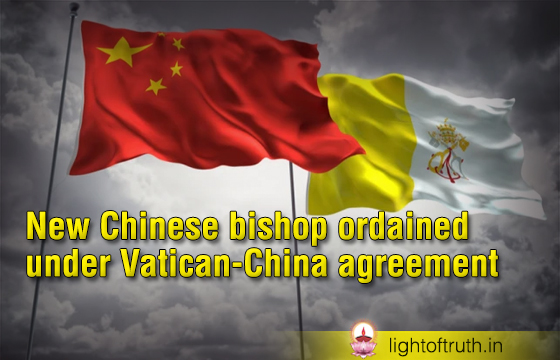
New Chinese bishop ordained under Vatican-China agreement
The Vatican announced that Pope Francis has erected a new diocese in China and appointed Father Anthony Ji Weizhong as its first bishop. The pope decided last October to suppress the Diocese of Fenyang in mainland China, which was originally erected in 1946 by Pope Pius XII, and at the same time erect the new Diocese of Lüliang.
Diocesan borders have been an area of dispute between the Vatican and China in the decades since the Chinese Communist Party came to power and started to redraw diocesan lines, seeking to bring them more in line with Chinese administrative boundaries.
Indeed, the territory of the newly-created Diocese of Lüliang conforms to the territory of the city of Lüliang, located about 400 miles southwest of Beijing in western Shanxi province. It will serve a total population of 3.3 million people, of whom approximately 20,000 are Catholics. A total of 51 priests and 26 religious sisters serve in the diocese.
Pope Francis appointed Weizhong as bishop of Lüliang on Oct. 28, 2024, having approved Weizhong in the context of the “Provisional Agreement,” better known as the Vatican-China deal, which appears to give the Chinese Communist Party (CCP) some ability to choose episcopal candidates.

Patriarch Pizzaballa urges Christians to make pilgrimages to Holy Land
Cardinal Pierbattista Pizzaballa, the Latin Patriarch of Jerusalem, invites Christians to return to the Holy Land on pilgrimage, saying their presence makes residents feel part of the universal Church. “This ceasefire is a turning point that has been marked in the life of the Holy Land.” Patriarch Pierbattista Pizzaballa offered that assessment in a video message recorded from the Church of the Holy Sepulchre in Jerusalem.
The Latin Patriarch of Jerusalem was joined by the Custos of the Holy Land, Fr. Francesco Patton, in inviting Christians to make plans to visit the Holy Land on pilgrimage in the near future. “Last year was a difficult year,” said Patriarch Pizzaballa. “For this year, I want to express the appreciation we have for all the universal Church, for the support, for the prayer, or the unity and solidarity they expressed for the Holy Land.” He urged Christians worldwide to express their solidarity with the Holy Land, saying Jerusalem is safe, especially with the ceasefire between Israel and Hamas that went into effect on Jan. 19.
“The source and origin of hope is here at the Holy Sepulchre with Jesus, the Risen Lord,” he added. “So, it’s about time to take courage to come here. We are waiting for you.”
In the video, Fr. Patton agreed with Patriarch Pizzaballa, highlighting the importance of pilgrimage to the land where Jesus was born, died, and rose again.
Standing in front of the Holy Sepulchre, he said Christians are “waiting for you, because when you come as pilgrims to the Holy Land, our small Christian community feels that we are part of a great family, the great family of the Catholic Church and Christians living all around the world.” “Please, don’t fear,” concluded Fr. Patton. “Don’t be afraid. Come!”

Indonesian archbishop rejects government energy plans in majority Catholic island of Flores
Indonesian Archbishop Paulus Budi Kleden, SVD, has spoken out against government-backed geothermal projects in Flores, the country’s most Catholic island located in East Nusa Tenggara.
According to UCA News, Indonesia’s Energy and Mineral Resources Ministry designated Flores a “geothermal spot” in 2017, identifying 16 project sites on the island in spite of strong opposition from local villagers.
“After hearing testimonies from several people, from Sokoria and Mataloko, and discussions with several priests, I have decided to reject geothermal projects in three vicariates,” Kleden said in a Jan. 10 video message.
Kleden, who became archbishop of Ende in August 2024, said residents have complained of the depletion of water springs in Sokoria and hot mud eruptions in Mataloko, UCA News reported.
Kleden is the first Indonesian archbishop to speak out publicly against the government’s energy plans in Flores, insisting that the projects have triggered a life-threatening “ecological disaster” on the island.
In addition to encouraging priests in the Ende Archdiocese to take a stand against the social and environmental harm caused by mining activities, Kleden said local residents should be encouraged to seek appropriate legal advice to protect their land.
Father Simon Suban Tukan, JPIC coordinator for the Society of the Divine Word in West Flores, told that the new law is important to protect the rights of environmental activists who feel threatened by a “government agenda that emphasizes investment.”