Dialogue only way forward for social harmony: Cardinal Gracias

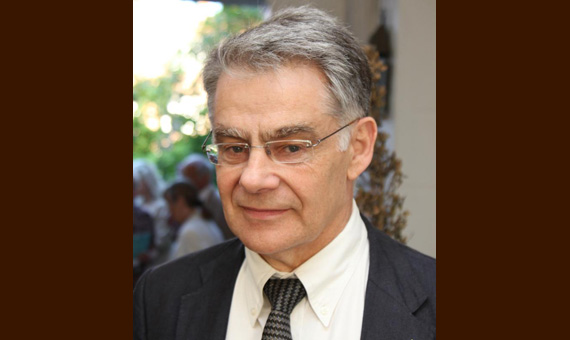
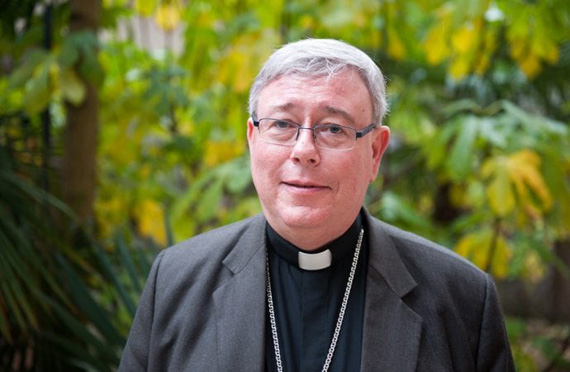
Cardinal Oswald Gracias, president of the Catholic Bishops’ Conference of India, says consistent dialogue with all sections of people is important and necessary to maintain unity and harmony in society.

“Dialogue is the tapestry of different cultures, languages and ethnic diversity and the Church has always stood for service of society,” the cardinal, who is also the Archbishop of Bombay, told a press conference on February 12, the eve of the bishops’ conference’s 34th biennial plenary session.

The February 13-19 meet at the St John’s Academy of Medical Sciences has chosen the theme “Dialogue: The Path to Truth and Charity.”

Cardinal Gracias called for a variety of dialogues, particularly cultural dialogue for the whole country.

As a new decade begins, the Catholic Church in India will move forward to dialogue with all groups in society. This could include civic bodies, government and non-governmental organizations so as to create a peaceful and a harmonious environment for all to live as true citizens of the rich land, India, the cardinal said.

The cardinal, one of the six consultants of Pope Francis, assured all Indian citizens that the Church in India would continue to live the gospel values of peace, joy and harmony and always work for the whole humanity.

“I place into the Lord’s hands this plenary assembly and pray that the fruits of the week-long deliberations may inspire us to continue to build bridges, first by under-standing the other person and then walking along with him/her, irrespective of his caste, creed and colour.”

Asked about the novelty of the theme, the cardinal said the plenary had the same theme 20 years ago and it might come up again. The Church wants to give an impetus and vitality to this theme with more networks to improve the dialogue, he said added that the Church looked forward in dialoguing for anybody having anxiety as the Church is second to none for many services.

Church leaders wary of Kerala’s burial rights bill

Catholic Church leaders in Kerala have expressed apprehension about the state’s communistled government proposing a new law on the burial rights of Christians.

The proposed law has several aspects that need clarification to ensure that it does not end up obscuring the rights and freedom Christians currently enjoy, Cardinal George Alencherry, major archbishop of the Syro-Malabar Catholic Church, said in a statement.

The head of the Eastern-rite Church was responding to the draft Kerala Christian Cemeteries (Right to Burial of Corpse) Bill, 2020, that the government presented in the state legislature on Feb. 6.

The law primarily aims to address the burial rights that Christians of two warring factions — Orthodox and Jacobite. Their century-old quarrel over ownership of land and churches has often resulted in each faction denying access to the other, even to cemeteries to bury their dead.

The dispute has intensified since 2017 when the Supreme Court gave ownership to the Orthodox faction. Since then, the Orthodox faction has denied Jacobites access to cemeteries where the ancestors of both factions are buried.

Proclaim good news through joyful service: Nuncio

Apostolic Nuncio to India Archbishop Giambattista Diquattro on February 13 urged Catholic bishops in the country to lead their people in proclaiming the good news through joyful services.

Nearly 200 bishops representing 174 dioceses in India are currently attending their biennial plenary assembly at Bengaluru’s St John’s Academy of Medical Sciences. Speaking at the opening session, the nuncio conveyed to the good wishes and blessings of Pope Francis to the participants while calling for effective and dynamic leadership for better service to the people.

The nuncio led the inaugural Mass presided along with Cardinals Oswald Gracias, George Alencherry and Baselios Cleemis. The Theme of the February 13-19 assembly is “Dialogue: The Path to Truth and Charity.”

The nuncio said all are called to foster harmony and peace in society. The nuncio also assured the bishops that he would convey to the Pope their filial greetings. He appreciated the services rendered by various Catholic organizations under the leadership of the local bishops.

Inner joy God’s gift, Justice Joseph tells Naga Catholics

Catholics are called to spread inner joy like light in the world and it can come only from God, says Justice Kurian Joseph, former Supreme Court judge.

“Wealth, power, or positi-ons cannot remove darkness; only God’s light can remove darkness,” Justice Kurian told opening session of the 36th annual convention of the Catholic Association of Nagaland on January 31 at Dimapur, the commercial capital of the northeastern Indian State.

The three-day convention has chosen as the theme, “Be the light that shines in the darkness.” It began with Mass led by Bishop James Thoppil of Kohima.

Justice Kurian, who was the chief guest, commended the joyous nature of Naga people and said he was fortunate to be in the land of festivals. “Unless you are joyful, you cannot have festivals,” said the native of Kerala State who was on his maiden visit to Nagaland.

Christians, Muslims thank Odisha CM for special funds

A delegation of Christian and Muslim leaders in Odisha on February 13 met Chief Minister Naveen Patnaik to thank him for sanctioning funds to improve pilgrimage centres in the eastern Indian State.

A day earlier, Patnaik sanctioned 160 million rupees to minority religious institutions which will be disbursed by the state’s Special Problem Fund during the financial year of 2019-2020.

The money is to improve amenities at pilgrimage centres, such as building community halls. The delegation that met Patnaik comprised around 60 representatives of Christian and Muslim communities.

“We are grateful to you for the concern and financial support for the development of pilgrim amenities,” Fr Prasanna Pradhan vicar general of the Archdiocese of Cuttack-Bhubaneswar told Patnaik on behalf of the Christian community in the state. The chief minister also granted 10 million rupees each to the Kendrapara Fakirabad Markaji Masjid, Bhadrak Puruna Bazar Jama Masjid, Sambalpur Paltan Masjid, Sambalpur Saint Joseph’s Cathedral (Catholic), Berhampur Bhapur Bazar Jamia Masjid, Giriroad Berhampur Odia Baptist Church, Rourkela Bishop Missionary (Catholic) and Rajgangpur Sunni Jama Masjid.

Loreto nuns raise ‘One Billion’ voices against citizenship law

It’s not enough to talk about violence against women only. Voices have to be raised against atrocities on minorities and the marginalized as well, and anyone who is feeling insecure in the current circumstances, when even something as basic as citizenship is coming up for questioning. This was the rhetoric at the three-hour One Billion Rising program organized by the Loreto nuns at Allen Park on January 31.

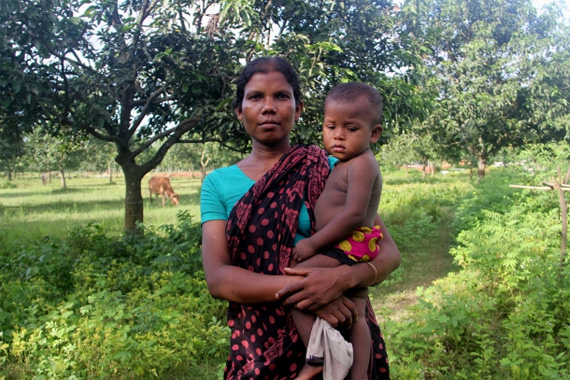
Odisha woman with 31 fingers, toes branded witch

An Indian woman with 31 fingers and toes combined is suffering stigmatization at the hands of her neighbours and had to resort to staying indoors to avoid being called a witch.

According to the BBC, Kumari Nayak, 63, is set to enter the Guinness World Records for having the most digits in the world – 19 toes and 12 fingers. She beats previous record holder Devendra Suthar, who entered the record book in 2014 – with 14 toes and 14 fingers.

Let religious people vote too, says Myanmar cardinal

Cardinal Charles Maung Bo of Yangon has appealed to Myanmar’s government to scrap the constitutional provision which prohibits members of religious orders from voting in elections.

He is concerned that Article 392 (a) of the constitution bars Buddhist monks and nuns, Catholic priests, nuns and religious, other Christian clergy, Muslim clerics and others from the right to vote.

“As cardinal I can make statements and speeches and encourage citizens to vote, but I am myself barred from voting. This is an extremely unusual arrangement. I am not aware of any other democracy in which this is a requirement,” he said.

In a written appeal released on Feb. 6, Cardinal Bo said it was not his duty as a religious leader to identify parties or leaders to support. “But as a country soaked in a great religious tradition and where religious leaders serve as moral guides, it is the duty of every religious leader to encourage all citizens to vote for the leader and party of their choice based on values,” he asserted.

Christians in Pakistan Celebrate Court Ruling

Christians across Pakistan are rejoicing after a court on 29th January acquitted 40 men jailed for alleged involvement in the lynching of two people in a district outside Lahore.

The 40 individuals, almost all of them Christians, shouted “Alleluia, Praise God” as the anti-terrorism court in Lahore ordered their release after nearly five years in custody.

More than 40 others, on bail after being accused of lesser offenses that took place at about the same time in Youhanabad district, were also acquitted.

They had all been arrested as police responded to riots in Youhanabad sparked by suicide bomb attacks on two churches one Sunday morning in March 2015, in which at least 15 people were killed and more than 70 were injured.

Speaking to Catholic charity Aid to the Church in Need (ACN) just hours after the acquittal verdict, Fr Emmanuel ‘Mani’ Yousaf described how emotion swept through the court as the accused began to absorb the court’s decision, citing insufficient evidence to prove the men’s guilt.

Reporting that the accused were now back home with their families, Father Yousaf said: “What we have seen is wonderful news for Pakistan. “Throughout Pakistan, people had been praying, every day praying that the court would rule in their favour. It is a big day for us all.

Asia Bibi breaks silence in new book

Asia Bibi, a Pakistani Christian woman who spent years on death row after being convicted of blasphemy, has published a book about her experiences and her new life. Ms Bibi released a memoir, Enfin Libre or Finally Free, written with French journalist Anne – Isabelle Tollet.

She was sentenced to death on blasphemy charges by a Pakistani court in 2010 but acquitted in 2018. She currently lives in an undisclosed location in Canada. Ms Bibi, 47, has always maintained her innocence in a highly sensitive case that polarised her home country of Pakistan and was closely followed around the world.

The Pakistan Supreme Court’s quashing of her sentence in October 2018 led to violent protests by religious hardliners who support strong blasphemy laws, while more liberal sections of society urged her release.

In the new book, she recounts her arrest, the conditions of her prison detention, and her eventual release. She also discusses the challenges of adjusting to her new life in Canada.

“You may know my story through the media, you may have tried to put yourself in my place in order to understand my suffering,” she writes in the book’s publicity materials. “But you are far from understanding my daily life in prison or my new life and that’s why, in this book, I will explain it all.”

In an excerpt released by the publishing house, she writes: “How could I ever imagine in 50 years that I would become a global symbol of the fight against religious extremism when I am but a simple, illiterate peasant?

“From my small windowless cell, I often wondered why Pakistan was targeting me.”

Official Website

Exit mobile version