
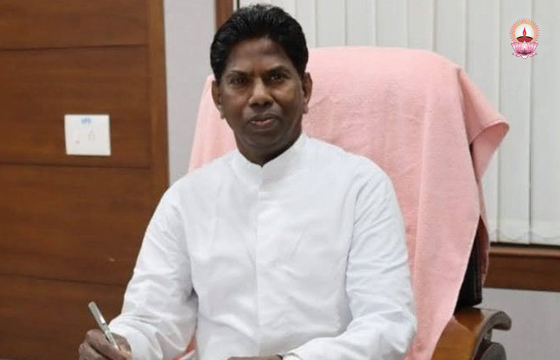
Loyola College of Arts and Science, one of the Jesuit institutions in Tamil Nadu, has come forward to sponsor the academic fees of poor students amid the ongoing coronavirus pandemic.
The college is located in Mettala near Salem but in Namakkal district in Tamil Nadu. It was started in 2015, affiliated to the Periyar University, Salem.
It is one of the nine colleges the Jesuits manage in Tamil Nadu. The college has 1,075 students, including 442 girls, coming mostly from Namakkal and Salem districts. Matters India interviewed College principal Jesuit Father Maria Joseph Mahalingam about the work of Jesuit educational institutions in Tamil Nadu “The Periyar University extended the deadline for admission until October 30. Our Jesuit community analyzed local people’s financial situation and made a comparative study of admissions in the previous academic years. We also studied the college’s fee structure. Each semester, a student needs to pay 9,500 rupees for Arts and 10,000 rupees for the Science course. The college’s fee structure covers the expenses of special training for the Union Public Service Commission exams, English coaching and Computer Education. The financial crisis due to the continuing lockdown and the inability of bright students to pay the necessary college fees prompted us to offer the maximum scholarship to the needy.” said the college principal “Loyola College, Mettala, charges only 5,000 rupees from the first year students for the first semester while the semester fee is 10,000 rupees. For the orphan, semi-orphan, differently-abled students, some have paid only 5,000 rupees for the entire year while they need to pay 47,000 rupees including the college, hostel and examination fee for two semesters.”

Jesuits to start St Xavier’s University, Meghalaya
The draft bill was brought by the education department and the same was approved by the cabinet.
The bill will be placed in the autumn session of the State Assembly on November 5.
Speaking to media persons, Deputy Chief Minister Prestone Tynsong said, “St Xavier’s is one of the most successful uni-versities in the country. The Calcutta Jesuits have established St Xavier’s University, Kolkata at New Town in Kolkata in 2017.”
The St Xavier’s University Meghalaya will be run by the Jesuits of Kohima Region work-ing in the North East. Before submitting the Letter of intent to the Government, a team of Jesuits visited other Jesuit universities in the country. This is the third Jesuit University in the country after Xavier University Bhuba-neswar (XUB), Odisha and St Xavier’s University Kolkota (SXUK) West Bengal.
The Meghalaya government has set up a regulatory board under the Meghalaya Private Universities (Regulation of Esta-blishment and Maintenance of Standards) Act, 2012.
The regulatory board will ensure that private universities maintain the standards of infra-structure, teaching, research, examination, and extension of services, fee structure, and safeguard the interest of the state.
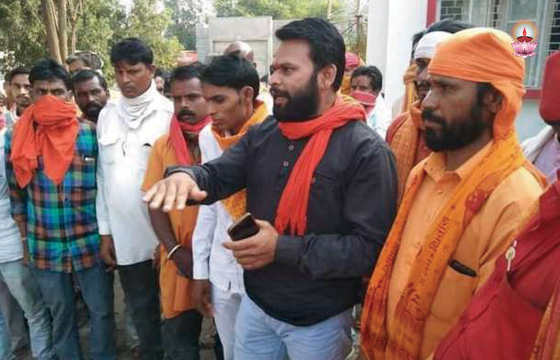
Hindu groups want to deny benefits to Indian tribal Christians
Right-wing Hindu groups in India have stepped up a campaign seeking to strip tribal Christians of government concessions with the aim of stopping more indigenous people converting to Christianity.
A group of right-wing Hindu activists marched through Jhabua town in the central State of Madhya Pradesh on Nov. 4. They shouted slogans asking the government to remove tribal people who have converted to Christianity from the list of beneficiaries.
“The benefits of reservation meant for tribal people should strictly be given to only those who have not converted to any other religion,” protest leader Azad Prem Singh told media.
India’s constitution guarantees social benefits such as re-served seats in government jobs and educational institutions along with educational fee concessions and financial support for socially poor Dalit and tribal people to help them move to the social mainstream.
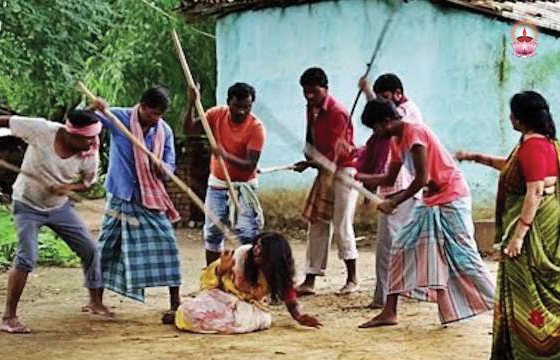
Family accused of witchcraft murdered in India
Police in the eastern Indian State of Jharkhand have arrested three people for killing three members of one family for alleged witchcraft in a crime described as an “inhuman act” by a Catholic official.
The bodies of Birsa Munda, 48, his wife Sukru Purty, 43, and daughter Somwari Purty, 20, of Kuda village in Khunti district, were found by police on October 28 after they went missing on October 7.
“It is an inhuman act and we condemn it because we have no right to take away anybody’s life. It is a matter of concern and civil society has to take it very seriously as it can’t be acceptable in modern times. The Church is always pro-life and these kinds of incidents sadden us,” said Father Vincent Ekka, who heads the department of tribal studies at the Jesuit-run Indian Social Institute in New Delhi.
“When the whole country is talking about development and progress, killing in the name of witchcraft is certainly a setback to all of us. We have to address it collectively be-cause it needs the involvement of government machinery, non-government organizations, civil society and missionaries.”
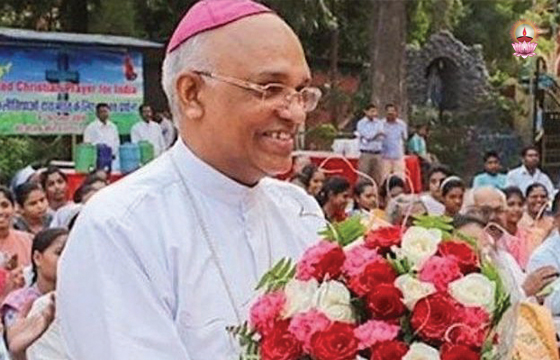
Agra gets new archbishop
Pope Francis on November 12 promoted and transferred Bishop Raphy Manjaly of Allahabad as the archbishop of Agra, the mother diocese of the Church in northern India.
He succeeds Archbishop Albert D’Souza, who has headed the Agra Archdiocese since 2007. Archbishop D’Souza last year turned 75, the canonical retirement age for bishops.
Bishop Manjaly was born on February 7, 1958, in Vendore, in southern India’s Kerala State. After school in Kerala, he joined St Lawrence Minor Seminary, Agra, in 1973. He then studied philosophy and theology at St Joseph’s Regional Seminary, Allahabad. He was ordained a priest on May 11, 1983.
He has studied master’s degree from Agra University and obtained a doctoral degree from Angelicum University of Rome, Italy.
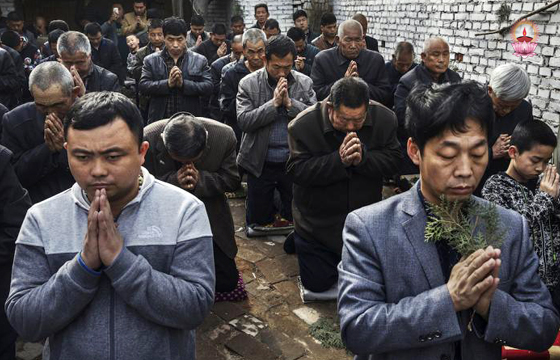
Baoding, priests, nuns and seminarians seized by government officials
Catholic sources in Hebei say that on the morning of November 2, two priests from the unofficial community of Baoding and more than a dozen seminarians and nuns from the same community were forcibly taken away by government officials. After a few hours, two seminarians were released.
On the same day, Fr Lu Genjun, former vicar general of Baoding, was taken away. Until now, no one knows where they are being held.
A priest from the underground community of Baoding, commenting on the incident, pointed out that the abduction took place shortly after the renewal of the provisional agreement between China and the Vatican. He asked all Catholics to pray for the kidnapped and for full religious freedom in China.
The diocese of Baoding, with over 500,000 faithful, is one of the cornerstones of the unofficial community. Its bishop, Msgr Giacomo Su Zhimin, has been missing in police custody since 1997 and nothing is known about his fate since then.
His coadjutor bishop Francesco An Shuxin, after a long period of imprisonment, decided to enter the official church.
-AsiaNews

Karachi: Court approves the conversion and marriage of 13-year-old Arzoo Raja. The mother’s desperation
The High Court of Sindh in Karachi has agreed with the kidnappers of Arzoo Raja, a 13-year-old girl who, after being kidnapped, was converted to Islam and forced into a forced marriage with a 44-year-old man.
The court, to which the kidnappers had turned after being accused by the girl’s family, agreed with them, stating that Arzoo had freely accepted Islam and freely married 44-year-old Ali Azhar. The court also ordered that no arrests be made.
During the court proceedings, Arzoo’s mother, Rita Masih, burst into tears (see video): “Let me see my daughter, she’s in there but they [the kidnappers, the police and the court] won’t allow me to see my innocent little daughter. Arzoo, my sweet-heart, come to your mom and give me a big hug, my dear daughter. Your sister got sick from what happened to you; your brother no longer eats because they want you home. My daughter is only 13, she is innocent. They [the kidnappers] keep lying and won’t let me meet my little girl. I want my daughter back! Please, please, help me!”
Then Rita Masih passed out, but the court, the police and the kidnappers did not allow her to meet her daughter. In another room, Arzoo was crying (see photo 1) and spread her arms as if to hug her mother, but the police blocked her and kept her away.
In recent days, demonstrations were held throughout the country to denounce the violence against minorities, forced marriages and the specific case of Arzoo Raja.
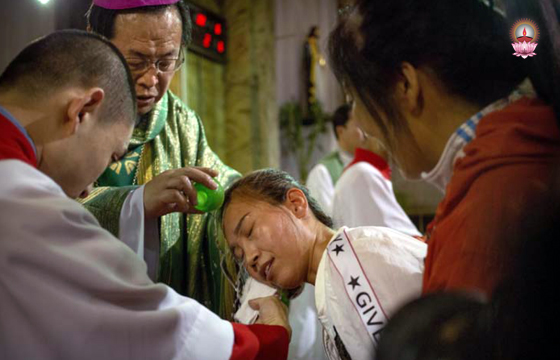
Xiaoyu, left standing in class because he believes in God
A young teenager named Xiaoyu has had to endure stand-ing in class for over a month, in punishment because he believes in God and because he dared to challenge his teacher who wanted to convince him not only of the theory of evolution, but also of non-existence of God.
The testimony sent to us by Fr Stanislaus, a priest from north-eastern China, is anonymous out of respect for the young man and the teacher. But it is very significant of the campaign implemented by the United Front to curb the faith among young people. This happens not only with the ban on going to Mass for minors under 18, but also with checks and disciplinary measures among teachers and students if any of them declare themselves a believer.
I was surprised, but also moved when a faithful told me about his son. In class, the professor declared: “The Bible says that man was created by God, this statement is wrong. God does not exist, man evolved from apes, proof of this is Darwin’s Theory of Evolution and the fossil anthropoids…”
After that, the professor asks Xiaoyu and he replies: “Professor, I don’t understand. How does the Theory of Evolution prove the non-existence of God? Although humans evolved from apes, where did they [the apes] come from? How can it be proved that they were not created by God? How is the beginning of all existence?…”
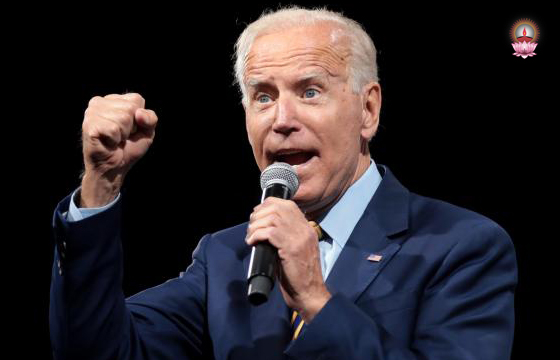
Asian Catholic bishops welcome Biden’s victory in US elections
The Federation of Asian Bishops’ Conferences (FABC) welcomed the election of Joe Biden as president of the United States of America.
“We warmly send our prayerful wishes and congratulations to the people of America and the President-Elect Joe Biden,” read a statement signed by Cardinal Charles Maung Bo, FABC president.
The prelates noted that with the election of Biden the United States “enters into a new phase in their glorious history, affirming democracy and universal good.”
“President-Elect Joe Biden comes from a long tradition of Catholic faith-based life. His concern for the cry of the earth and the cry of the poor is a refreshing welcome,” read the bishops’ statement.
“The world with its poor and its climate challenges look forward to the USA fortifying the global fight against global warming and poverty,” it added.
“With prayerful wishes we welcome him and do hope his tenure will pay greater attention to countries in the margins like Myanmar,” read the statement.
The federation of Catholic bishops’ conferences expressed hope that the United States “will play its leadership role in the company of international organizations like the UN.
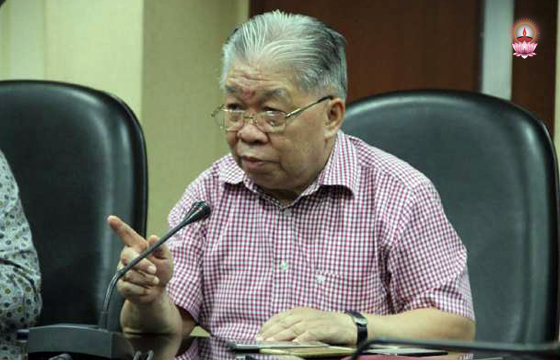
Pope Francis appoints new Indonesian archbishop in Papua
Pope Francis has appointed Bishop Petrus Canisius Mandagi of Amboina as archbishop of Merauke in Papua.
The appointment was announced by the archdiocese’s secretary-general, Fr Hendrikus Kari-wop, on Nov. 11 during a Mass at St Francis Xavier Cathedral Church that was broadcast online. Abp. designate Mandagi of the Congregation for Missionaries of the Sacred Heart has been the archdiocese’s apostolic administrator since August last year following the death of its previous administrator, Bishop John Philip Saklil of Timika. “Because I believe it is God’s will. I must not reject God’s will,” he said on Nov. 12.