Catholic Sisters Help Children Living with HIV Build a Better Future
Faith Brings New Hope to Assam Village Once Known for Alcoholism
Cardinal Tagle: Friendship reveals the face of Jesus and the Church
Israel prepares ‘extensive’ West Bank operation after deadly shooting near Tal
Pope: Visit to Türkiye and Lebanon teaches that peace is possible
Thousands protest corruption in Philippines as Church leaders call for accountability
Pope: Nicaea invites Christians to unity in face of violence, conflict
Commercialization of religion has always been a disturbing factor to me. There can be no single definition of what constitutes religion because the word means many different things to different people. But certainly, many people would agree that religion is a multifaceted entity consisting of but not limited to theology (study of God), philosophy (study of wisdom), anthropology (study of human beings), mysticism (awareness of an ultimate reality), morality (rules of personal conduct), cosmology (relationship between humans and the cosmos), social action, ethics, rituals etc.
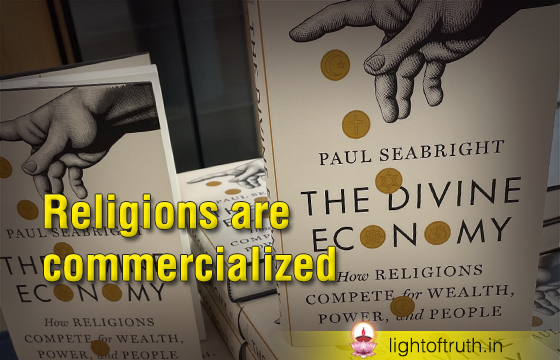
India is renowned for its remarkable religious diversity. It is home to nearly all major world religions. The country is the birthplace of four religions – Hinduism, Buddhism, Jainism and Sikhism. There is an interesting book titled: The Divine Economy: How Religions Compete for Wealth, Power, and People by Paul Seabright. Major thoughts expressed by the author are mentioned below:
Indian religions involve various beliefs, worldviews, texts, revelations, morals and prophecies that portray sacred significance to the members of a particular faith. Individuals also practice sermons, rituals, prayers, meditation and feasts as per their devotion to religious faith.
On the other hand, spirituality is an overlapping concept that involves practices and beliefs around the value, connection and meaning of the existence of an individual. It is usually practiced to achieve a positive state of mind with contentment, acceptance and gratitude. Individuals indulge in religious and spiritual tourism, donation drives, books and literature tools, flowers, garlands, candles and incense sticks to practice and propagate their beliefs.
As per the report titled: “India Religious and Spiritual Market Size, Share, Trends and Forecast by Sector, Income Source, Distribution Channel, Religion, and Region, 2025-2033” by imarc, India’s religious and spiritual sector is undergoing a rapid tech-driven shift with the emergence of spiritual tech platforms and faith-tech start-ups offering services like online pujas, astrology consultations, virtual satsangs, and guided meditations. These services are now integrated with quick commerce models, enabling doorstep delivery of religious articles, prasadams, idols, and ritual kits within hours.
The demand for personalized spiritual experiences, curated rituals based on nakshatra, location, or family traditions, is also gaining traction, especially among younger urban audiences. This digital movement is being fuelled by rising smartphone penetration, comfort with online transactions, and growing interest in spiritual wellness to carer to the Indian religious and spiritual market demand.
However, the market still faces challenges around trust, standardization, and lack of regulatory oversight. Fragmentation among service-providers and varied pricing also create friction for consumers.
Despite these gaps, the momentum is strong, with venture-backed platforms working to organize a largely unorganized space, making spirituality more accessible, structured, and on-demand for millions across income brackets and regions.
It is time for all Christian groups/churches to introspect on the widespread commercialisation – how every sacrament comes with a price-tag, extravagant liturgical celebrations, marketing of various types of religious articles and promotion of pilgrimages/religious tourism etc. How long are we going to price the Lord? Let us arise, awake and STOP the commercialisation of religion!