
Catholic Sisters Help Children Living with HIV Build a Better Future
Faith Brings New Hope to Assam Village Once Known for Alcoholism
Cardinal Tagle: Friendship reveals the face of Jesus and the Church
Israel prepares ‘extensive’ West Bank operation after deadly shooting near Tal
Pope: Visit to Türkiye and Lebanon teaches that peace is possible
Thousands protest corruption in Philippines as Church leaders call for accountability
Pope: Nicaea invites Christians to unity in face of violence, conflict
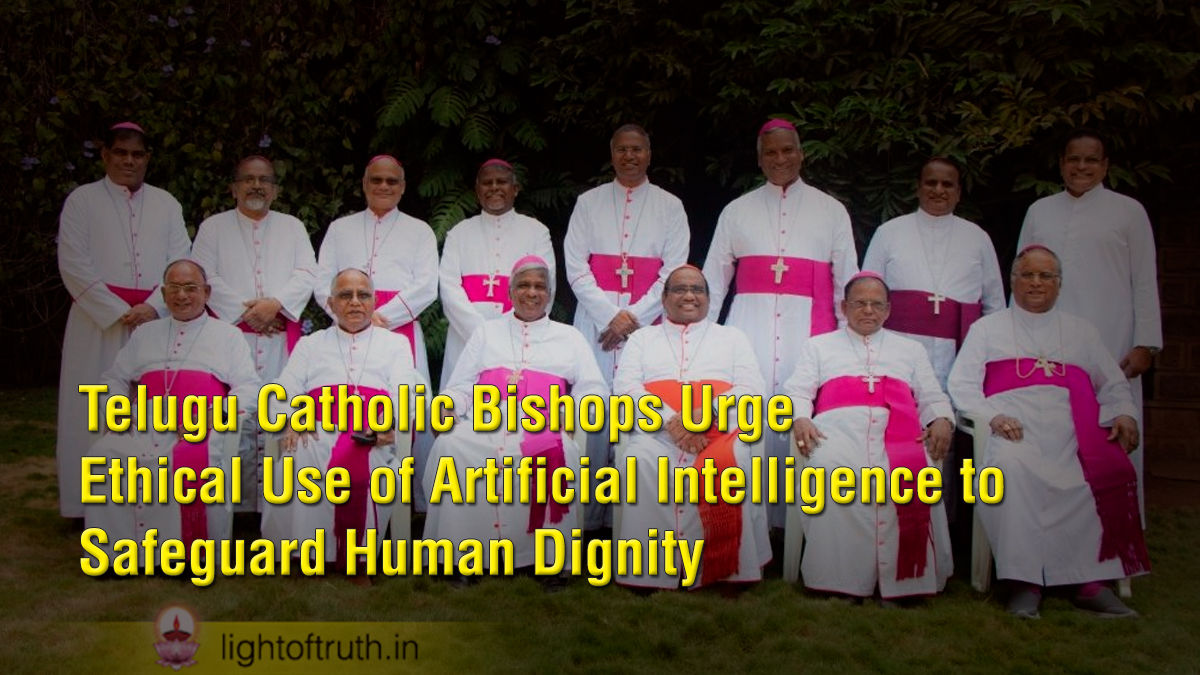
Archbishop Udumala Bala Showreddy of Visakhapatnam has called upon the Catholic Church in Andhra Pradesh and Telangana to promote responsible technology use, ethical artificial intelligence (AI) development and the protection of human dignity in an increasingly digital society. Addressing a national-level gathering of theologians, pastors and scholars in Hyderabad on November 5–6, he urged parishes, seminaries and Catholic educational institutions to take an active role in shaping a human-centred digital culture.
Archbishop Bala, who chairs the Telugu Catholic Bishops’ Council’s Commission for Theology and Doctrine, delivered the keynote address at the meeting organised around the theme, “Steering the Digital Downpour in AI Era: The Relevance of Pope Leo XIV’s Magnifica Humanitas for the Church in Telugu Region.”
Emphasising the need to translate theological principles into local pastoral practice, he said the Church’s responsibility was not merely to translate the teachings of Pope Leo XIV into regional languages but to integrate their message into the socio-cultural realities of Telugu-speaking communities.
He proposed that parishes promote what he described as “digital temperance” and critical awareness of technology consumption. Catholic schools and colleges, he said, must go beyond teaching technical skills such as coding and equip students with ethical verification, data protection awareness and respect for human dignity.
Highlighting the need for dialogue between the Church and the technology sector, he called for greater engagement with Catholic professionals working in Hyderabad’s Hitech City. He urged the Church to help technology professionals develop ethical consciences so that artificial intelligence and algorithmic systems serve social justice and the common good.
Drawing attention to the digital divide in Andhra Pradesh and Telangana, Archbishop Bala contrasted Hyderabad’s rapidly expanding technology industry with rural communities struggling with basic connectivity and agricultural challenges. He expressed concern that while young professionals from the region contribute to global AI development, vulnerable communities often remain excluded from its benefits and exposed to its social consequences.
Referring to the biblical contrast between the Tower of Babel and the rebuilding of Jerusalem, he warned against a technocratic culture that reduces human beings to data, productivity measurements and digital identities. While Babel symbolises division and exclusion, the rebuilding of Jerusalem represents community, shared responsibility and concern for vulnerable people. He called this vision a spiritual reconstruction, or “Nava Nirmanam,” in which technology becomes an instrument of communion rather than division.
He specifically highlighted the difficulties faced by small-scale farmers in Anantapur and Adilabad, underpaid data workers and tribal communities in the Eastern Ghats, who often lack access to digital services and emerging technologies. He insisted that the dignity of humanity must be measured by the treatment of the most vulnerable.
The Archbishop also identified three major responsibilities for the Church: safeguarding truth against deepfakes and digital disinformation, protecting the dignity of labour amid automation and respecting human limitations against excessive technological optimisation. He called for workplace justice and human-centred labour policies as artificial intelligence increasingly influences employment.
Concluding his address, he invoked Mary’s Magnificat as an alternative to the divisive spirit of Babel, emphasising God’s concern for the lowly and marginalised. He reminded participants that artificial intelligence must remain a tool in human hands rather than becoming a master or replacing human responsibility.
His address called upon the Telugu Church to ensure that technological progress strengthens human relationships, social solidarity and the common good while remaining firmly rooted in the dignity of every person.


Leave a Comment