
Catholic Sisters Help Children Living with HIV Build a Better Future
Faith Brings New Hope to Assam Village Once Known for Alcoholism
Cardinal Tagle: Friendship reveals the face of Jesus and the Church
Israel prepares ‘extensive’ West Bank operation after deadly shooting near Tal
Pope: Visit to Türkiye and Lebanon teaches that peace is possible
Thousands protest corruption in Philippines as Church leaders call for accountability
Pope: Nicaea invites Christians to unity in face of violence, conflict
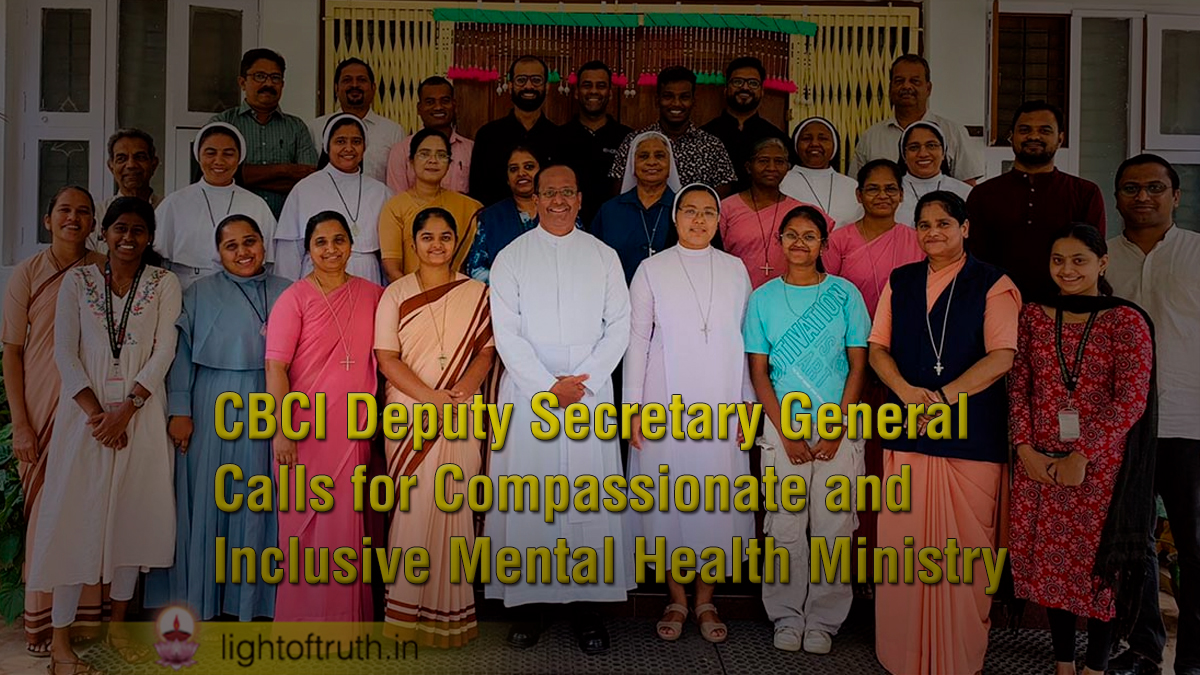
The Catholic Bishops’ Conference of India (CBCI) has called for a more compassionate, inclusive and professionally equipped approach to mental health ministry in Church communities across the country. Rev. Dr. Mathew Koyickal, Deputy Secretary General of the CBCI, made the appeal while delivering the inaugural message at the Annual National Convention on Mental Health Ministry, held as part of the National Mental Health Conference 2026 in Guwahati on November 5–6.
Extending greetings on behalf of the CBCI, Rev. Dr. Koyickal welcomed clergy, religious, mental health professionals, persons with lived experience of mental health conditions, family members and volunteers. He described mental health ministry as an essential expression of the Church’s healing mission, rooted in respect for human dignity, recognition of suffering and compassionate accompaniment.
Referring to the October 2026 prayer intention of Pope Leo XIV, he stressed the need to recognise mental and emotional suffering, which frequently remains hidden, and to make mental health care an integral part of the everyday life of Christian communities.
Highlighting the challenges faced by individuals and families, he observed that many people continue to suffer silently because they fear being misunderstood, labelled or rejected. Families caring for loved ones with mental health difficulties also experience exhaustion, uncertainty and isolation. He urged the Church to create communities where people can speak openly about their struggles and receive understanding and support.
A major focus of his address was the need to overcome the stigma associated with mental illness. He cautioned against misconceptions that associate mental health conditions with moral failure or insufficient faith. Seeking professional psychological or psychiatric assistance, he affirmed, is entirely compatible with Christian faith and can be an important step towards recovery.
He also emphasised that prayer, the sacraments and pastoral accompaniment should complement, rather than replace, appropriate psychological and psychiatric treatment. Calling for collaboration between pastoral ministers and qualified mental health professionals, he highlighted the importance of confidentiality, clearly defined responsibilities and respect for individual choices.
Acknowledging the contribution of psychiatrists, psychologists, counsellors, nurses, social workers, pastoral ministers, family caregivers and volunteers, he encouraged Church institutions to recognise and strengthen their services. He particularly stressed the importance of involving persons with lived experience in shaping mental health ministry policies and practices.
Calling for concrete action beyond the conference, Rev. Dr. Koyickal proposed strengthening mental health awareness programmes in parishes and Church institutions, training pastoral teams, establishing accessible referral systems for professional care and ensuring sustained support for individuals and families. He also urged special attention to people affected by poverty, geographical isolation and other barriers to accessing mental health services, irrespective of their religious or social backgrounds.
Concluding his message, he called upon the Church in India to move from stigma to understanding, isolation to belonging and indifference to compassionate action. He said the real success of the conference would be measured not merely by its discussions but by the lives touched through the efforts of participants in their respective communities.
The National Mental Health Conference 2026 brings together Church leaders, religious, mental health professionals and others involved in pastoral care to strengthen awareness, professional collaboration and compassionate support for people experiencing mental health challenges.




Leave a Comment