
Catholic Sisters Help Children Living with HIV Build a Better Future
Faith Brings New Hope to Assam Village Once Known for Alcoholism
Cardinal Tagle: Friendship reveals the face of Jesus and the Church
Israel prepares ‘extensive’ West Bank operation after deadly shooting near Tal
Pope: Visit to Türkiye and Lebanon teaches that peace is possible
Thousands protest corruption in Philippines as Church leaders call for accountability
Pope: Nicaea invites Christians to unity in face of violence, conflict
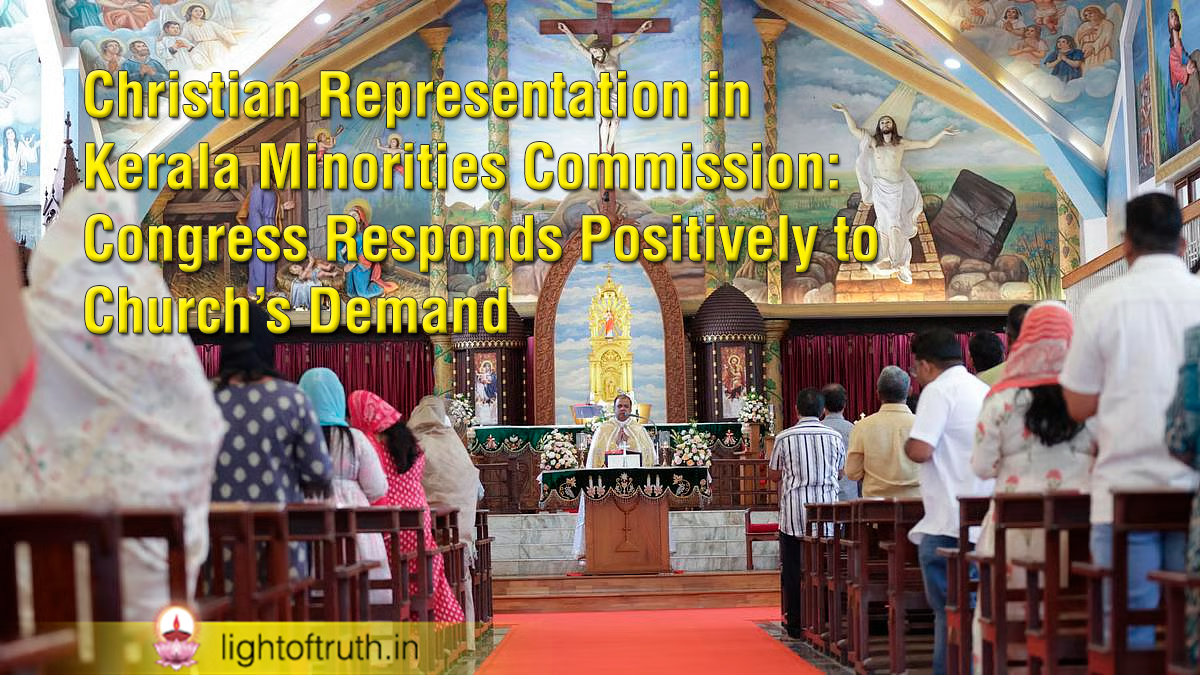
The demand for appointing a Christian as the chairperson of the Kerala State Commission for Minorities has received a positive response from Congress leadership, bringing renewed attention to the question of equitable representation among religious minority communities in the state.Representatives of the Christian community have raised concerns over the absence of a Christian chairperson in the Commission since its establishment. They argue that Christians, being one of the officially recognised religious minority communities in India, should also have an opportunity to lead an institution entrusted with safeguarding the rights and interests of minorities.
The Church has maintained that the demand is not merely about securing an administrative position but about ensuring adequate representation and participation in institutions responsible for minority welfare. It has also pointed out the need for greater Christian representation in various government boards, corporations and statutory bodies.
Congress leaders have reportedly expressed a favourable attitude towards the demand. The possibility of appointing a Christian to the chairperson’s position has consequently entered political discussions. Dominic Presentation, a senior Congress leader, is among the names reportedly being considered for the post. However, no official decision or appointment has been announced.
The question also draws attention to the composition and functioning of the Kerala State Commission for Minorities. Established under the Kerala State Commission for Minorities Act, 2014, with retrospective effect from May 15, 2013, the Commission is mandated to examine matters concerning the protection and advancement of religious minorities in the state. Its responsibilities include addressing grievances and making recommendations concerning the educational, economic and social development of minority communities.
The demand also relates to the implementation of the recommendations of the Justice J. B. Koshy Commission, which examined the social, educational and economic concerns of Christians in Kerala. The Church has called for appropriate follow-up action on these recommendations, including measures to improve institutional representation.
The discussion raises a wider question about the principles governing minority representation in democratic institutions. While appointments should be based on competence, experience and commitment to public service, equitable participation of different communities can strengthen public confidence in such institutions.
The positive response from Congress offers an opportunity for further dialogue. The actual appointment, however, will determine how far the demand is translated into administrative action. Ensuring that every minority community has a meaningful voice in institutions established for its welfare remains an important aspect of inclusive governance in Kerala.




Leave a Comment