- Dr Nishant A.Irudayadason
Prof. Pontifical Athenaeum Jnana Deepa, Pune
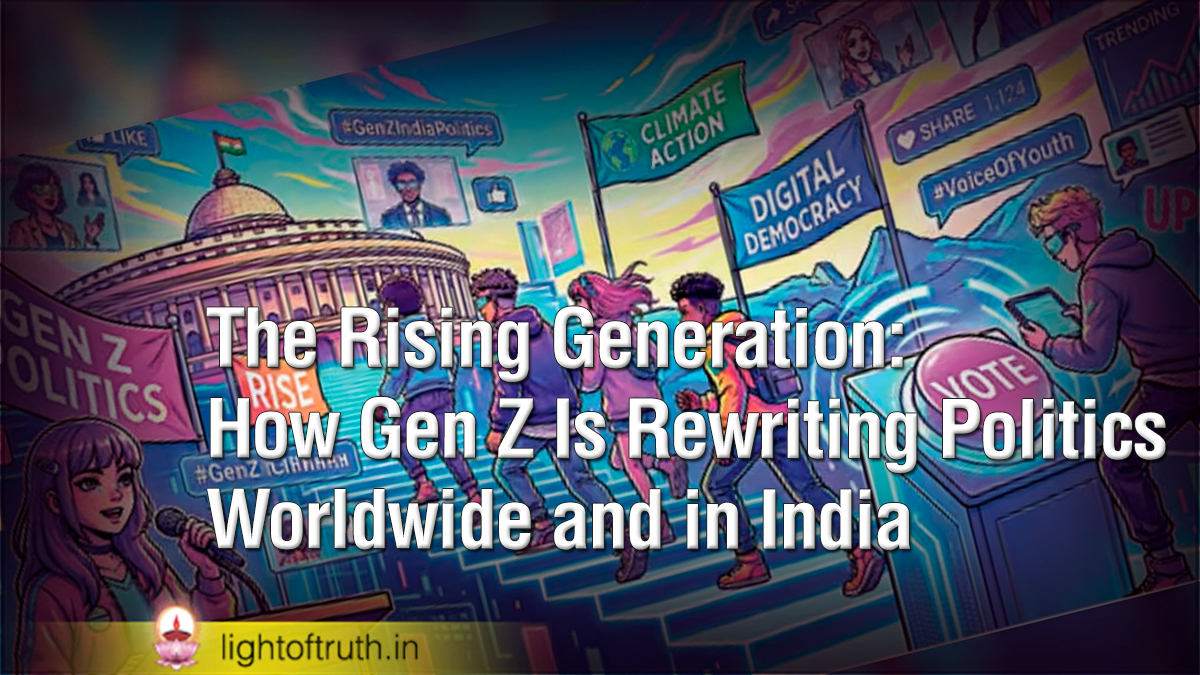
Worldwide, Generation Z, born between the late 1990s and early 2010s, is forcing its way into politics with a speed and style older leaders struggle to grasp. Raised on smartphones and social media, they organise and build pressure in ways that unsettle traditional power structures. In recent years, young people have taken to the streets in Bangladesh, Nepal, Madagascar, Peru, Indonesia, Morocco and Kenya, often under shared symbols such as the pirate flag from a popular Japanese comic. Their demands are clear: an end to corruption and favouritism for the powerful, better job prospects, and governments that listen. In Bangladesh, student protests over unfair job quotas in 2024 helped drive the long-serving prime minister from office. In Nepal, short demonstrations in 2025, sparked partly by a social media ban, toppled the government and later brought younger, youth-backed leadership. Similar energy has forced policy climb downs elsewhere, reminding rulers that a large, connected and frustrated young population cannot be ignored forever.
What makes these movements distinctive is less a single ideology than a shared impatience with systems that seem closed and self-serving. Young protesters often work, relying on group chats, short videos and memes to coordinate and keep momentum. They focus on concrete problems that touch daily life rather than abstract political theories. High living costs, scarce good jobs, and the sense that political families pass opportunities among themselves have proved powerful triggers. Outcomes vary. Some governments have been forced into major concessions. Others offering limited reforms or by using force. Yet the pattern is clear enough: where the median age is low, and opportunities feel blocked, Gen Z has shown it can move from online frustration to real political pressure in a matter of days. This is not the first time young people have challenged authority, but the tools and the speed are new.
India presents a more complicated picture. The country has one of the largest Gen Z populations on earth, numbering in the hundreds of millions. Young Indians are highly connected and well informed about politics, jobs and inequality. For a long time, however, large street movements like those seen next door in Bangladesh or Nepal remained limited. Many young people expressed caution about open protest, worried about being labelled anti-national or simply feeling that their actions would change little in a vast and complex system. Voting turnout among the youngest age groups has often lagged behind the overall average, and surveys have shown a mix of interest in issues and wariness of traditional party politics. At the same time, parties have noticed this group’s size and begun adjusting. Leaders post short videos, visit campuses, and talk more openly about employment, education and the cost of living. Digital platforms have become central battlegrounds where humour, satire, and rapid information-sharing shape opinions faster than formal campaigns.
In the past year, the Indian story has begun to shift. A satirical online effort that grew into the Cockroach Janta Party movement drew attention to youth unemployment and later to questions about electoral rolls. Protests over leaked exam papers and job opportunities have brought young people onto the streets in several cities. These actions have not toppled governments in the dramatic fashion seen elsewhere. Yet, they have forced public debate, prompted some resignations, and reminded the political class that a large share of the electorate under thirty cannot be treated only as a vote bank. Young Indians continue to prioritise practical concerns: secure work, fair examinations, climate risks that will shape their futures, and a sense that institutions treat them as partners rather than passive recipients of policy.
Together, the global and Indian experiences reveal both the power and limits of Gen Z’s political energy. This generation has shown it can unsettle entrenched systems when corruption, economic disappointment and digital tools combine, producing dramatic results in younger societies while exerting more gradual influence in larger democracies such as India through elections, digital discourse and targeted protest. Challenges remain: movements can lose focus, lasting institutional reform is hard, and governments may offer only partial concessions or tighter controls. Yet the underlying drivers such as uneven opportunity, visible privilege and a demand for transparency will not vanish. Gen Z is no uniform bloc, differing by country, class, gender and region, but its members share a refusal to accept that politics should stay fixed for their parents’ generation. Whether through dramatic uprisings or steady pressure, they insist the future must include them; leaders who dismiss this as temporary risk finding themselves on the wrong side of a generation that already knows how to organise and how long it is prepared to wait.





Leave a Comment