US Bishops launch prayer and action initiative against spread of abortion pills

The US Conference of Catholic Bishops’ Committee on Pro-Life Activities invites Catholics to pray and act to stop the spread of abortion pills.

The US Conference of Catholic Bishops’ (USCCB) Committee on Pro-Life Activities is inviting Catholics to join a focused effort of prayer and action against the spread of abortion pills, starting on August 18 and lasting until October.

“Every abortion involves the death of a child and harm to the mother. Now with easier access to abortion pills, the abortion rate is tragically climbing, along with increased health risks,” said Archbishop Paul Coakley, USCCB President, and Bishop Daniel Thomas, Chairman of the Conference’s Pro-Life committee, in a joint invitation released on August 18.  The invitation includes a prayer in English and Spanish that can be said for the intercession of St. Joseph, Defender of Life. It also encourages Catholics visit the USCCB’s ‘Respect Life Prayer and Action website’, where they can learn about the danger of abortion pills and send messages to pharmacies and pharmaceutical companies that are involved.

The initiative was launched in order to overlap with the Respect Life Month, which is observed every October by the Catholic Church in the United States. “The Food and Drug Administration has enabled a nationwide mail-order abortion industry by allowing abortion pills to be prescribed in tele-health appointments and sold both at neighbourhood pharmacies and online, circumventing state laws that protect life in the womb,” the Bishops’ invitation explains.

“This leaves women vulnerable to suffering an abortion alone at home, without any medical supervision. It also sets up additional opportunities for exploitation by violent partners or human traffickers.”

In May, the US Supreme Court extended an order that temporarily continues to allow for abortion pills to be prescribed through telemedicine and sent by mail, as a legal dispute over this issue takes place in a lower court.
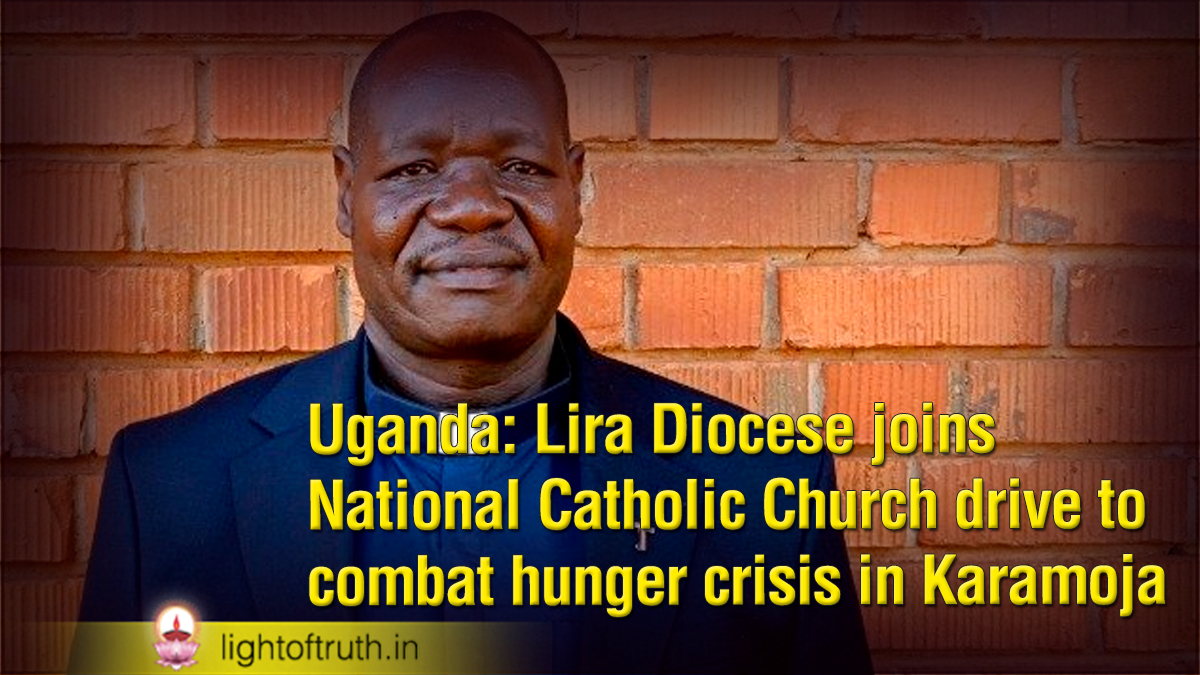
Uganda: Lira Diocese joins national Catholic Church drive to combat hunger crisis in Karamoja

The Catholic Church in Uganda has intensified its response to the worsening food crisis in Karamoja, a sub-region located in the northeastern corner of Uganda, bordering Kenya and South Sudan. Lira Diocese is mobilising food assistance for the most vulnerable families.

The crisis began to escalate between April and July this year after a prolonged drought destroyed crops, leaving many households without food and severely affecting their livelihoods

In response to the humanitarian situation, the Bishop of Kotido Diocese, Bishop Dominic Eibu, MCCJ, appealed to his brother bishops across the country to support the people of Karamoja through donations of food and other essential supplies.

Following this diocesan appeal, the Chairman of the Uganda Episcopal Conference (UEC), Bishop Joseph Anthony Zziwaof Kiyinda-Mityana Diocese, called on all bishops in their respective dioceses to organise relief efforts for the people of Kotido and Moroto dioceses, where thousands of families continue to face acute food shortages.

Responding to this call, Lira Diocese, together with other dioceses across Uganda, has launched a diocesan-wide campaign encouraging Christians to donate food items as an expression of Christian charity and solidarity with their brothers and sisters in Karamoja. The initiative aims to provide immediate relief to families affected by the prolonged drought while demonstrating the Church’s commitment to caring for those most in need.

Lira Diocese’s response

In Lira Diocese, the campaign is being coordinated by Caritas Lira Diocese, the Church’s official charitable and humanitarian arm. Christians in parishes across the diocese are donating food items such as maize flour (Posho), beans, and other non-perishable foods, which will be transported to the affected communities in Karamoja.

Every family in Lira Diocese is being encouraged to contribute whatever they can afford, however small, to help alleviate the suffering. Reports indicate that children, pregnant and breastfeeding mothers, and the elderly are among the most affected by the food crisis, with many showing signs of severe malnutrition.

Speaking during the launch on the diocesan Catholic radio station – Radio Wa, the Vicar General of Lira Diocese, Monsignor Valente Innocent Opio, appealed to the lay faithful to respond generously to the humanitarian call.

“Let every family share whatever it can afford. Feeding the hungry is not only an act of charity but also a command from our Lord Jesus Christ,” Monsignor Opio said, referring to the Gospel of Matthew 25:35, where Christ identifies Himself with those who hunger.

The campaign has already recorded encouraging progress, with thousands of Kilograms of maize and other food items collected from generous Christians across the diocese.

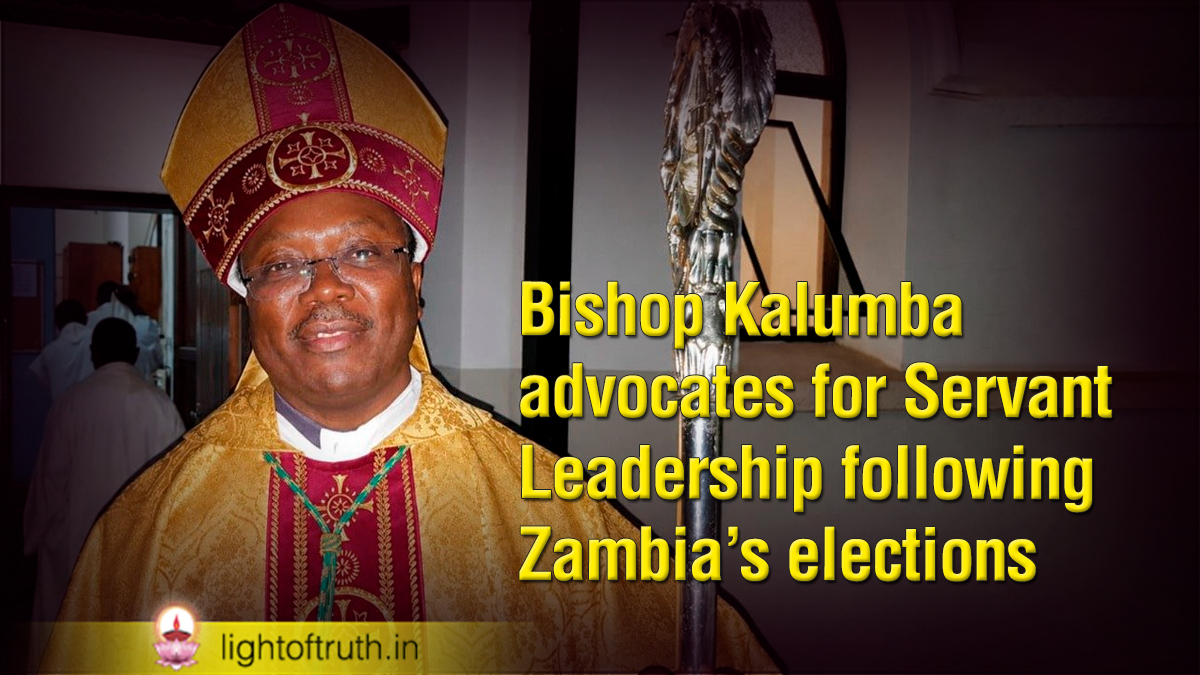
Bishop Kalumba advocates for Servant Leadership following Zambia’s elections

Bishop Valentine Kalumba, OMI, of the Catholic Diocese of Livingstone in Zambia, has urged Zambians to embrace peaceful co-existence among Zambia’s over 73 tribes and languages. The Bishop was speaking to Vatican News in the aftermath of Zambia’s presidential and parliamentary elections.

Reflecting on the just-ended national elections in Zambia, the Bishop of Livingstone said that with the elections over, it was time for a reset, an opportunity for reflection and healing. The Bishop also appealed especially to social media users not to fan the flames of ethnic division.

In his remarks, Bishop Kalumba said it was sad that elections, not only in Zambia but worldwide, have become moments of great tension, stress, and anxiety. Ordinarily, voting in an election should be a celebration of citizens exercising their fundamental rights and making their democratic voices and choices heard, Part of the solution, the Bishop suggested, lies in returning to the Gospel meaning of leadership.  Leadership at all levels of society, he said, should always be about service. The current high stakes of contesting political leadership to amass wealth or resources for one’s family, friends, and tribe run counter to the spirit of Servant Leadership. Notwithstanding all that has happened in recent days, Bishop Kalumba said that, generally, especially in Livingstone Diocese, the voting and the announcement of election results seem to have gone fairly well. According to the Livingstone prelate, there may have been some isolated criminal elements in the City of Livingstone, when some persons sought to take advantage of the election climate to loot and commit acts of vandalism. Still, the authorities were able to deal with these incidents.

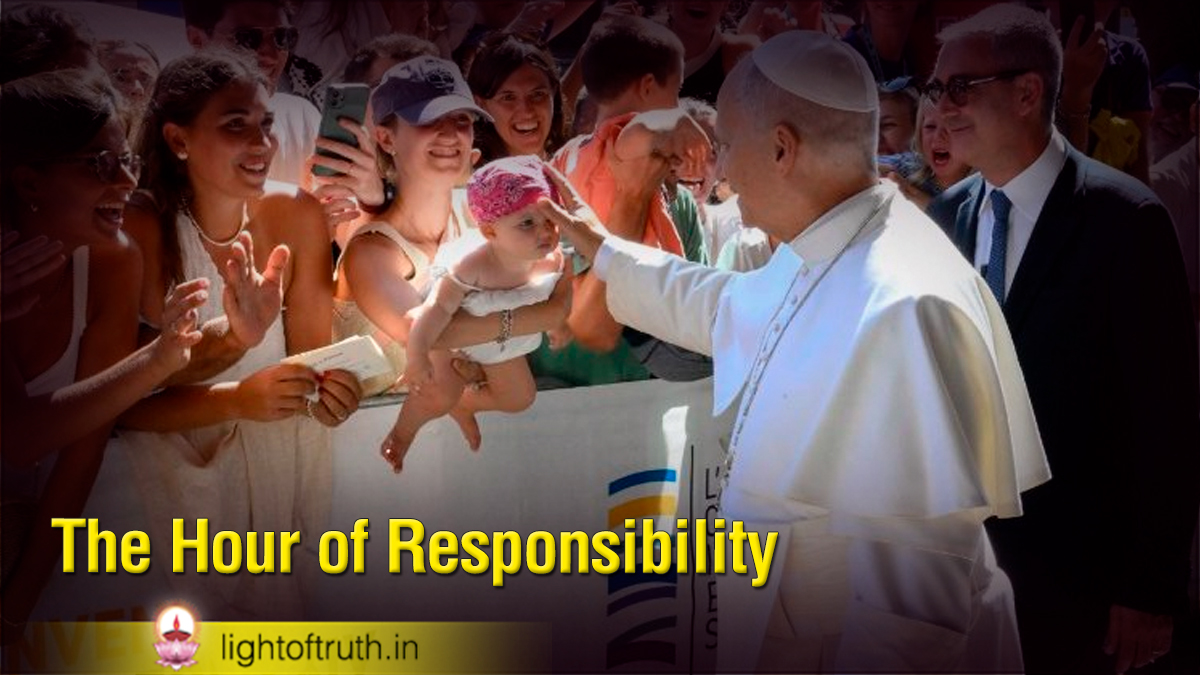
The Hour of Responsibility

The words of Pope Leo XIV at the Meeting in Rimini and his call for the authentic realism of mercy against the false realism that would have us rearm

 “Against the false realism that rearms minds, words, and nations, Catholic culture today must set the realism of mercy, in which there can be no enemies, and all people, even adversaries, are brothers and sisters to be looked in the eye and encountered in truth.”

These are the words Pope Leo XIV addressed to the participants at the Meeting in Rimini, and in particular to the thousands of young people who bring the great end-of-summer gathering to life, a gathering that grew out of the experience of Communion and Liberation. They were not words spoken merely for the occasion, but a precise invitation. First and foremost, an invitation to look at the reality in which we are living.

Already 44 years ago, Saint John Paul II, speaking at the Meeting, had emphasized the beauty of words such as “encounter” and “friendship among peoples” during what he himself called “dramatic moments in the history of the world.”

Today, the international situation is even more uncertain and precarious than it was then: a growing number of conflicts, ongoing massacres of civilians and children—one need only think of Gaza and Ukraine—and the many nations investing ever greater sums in rearming themselves. Faced with all this, the Pope recalls the vocation of the Meeting, which is not to be “a sort of enclave,” but a “crossroads” of encounters and dialogue. 

To follow Christ today, after the tragedies of the twentieth century, means fully recognizing that evil cannot be fought with evil. The only answer, the Christian answer, is love -“the method of redemption,” embodied by the crucified Messiah. And so, to those who today, in the name of a presumed realism-which the Pope did not hesitate to call “false”-would rearm minds, words and nations, Catholic culture responds with an authentic realism: the realism of mercy, “in which there can be no enemies, and all people, even adversaries, are brothers and sisters to be looked in the eye and encountered in truth.”

There is therefore a need for courageous pioneers who will commit themselves concretely to freeing human coexistence from suspicion, work from the idolatry of profit, and technology and finance from the business of death.

Pope Leo calls for the exposure of “unjust power relations” that lie “at the root of poverty and inequality, war and environmental disasters.” This is a strong and consequential appeal from the Successor of Peter, who from the very first day of his pontificate has spoken of “unarmed and disarming” peace, and it should be kept in mind as a criterion for judging the social and even political engagement of all Catholic laypeople.