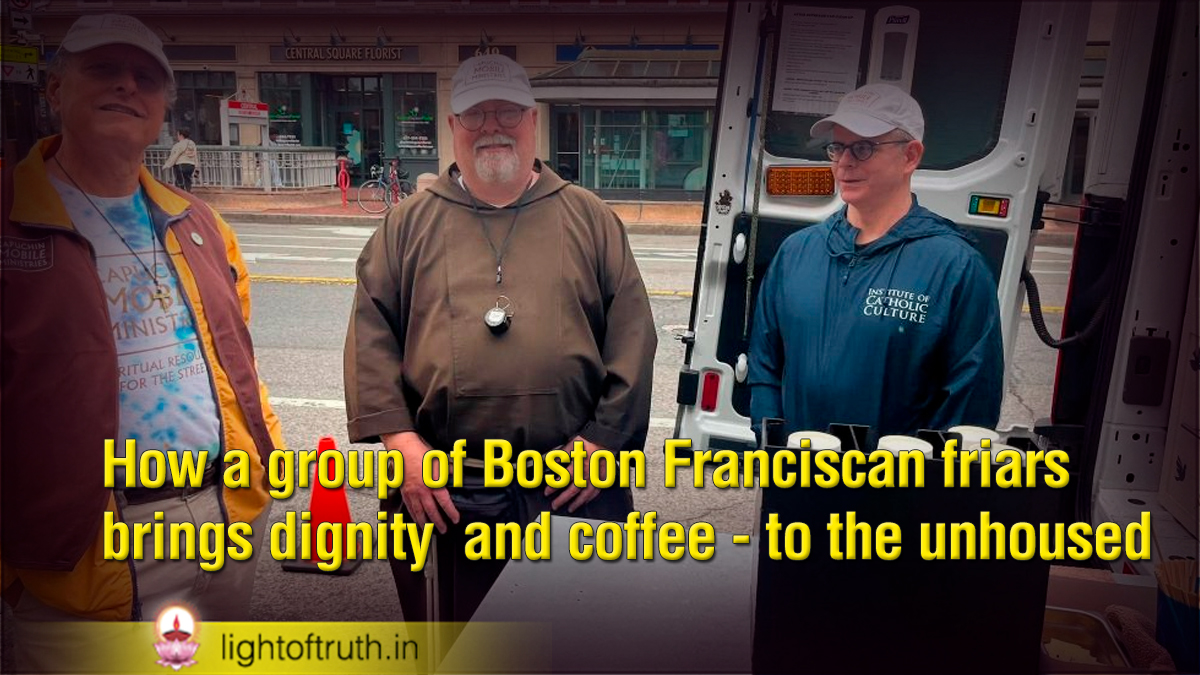
How a group of Boston Franciscan friars brings dignity  and coffee – to the unhoused

Capuchin Mobile Ministries not only offers spiritual care and food to unhoused people in the Boston area, but it also aims to provide something that can be particularly hard to find for those experiencing homelessness: relationships. 

Three times a week, a van with a mix of a Capuchin Franciscan friar or two, lay chaplains and volunteers, travels to seven sites. For about 20 minutes at each site, volunteers give out coffee and sandwiches while the friars and lay chaplains talk to the people who come up to the van. “It’s like a mobile coffee hour,” said Br. Paul Fesefeldt, founder and director of the ministry.  The idea dates to 2019, when the Capuchin provincial asked Fesefeldt to start a food truck ministry. Fesefeldt, who previously served in other homeless ministries in Boston, spent six months talking to people. “The need was not a food truck,” he said. “There’s a lot of food in a big city. There are very few programs providing spiritual care to people on the street.” On a food truck, the person giving out the food stands high above the people receiving it. With Capuchin Mobile

Vatican unveils agenda for global family summit marking ‘Amoris Laetitia’ anniversary

The Vatican has released the framework for a fall meeting with the heads of Eastern Catholic Churches and presidents of bishops’ conferences, marking the 10th anniversary of Amoris Laetitia and focusing on the Church’s pastoral approach to families.

The Oct. 7-14 gathering is intended “to proceed, in mutual listening, to a synodal discernment on the steps to be taken in order to proclaim the Gospel to families today,” not only in light of Amoris Laetitia but also “taking into account what is currently being done in the local Churches.”

The Vatican described the initiative as part of an ongoing process of “pastoral conversion,” emphasizing renewed evangelization rooted in lived experience.

Participants are expected to reflect on how families themselves contribute to the Church’s mission, not only as recipients of pastoral care but as active agents of evangelization. The meeting will include listening sessions, the sharing of concrete pastoral experiences, and dialogue with experts. Its goal is to discern “the direction in which the Holy Spirit is leading us today,” while recognizing and supporting what is already being lived out in families and local Church communities. The themes are divided into five daily sessions by the organizers of the family summit. The first topic discussed will be “Families today: reality, beauty and challenges” – aimed at “discerning the signs of the times through the experience of families and the Church’s pastoral commitment today.” The second day will be focused on the young people “and the discovery of the vocation to marriage” and is aimed at “listening to young people and accompanying them in discovering the value of marriage.” Listening to and accompanying couples “in the early years of married life and at every stage of life” is a third-day topic of the discussion – titled “Married life. The first years of marriage: a decisive time.” “Walking with families in complex situations” is the fourth stage of discussion, titled “In the difficulties of life: accompanying and supporting.” The last day of the discussions will be focused on “Christian families as subjects of the Church’s mission” and will discuss the theme of “Embracing conjugal and family love as an impetus for mission.”

France’s traditionalist Catholics rally behind Pope Leo XIV after SSPX schism

French Catholics attached to the traditional Latin Mass but loyal to Rome are expressing deep sadness after the Society of St. Pius X consecrated four bishops without papal approval, prompting the Vatican to declare the group in schism and excommunicate six SSPX bishops.

The events occurred just as French traditionalist Catholics were actively mobilizing to welcome Pope Leo XIV to France Sept. 25 to 28. Philippe Darantière has served since 2025 as president of the association Notre-Dame de Chrétienté, which organizes the annual Pentecost Pilgrimage to Chartres for pilgrims attached to the traditional liturgy. Darantière highlighted the unprecedented mobilization of the association in helping to organize the pope’s upcoming visit to France.

“We were asked to contribute to the preparations for his visit to Paris specifically, on September 25 and 26,” he told . “The Archdiocese of Paris estimates that it needs 10,000 volunteers.”

“They turned to us because Notre-Dame de Chrétienté is known for its ability to organize large-scale gatherings that require significant logistical support,” he said about his organization, which every year draws close to 20,000 people to walk from Paris to Chartres with traditional Latin Masses concelebrated en route.
The first major papal event in France is to be a meeting and prayer vigil with Leo and young people, scheduled to take place on the evening of Friday, Sept. 25, at the Stade de France in Saint-Denis in the northern suburbs of Paris. The second event is the main Mass that is to be celebrated the afternoon of Saturday, Sept. 26, at the Place de la Concorde – the largest square in Paris -with Massgoers expected all along the Avenue des Champs-Élysées, which leads to the Arc de Triomphe. Leo will celebrate Mass in the presence of all the bishops of France and a crowd that could number nearly 500,000 people.

As Pope Leo faces SSPX schism, a Minnesota church merges old customs with fidelity

Fr. John Ubel, pastor of the Church of St. Agnes, wears the traditional biretta hat and vestments as he sits between altar servers during one of the Catholic parish’s Latin Masses in St. Paul, Minn., June 28, 2026.

With incense wafting to an elevated pulpit and 13 altar boys looking on, the priest at the Church of St. Agnes preached about merging old Catholic customs with fidelity to the Vatican this week — as Pope Leo XIV tackled a major challenge from a traditionalist breakaway group.

“Our Catholic faith is a living tradition, and there is a difference between being rooted and being stuck,” Fr. John Ubel said in homilies June 28 at English-language and Latin Masses.

Since the Second Vatican Council modernized the liturgy more than 60 years ago, celebrating Mass in the traditional Latin Rite that preceded those reforms has become a lightning rod of the theological, cultural and increasingly partisan divides among Catholics.

While the Latin Rite was not the cause of the rift, the acrimony and the lingering suspicion that all those who like it are ultraconservative rebels is an open wound at St. Agnes, which isn’t affiliated with SSPX and has the church’s permission to celebrate Mass in Latin.

“For all who are attached to Tradition, I pray that they seek to maintain full ecclesial communion with our Holy Father, Pope Leo XIV,” Ubel said July 2. 

St. Agnes, a historic church founded for German-speaking immigrants in what’s now a diverse, central neighbourhood in Minnesota’s capital, offers one traditional Latin Mass per weekend, with the archbishop’s permission. It also has a modern version of the Mass in Latin and four in English.

Worshippers at the Church of St. Agnes receive Communion on the tongue and while kneeling at the altar rails, in the traditional custom, during one of the Catholic parish’s Latin Masses in St. Paul, Minn., June 28, 2026.

“I believe that St. Agnes is an example where the different forms of Latin Mass, and English, peacefully coexist, and, in many ways, I think it’s a model for how the church can respect various liturgical traditions and do so in full charity,” Ubel said in last Sunday’s homilies.

The archbishop of St. Paul and Minneapolis, Bernard Hebda, expressed hope that local Catholics who had been attending SSPX chapels would now turn to approved services.

“We are blessed that the same traditional Eucharistic liturgy beloved by those who have worshiped with the SSPX in the past continues to be celebrated in six locations throughout the Archdiocese,” Hebda said in a statement. “I am confident that those who prefer the Traditional Latin Mass could find a home here.”

In addition to being celebrated in Latin, the old rite Mass diverges from standard services in other ways: The prayers are different and longer, the priest celebrates at the altar with his back to the congregation, and Communion is given out only on the recipient’s tongue, instead of in the hand, while the person kneels at the altar rail. The priests also wear shorter “Roman-style” vestments and a black biretta hat. Very few U.S. Catholics regularly attend Sunday Mass in the “extraordinary form” that predates the Vatican II reforms of the 1960s, according to Stephen Cranney, a lecturer at Catholic University of America in Washington, and co-author of an upcoming book on the Latin Mass in the United States.

Pope Leo XIV calls for prayers for peace in Ukraine

In a letter to Archbishop Paul Richard Gallagher, his Special Envoy to the celebrations marking the 35th anniversary of the restoration of the Latin Rite Church’s structures in Ukraine, Pope Leo XIV recalls the Church’s twentieth-century persecution and urges prayers for peace, for families, and for all those suffering because of the war. Pope Leo XIV has called for prayers for all the faithful, living and deceased, who suffer or have suffered because of the “brutality” of the war in Ukraine. He also urges the faithful to implore God for peace in the world and in families.The celebrations will take place on 19 July 2026 at the National Shrine of Our Lady of Mount Carmel in Berdychiv.

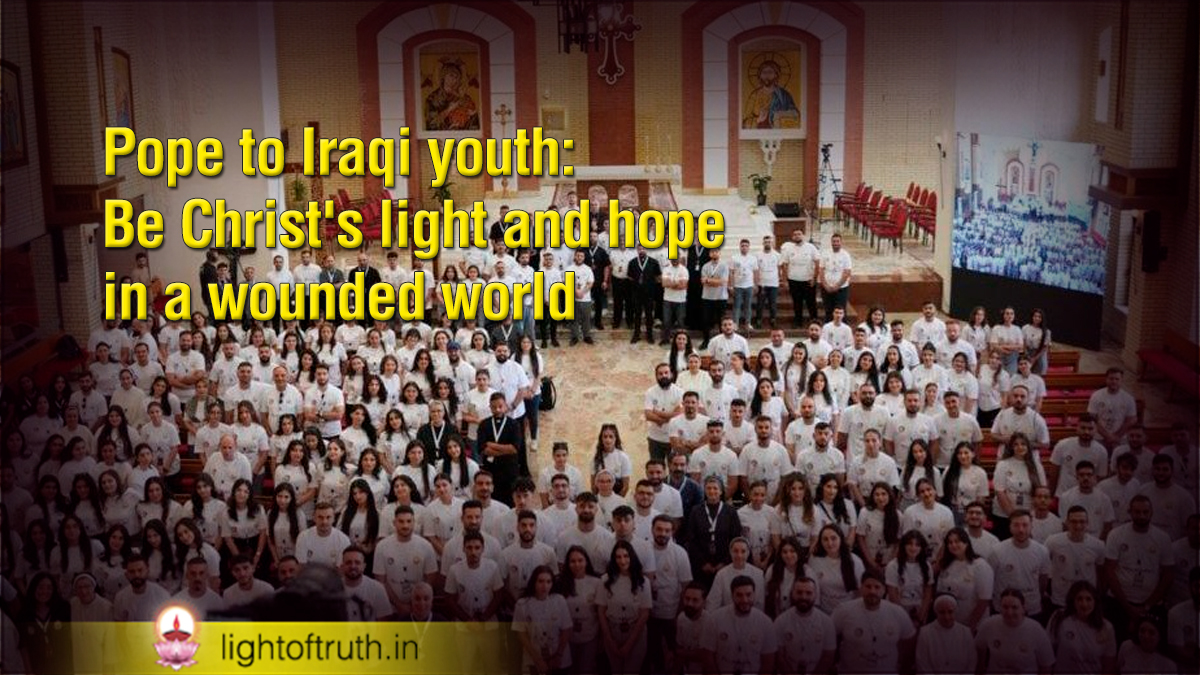
Pope to Iraqi youth: Be Christ’s light and hope in a wounded world

Pope Leo XIV encourages young Iraqi Christians gathered in Ankawa to become missionaries of faith, love and hope, urging them to be Christ’s light and peacemakers in a land marked by conflict and instability.

As young people from across Iraq gather in Ankawa, in the Archeparchy of Erbil, for their annual Youth Meeting from 8 to 11 July, Pope Leo XIV is encouraging them to embrace their vocation as missionaries of hope, urging them to become “Christ’s light” in a country that continues to experience the consequences of war and instability.

In a video message to the gathering, dedicated this year to the theme Mission, the Pope reminds participants that they have an indispensable role in the life of the Church today.

“The Church has a vital mission to serve the world by sharing the light of Christ,” he says, encouraging the young people to help “shape the Church — and the world — in the years to come.”

Recalling a conviction he has expressed previously, Pope Leo emphasises that “young people are not only the future of the Church, but also the present.” And recognising the difficult reality many Iraqi Christians continue to face, the Pope acknowledges that witnessing to the Gospel is often demanding. “It is not always easy to be a light in the world,” he says. “You are called to radiate this light in a situation that has often been marked by war and instability. “Do not be afraid, Even so, he urges them not to lose heart. “Do not be afraid! And do not think that you are alone in this task. I am with you; the Church is with you. Place your trust in Jesus.”

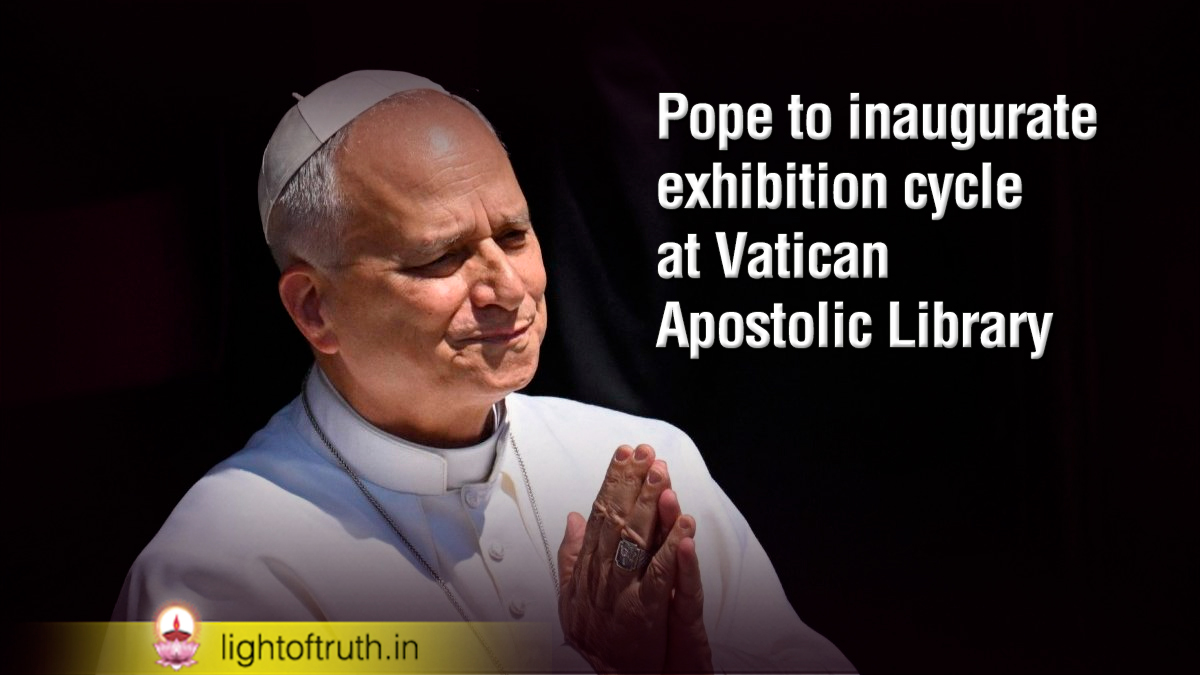
Pope to inaugurate exhibition cycle at Vatican Apostolic Library

Pope Leo XIV will visit the Vatican Apostolic Library on Monday, September 14, and will inaugurate the first chapter of the exhibition cycle “Catastrophe and Wonder,” entitled “AQVA.” The Vatican Apostolic Library announced on Sunday that the Pope will visit the Library on Monday, September 14, at 11 AM to inaugurate the exhibition cycle “AQVA. Catastrophe and Wonder.” The exhibition will be open to visitors on selected days of the week from September 25 through May 14, 2027.

‘A home where past and future can meet as friends’. The display brings together the works of three contemporary figures – French artist JR, American typographer Bill Moran, and the Italian chef Fulvio Pierangelini – in dialogue with the collections and spaces of the Pope’s Library, offering a reflection on water as both a threat and a resource. Each of the three artistic collaborators reinterprets the Library’s historical collections through their own artistic practices.

The Librarian and Archivist of the Holy Roman Church, Monsignor Giovanni Cesare Pagazzi, expressed his delight to welcome the Holy Father, noting the exhibition “are intended to foster dialogue between contemporary art and the Library’s centuries-old heritage.

“On several occasions,” Monsignor Pagazzi recalled, “the Pope has emphasized fidelity to the past and fidelity to the future. The present – including the present of this exhibition – can become a home where past and future meet as friends.”  The Vatican Apostolic Library, an ancient institution dedicated to preservation and research, belongs to the Pope and is closely connected to the governance and ministry of the Holy See.

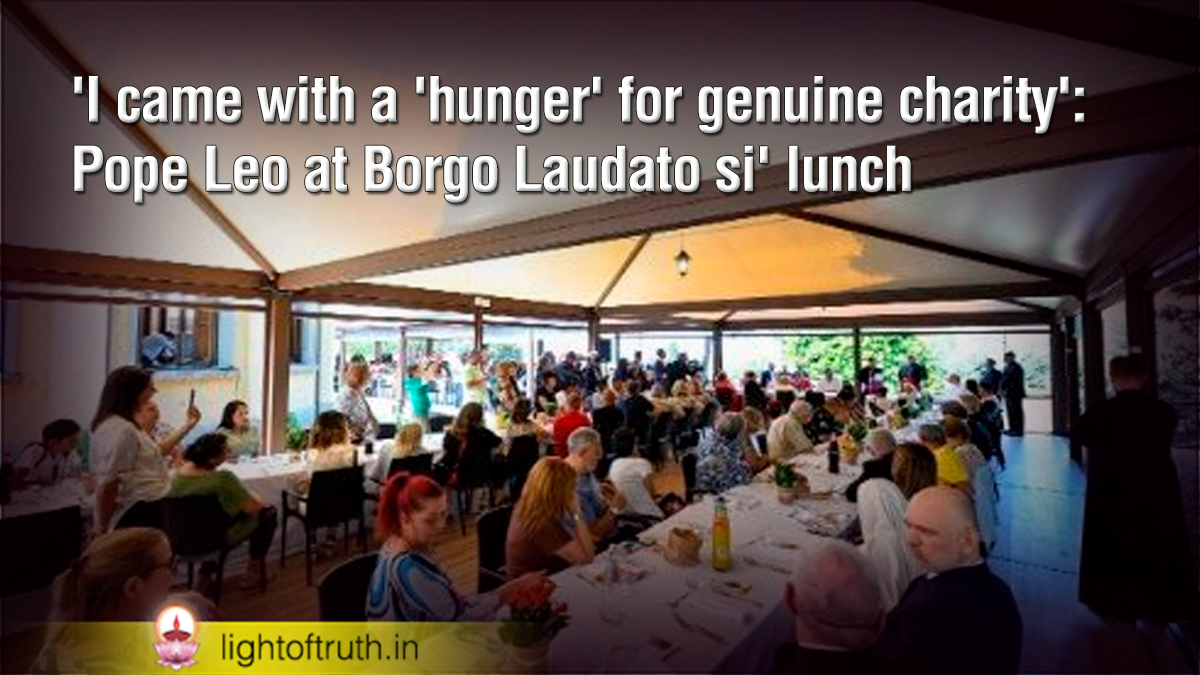
‘I came with a ‘hunger’ for genuine charity’:  Pope Leo at Borgo Laudato si’ lunch

During a special “Lunch with the Pope” in Borgo Laudato si’ in the Pontifical Gardens of Castel Gandolfo with some 200 poor and socially vulnerable people, Pope Leo XIV says he came with “hunger for justice” and “hunger for genuine charity,” as he invited everyone to build a Church of justice, peace, and love.

“I came without a prepared speech, but I did come with hunger—hunger for justice, hunger for genuine charity, hunger for a Church that truly knows how to open its doors, to welcome and receive everyone; where there is love for all and no one is an enemy, where all of us know how to live reconciliation, forgiveness, and peace.”

With these words, Pope Leo XIV greeted those gathered for the special “Lunch with the Pope” at Borgo Laudato si’ in the Pontifical Gardens of Castel Gandolfo.

The event brought together 200 people, including nearly 40 children, living in vulnerable circumstances and accompanied by the Diocese of Rome and affiliated charitable organizations. The guests are spending the day immersed in the beauty and spirituality of the Borgo Laudato si’ initiative.

The day’s programme began with Mass celebrated by Cardinal Fabio Baggio, Director General of the Laudato Si’ Centre for Higher Education, and concelebrated by Archbishop Luis Marín de San Martín, the Pope’s Almoner and Prefect of the Dicastery for the Service of Charity. The guests also enjoyed a guided visit through the Borgo.

Welcoming those present, the Holy Father thanked them for coming and reaffirmed the Church’s desire to express God’s love to every person.

The Pope also thanked those who responsible for the beautiful lunch and gathering.”Whenever we come together, whenever we share this spirit of encounter around the same table—the one table where Jesus is also present among us—,” Pope Leo said, “we are truly building a different world, a world of hope, a world that is a light in the midst of our own. “Observing that “too often, our world is fractured by violence, hatred, and discrimination,” Pope Leo encouraged everyone to build communities and live out solidarity and mutual care. “Let us work together and strive always to be this kind of Church: a Church of justice, peace, and love,” he urged. Before inviting everyone to enjoy the meal, the Holy Father offered a prayer of blessing for those gathered, for their families, and for all who suffer.

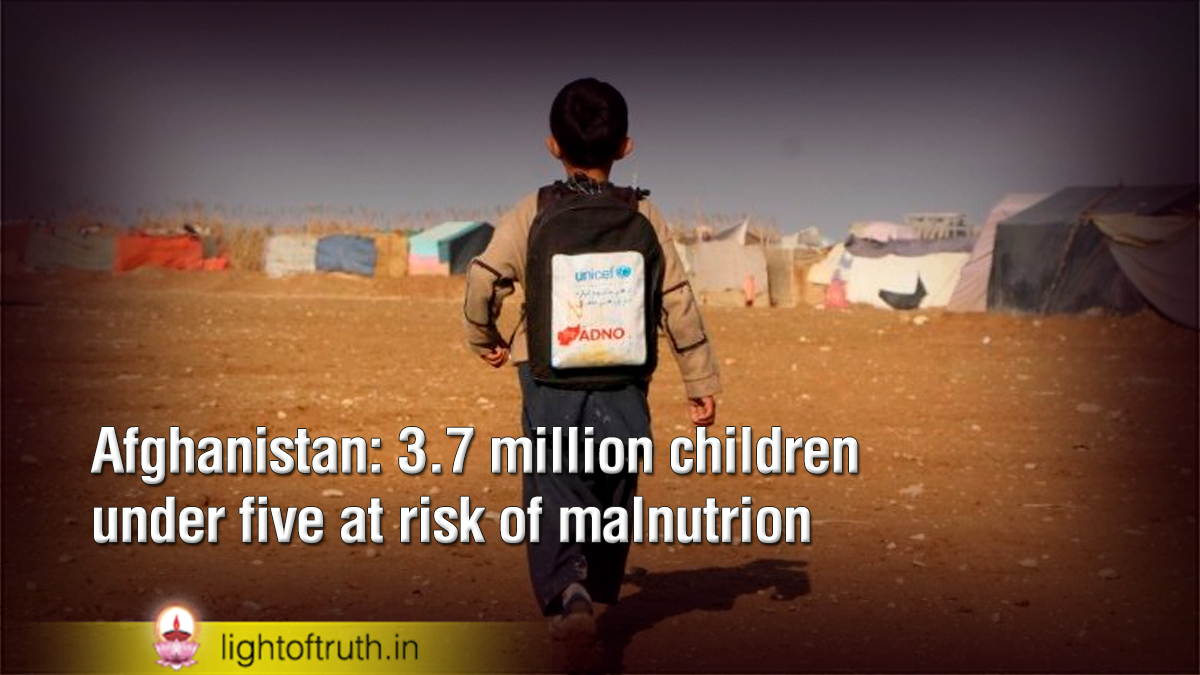
Afghanistan: 3.7 million children under five at risk of malnutrion

A new UNICEF report warns that 3.7 million Afghan children under the age of five are at risk of malnutrition, urging urgent investment in preventive nutrition measures before the country’s annual peak hunger season.

A new UNICEF report warns that 3.7 million children under the age of five in Afghanistan are at heightened risk of malnutrition, as worsening food insecurity and poor nutrition continue to threaten the lives of the country’s youngest and most vulnerable.  The report, highlights an alarming deterioration in children’s nutrition across the country, calling for urgent investment in preventive measures before the annual peak malnutrition season intensifies.

Afghanistan continues to face one of the world’s most severe humanitarian crises following decades of conflict, economic collapse, and recurring climate shocks. Since the Taliban returned to power in August 2021, the country has experienced a sharp decline in international funding, widespread poverty, and increasing pressure on already fragile health and social services. Women and girls also continue to face sweeping restrictions on education, employment, and public life, compounding the challenges faced by families across the country.

For the first time, UNICEF has assessed child malnutrition alongside household food and nutrition insecurity among the same group of children in every province of Afghanistan. The analysis identifies early warning signs – including reduced dietary diversity, skipped meals, and children eating less than they need, and going hungry – that often precede acute malnutrition.

The report comes as Afghanistan enters the period when acute malnutrition traditionally reaches its highest levels between July and September. However, recent data from the country’s Nutrition Cluster indicate the crisis is worsening earlier than expected, with acute malnutrition increasing in 26 of Afghanistan’s 34 provinces compared to 2025.

Children under the age of two are bearing the heaviest burden. They account for 83 per cent of severe acute malnutrition cases and 77 per cent of moderate acute malnutrition cases nationwide.

“Young children in Afghanistan are slipping into malnutrition even before the peak season has begun.” These new findings give us an opportunity to act before children reach severe malnutrition. When families begin skipping meals or cutting back on nutritious foods, it is not simply a sign of hardship – it is an early warning that a child may soon develop acute malnutrition.”

While treatment remains essential to saving lives, greater investment is needed in prevention, beginning with improving the diets of young children and pregnant women. According to UNICEF, deteriorating child nutrition is being fuelled not only by food insecurity, but also by disease outbreaks, low vaccination coverage, inadequate water, sanitation and hygiene services, and growing shortages of funding and essential supplies.