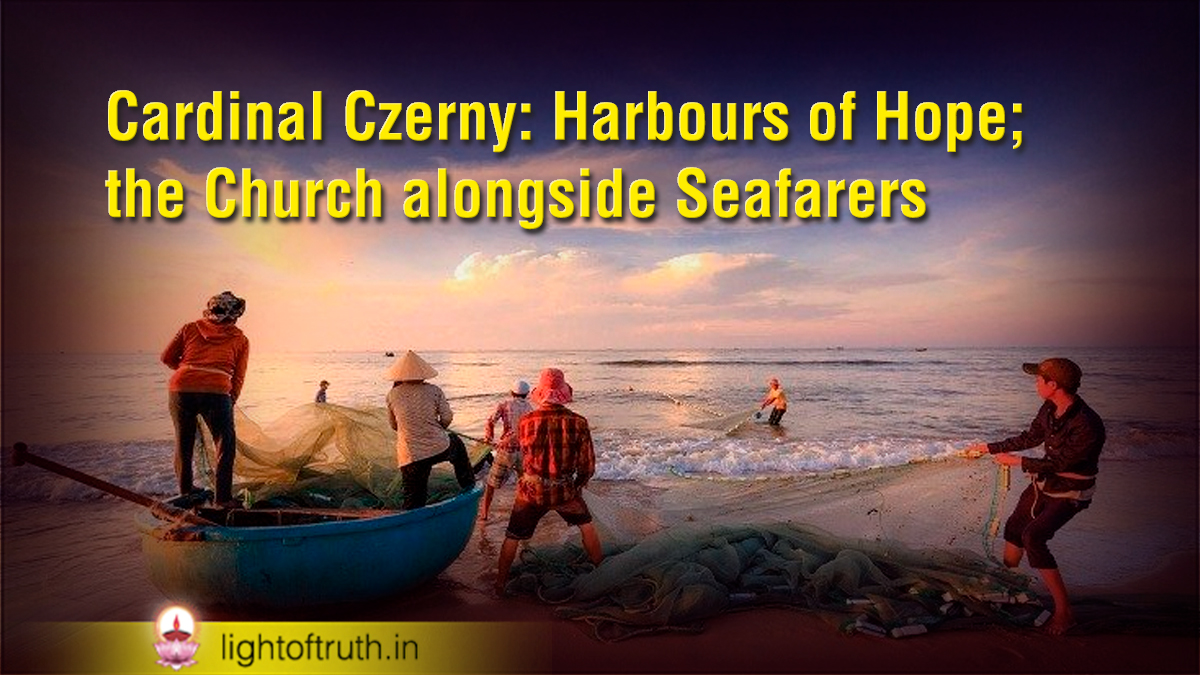
Cardinal Czerny: Harbours of Hope; the Church alongside Seafarers

Each year on the second Sunday of July, Christian Churches around the world mark Sea Sunday-a day dedicated to praying for maritime workers and their families. In 2026, the day falls on July 12 and the theme is “Harbours of Hope: The Church alongside Seafarers”. Cardinal Michael Czerny, Prefect of the Dicastery for Promoting Integral Human Development, wrote a message for Sea Sunday with the title, “Beyond Cargo and Commerce: The Human Face of the Sea”.

In his message for Sea Sunday 2026, Cardinal Michael Czerny highlights the complex challenges maritime workers face today as the sea today is “increasingly marked by tension, insecurity, war, and fear.”

In his message, the Prefect highlighted how the world continues to rely on seas, lakes, rivers, and waterways. However, he made sure to place the emphasis on the faces behind the maritime businesses: the more than 1.8 million people whose work is tied to waterways. So many livelihoods, communities, and families rely on these men and women. “The crisis of the Strait of Hormuz has reminded the world of how deeply humanity depends on the sea and those who work upon it,” Cardinal Czerny explained.

Cardinal Czerny pointed out that maritime workers still face uncertainty as the sea, “which has long connected peoples and nations, is increasingly marked by tension, insecurity, war, and fear.” Not only do crews have to confront the dangers of the water, but now they also face the consequences of conflict—food shortages, their confinement, and fear for their own lives.

Cardinal Czerny highlighted how the sea can teach humanity that “we belong to one another. Oceans do not divide people; they connect them.” The Catholic Church is working to remind every maritime worker that they are never alone or forgotten.

Cardinal Prefect stressed, “When the oceans suffer, humanity suffers with them.” It is the responsibility of all to protect marine life, promote ethical and sustainable practices, defend dignity and safety of maritime workers, and develop spirit of global responsibility to care for our seas
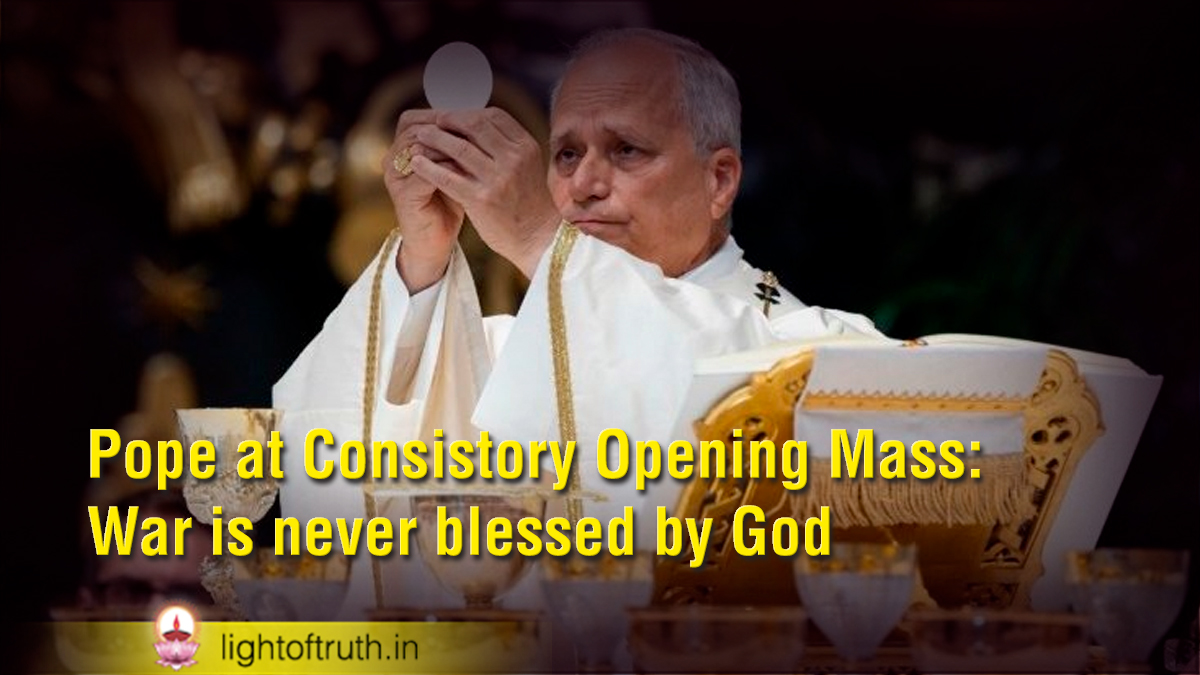
Pope at Consistory Opening Mass: War is never blessed by God

The Extraordinary Consistory convened by Pope Leo XIV began on Friday, June 26, with the celebration of the Eucharist in St. Peter’s Basilcia. In his homily, the Pope reminded the Cardinals that the life-giving source of the Consistory is Christ Himself, as proclaimed in the Gospel: “I am the true vine” (Jn 15:1).

He explained that “the Gospel itself prepares the ground for it to bear fruit: ‘Remain in me, and I in you’ (Jn 15:4).” He then reflected on three guiding principles for discernment during these days: sharing in the true freedom of faith, asking for the gift of peace in unity, and embracing harmony through obedience.

He explained that “it is precisely our relationship with the Lord Jesus that frees us from sin and fear. The living Church is the Church that believes through the gift of the Holy Spirit poured into our hearts. And this Church bears much fruit”.  Pope Leo invited the Cardinals to ask for “the gift of peace in unity.”

Reflecting on the many conflicts affecting humanity, he stressed that “war is never worthy of humanity, and it is never blessed by God, because, even if we are equipped with high-tech weapons, the Creator has endowed us with intelligence and free will to resolve conflicts as human beings and not as beasts.”

“Peace is a duty of justice because we are one human family, that finds its head and redeemer in Christ.”

Pope Leo invited the Cardinals also to embrace “harmony through obedience,” describing it as “a listening that recognizes the gift of the Word made flesh for us.” Through this attentive listening, he said, “the Holy Spirit guides us, pointing out pastoral challenges and opportunities, purifying our intentions, and correcting whatever strays from our shared path.”

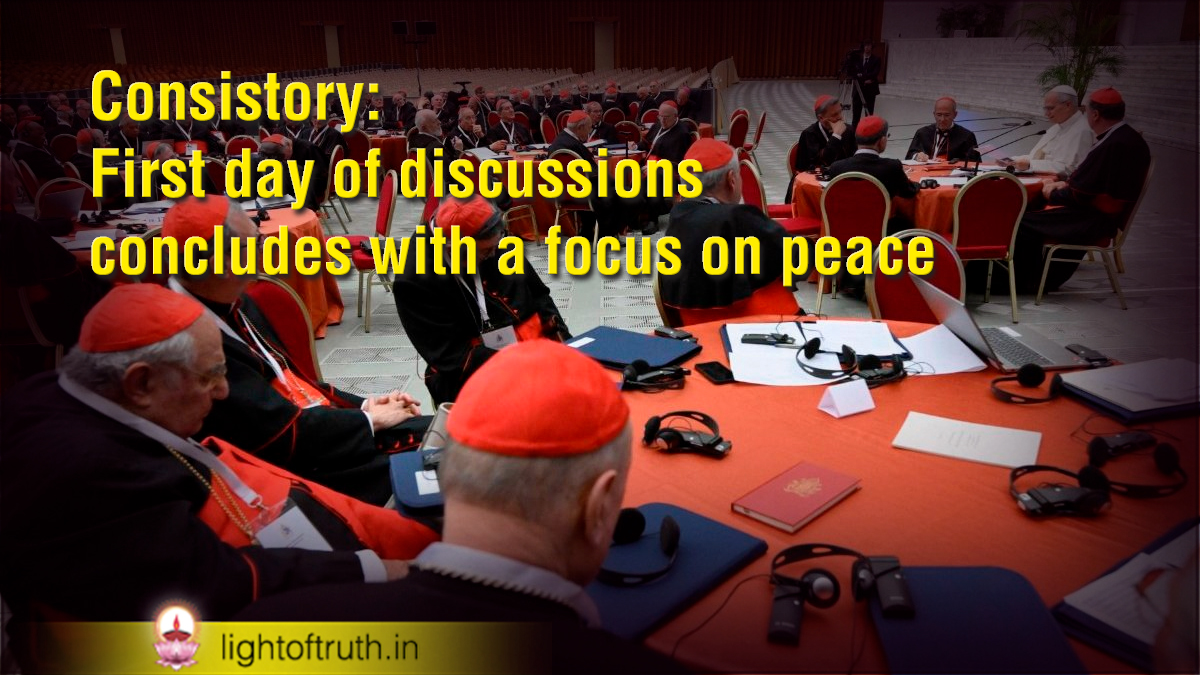
Consistory: First day of discussions concludes with a focus on peace

In the Paul VI Hall, the second session of the Extraordinary Consistory centred on peace, emphasizing the need to work toward building peace and a “civilization of love.” Many groups also emphasize the need to move beyond the logic of the “just war” doctrine and instead speak of the right to proportionate self-defence.

The afternoon session opened with prayers for the “painful situation in Venezuela” and for the many victims of the recent earthquake.

The session, entitled “The Culture of Power and the Civilization of Love,” was devoted to reflection on Chapter Five of the encyclical Magnifica Humanitas. Cardinal Víctor Manuel Fernández, Prefect of the Dicastery for the Doctrine of the Faith, delivered the introductory address. Pope Leo XIV attended the opening of the session and returned later for the plenary meeting.

The discussions then got underway. Eleven groups reported back to the assembly. All addressed the challenges of the present time, highlighting “the dehumanizing force of the culture of power, its universal reach, the temptation to conform to the logic of the powerful, and the normalization of war and polarization, which lower society’s tolerance for violence and encourage dangerously simplistic approaches to resolving conflicts.”

Against this backdrop, the participants stressed the responsibility to build peace and a civilization of love. They also emphasized the importance of offering a credible witness through a language centred on people: one of listening, forgiveness, reconciliation, restorative justice, and concrete gestures. Such a language, is capable of touching the hearts of those caught up in conflict, acknowledging the wounds caused by war, and fostering the search for unity within the Church.

It emphasised that the unity within the Church is essential to its credibility, as is dialogue with other faiths and religions. At a time when the globalization of indifference makes people increasingly insensitive to the suffering of others, every individual is called to take responsibility for building peace.

The discussion also addressed the role of political authority, calling for it to be freed from what was described as its toxic link with economic power. Other topics included the family, education, the difficulty of moving beyond the demand for immediate solutions, and the need for bold evangelization. Many participants stressed the need to move beyond the logic of just war, since the Gospel cannot be imposed by force, and instead to speak of the right to proportionate self-defence.

Deep gratitude was expressed to Pope Leo for the encyclical, for his condemnation of armed conflicts, and for his repeated appeals for peace. The cardinals also emphasized that the encyclical itself is a call to the College of Cardinals to assume responsibility for building peace.

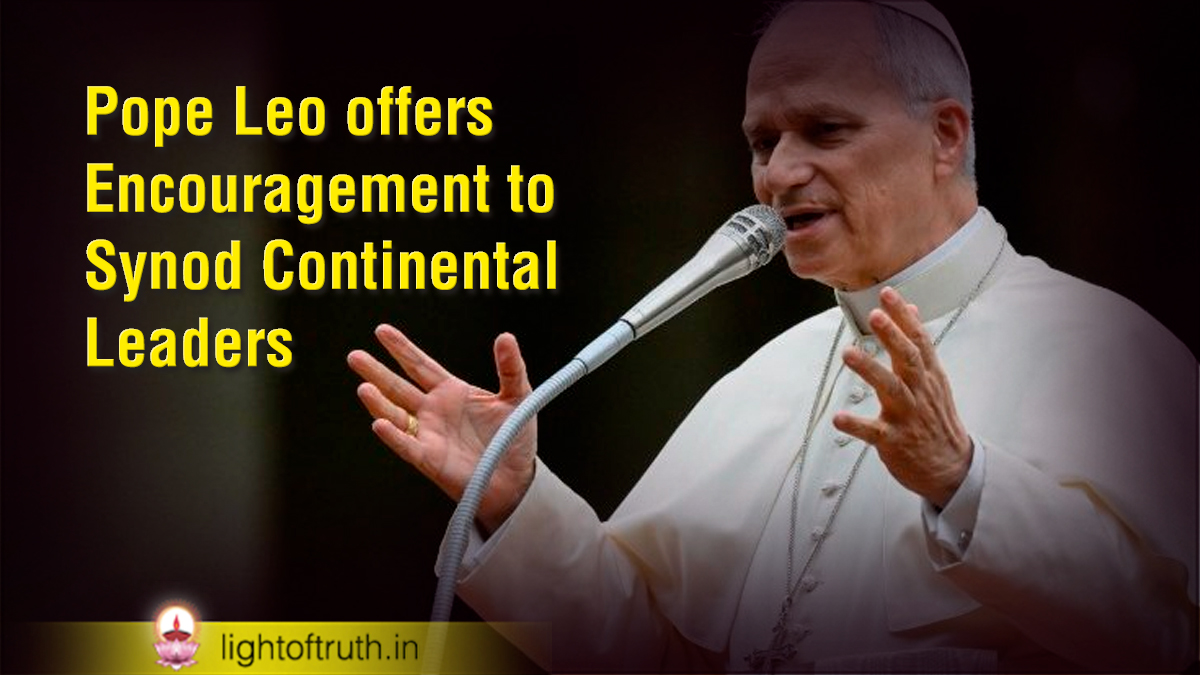
Pope Leo offers Encouragement to Synod Continental Leaders

Pope Leo XIV meets with leaders of the Synod continental bodies as they reflect on the implementation of the Synod on Synodality and the path toward the 2028 Ecclesial Assembly.

Pope Leo XIV met privately with the heads of the Synod continental bodies at the conclusion of three days of work. The meeting brought together representatives from Latin America, Africa, Asia, Europe, Oceania, the Middle East, and North America, accompanied by the coordinators of the continental synodal teams. Cardinal Mario Grech, Secretary General of the Synod, described the encounter with the Pope as “a strong sign of support and encouragement” for participants as they continue their work “for the synodal conversion of the Church.”

Opening the meeting, Cardinal Grech offered a brief assessment of the journey toward the 2028 Ecclesial Assembly. The Cardinal noted the many initiatives already undertaken by local Churches to involve the faithful, including schools of synodality, formation programmes, symposia, conferences, and processes of listening and discernment.

The following days were dedicated to listening and discernment in this “new” synodal time. The implementation phase, centred on the Final Document of the XVI Ordinary General Assembly of the Synod of Bishops, is not a simple repetition of the pre-assembly process rather, it is a new process in which local communities are called to translate the recommendations of the synodal document into their own contexts.

Participants shared the main developments in the implementation of the Final Document across the continents, including significant experiences, difficulties, open questions, and pastoral priorities.

At the heart of the meeting was a reflection on the document presented by Fr. Giacomo Costa, SJ, Consultor of the General Secretariat of the Synod. The text outlines the path toward the Ecclesial Assembly of October 2028 in four progressive stages. The first stage, “Remembering,” with evaluation assemblies in dioceses and eparchies. The second, “Interpreting,” through assemblies of national or regional Bishops’ Conferences. The third, “Orienting,” will take with continental assemblies that will produce a perspective report. The final stage, “Celebrating,” with an Ecclesial Assembly of the whole Church in the Vatican, together with the Holy Father. Participants stressed that the role of continental bodies and their teams is above all one of accompaniment, not supervision.

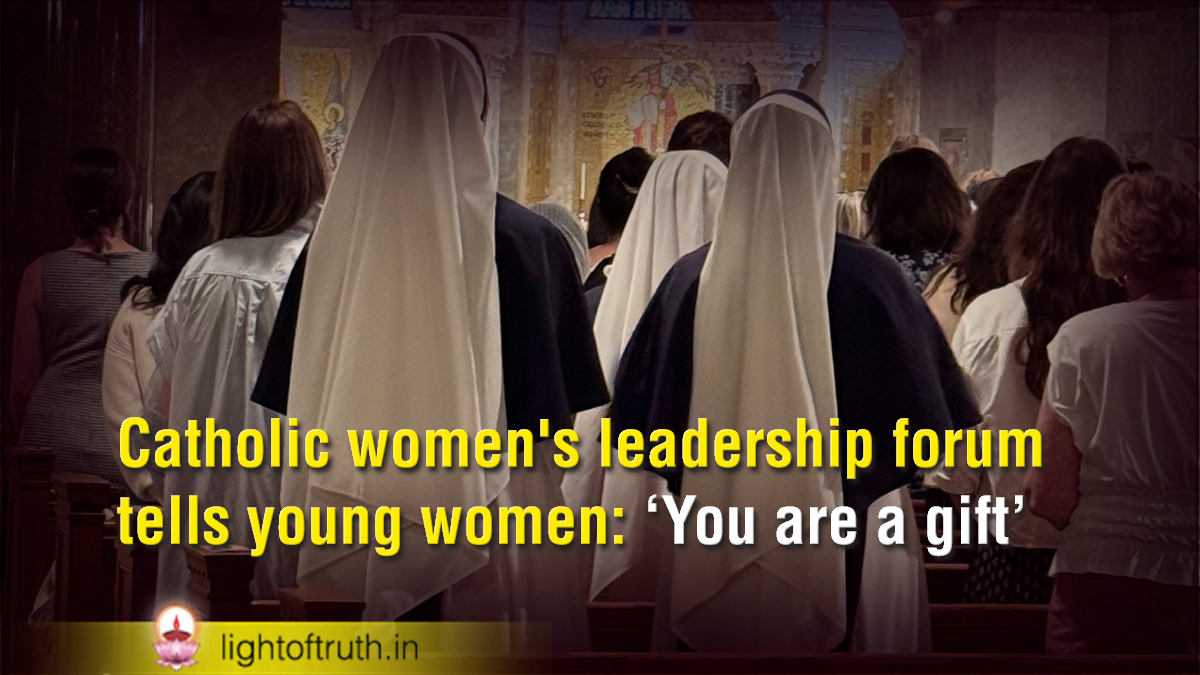
Catholic women’s leadership forum tells young women: ‘You are a gift’

The 2026 GIVEN catholic Young Women’s Leadership Forum, taking place in Washington, D.C., this week, exists to help women understand their gifts and how to share them with the world. The five-day gathering is hosted by the GIVEN Institute – a non-profit organization dedicated to activating the gifts of Catholic young adult women for the Church and the world through faith formation and leadership.

The five-day gathering is hosted by the GIVEN institute – a non-profit organization dedicated to activating the gifts of Catholic young adult women for the Church and the world through faith formation and leadership. “We hope women will take away an understanding, on a much deeper level, that they are a gift. They are a beloved daughter of God,” said the executive director of GIVEN, Jennifer Cole-Schaefer. Women have “been given gifts that are specific to them, and God has a plan to use those gifts,” she said. “Itʼs all about receiving this idea that we are a gift, realizing what our gifts are, and responding in a way that only we can respond with our particular gifts”. The forum welcomes Catholic women, ages 21-35, who have been accepted into the institute’s leadership program, as well as mentors, volunteers, exhibitors, and sponsors. Acceptance into the program includes participation in GIVEN’s forum, followed by a year of accompaniment with a trained mentor. Participants cultivate a personalized “action plan” designed to serve the Church and their community. The “formation starts well before we get to the forum, but the forum is a really pivotal in-person experience,” Cole-Schaefer said. It’s after the forum that the real work begins – when women start to actualize their action plans, and they don’t do that alone. They do that through mentoring.” So we have a whole army of women with some life experience who’ve stepped forward and been trained as mentors to walk with our young women as they discern all the steps.”

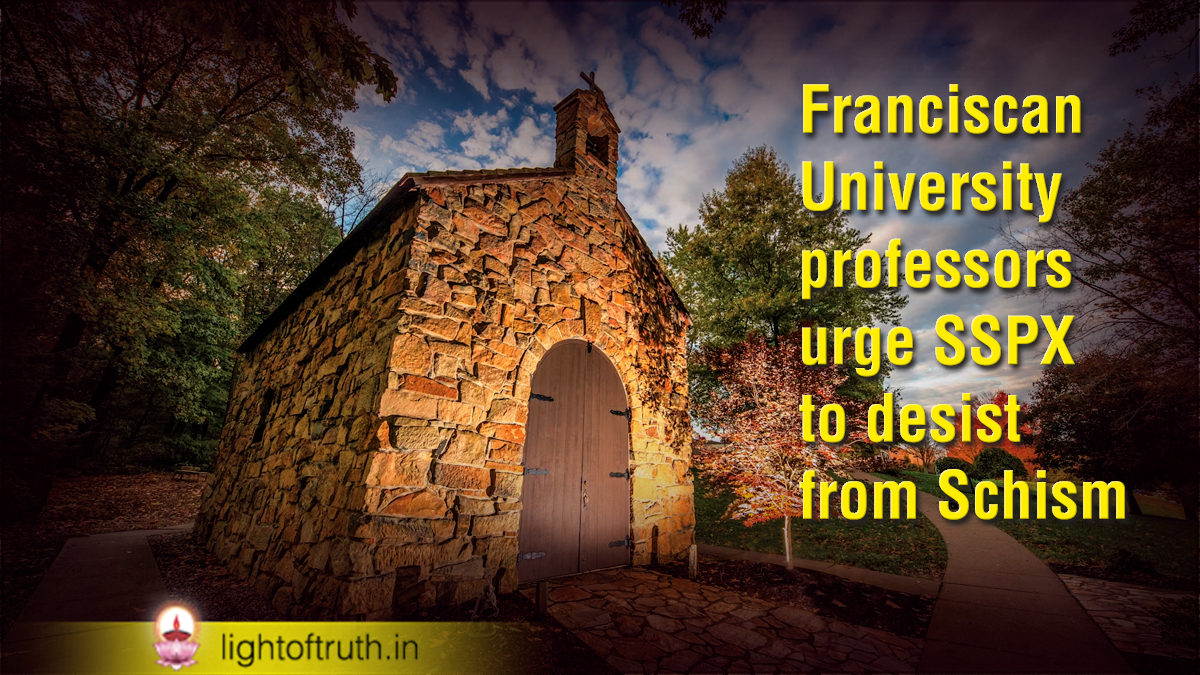
Franciscan University professors urge SSPX to desist from Schism

More than 20 professors at the Franciscan University of Steubenville are calling on the Society of Saint Pius X (SSPX) to not proceed with its planned consecration of bishops on July 1. We write not as adversaries, but as fellow Christians who love the Church, which is built on Sacred Scripture and Sacred Tradition, and who, like you, long for the salvation of souls,” the professors wrote in an open letter to the SSPX, noting that if the group moves forward with the illicit consecrations, “it would cement and deepen the already existing separation between the Society and the See of Peter.

Whatever legitimate questions or grievances may exist, they are no excuse to create a schism,” the letter’s signatories assert. The letter is signed by 26 faculty and staff, with university professors of theology constituting the majority of the signatories. The treasures of Catholic Tradition do not belong outside communion with Peter; they belong at the heart of the Church,” the letter continues. “A new episcopal ordination outside the ecclesial hierarchy without the Apostolic mandate would create a new wound in the Body of Christ and place the gifts that God has entrusted to the Society, which belong to the Church and are ordered towards unity with her (Lumen gentium 8) outside of her maternal embrace. Please don’t do this,” the letter said. “Please don’t create this wound! Please, re-enter into dialogue with the Holy See and into full communion with the Church.

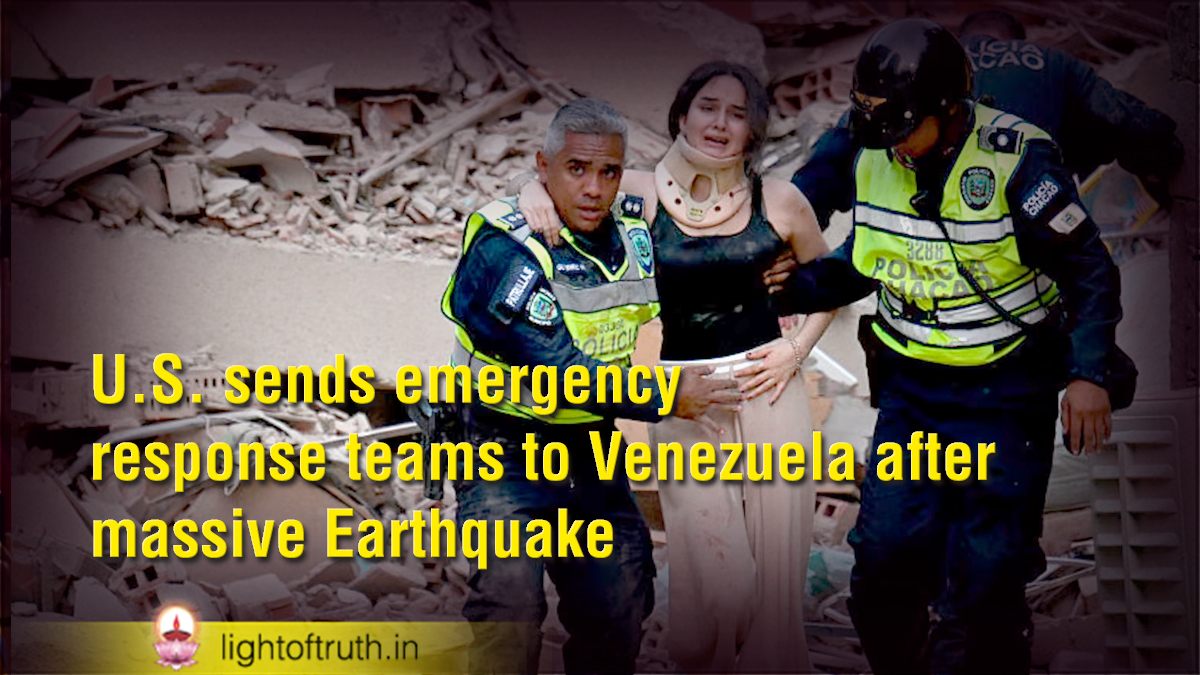
U.S. sends emergency response teams to Venezuela after massive Earthquake

The Trump administration is deploying U.S. emergency response teams to Venezuela in the wake of two high-magnitude earthquakes as local Catholic leaders mobilizes the Church’s support network.

 “Weʼre already deploying search and rescue teams from Fairfax County [Virginia] and Los Angeles,” Secretary of State Marco Rubio said. “There will be some others weʼll add,” Rubio said. “Thatʼs their most immediate need right now, is search-and-rescue efforts: They have [many] collapsed buildings. And so theyʼll need a lot of help in terms of digging through that.” The earthquakes took place on June 24, with the first 7.2-magnitude earthquake recorded at 6:04 p.m. local time, and the second 7.5-magnitude earthquake occurring just 39 seconds later, according to the United States Geological Survey.

“Weʼve already stood up our disaster response teams at the Department of State and our humanitarian efforts,” Rubio said. “Itʼs something we did very well in Jamaica, after that storm, and itʼs something weʼre really prepared to do now.” The update came after Rubio issued a statement earlier in the morning pledging to carry out U.S. President Donald Trump’s directive for “all agencies of [the U.S.] government” to “get ready to move quickly.” “The United States extends our deepest condolences to the people of Venezuela following the devastating earthquakes,” Rubio said. “Our hearts are with all those who have lost loved ones, those injured, and the courageous rescue workers working tirelessly in the aftermath.”

Bishop A. Elias Zaidan, chair of the U.S. Conference of Catholic Bishops’ Committee on International Justice and Peace called on the international community to “mobilize in support of the Venezuelan people, and to send the necessary humanitarian assistance to alleviate their suffering.”

Pope Leo XIV has sent an initial 100,000 euro donation to Venezuela in the aftermath of the earthquakes through the Apostolic Almonerʼs Office. Catholic Relief Services (CRS) said it is “working through Caritas Venezuela and the local Church to quickly deliver emergency shelter, food, safe water, medical care and other critical relief to those affected.” Archbishop Raúl Biord Castillo of Caracas told the aid group after touring affected parishes to assess the situation that “many of them have serious structural damage,” with the Cathedral of Caracas among the most affected. Bishop Pablo Modesto González Pérez of the Diocese of La Guaira described the impact of the earthquakes on the local seminary, telling Aid to the Church in Need: “We are without electricity and we have all been affected. In the seminary, many walls collapsed.” The bishop expressed gratitude that no priests were seriously harmed and noted the mobilization of the local Church in response to the disaster: “Many parishes have received people to spend the night in their facilities. We have already activated a solidarity network through the parish Caritas.”

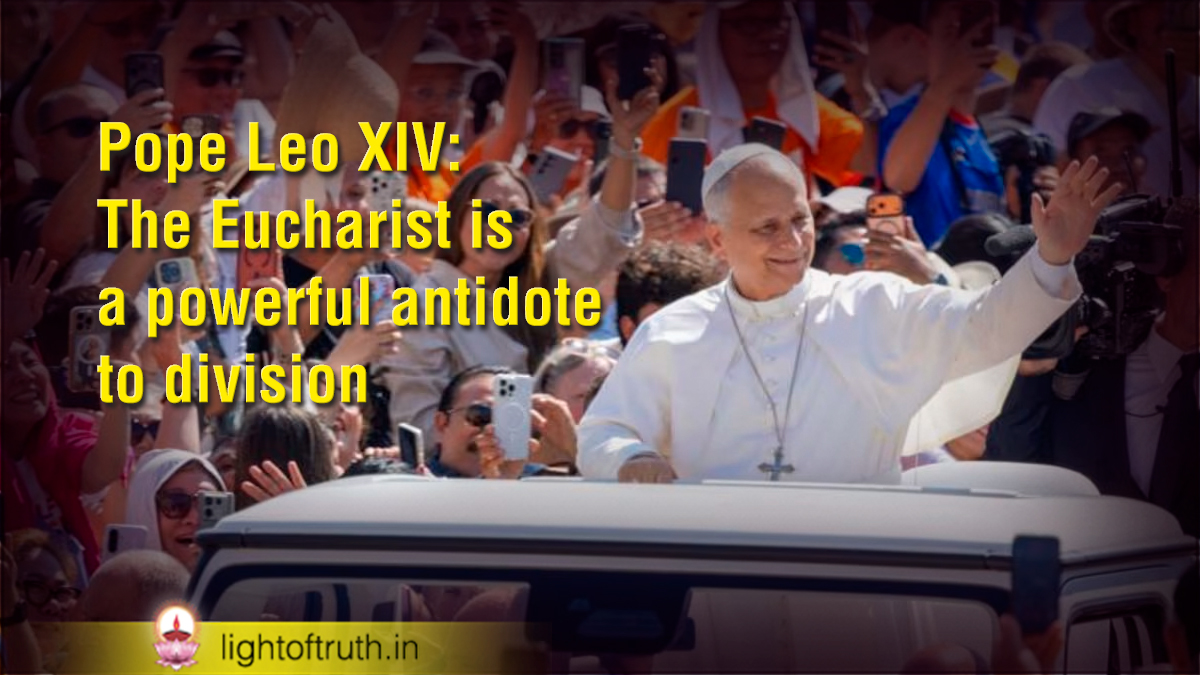
Pope Leo XIV: The Eucharist is a powerful antidote to division

Pope Leo XIV said that the Eucharist is a “powerful antidote” to division in the world, calling on Catholics to “draw with faith from this source of divine life” and to allow themselves “to be transformed by the mystery we celebrate”.

Thus, by incorporating us into Christ, the Eucharist teaches us to adopt the very style of life of the Lord Jesus, which was marked by the free gift of Himself. This gift draws us into the dynamic of unity, offering a powerful antidote to the forces of division that undermine our world, our communities, our families, and our hearts,” The pope continued his catechesis on the documents of the Second Vatican Council, focusing on the Constitution “Sacrosanctum Concilium” on the sacred liturgy.

Leo highlighted the liturgical reform called for by the council fathers, especially the creation of the Lectionary, the book containing the biblical readings for liturgical celebrations. “The liturgical reform translated this request into the treasure that is the Lectionary, the book that gathers all the biblical readings for liturgical celebrations,” “This richness has been drawn from the purest source of the living Tradition, which combines fidelity with tradition; with openness to legitimate progress,” the pope added, citing “Sacrosanctum Concilium”.

Reflecting on the Mass, Leo said the faithful are invited “to listen to the Word of God and to be nourished at the Lord’s Table, where He offers Himself to the Father. The two parts of the Mass — the Liturgy of the Word and the Liturgy of the Eucharist — “are so closely connected with each other that they form but one single act of worship.”  The Eucharist opens us to an understanding of Scripture, just as Scripture for its part illumines and explains the mystery of the Eucharist,” the pope said, quoting Benedict XVI’s apostolic exhortation “Verbum Domini”

Leo also drew on the teaching of St. Augustine, who explained the mystery of the Body of Christ to the newly baptized by citing St. Paul’s words: “Now you are Christ’s body, and individually parts of it”. “It is your own mystery that you receive,” Augustine wrote, according to the pope. “To what you are, you respond: Amen, and your response is like your signature. You are told, ‘The Body of Christ,’ and you reply, ‘Amen.’ Be therefore members of the Body of Christ, so that your Amen may be true”. The pope said that through the Eucharist, Christians become what they receive: the Body of Christ. “Thus, the Eucharist is the sacrament of the Kingdom that is to come. It is the Bread for the journey that leads us to our heavenly homeland, until that blessed day when ‘God will be all in all”.

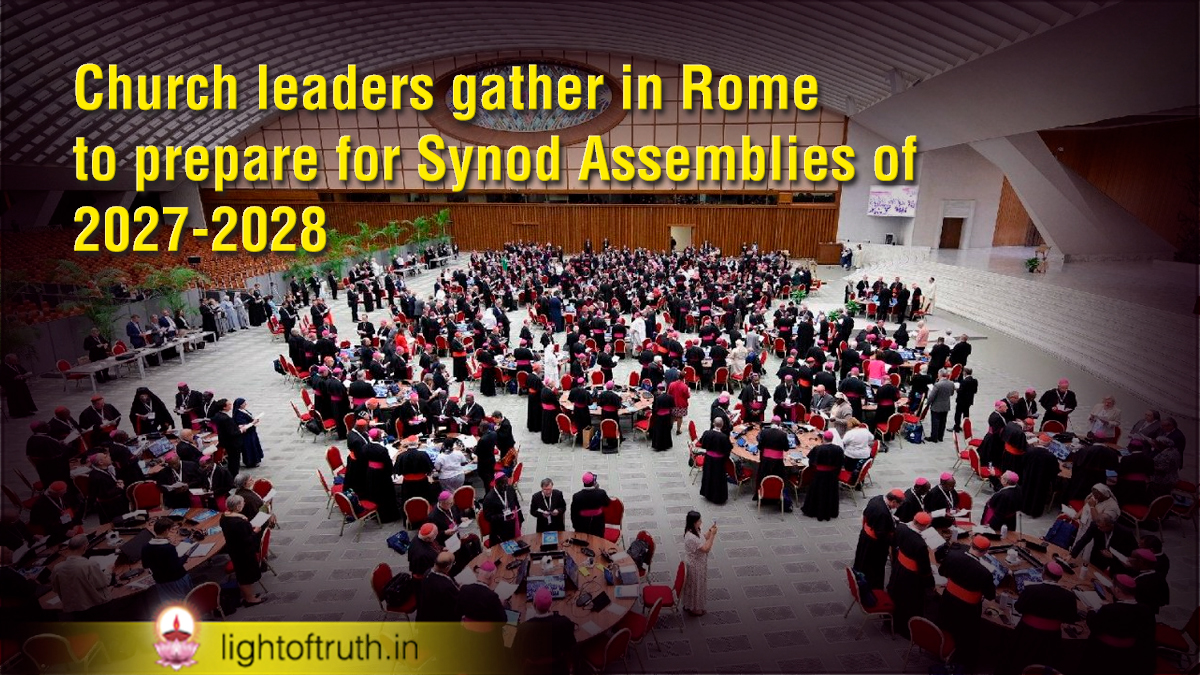
Church leaders gather in Rome to prepare for Synod Assemblies of 2027-2028

The General Secretariat of the Synod announces that leaders of the Church’s continental bodies are gathering in Rome to assess progress in implementing the Synod on Synodality and to prepare for the ecclesial Assemblies of 2027–2028.

The heads of the Church’s continental bodies have gathered in Rome this week for three days of meetings dedicated to the next phase of the Synod on Synodality, The meeting, brings together representatives of continental ecclesial organizations from Latin America, Africa, Asia, Europe, Oceania, the Middle East, and North America, accompanied by coordinators of the continental synodal teams.

According to the press release, the gathering comes as the Church continues the implementation phase of the Synod on Synodality following the conclusion of the XVI Ordinary General Assembly of the Synod in October 2024. That process, it notes, “will be marked by the ecclesial Assemblies of 2027–2028.”

Participants are meeting in light of the recent publication of Towards the Assemblies 2027–2028: Stages, criteria, and tools for Preparation, which is intended to guide the next stages of the synodal journey.

The gathering would focus on listening to “the principal developments in the implementation of the Final Document of the XVI Ordinary General Assembly of the Synod of Bishops,” while fostering the exchange of experiences from different regions of the world and identifying “common dynamics and issues requiring further shared reflection.”

Part of the programme is dedicated to accompanying local Churches and regional groupings of Churches as they continue to implement the synodal process. Particular attention will also be given to the role of communication in supporting that work. The final day of discussions will focus on the continental Assemblies, described in the press release as “one stage in the broader journey of ecclesial assemblies that will culminate in the Assembly of October 2028”.

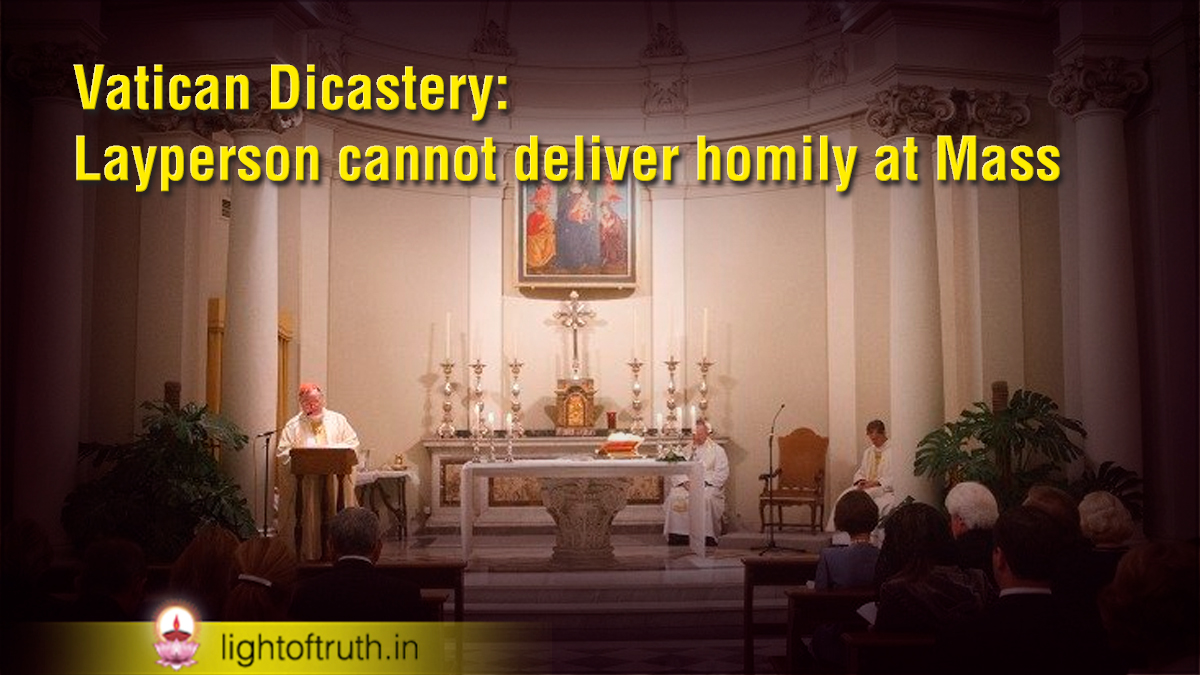
Vatican Dicastery: Layperson cannot deliver homily at Mass

The Dicastery for Divine Worship and the Discipline of the Sacraments responds to a request made by the German Bishops, denying their petition for a layperson to preach the homily during Mass, even in exceptional cases, stating that the proclamation of the Word in the liturgical celebration is inseparable from the mission received sacramentally.

The Dicastery for Divine Worship and the Discipline of the Sacraments has issued a clarifying text regarding who is permitted to deliver homilies.

The German Bishops had requested “to permit, in exceptional circumstances, a duly commissioned lay member of the faithful to preach in place of the homily during the celebration of the Eucharist.”

While the Dicastery expressed appreciation for the pastoral concerns that inspired the request, it reaffirmed that the current discipline cannot be dispensed from by means of an indult, since the reservation of the homily to a priest or deacon is not a merely disciplinary norm but derives from the very nature of the liturgy.

In the text, the Dicastery reiterated that the homily, which forms an integral part of the Liturgy of the Word, is intrinsically linked to the proclamation of the Gospel and constitutes an exercise of the munus docendi entrusted to ordained ministers through the Sacrament of Holy Orders.

It added that the proclamation of the Word within the liturgical celebration is inseparable from the mission received sacramentally and from the unity that binds together Word and Sacrament in the Eucharistic celebration.

The letter also emphasised the importance of promoting the ongoing formation of ordained ministers so that the homilly may fully express its pastoral and spiritual effectiveness. Finally, the Dicastery recalled that the Church’s current discipline already provides for numerous forms of proclaiming the Word and preaching that may be entrusted to lay members of the faithful outside the homily and outside the celebration of the Eucharist, in accordance with canon law and the proper nature of these different forms of proclaiming the Gospel.