National Federation of Churches in India Launched to Strengthen Christian Unity

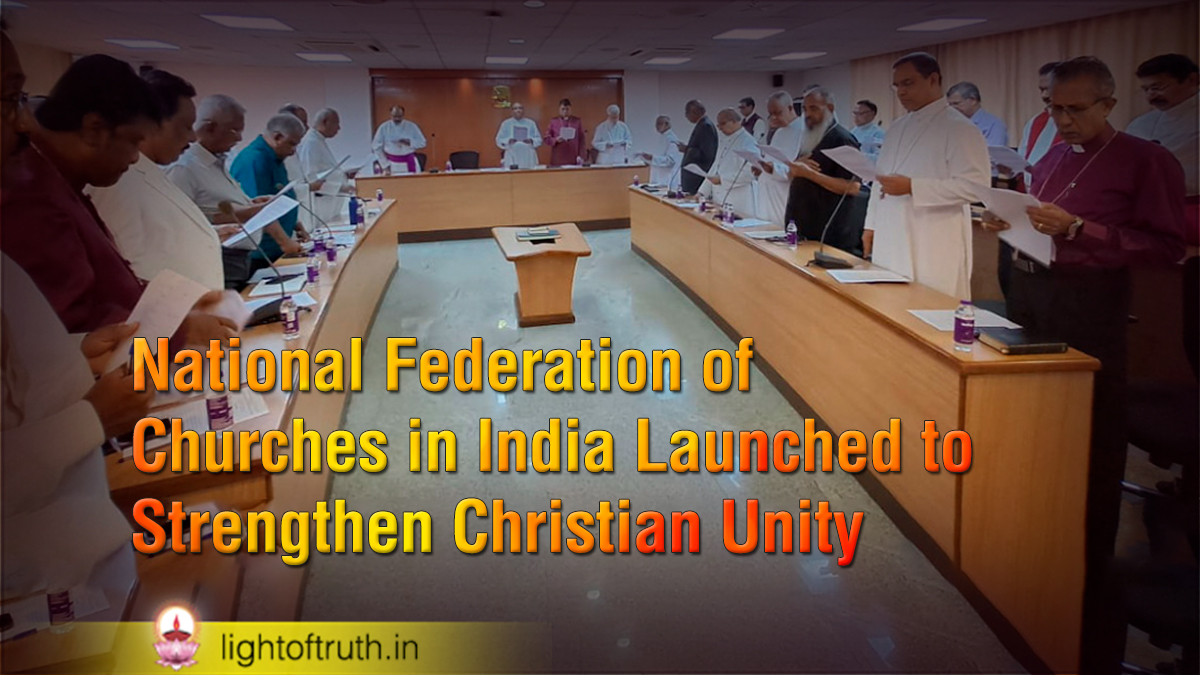
The National Federation of Churches in India (NFCI) was officially launched during the Fourth National Ecumenical Bishops’ Fellowship Meeting held at St. John’s National Academy of Health Sciences, Bengaluru.

The new federation was formed as a united platform for Churches in India to respond together to the growing challenges faced by the Christian community. Church leaders expressed concern over attacks on pastors and faithful, anti-conversion laws in some states, and issues related to Church properties and financial regulations.

After nearly two years of discussions and planning, the guidelines for the new federation were approved and adopted during the meeting, leading to its formal launch.

The NFCI will serve as a national ecumenical body and umbrella organisation for Christians in India. Its main goal is to promote visible unity among Churches while respecting the traditions, identities, and structures of different denominations. It will also address common concerns affecting Christian communities across the country.

Around 45 Church leaders, including bishops, archbishops, and heads of Churches from different denominations, attended the meeting.

The gathering began with a prayer service for Christian unity. Church leaders highlighted the importance of dialogue, cooperation, and collective action in facing present challenges.

During the meeting, leadership elections were also held. Cardinal Anthony Poola was elected Chairman of the NFCI. Archbishop Joseph D’Souza, Bishop Joseph Kallarangatt, and Bishop Vincent Vinod Kumar were selected as conveners.

The launch ended with a prayer of dedication and blessing.

Church leaders described the formation of the NFCI as a historic step towards stronger Christian unity, fellowship, and coordinated action in India.

Catholic Bishops Urge New Governments to Protect Equality and Minorities

The Catholic Bishops’ Conference of India (CBCI) has called on newly elected governments in several Indian states to govern with justice, equality, and transparency.

The appeal came after election results were announced in Kerala, Tamil Nadu, Assam, West Bengal, and Puducherry. In a public statement, the bishops congratulated the winning parties and urged them to follow inclusive policies that protect all communities, especially the poor and minorities.

The bishops said governments should remain faithful to the values of the Indian Constitution by promoting equality, justice, and social harmony.

They especially asked leaders to focus on the needs of the poor, marginalized communities, and religious minorities. The statement noted that real national development is meaningful only when the benefits of progress reach vulnerable sections of society.

The appeal was signed by Cardinal Anthony Poola, President of the CBCI. He also assured the Church’s willingness to work with governments for nation-building through its educational, healthcare, and social service institutions.

Church leaders made this appeal at a time of growing concern over rising attacks on Christians in different parts of India.

According to the United Christian Forum, more than 700 incidents of violence or harassment against Christians were reported in 2025.

Church representatives said governments at both state and national levels have a constitutional duty to protect all citizens equally and preserve India’s social harmony.

The bishops also expressed concern that religion is increasingly becoming a source of division in public life.

Christians form about 2.3 percent of India’s population, while Hindus make up nearly 80 percent.

The CBCI called for peaceful governance that respects diversity and protects the rights of every citizen.

CCBI Appoints Lay Leaders and Women to National Church Roles

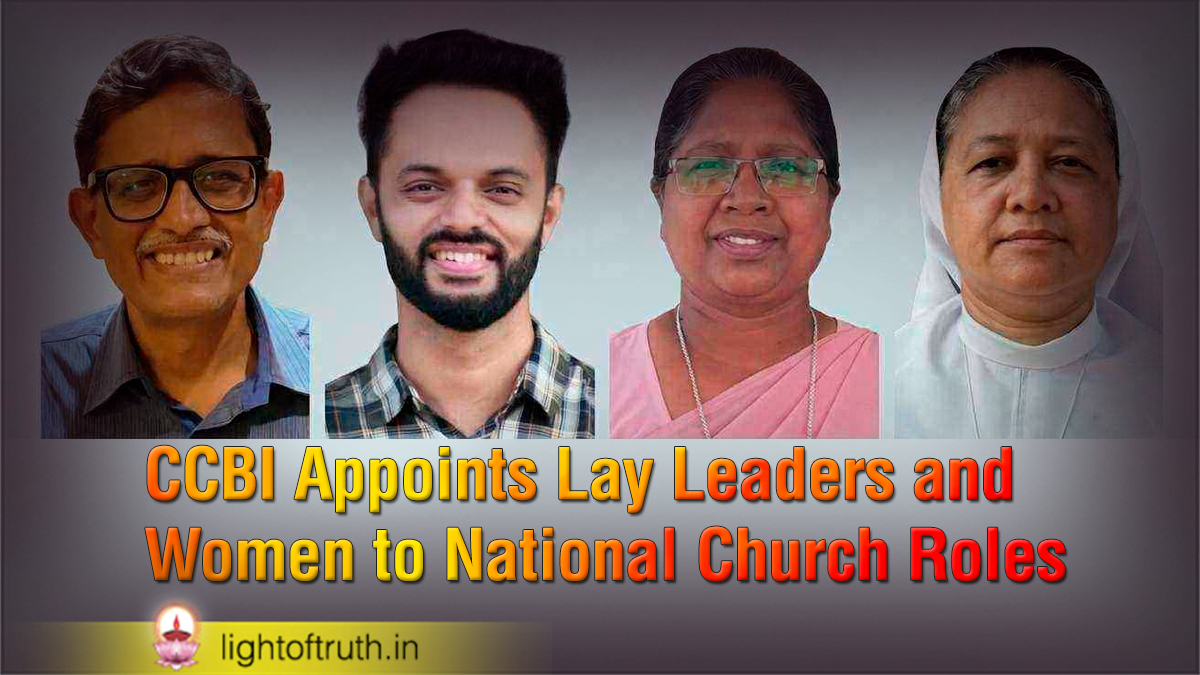
The Conference of Catholic Bishops of India (CCBI) has appointed two lay leaders and two women religious to important national roles, marking a major step toward greater participation of laity and women in Church leadership.

The appointments were made during the CCBI Executive Committee meeting held on May 5 and 6 in Bangalore.

Mr. Adrian Rosario from the Archdiocese of Bombay has been appointed Executive Secretary to the Commission for Laity. Mr. Ajin Joseph from the Archdiocese of Delhi has been named Associate Executive Secretary to the Commission for Family, with special responsibility for Pro-Life Ministry.

Two women religious were also appointed to national positions. Sr. Celina Surin of the M.S.M.H.C. congregation from Assam has been appointed Associate Executive Secretary to the Commission for Youth. Sr. Deepti Minj of the S.C.S.C. congregation from Raipur has been appointed Associate Executive Secretary to the Commission for Women.

The CCBI said these appointments reflect its growing commitment to shared leadership and wider participation in the mission of the Church.

The recent CCBI National Synodal Assembly, held from May 1 to 3 in Bangalore, also showed this focus. Out of 220 delegates, 107 were lay leaders, making it one of the most representative gatherings in recent Church history in India.

Church leaders said the CCBI is creating more opportunities for lay faithful and women to take leadership roles at parish, diocesan, regional, and national levels.

As the largest Bishops’ Conference in Asia, the CCBI continues to promote a more participatory, inclusive, and mission-oriented Church in India through its National Pastoral Plan and synodal vision.

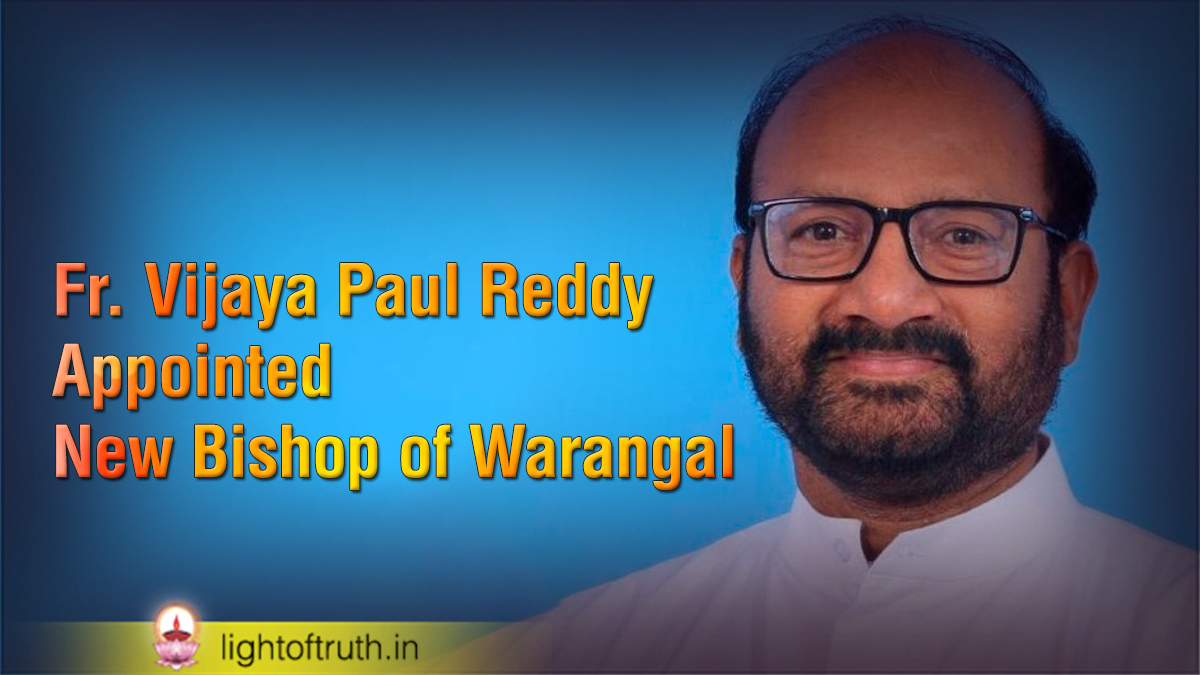
Fr. Vijaya Paul Reddy Appointed New Bishop of Warangal

Pope Leo XIV has appointed Fr. Vijaya Paul Reddy Duggimpudi as the new Bishop of the Diocese of Warangal. He becomes the fourth bishop of the diocese and succeeds Archbishop Udumala Bala, who was recently transferred to Visakhapatnam.

Fr. Vijaya Paul Reddy is 61 years old and has been serving as the Diocesan Administrator of Warangal since April 2025.

Born on January 8, 1965, in Manugonda, Telangana, he completed his philosophy and theology studies at St. John’s Major Seminary, Hyderabad. He also earned academic degrees from Osmania University and Annamalai University, including Bachelor’s and Master’s degrees in Arts and Education.

He was ordained a priest for the Diocese of Warangal on April 2, 1992.

Over the years, Bishop-elect Vijaya Paul served in many important roles in the Church. He worked as Assistant Parish Priest, Hostel Director, Parish Priest, and educational administrator in different dioceses. He also served as Director of Fatima College of Education, Director of Lodi Multipurpose Social Service Society, and Director of Christu Jyothi Institute of Technology and Science in Warangal.

Church leaders and faithful have welcomed his appointment with joy and hope.

The Diocese of Warangal was established on December 22, 1952. It covers the districts of Warangal and Karimnagar in Telangana.

According to Church statistics, the diocese has over 85,000 Catholics across 78 parishes. It is served by 92 diocesan priests, 187 religious priests, and 650 religious sisters.

With his long pastoral, educational, and administrative experience, Bishop-elect Vijaya Paul Reddy is expected to guide the Diocese of Warangal with dedication and faith.

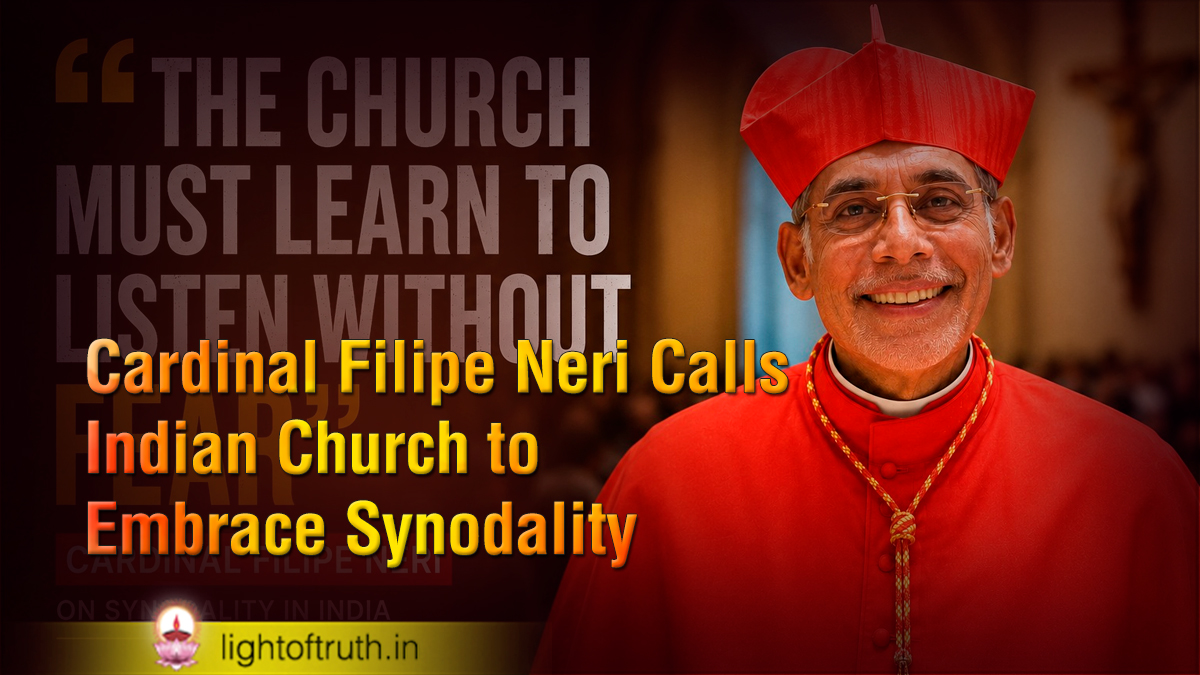
Cardinal Filipe Neri Calls Indian Church to Embrace Synodality

Cardinal Filipe Neri Ferrão has called on the Church in India to become more participatory, inclusive, and missionary through the spirit of synodality.

Speaking about the Church’s journey in India, the President of the Conference of Catholic Bishops of India said synodality is both a grace and a responsibility. He explained that the Church must move from “working for people to walking with people” by promoting listening, shared responsibility, and active participation.

The Cardinal said India is already familiar with walking together through families, parishes, basic Christian communities, and religious groups. However, he noted that the Church now needs to make this journey more intentional, organised, and missionary.

He highlighted that India’s diversity of cultures, languages, rites, and traditions is a gift. According to him, synodality helps the Church strengthen unity while respecting differences. He stressed that unity does not mean uniformity but working together in Christ.

Cardinal Ferrão also called for a stronger culture of listening, especially to young people, women, and those on the margins of society. He said bishops, priests, religious, and lay faithful must create more spaces for dialogue and participation.

He identified several challenges facing the Church in India, including clericalism, lack of formation in synodal values, fear of change, and social divisions such as caste and class differences.

The Cardinal encouraged Catholics to see these challenges as opportunities for renewal and mission. He said the CCBI’s Mission 2033 pastoral plan offers a practical roadmap for building a synodal Church through communion, participation, and mission.