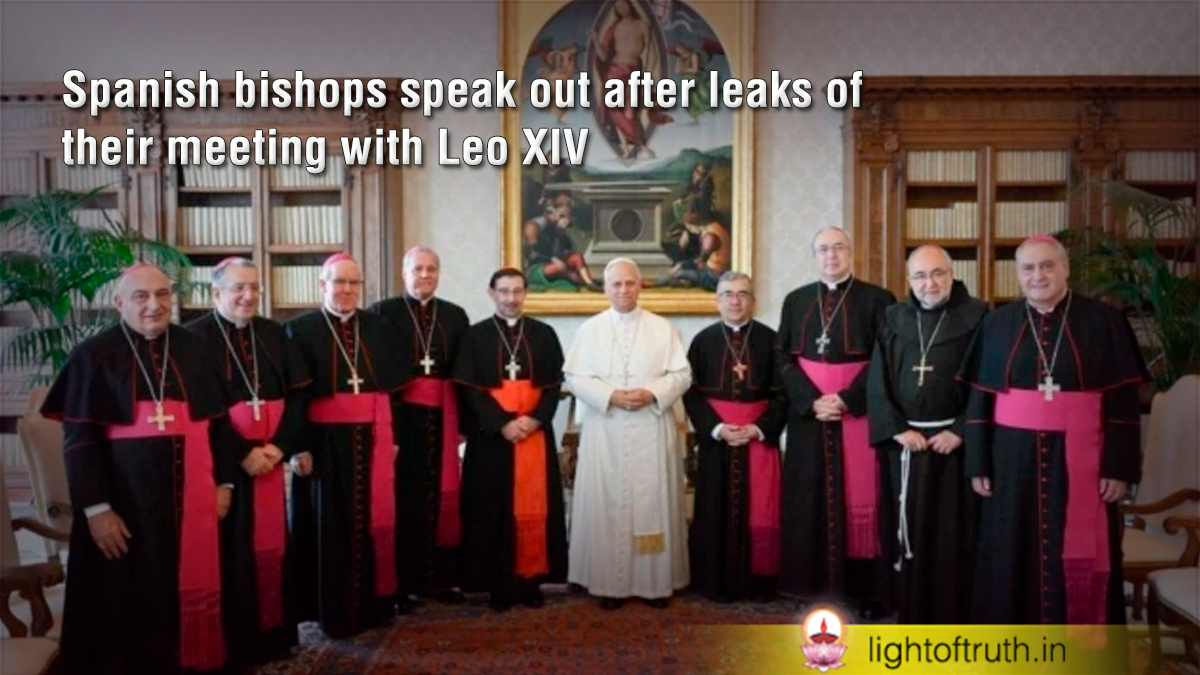
Spanish bishops speak out after leaks of their meeting with Leo XIV

The executive committee of the Spanish Bishops’ Conference, (CEE, by its Spanish acronym) meeting in Madrid this week, issued an official statement regarding the leaks about its meeting with Pope Leo XIV that recently appeared in various media outlets. The newspaper El País published an article on Feb. 23 titled “The pope warned the bishops that his greatest concern in Spain is the far right that is trying to ‘instrumentalize the Church.’”

The article alluded to alleged comments made by the pope during the meeting with the nine members of the CEE’s executive committee on Nov. 17, 2025, at the Vatican, according to “two sources familiar with what transpired at the meeting.”

Numerous media outlets, based on the article published by El País, replicated the content with similar headlines, and some, such as Vida Nueva, added nuances to what the pope said, citing people who “were present at that meeting.” According to its website, Nueva Vida (New Life) “is a weekly religious news magazine that aims to be a committed voice within the Church.” 

Meanwhile, other media outlets have published information that contradicts the initial reports. Citing “more than two members of the executive committee, and some other prelates familiar with what was said at the meeting,” Religión Confidencial stated that the issue was not raised at the pope’s initiative but rather at the suggestion of one of the Spanish prelates and that the pontiff merely explained a general framework of doctrine regarding the Church’s relationship with politics.

El Debate, more emphatically, headlined: “Clearly, the pope’s greatest concern in Spain is not the far right but evangelization,” citing “episcopal sources who are well aware of what happened at the Vatican on Nov. 17.”

In response to all these publications, the executive committee of the CEE issued a statement on Feb. 24, noting that “Pope Leo XIV received us with special affection, listened to the presentations of all the members of the committee, and encouraged us in the evangelizing mission to which the Church in Spain is committed.”

“The Holy Father also encouraged us to foster communion among all the members and institutions that make up the Church,” the bishops continued. Regarding the issue that sparked the cascade of diverse reports, the CEE explained that “in the dialogue, the Holy Father reflected, among other things, on the risks of subjecting faith to ideologies, without mentioning any specific group.” Finally, the prelates express their “respect for and support of the pope and welcome his call to evangelizing communion in the society in which we live, with all its challenges.”
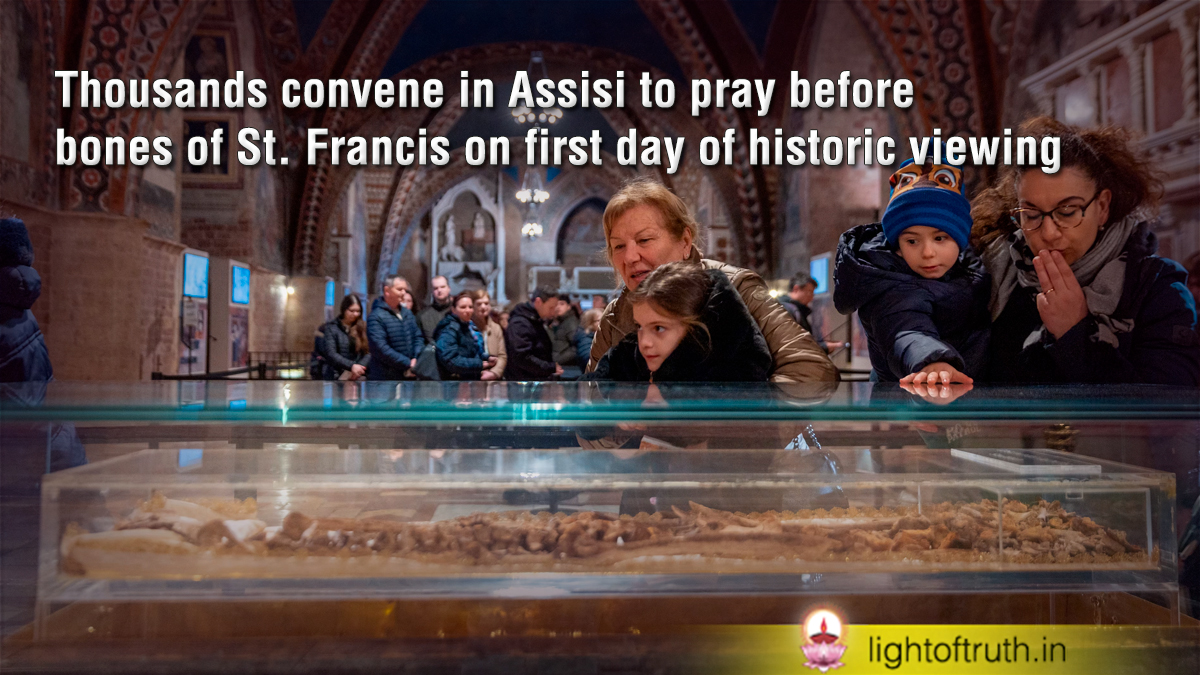
Thousands convene in Assisi to pray before bones of St. Francis on first day of historic viewing

Hundreds of pilgrims lined up before dawn on Sunday to be among the first to pray before the exposed relics of St. Francis in his basilica in Assisi, Italy.  The saint’s bones will lie in a glass box through March 22 — fully visible outside the stone tomb in a crypt where they usually rest — as hundreds of thousands of people venerate the holy remains.

A highly organized system with QR code reservations allowed approximately 750 people to enter the lower church of the basilica every 30 minutes through most of the day Feb. 22 to view the saint.

Filing past 13th- and 14th-century frescoes by Cimabue and Giotto, pilgrims on the chilly but sunny winter day approached the glass case, protected by a plexiglass barrier. Some were overwhelmed with emotion as they had the opportunity to stand a foot away from what still exists of St. Francis on earth 800 years after his death, according to Jacob Stein.

Stein, the creator of “Crux Stationalis” blog and part of the social media team of EWTN News, was among the first group to arrive at the church. Despite the crowds, he described the atmosphere in Assisi and in the presence of the relics as prayerful and unrushed. Inside the basilica, where cellphone use was forbidden, friars gently recalled the pilgrims to silent recollection when voices got above a whisper. People knelt before St. Francis and kissed the glass and left their written prayers in boxes shared by the Franciscans.

“My prayer afterwards was to the wounds of Christ, to honor them,” Stein said, referring to St. Francis’ stigmata. This moment helps you to understand that the devotion for St. Francis is because of “his conformity to Christ as a complete and utter example to follow.”

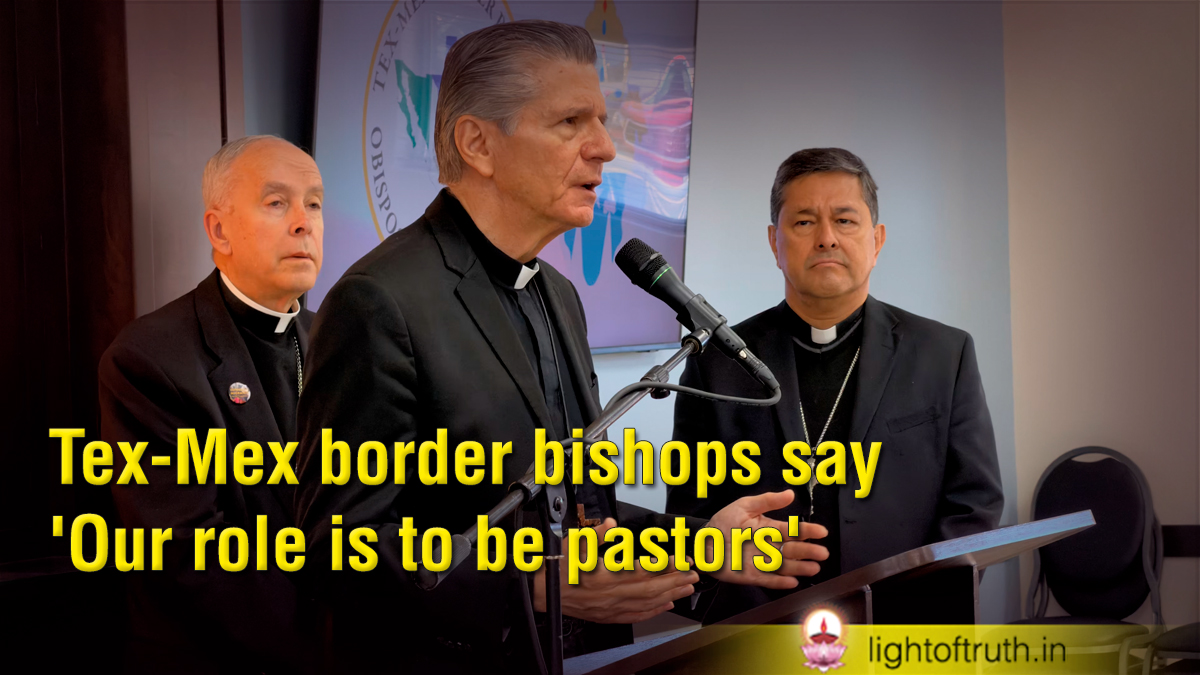
Tex-Mex border bishops say ‘Our role is to be pastors’

A group of bishops from the Texas-Mexico border region, informally known as the “Tex-Mex bishops” met in El Paso, Texas on Friday to discuss immigration and its effects on both the U.S. and Mexico, as well as recent drug cartel-related violence in Mexico.

The meeting of the Tex-Mex bishops is now “the longest-running international gathering of Catholic bishops anywhere in the world,” according to a press release from the Diocese of El Paso on behalf of the bishops. The group has met twice a year for more than 40 years.

At the press conference, San Antonio Archbishop Gustavo García-Siller, the group’s coordinator, said the bishops were concerned with the “plight of our brothers and sisters, migrants, which are on both sides of the border.”

The prelate said immigration enforcement has “changed drastically” in recent years. Because of these changes, García-Siller emphasized that the bishops “need to learn new ways to serve well” migrants and refugees in order to “bring solutions” and “some solace, some peace, some kind of understanding.”

“You need to know that God loves you, and that we love you, too,” he said before beginning to address his listeners in Spanish.

At their meeting, the bishops were guided by the November Special Message from the United States Conference of Catholic Bishops (USCCB) on immigration, and the recently released statement of 20 U.S. Catholic bishops from border states and others, who recommended immigration enforcement reforms to the Trump administration.

Bishop Mark Seitz of El Paso said, however, that “bishops are not politicians. That is not our role…our role is to be pastors.” Echoing García-Siller, Seitz said that “Our role is to love the people that we serve. And…it doesn’t matter to us whether they’ve lived here a long time or they’re simply passing through. When we see that other person, we see a person created by God and given a special dignity, a value that is unparalleled and unrepeatable.”