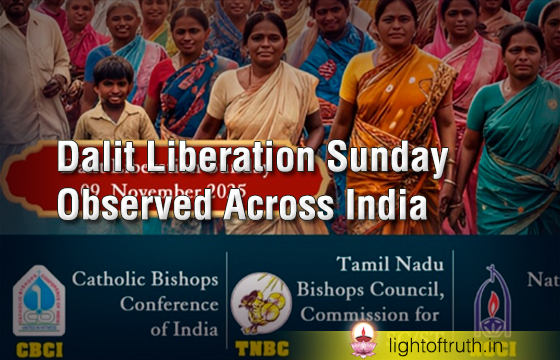
Dalit Liberation Sunday Observed Across India

Dalit Liberation Sunday, observed annually on the second Sunday of November, was celebrated across India on November 9, reaffirming the Church’s commitment to justice and equality for Dalit Christians.

Speaking to Catholic Connect News, Fr. Vijay Kumar Nayak, Secretary, CBCI Office for Scheduled Castes/Backward Classes (CBCI), explained that the observance was officially approved by the CBCI in 2016 “for the cause of Dalits.”

“Dalit Liberation Sunday is approved by the Catholic Church from 2016 onwards. The Catholic Bishops’ Conference of India has dedicated the second Sunday of November for this purpose,” Fr. Vijay Kumar Nayak said.

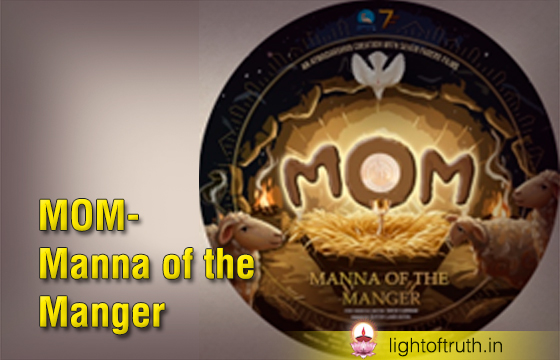
MOM- Manna of the Manger

Jesus the Bread of Life was born in Bethlehem the House of Bread. Is it a mere coincidence or a divine concurrence ? The multi-lingual animation film, MOM Manna of the Manger, is a journey in search of the answer.  

On the eve of the Last Supper Jesus himself sets out a solo journey from Jerusalem to Bethlehem. On the way he is kind of intercepted by a lamb that is running away from his imminent fate of being the sacrificial lamb for the pascal meal. Chasing the lamb are two siblings, Hannah(15) and Joachim (7), the former for handing it over for the sacrifice as per the law of Moses and latter for setting it free. Jesus the Lamb of God takes the lamb to its stable to its mother. But that stable was the kids playhouse as well where they revelled in a clay play in which Jesus too happily joins. The clay play was around a manger which was adorned with their work of hands- sun, moon, stars, figs, breads, chalices and even manna!  Jesus playing with the  Manna acquires Eucharistic proportions as it turns out to be a harbinger of what He is to undergo in the next few days. Finally the children witness Jesus’ nativity.   

MOM- Manna of the Manger is an initiative by Fr. Ananad of the Atmadarshan TV, Indore. It is being produced by St. Peter Claver Sisters. It is written and directed by Rajesh K Abraham of Seven Farers Films. The film is expected to be released this Christmas.

Communio Volunteers Begin Pilgrimage in Tura diocese, Meghalaya

Marking a significant step in their missionary journey, the Communio Volunteers have begun their Pilgrimage of Hope in the Diocese of Tura — a mission experience rooted in faith, service, and communion. The initiative reflects the spirit of the Jubilee Year, calling young volunteers to become witnesses of Christ’s love through action and presence among the people of Tura.

The preparatory sessions were led by Fr. Vignan Das and Sr. Margarita Dias SCB, Associate Directors of Communio, who guided the volunteers through prayer, reflection, and sharing. The spiritual encounter deepened their sense of mission as a journey of faith, communion, and service. On November 9, the volunteers joined the Annual Eucharistic Procession in the Diocese of Tura, a vibrant expression of faith that drew large participation from the faithful. During the event, Bishop Andrew R. Marak addressed the youth, urging them to live their faith with joy and dedication, reminding them that “mission begins in the heart and flows outward through acts of love and compassion.” Auxiliary Bishop Jose Chirackal, of Tura, presided over the Holy Eucharist and blessed the volunteers before their mission journey. His message of encouragement inspired them to go forth as bearers of God’s love and mercy.

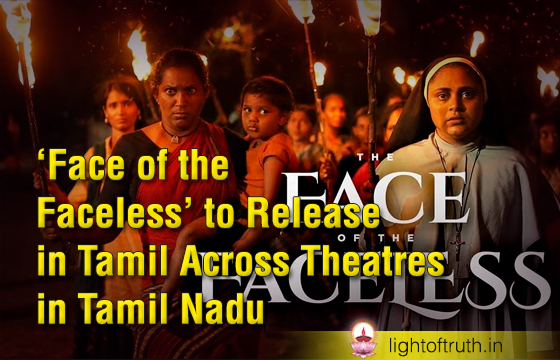
‘Face of the Faceless’ to Release in Tamil Across Theatres in Tamil Nadu

The acclaimed film ‘Face of the Faceless’, depicting the life of Blessed Rani Maria, will be released in Tamil across 60 theatres in Tamil Nadu on November 21, 22, and 23. Winner of the Best Christian Film Award 2024, the movie narrates the life of Blessed Sister Rani Maria, whose selfless service for the upliftment of women in Indore, Madhya Pradesh—transcending religious boundaries—became a guiding light for many. The film conveys powerful messages of spiritual depth, sacrifice, love, forgiveness, peace, and unity.

Running for 136 minutes, this production by Tri Light Creations was recommended for the 2024 Oscar Awards and has earned over 123 international awards, marking a remarkable achievement. Aimed at reaching wider audiences, and supported by Matha TV, the film will be screened in theatres throughout Tamil Nadu from November 21. On the same day, the Telugu version will also be released in Andhra Pradesh and Telangana.

Originally made in Hindi in 2023, Face of the Faceless was later dubbed in Malayalam, where it enjoyed an exceptional six-week run in Kerala, receiving high praise and heartfelt appreciation from viewers. Now translated into French and Spanish, the film is set for a worldwide release in January 2026. For the Tamil version, Matha TV has skillfully translated and enhanced the film, which will premiere in Tamil Nadu theatres on November 21. Born in Kerala in 1954, Sister Rani Maria dedicated her life to serving tribal communities in Indore, fearlessly speaking out against injustice. She was brutally stabbed 40 times by Samandar Singh, a hired assassin of dominant powers, while travelling by bus.

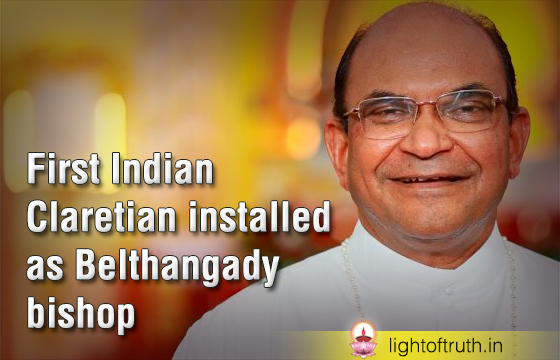
First Indian Claretian installed as Belthangady bishop

Claretian Father James Patteril, a son of the soil, was consecrated the second bishop of the Belthangady, one of the three Syro-Malabar dioceses in the southern India’s Karnataka state. The Episcopal consecration and the installation ceremony of the first Indian Claretian was held on November 5 at St. Lawrence Cathedral in Belthangady, some 60 km northeast of Mangaluru.

Major Archbishop Raphael Thattil, the head of the Syro-Malabar Church, consecrated the new bishop in the presence of the Archbishop Joseph Pamplany of Tellicherry and Bishop Emeritus Lawrence Mukkuzhy of Belthangady. Also present were around 40 bishops from various parts of India and hundreds of priests, nuns and a large gathering of laity. The program also included a public meeting to welcome the new bishop and pay tribute to Bishop Mukkuzhy.

The major archbishop on August 28 announced Father Patteril as the second bishop of Belthangady. Archbishop Pamplany said the region is multicultural and multilingual and the new bishop can manage all languages spoken in the region, like his predecessor. “A good shepherd must know its sheep and accompany them in both good and bad times,” he added.

Bishop Patteril was born on July 27, 1962, near Belthangady to Late Abraham Patteril and Rosamma. He joined the Claretian seminary in 1978 and was ordained a priest on April 26, 1990, by Archbishop George Valiamattom of Tellicherry. He served three parishes in Belthangady, before going to Germany to study masters in Pastoral Theology. He was in Germany from 1994 until his appointment as a bishop.

The Belthangady diocese was carved out of Tellicherry archdiocese and established on August 4, 1999, with its episcopal vicar Lawrence Mukkuzhy as its first bishop. The first  Syro Malabar diocese in Karnataka comprises South Canara, Udupi and Coorg districts. Currently, the diocese has 55 parishes with more than 30,000 Catholics in 4,750 families and thousands of students from Kerala. They are served by 57 diocesan and 27 religious priests along with 198 women religious.

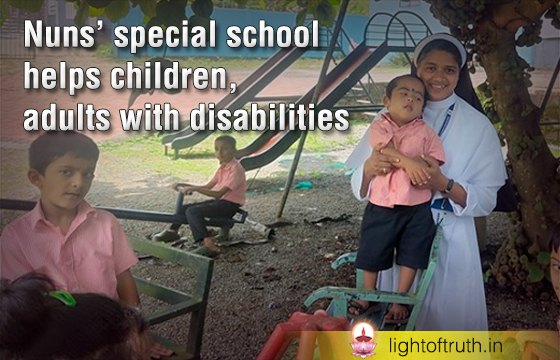
Nuns’ special school helps children, adults with disabilities

Kripalaya Special School, managed by the Sisters of the Adoration of the Blessed Sacrament, is celebrating 25 years of providing education and life skills to children and adults with physical and intellectual disabilities from impoverished families. In 2010, the Kerala state government honoured the school at Pulpally, a town in Wayanad district of Kerala, as the best “special school.”

According to Sister Memadthil, the school headmistress, the school that started with just five students, has cared for 360 children, including 139 currently enrolled. The school cares for children as young as 3, but also assists several adults as old as 50 without family support. Sister Memadathil said that this is one of the leading “special schools” in Kerala. The school was started in 2001 by Sr. Josilia Kizhakkechalil, provincial at that time. There are 27 staff members, including 21 teaching staff and six non-teaching staff. Among them, 16 are members of Mary Matha province, based in Mananthavady. For parents, the school has been a blessing. Many of them could not leave their children alone at home and were unable to work. Now, they feel secure leaving their children with us, even beyond school hours if necessary. This has given them peace of mind and the freedom to earn a livelihood. The local community also supports us in many ways. Neighbours sponsor meals, donate furniture and celebrate festivals with our students. Kripalaya has become a household name in this area, and people are proud to be associated with it.

Founder of Kerala’s first indigenous women congregation beatified

Mother Eliswa Vakayil, the first Catholic nun in the Kerala Catholic Church history and pioneer of women education in the southern Indian state, was beatified on November 8 at a solemn ceremony in Kochi. Cardinal Sebastian Francis, a Malaysian prelate with Indian roots and representative of Pope Leo XIV, made the formal proclamation during a service that began at 4:30 pm in the Basilica of Our Lady of Ransom at Vallarpadam, a suburb of Kochi.

The beatification, which took place 112 years after Mother Eliswa’s death, is the third in the four-stage canonization process. The beatification began with the reading of an apostolic letter on the papal delegate’s declaration. The unveiling of Mother Eliswa’s statue followed, amid hymns of praise. A relic of the nun was placed in the church.

Mother Eliswa was declared a Servant of God on March 6, 2008, by Archbishop Daniel Acharuparambil of Verapoly. The Vatican declared her a Venerable on Nov. 8, 2023. Pope Francis approved the decree to beatify her on April 14, seven days before his death. As part of the procedure, the Pope had approved a miracle attributed to Mother Eliswa.

Mother Eliswa (1831-1913) is credited for empowering women founding India’s first indigenous community for women— the Third Order Discalced Carmelite Congregation (TOCD). The first convent was set up in 1866 at Koonammavu, some 20 km north of Ernakulam. Mother Eliswa’s daughter, Anna, and her sister Thresia, who shared her charism, were the co-foundresses. Initially, the congregation had members from both the Latin and Syro-Malabar rites. After 24 years, the congregation split into two, with the Latin branch becoming the Congregation of Teresian Carmelites (CTC) and the Syrian branch the Congregation of the Mother of Carmel (CMC).

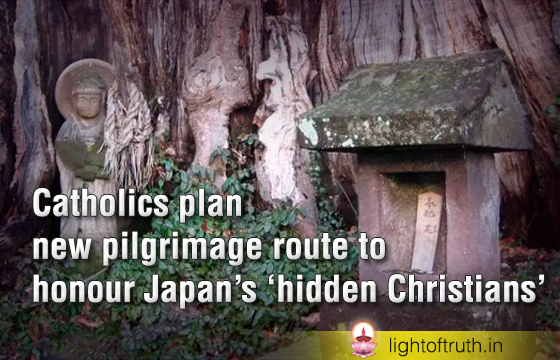
Catholics plan new pilgrimage route to honour Japan’s ‘hidden Christians’

The Catholic Church in Japan, in collaboration with European religious groups, is set to establish a new pilgrimage route in southern Japan to honour the first Christian missionaries and the “hidden Christians” who preserved their faith despite centuries of persecution.

The planned route, called “The Way of the Gospel,” will serve as a spiritual journey similar to Spain’s famed Camino de Santiago, Vatican news agency Fides reported on Nov. 8.

The Camino de Santiago (Way of St. James) is a 311-kilometer pilgrimage leading to the shrine of the apostle James in Santiago de Compostela, Spain.

The idea emerged after a Spanish Catholic delegation from the Archdiocese of Lucca visited Japan in September. The project is being developed with the Perugian Confraternity of Santiago de Compostela, together with the Japanese prefectures of Kagoshima, Kumamoto, and Nagasaki, their municipalities, and the dioceses of Kagoshima, Nagasaki, and Fukuoka. The confraternity promotes the pilgrimages to Santiago de Compostela. Local authorities in Kumamoto and Nagasaki, as well as the mayor of Amakusa and various public and private institutions, have welcomed the initiative.

The pilgrimage route will connect Kagoshima and Nagasaki, passing through sites associated with early missionaries, including St. Francis Xavier, Luis de Almeida, and Alessandro Valignano. It aims to promote reflection on Japan’s Christian heritage and showcase the region’s cultural and natural beauty.

The route will also include UNESCO-listed “Hidden Christian Sites in the Nagasaki Region,” recognized in 2018 for their global historical value. This acknowledgment has since inspired multiple cultural and faith-based initiatives in Japan and abroad. During his 2019 trip to Japan, Pope Francis paid tribute to the hidden Christians in Nagasaki, and in November 2024, he met with members of Japan’s Hidden Christians Research Association in Rome.

While some scholars suggest that Nestorian Christianity may have reached Japan as early as the 6th century, documented evidence shows that the Catholic faith was introduced by Portuguese traders in 1543. The arrival of St. Francis Xavier in 1549 further strengthened missionary activity, leading to a period of rapid growth before Christianity was banned in 1620 and missionaries expelled.

Persecution forced many believers to practice their faith in secret, earning them the nickname Kakure Kirishitan (“Hidden Christians”). The ban on Christianity was partially lifted in 1853, and full religious freedom was restored in 1873 under Western pressure, ending over two centuries of suppression.

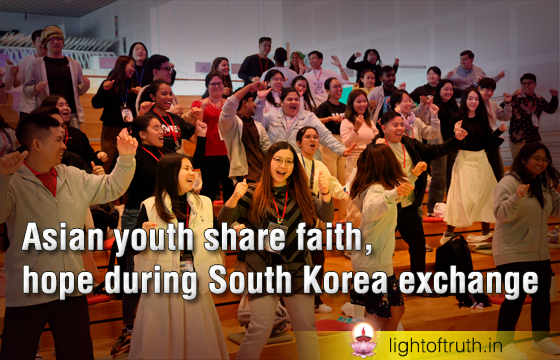
Asian youth share faith, hope during South Korea exchange

Catholic youth from 11 Asian nations who joined an exchange in South Korea described the experience as rewarding and a meaningful opportunity to share their faith and build lasting friendships. The Daejeon Diocese hosted the second WE Connect: Pilgrims of Hope event from Nov. 1-7, drawing 73 participants. WE Connect was founded by Asian delegates who participated in the 6th Asian Youth Day and by alumni of the “Fondacio” youth leadership program. Kim Hye-ji of the Daejeon Diocese said the gathering helped participants better understand one another and grow in faith. For example, “when I shared thoughts about Korea’s martyr spirituality, I felt the Holy Spirit moving,” Kim said. “Despite our differences in language and culture, I realized we are one in Christ,” she added, expressing hope that the experience would guide her in discerning her vocation.

Young people from Thailand, Cambodia, Bangladesh, Malaysia, East Timor, and the Philippines attended the program, besides those from the host country. Bishop Emmanuel Kanon Rozario, chairman of the Office of Laity and Family of the Federation of Asian Bishops’ Conferences (FABC), spent three days interacting with the young participants. The week-long program featured workshops, cultural exchanges, and faith-sharing sessions. Participants also learned about the history of the Korean Church and visited major pilgrimage sites associated with martyrs in the dioceses of Daejeon and Suwon.

Father Park Jin-hong, director of the Daejeon diocesan youth centre, expressed hope that the young people “while reflecting on the martyrdom spirituality of the Korean Church, will discover and share the unique spirituality of their own churches.” Park said the WE Connect initiative demonstrates the potential for building a “network of spirituality” among Asian youth. The event, he said, was “a small preparation for the 2027 Seoul World Youth Day (WYD),” which South Korea will host. The global Catholic youth gathering, founded by Pope John Paul II in 1985, draws tens of thousands of participants from around the world. Pope Leo XIV is expected to attend the 2027 celebration.

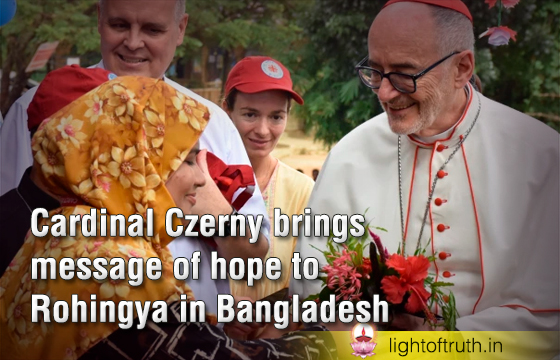
Cardinal Czerny brings message of hope to Rohingya in Bangladesh

Cardinal Michael Czerny, SJ, prefect of the Dicastery for Promoting Integral Human Development, concluded a five-day pastoral visit with migrants and displaced Catholics under the theme “Raising Hope to Foster a Culture of Care.” From Nov. 1–5, Czerny met with internally displaced Catholics near Dhaka and visited Rohingya in Cox’s Bazar, highlighting urgent issues of migration, poverty, and social justice.

Bangladesh hosts two vulnerable communities: approximately 50,000 internally displaced Catholics in Dhaka and Narayanganj, and nearly 1.1 million Rohingya refugees and migrants in Cox’s Bazar — considered the largest refugee camp in the world. The visit sought to affirm the Church’s solidarity with these groups and encourage collaboration among Church leaders, government agencies, and humanitarian organizations.

On Nov. 2, Czerny celebrated Mass with more than 600 Catholics in Modonpur, Narayanganj, an industrial area where many migrants from rural Bangladesh live in precarious conditions. Many have fled their ancestral villages seeking better livelihoods, often working in factories under difficult circumstances. “You are poor, but you gather to worship God,” Czerny told the faithful. “As you pray, God will answer your prayers. You will be blessed.”

For Sujon Das, 28, a machine operator originally from Thakurgaon, the encounter was deeply moving. “Cardinal Czerny admired us,” Das told CNA. “I had night duty on Nov. 3, but after work I joined the Mass. Normally we cannot attend Sunday Mass because we only get Fridays off — and sometimes we work even then.” Das recalled a painful memory: “On Aug. 5, 2024, during political unrest, miscreants set fire to our church. Still, we keep our faith.” The violence occurred during widespread unrest following the resignation of Prime Minister Sheikh Hasina, which resulted in attacks on religious minorities across Bangladesh.

During his homily, Czerny praised those who serve migrants and refugees: “Communities that welcome migrants can be a living witness to hope — a promise of a present and future where the dignity of all as children of God is recognized.”