Church joins rescue efforts as deadly floods hit central Vietnam

Church groups have joined rescue operations across central Vietnam after torrential rains and floods since Oct. 22 killed at least ten people and forced thousands from their homes, officials said. The Agriculture and Environment Ministry said about 100,000 houses in Hue and Da Nang were inundated, with floodwaters reaching up to four meters in some areas.

More than 150 landslides were reported and 2,200 hectares of crops were damaged across the region.

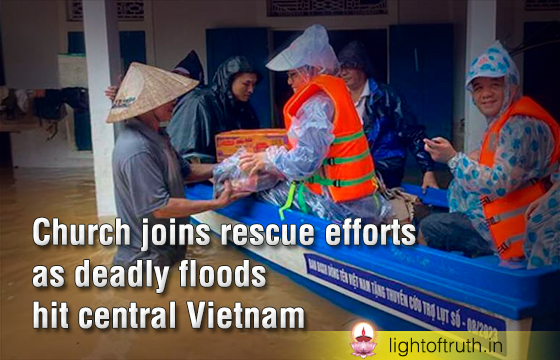
As emergency teams battled rising waters, Catholic aid workers mobilized quickly. Father Philippe Hoang Linh, deputy director of Caritas in the Hue Archdiocese, said church volunteers used boats to deliver food and drinking water to hundreds stranded in flooded homes. “We have to use boats to navigate narrow alleys to deliver food and drinking water — a gesture of humanity that rekindles hope amid hardship,” he said. Many church facilities, including the Hue Archbishop’s House and Pastoral Centre, were flooded, while parishes on higher ground opened their doors to shelter displaced families. In Quy Lai Parish, priests and laypeople distributed noodles and drinking water. “We’re trying to help people survive this difficult time. Many have lost all their food and belongings,” said Father John Baptist Pham Xu. Residents said floodwaters rose rapidly after hydropower plants released water from swollen reservoirs. “The water reached chest level inside our house, and electricity has been out since Oct. 27,” said Peter Nguyen, a Hue resident and father of two. “Much of our furniture was swept away.”
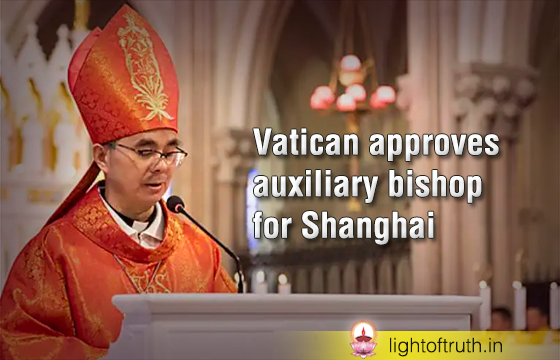
Vatican approves auxiliary bishop for Shanghai

The Vatican announced on 15 October that Pope Leo XIV appointed Father Ignatius Wu Jianlin as auxiliary bishop of Shanghai on Aug. 11, with his episcopal ordination taking place under the framework of the Provisional Agreement between the Holy See and the People’s Republic of China. Father Wu Jianlin’s consecration at St. Ignatius Cathedral marks a further development in the complex relationship between Beijing and the Vatican.

Chinese authorities had previously announced Wu’s “election” by an assembly of priests and laypeople on April 28, during the sede vacante period following the death of Pope Francis.

The Vatican Bollettino, published on 15 October, revealed that the Holy Father approved Wu’s candidacy on Aug. 11.

While his appointment was not previously made public, the announcement suggests the move was made in accordance with the Vatican-China agreement. At the time of Wu’s election, observers expressed concern that Beijing was exploiting the papal interregnum to assert control over episcopal appointments. Vatican statement confirms the new appointment was approved by Pope Leo XIV. Bishop Wu, 55, was born on Jan. 27, 1970, and studied philosophy and theology at Sheshan Seminary in Shanghai from 1991 to 1996. He was ordained a priest in 1997, and served in a number of roles as cleric. 

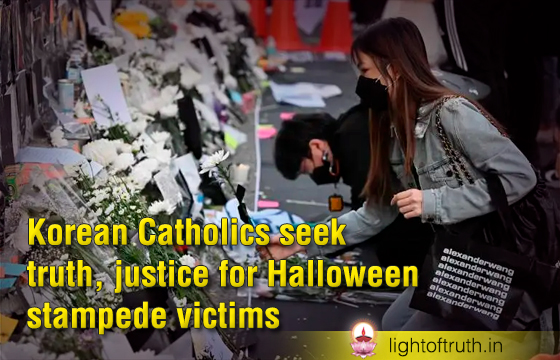
Korean Catholics seek truth, justice for Halloween stampede victims

South Korean Catholics joined a memorial program including Mass in the national capital Seoul ahead of the third anniversary of the Halloween stampede tragedy that claimed 159 lives, mostly young people. The event at Seoul’s Itaewon Square drew about 400 people, mostly Catholics, including family members of the victims, on Oct. 27.

The memorial was organized by the Catholic Priests’ Association for Justice, and the mass was presided over by Father Andrew Choi Jae-cheol, parish priest of St. Mark’s Church. During the program, participants laid flowers and lit 159 candles in memory of 159 victims who died in the stampede on Oct. 29, 2022, reportedly due to a crush caused by overcrowding in Itaewon district, a popular hangout site.

Names of all the victims were called out one by one as a mark of tribute to their memories. Father Choi termed the tragedy a “social disaster” and prayed for the souls lost and their families. He urged the authorities to “reveal the truth, ensure a thorough investigation, bring those responsible to justice, and help us build a safe nation where such a tragedy never happens again.” Father Leo Ha Chun-soo, who delivered the homily at the Mass, said that precious lives have been lost because “the state failed to fulfill its role.” 

Teresa Kim Nam-hee, mother of a victim, Gabriella Shin Ae-jin, said she has been appalled by the apathy of some people and the negligence of the government in ensuring justice for the victims. She alleged that some people played music on high-volume speakers to disrupt the memorial mass, which revealed “how cruel people can be.” “At the time, when uncontrollable anger and resentment threatened to consume me, I was able to endure that day because there were priests and nuns who kept the line in order and celebrated the mass with me without wavering,” she added. She hoped that the pain and suffering of the Itaewon tragedy would end “when our society empathizes with each other’s pain, holds hands, and puts life first.” Rose Lee Jeong-mi, who joined the memorial, said that the tragedy is a wake-up call to build a country safe for the next generations to live. “I will remember the pain of the bereaved families who carry painful memories and pray that I can share in their pain,” she added.

Southeast Asian leaders sign ceasefire between Thailand and Cambodia

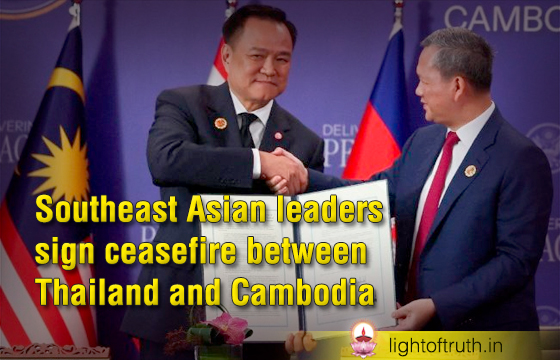
President Donald Trump on Sunday co-signed a ceasefire agreement between Thailand and Cambodia, alongside leaders from Malaysia, Thailand and Cambodia, during the Association of Southeast Asian Nations summit in Kuala Lumpur. Thai Prime Minister Anutin Charnvirakul, Cambodian Prime Minister Hun Manet and Malaysian Prime Minister Anwar Ibrahim joined Trump for the signing ceremony, which formalized a deal aimed at preventing further conflict along the disputed border between Thailand and Cambodia.

The agreement builds on a truce brokered in July, when Trump threatened to impose higher tariffs on both countries unless they ended five days of border fighting that left dozens dead and displaced hundreds of thousands. Under the first phase of the deal, Thailand will release 18 Cambodian soldiers and begin removing heavy weapons and landmines from the border region. Malaysian troops will be deployed to monitor the area and help prevent renewed hostilities.

The 500-mile  frontier between Thailand and Cambodia has been a source of tension for decades, stemming from a vaguely defined French colonial-era treaty signed in 1907. The latest flare-up centered on territory near the Laotian border and a region that includes several 1,000-year-old temples from the Angkor Empire.

Philippines: Bringing to light safeguarding as a mission of all

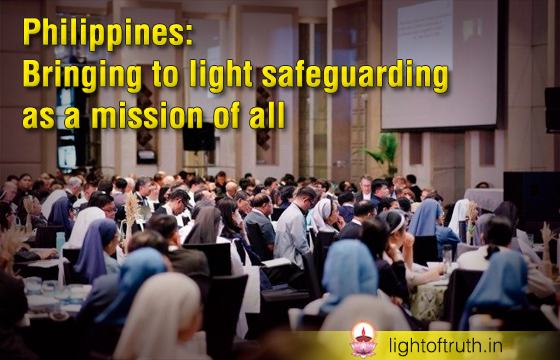
A conference highlighting the Church’s mission to protect minors and vulnerable persons has taken place in the Philippines, marking an important step in strengthening safeguarding efforts in the country. It was the first national conference of its kind in the Southeast Asian island nation – a country that stands as a stronghold of the Catholic Church in the region. Experts from across the Philippines and neighbouring Southeast Asian nations took part. More than 300 delegates – including bishops, religious superiors, members of religious orders, and lay experts – gathered for four days in Angeles City, Pampanga Province, under the theme “Our Mission of Safeguarding: A Journey of Hope and Compassion.” The event was jointly organised by the Catholic Bishops’ Conference of the Philippines (CBCP), the Pontifical Commission for the Protection of Minors (PCPM), the Conference of Major Superiors of the Philippines (CMSP), and the Manila-based Catholic Safeguarding Institute (CSI).

Coleen Rae Ramirez-Panahon is the Director for Safeguarding Research and Reflection at the Catholic Safeguarding Institute (CSI) in the Philippines. She told Vatican Radio that the country’s first national safeguarding conference brought new visibility to the idea that safeguarding is a mission shared by all. “In the past, the issue might have remained in the shadows and been seen as the responsibility of only a few,” the Philippine expert explained. “Now, the most immediate step we can take is to share what we’ve gained from the conference – above all, the conversion and commitment of our wider communities to safeguarding. We must bring everyone on board and open up the conversation, so that fears and apprehensions begin to fade. It’s equally important to get to know the vulnerable people in our midst, to understand their situations, their barriers, and their hopes. Only then can we shape the protective measures that pastors must adopt in their own parishes.”

Don Bosco Gujarat launches 100-day drive to end child marriage

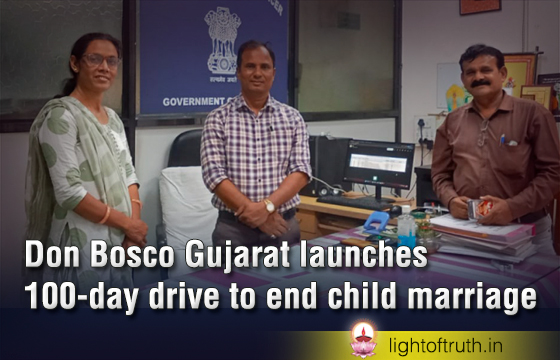
In a bold move to safeguard the rights of children, Don Bosco Gujarat, in collaboration with Just Rights for Children, launched a 100-day campaign to eradicate child marriage across Anand, Vadodara, and Chhotaudepur districts. The campaign was inaugurated on 13 October 2025 by Don Bosco Kawant and Don Bosco Kapadvanj, both of which have long championed the dignity and future of children. This regional initiative aligns with the national movement Bal Vivah Mukt Bharat (Child Marriage-Free India), launched by Union Minister Smt. Annapurna Devi in November 2024 at Vigyan Bhawan, New Delhi.

Under the national umbrella, DISHA Don Bosco, Kawant, and DRISTI Don Bosco, Kapadvanj — partners of the Just Rights for Children Alliance — have played a pivotal role in grassroots awareness and prevention. Nationwide, the campaign has prevented over 1.9 lakh child marriages, offering thousands of children the chance to pursue education and personal growth.

The 100-day intensive awareness drive, running from 1 November 2025 to 26 January 2026, aims to mobilize communities, strengthen local participation, and foster collaboration among stakeholders. Religious leaders — pujaris, maulanas, granthis — along with marriage enablers such as caterers, printers, musicians, and halwais, will be engaged to ensure vigilance and accountability. Village panchayats will play a key role in declaring child marriage-free zones. Between June and September 2025, Don Bosco teams profiled 150 villages, conducted community meetings, painted awareness messages on walls in 25 villages, and collected pledge letters from 150 families. A national workshop titled Voices of Survivors brought together 53 participants who shared stories of resilience and transformation. Don Bosco Gujarat continues its mission to educate, empower, and protect young lives. The campaign stands as a clarion call: every child deserves the right to grow, learn, and dream — free from the burden of early marriage.

Adivasi community’s push for rights and recognition sets the stage for Assam Assembly Elections 2026

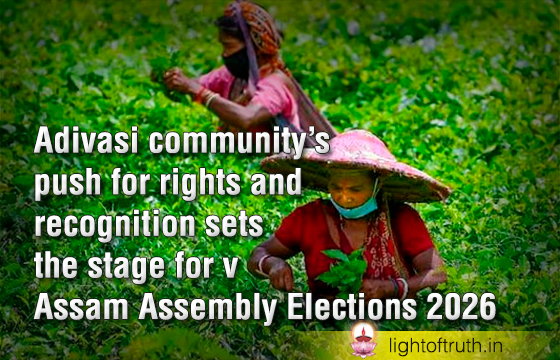
After decades of marginalisation, the Adivasi and tea tribes of Assam have demonstrated renewed collective strength through massive rallies in Dibrugarh and Tinsukia in October 2025. These mobilisations, which evoked memories of the tragic Beltola mayhem in 2007, signal the community’s resolve to press for long-standing constitutional and welfare demands ahead of the 2026 Assam Assembly Elections. With an estimate of around 20% of the state’s population—the Adivasi community is poised to play a decisive role in the electoral outcome, making their demands a crucial political issue.

Scheduled Tribe (ST) Status: This is the community’s most significant and long-standing demand. Despite migrating to Assam over a century and a half ago to work as indentured labourers in tea gardens, they have been denied constitutional recognition as an ST, unlike in their states of origin. The All Adivasi Students’ Association of Assam (AASAA) argues that the government has demonstrated a lack of political will to grant this status, a demand promised by the BJP in its 2014 campaign. Granting ST status would provide safeguards and benefits essential for their socio-economic upliftment. Impact on electoral dynamics: With millions of votes at stake, the Adivasi community’s united front can determine electoral outcomes in numerous constituencies. By focusing on shared concerns and exercising their voting power strategically, they can hold parties accountable and make their demands a central issue in the election discourse.
The rallies also bring to the fore a crucial need for the community to maintain vigilance over their leadership. History shows instances where internal and external political forces have exploited the community’s aspirations for personal gain. By actively rejecting and boycotting leaders with questionable integrity, the Adivasis aim to protect their collective voice and rights.

Court questions empty posts in India’s minorities commission

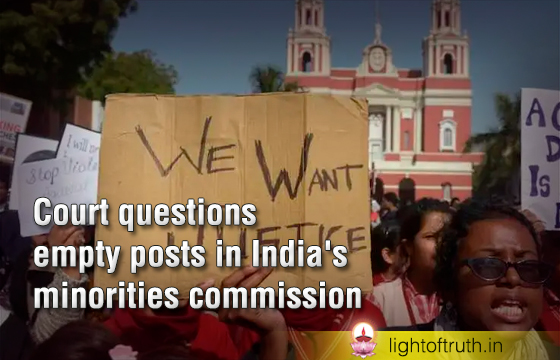
The Delhi High Court, the top court for the national capital region, issued a directive to the federal government to respond to the petition seeking explanations for prolonged vacancies in the federal National Commission for Minorities (NCM). The bench of Chief Justice D.K. Upadhyaya and Justice Tushar Rao Gedela observed on Oct. 15 that vacant posts of the commission chairperson, vice-chairperson and five members have rendered it ineffective and inoperative.

The court responded to a public interest litigation filed by Mujahid Nafees, convenor of the Minority Coordination Committee, an organisation focused on the welfare of minorities. In the petition, Nafees alleged that the government’s negligence in filling the top posts was a violation of constitutional safeguards for the minorities in the country. The National Commission for Minorities Act 1992 mandates the federal government to constitute the commission as a quasi-judicial body to safeguard the rights of minority communities. The commission remained largely defunct after several of its members moved out since November 2024, following completion of their five-year term.

Religious minorities form around 18 percent of India’s 1.4 billion people, more than 80 percent of whom are Hindus. Muslims are the largest minority community, forming 14.2 percent of the population, followed by Christians at 2.3 percent and Sikhs at 1.7 percent. The other religious minorities are Buddhists and Zoroastrians, the latter also known as Parsis. The Commission is mandated to have one member each from the six notified minority communities: Muslims, Christians, Sikhs, Buddhists, Parsis, and Jains.

Cardinal Filipe Neri: “Synodality Heals Divisions in a Polarised World”

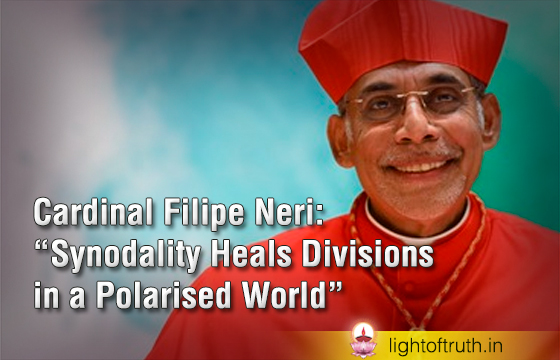
In an interview, Cardinal Filipe Neri Ferrão, President of the Conference of Catholic Bishops of India (CCBI) and the Federation of Asian Bishops’ Conferences (FABC), reflected on the meaning of synodality in today’s fast-changing and polarised world. He shared his hopes for the future Church in Asia, the vital role of the laity and youth, and the blessings he has received throughout his long and distinguished ministry as a priest and bishop. According to him, synodality means walking together, listening deeply, and discerning God’s will as a community. In today’s polarised world, especially with social media and AI sometimes dividing us, synodality offers a way to rediscover unity. It calls us to pause amidst the noise, to create spaces where voices, especially those often unheard, are genuinely listened to. This kind of collective listening and openness can help heal divisions not only within the Universal Church, but also beyond.

Supreme Court slams misuse of anti-conversion laws

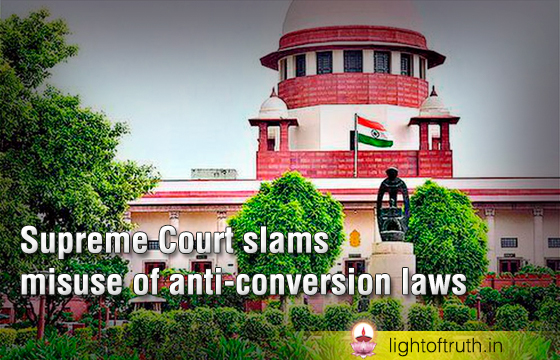
The Supreme Court of India on October 17 quashed multiple First Information Reports (FIRs) filed under the Uttar Pradesh Prohibition of Unlawful Conversion of Religion Act, 2021. The FIRs, lodged by third-party complainants affiliated with right-wing Hindu groups, accused Christian educators and clergy of orchestrating mass conversions—charges the Court found to be legally untenable and procedurally flawed.

The apex court’s ruling, authored by Justices J.B. Pardiwala and Manoj Misra, declared that “criminal law cannot be a tool to harass innocent citizens,” and emphasized that only the alleged victim or their immediate family may file a complaint of coercive conversion. The Court noted that none of the FIRs had been filed by actual victims, rendering them “incurably defective.”  Legal experts hailed the judgment as a watershed moment. “This ruling restores the sanctity of personal faith and curbs the weaponization of anti-conversion laws,” said constitutional scholar Anjali Menon. “It sends a clear message that religious choice is a matter of conscience, not criminal suspicion.”

The court’s decision also prompted a relook at pending cases across Uttar Pradesh, where dozens of FIRs had been filed under similar circumstances. “The judgment will encourage greater scrutiny of politically motivated complaints and protect minority communities from targeted harassment,” said advocate Ramesh Thomas, who represented several of the accused. In a poster circulated for public awareness following the judgment, the Court’s stance was summed up in bold clarity: “Faith is a matter of personal choice. No one else can police it.” As India navigates the tensions between religious plurality and political majoritarianism, this judgment stands as a constitutional compass—pointing firmly toward liberty, dignity, and the rule of law.