
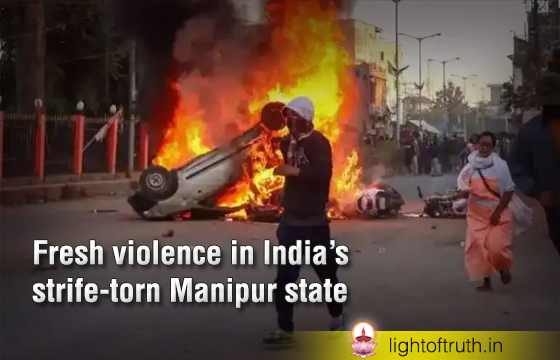
Fresh violence has erupted in India’s Manipur after the arrest of a prominent leader of a Hindu Meitei radical group, prompting authorities to tighten security in the strife-torn north-eastern state. Prohibitory orders were imposed at midnight on June 7, banning gatherings of more than five people in any location. Internet and mobile data services were also suspended, officials reported. The security measures will remain in effect for five days in the five restive districts of the northeastern state. The latest outbreak of violence erupted after the federal probe agency, the Central Bureau of Investigation, arrested A. Kanan Singh, leader of the Arambai Tenggol, an armed group representing the majority Meitei community.
He was picked up from the Imphal airport on June 7 for his alleged involvement in the ethnic violence that began on May 3, 2023, in the hilly state adjacent to civil war-torn Myanmar. The federal agency also reportedly took four of Singh’s associates into custody for interrogation. This upset the Meiteis, who protested at the airport and blocked roads to demand their immediate release. A government notification warned of the “imminent danger of loss of life and/or damage to public/private property, and widespread disturbances to public tranquillity and communal harmony” due to the violent protests. It also expressed apprehension that some antisocial elements might use social media to incite passions among the masses, which could have serious repercussions for the law and order situation. A Christian leader from the state confirmed that “there is unrest in many places in the Hindu majority Meitei areas.” “The latest violence seems to be a ploy on the part of Meiteis to delay the federal government’s efforts to restore peace in the state,” he told on June 9.
Daily Archives: June 14, 2025

Christians in India’s Odisha seek their right to belief
Christians in India’s Odisha have demanded that their constitutional right to freedom of religion be safeguarded amid rising religious persecution under the pro-Hindu Bharatiya Janata Party (BJP), which rules the eastern state. “Our people are assaulted, threatened, and forced to give up their faith in Jesus. This is the new situation in which we live in this state,” said Bishop Pallab Lima, who heads the United Believers Council Network India (UB-CNI). Lima told on June 11 that some 60 complaints, including violent assaults, threats, social boycott, denial of burial grounds, etc., were lodged with the police in the past few months. “The state’s police registered 32 FIRs [first information reports providing initial details of the crimes], but no action was initiated against the per-petrators,” he said. Lima alleged that the perpetrators belong to radical outfits associated with the BJP, which has been in power in Odisha since June last year. “The aggrieved Christians,” he said, “staged peaceful protest marches at 25 of 30 district headquarters in the state on June 9 to highlight their plight to the authorities.” The protesters also handed over petitions addressed to Indian President Droupadi Murmu, calling on her to protect Christians’ right to practice and proclaim their faith without any disturbance from anybody.
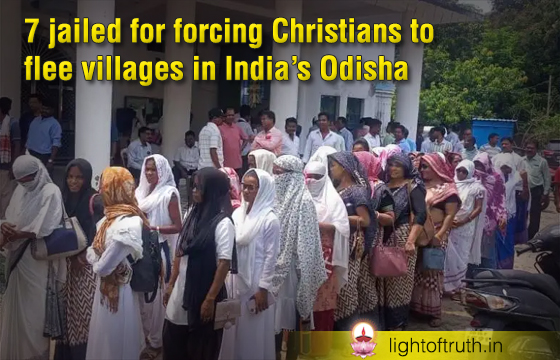
7 jailed for forcing Christians to flee villages in India’s Odisha
Seven people were sent to judicial custody by a court in India’s eastern Odisha state for attacking Christian families in villages and forcing them to flee their homes after they refused to give up their faith in Jesus. The incident was reported from Narayanpatna and Bondhugaon in Koraput district on June 10. At least 60 indigenous Christians, including women and children, were forced to spend the night in a nearby forest, after which they trekked to their relatives and friends’ houses in the area the next day, Church leaders said. “We are happy that police arrested seven persons on June 12 and a local court remanded them in judicial custody the same day,” said Bishop Pallab Lima, head of the United Believers Council Network India.
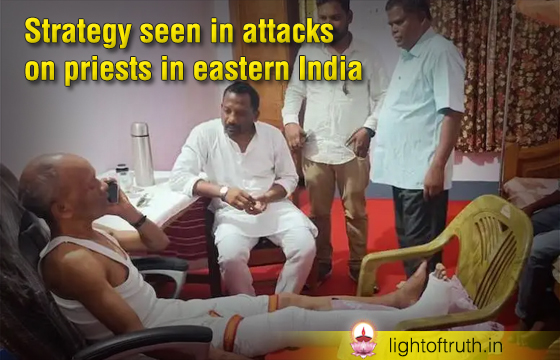
Strategy seen in attacks on priests in eastern India
Christian leaders in eastern India claim that the increasing incidents of robbery and assaults on priests in the region are systematic and part of a larger agenda to weaken the Church’s mission. In the latest incident, five masked men broke into the vicarage of a Catholic parish in Simdega diocese, in Jharkhand, during the early hours of June 9. The robbers “brutally assaulted” Samsera parish’s priest, Father Ignatius Toppo, and his assistant, Father Roshan Soreng, before stealing an undisclosed amount of money from a safe, according to Father Agustin Dungdung, the principal of the Church-run school in the parish. Father Dungdung, who resi-des in the parish house, was also attacked. In the past two years, “churches in eastern Indian states have increa-singly faced such attacks,” Bishop Theodore Mascarenhas of Daltonganj told on June 12.
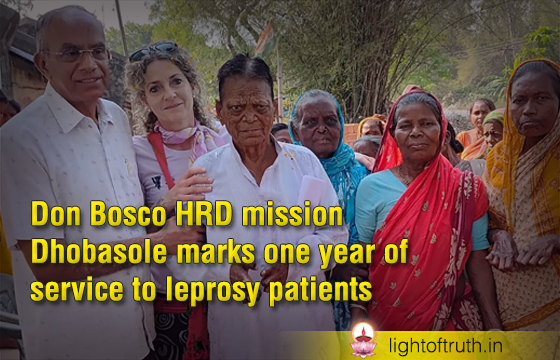
Don Bosco HRD mission Dhobasole marks one year of service to leprosy patients
As Don Bosco HRD Mission Dhobasole, West Midnapore completes one year of service to the Leprosy patients and their families, the team reflects on its humanitarian efforts to bring relief to patients in a leprosy hospital and rehabilitation villages. Nestled in Anchuri village, near Anchuri railway station, the government-run Bankura Leprosy Hospital serves patients from across West Bengal and neighbouring states. Despite leprosy being declared eradicated, thousands still suffer, particularly in underserved regions of India. Bankura hospital, with its 500-bed capacity spread across ten blocks, provides free medical care, food, and treatment. However, patients face extreme social stigma—ostracized by their families and communities, they often seek refuge in government and non-government facilities. A visit by Don Bosco HRD Mission Dhobasole last year revealed the lack of basic necessities. There are 350 men and 150 women patients, many live in discomfort, without proper storage for belongings, mobility aids, or essential medical equipment.

CCBI Inaugurates New Headquarters in New Delhi, Marking Historic Milestone
The Conference of Catholic Bishops of India (CCBI), the national episcopal conference for the Latin Catholic Church in India, celebrated a landmark event today with the solemn blessing and inauguration of its newly renovated General Secretariat at 9-10, Bhai Vir Singh Marg, New Delhi. His Eminence Cardinal Filipe Neri Ferrão, President of the CCBI, presided over the inauguration ceremony. His Excellency Leopoldo Girelli, Apostolic Nuncio to India and Nepal inaugurated the building. Archbishop Peter Machado, Vice President of the CCBI, blessed the office block, while Archbishop Anil Couto of Delhi blessed the residential section of the building. The event signifies a significant chapter in the history of the Episcopal Conference for the Latin Catholic Church in India.
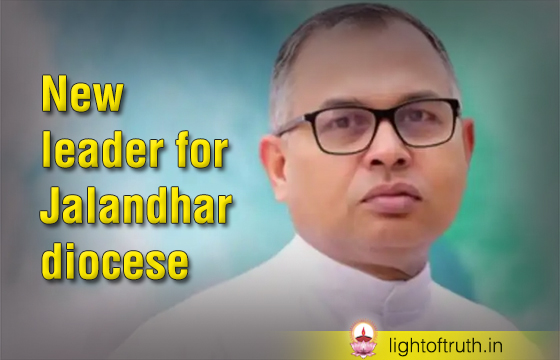
New leader for Jalandhar diocese
The Vatican has appointed a new bishop for India’s Jalandhar dioce-se in Punjab, four years after Bishop Franco Mulakkal stepped down des-pite a court clearing him of charges of raping a nun. The Vatican named Father Jose Sebastian Thekkum-cherikunnel as the new bishop on June 7. The 63-year-old priest serves as the financial administrator of the diocese. The diocese, which has been without a bishop for nearly seven years, has not announced the date of Episcopal ordination. Retired Auxi-liary Bishop Agnelo Rufino Gracias of Mumbai has been serving as its Apostolic Administrator since Sept. 20, 2018, a day before police arrested Mulackkal based on the complaint made to law enforcement. The bishop elect also comes from Kerala but was ordained a priest in 1991 for the Jalandhar diocese based in Punjab, the Sikh-dominated northwestern Indian state. In 2004, Thekkumcheri-kunnel obtained a Licentiate in Canon Law from the Pontifical Urban University in Rome. He served the diocese in various roles across parishes and at the diocesan seminary. Additionally, he held the positions of chancellor and judicial vicar of the diocese. In 2022, he was appoin-ted as the financial administrator.
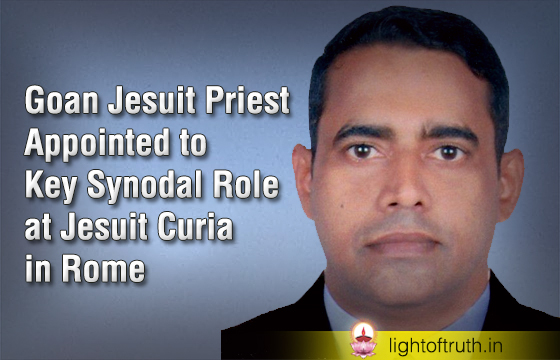
Goan Jesuit Priest Appointed to Key Synodal Role at Jesuit Curia in Rome
Jesuit Father Joseph Cardo-zo has been chosen to assist the Office of Discernment and Apostolic Planning for a Synodal Church. “It is in response to the call of the late Pope Francis, who after the completion of the Synod in Rome, had requested the Society of Jesus to help the Catholic Church in actualizing Synodality,” Father Cardozo told. The member of the Goa province will reside at the Jesuit headquarters in Rome. Jesuit superior general Father Arturo Sosa identified the area of discernment in common as a key contribution that the Society of Jesus can make to the synodal process. Discernment in common is a process where a group of people work together to identify the best course of action in a given situation. It’s often used in a religious context, where it’s seen as a way to discover God’s will for the group, explained Father Cardozo, who currently holds the post of vice provincial and the superior of the Jesuit community at Miramar, near Panaji.