

Despite health challenges that led to a cancelled trip to Dubai for COP28, Pope Francis maintained an ambitious travel schedule in 2024 that saw him draw large crowds in Asia and make his first-ever visit to Corsica as well as visiting Belgium and Luxembourg. The now-88-year-old pontiff’s longest apostolic journey was the 12-day tour of Southeast Asia and Oceania in Sept., where thousands of faithful attended papal events.
In Indonesia, Francis visited the grounds of Jakarta’s Istiqlal Mosque, where he joined Muslim leaders in discussing global challenges and signed a joint declaration condemning religious-based violence. “The path of inter-faith collaboration is essential to addressing global crises,” Francis told his audience. About 100,000 faithful later attended an outdoor Mass where the pope emphasized Catholic engagement in pluralistic societies.
In Papua New Guinea, Francis focused on Indigenous communities while blessing a new hospital for underserved populations. The pope’s message of hope reached its numerical peak in Timor-Leste, where an estimated 750,000 people – nearly two-thirds of the nation’s population – gathered for Mass in Dili.
September also brought some controversy during the pope’s visit to Belgium, where Prime Minister Alexander De Croo strongly criticized he pontiff’s comments on abortion.
During his in-flight press conference, the pope had called abortion “homicide” and referred to doctors who perform the procedure as “contract killers,” prompting De Croo to call such remarks “absolutely unacceptable.”
The dispute distracted from the actual focus of the Belgium visit: the 600th-anniversary celebrations of the Catholic universities of Leuven and Louvain-la-Neuve. Earlier in Luxembourg, Francis had challenged Catholics to evangelize an increasingly secular Europe, noting that “having wealth includes responsibility.” The papal travel year concluded on a historic note Dec. 15 in Corsica, where Francis became the first pope to visit the French Mediterra-nean island. His participation in a diocesan conference examining popular piety empha-sized the continued importance of local devotions in maintaining Catholic identity.
Daily Archives: January 3, 2025
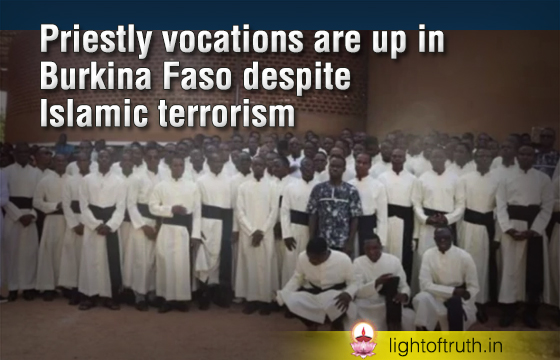
Priestly vocations are up in Burkina Faso despite Islamic terrorism
Despite constant terrorist attacks suffered by Catholics in Burkina Faso from Islamic fundamentalists, vocations to the priesthood have increased in recent years, especially in dioceses located in “danger zones.” Nearly 40% of seminarians come from these localities, which are the most affected by terrorism and violence.
According to the pontifical foundation Aid to the Church in Need (ACN), just at Sts. Peter and Paul Seminary alone, the number of candidates for the priesthood rose from 254 in the 2019-2020 academic year to 281 in 2024-2025. Terrorist violence began to wreak havoc in the African country in 2019. Father Guy Moukassa Sanon, the seminary rector, explained that during the holidays not all students can return home. Doing so would mean “mortal danger,” so they are taken in by diocesan centres, by host families, or are simply invited by their classmates to spend the holidays in safer areas.
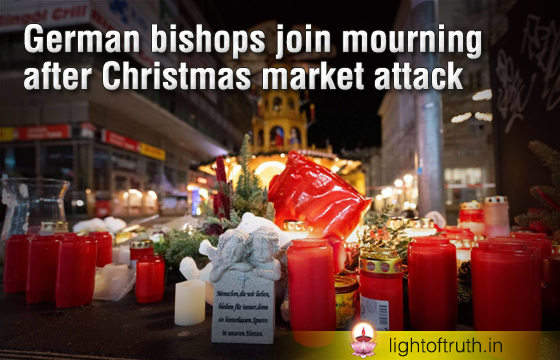
German bishops join mourning after Christmas market attack
The president of the German Bishops’ Conference and the Bishop of Magdeburg expressed their shock and offered prayers after a car attack at a Christmas market in eastern Germany on Friday, December 20 left five people dead and more than 200 injured.
Bishop Georg Bätzing of Limburg, the conference presi-dent, said the “attack in Magde-burg leaves us speechless. The horror, grief, and sympathy are felt today by many people through-out Germany and worldwide.”
He continued: “Our thoughts and prayers are in Magdeburg during these hours. As churches, we mourn with the relatives of the victims of this terrible attack and pray for the injured and the deceased, as well as for their relatives who now fear for their loved ones.”
Bishop Gerhard Feige of Magdeburg issued a statement immediately after the attack on Friday evening. “I think of those affected, their relatives, and the emergency services and include them in my prayers,” he said. “Especially in these days and before a feast where the message of God’s love, human dignity, and the longing for a healed world particularly move us, such an act is all the more frightening and abysmal.” Feige also said the attack presented “a challenge for our society to counter any extremism even more decisively and to work even more for peaceful coexistence.”
German Chancellor Olaf Scholz and Interior Minister Nancy Faeser visited the city earlier in the day to meet local officials and pay their respects at the site of the attack.
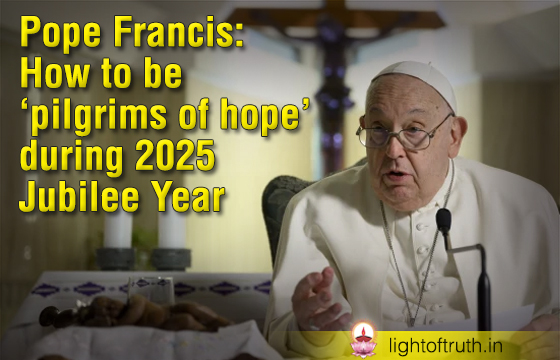
Pope Francis: How to be ‘pilgrims of hope’ during 2025 Jubilee Year
Pope Francis called on Ca-tholics to become “pilgrims of hope” in a BBC podcast on 27 December, emphasizing that “hope and kindness touch the very heart of the Gospel.”
Speaking just days after the opening of the 2025 Jubilee Year, the pope emphasized that “kindness is not a diplomatic strategy” nor “a set of rules to ensure social harmony or to obtain other advantages” but rather “a form of love that opens hearts to acceptance and helps us all to become more humble.”
“Wars, social injustices, and the many forms of violence we are exposed to every day should not dishearten us nor draw us toward skepticism and discouragement,” the Holy Father said in the audio message published Dec. 27.
The pope referenced G.K. Chesterton, noting that the British writer “was also held in high esteem by the Argen-tine poet Jorge Luis Borges.” Francis highlighted Chester-ton’s autobiographical invi-tation to “take the elements of life with gratitude and not for granted.”
Speaking about the recently begun jubilee year, Francis concluded with “a wish for hope, which is a theological virtue, together with faith and charity,” praying that “the new year bring us peace, fellow-ship, and gratitude.”
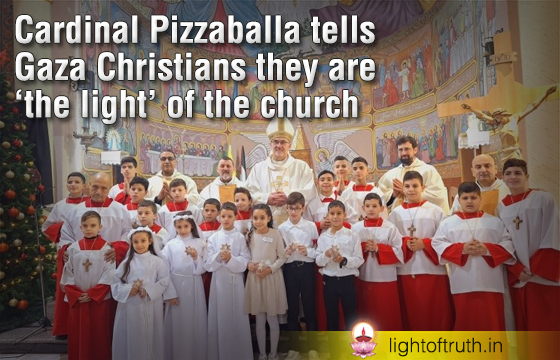
Cardinal Pizzaballa tells Gaza Christians they are ‘the light’ of the church
“You have become the light of our Church in the entire world,” Cardinal Pierbattista Pizzaballa told Gaza Christians Dec. 22 during a pre-Christmas visit aiming to bring the joy of the season to the suffering Christian community in the Gaza Strip.
After passing the Erez crossing at dawn, the Latin patriarch of Jerusalem said to Christians sheltering in the premises of Holy Family Parish in the war-torn Gaza Strip that that it was his “great joy at being among you today and extend to you the greetings of everyone who conveys their love, prayers and solidarity with you.”
Visibly moved and in white vestments forecasting Christmas joy, Pizzaballa arrived at the Gaza City Catholic parish with suitcases full of gifts. During the Mass, he also imparted the sacrament of confirmation to a number of young people, Vatican News reported.
“At Christmas, we celebrate the light and ask: Where is this light? The light is here, in this church. The beginning of the light is Jesus Christ, who is the source of our life. If we are a light to the world, it is only because of Him. At Christmas, I pray that Jesus grants us this light,” he said.
The visit marked the second time when the cardinal was able to join the Gaza community and their parish pastor, Father Gabriel Romanelli. The last time he was able to cross to Gaza was in May.
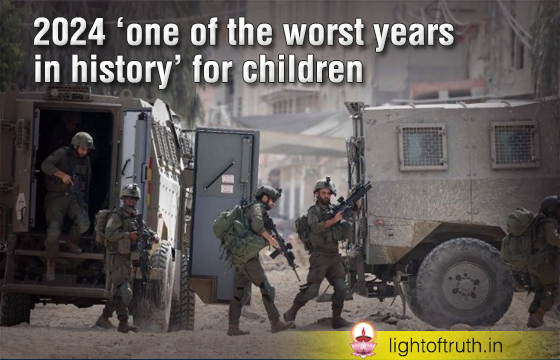
2024 ‘one of the worst years in history’ for children
The UN Children’s Fund, UNICEF, issued a new review documenting how 2024 is, by every measure, ‘one of the worst years for children’ worldwide on record and how their human rights are being violated in the most damaging and brutal of ways.
Having analysed the latest available data and prevailing global trends, UNICEF states that more children than ever are estimated to be either living in conflict zones or forcibly displaced due to conflict and violence, with a record number of children affected by conflict are having their rights violated. These violations, the Fund highlights, include being killed or injured, out of school, missing life-saving vaccines, and being critically malnourished.
UNICEF is calling for all parties to conflict, and for those with influence over them, to take decisive action to end the suffering of children, to ensure their rights are upheld, and to adhere to their obligations under international humanitarian law.
Decrying that this number is only expected to grow, UNICEF points out that conflict drives approximately 80 per cent of all humanitarian needs around the world, disrupting access to essentials, including safe water, food and healthcare. In addition, it documents that over 473 million children–more than one in six globally–now live in areas affected by conflict, with the world experiencing the highest number of conflicts since World War II.
“By almost every measure,” asserted UNICEF Executive Director Catherine Russell, “2024 has been one of the worst years on record for children in conflict in UNICEF’s history–both in terms of the number of children affected and the level of impact on their lives.” Russell observed that a child growing up in a conflict zone is far more likely to be out of school, malnourished, or forced from their home–too often repeatedly–compared to a child living in places of peace. “This must not be the new normal,” she appealed, “We cannot allow a generation of children to become collateral damage to the world’s unchecked wars.”
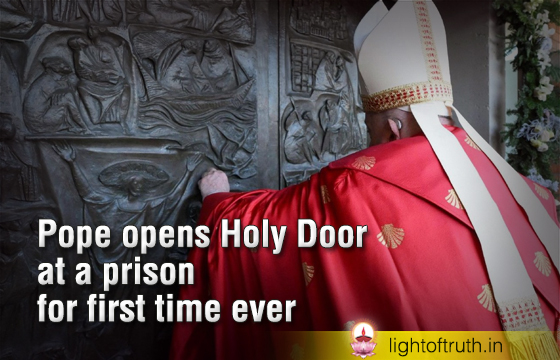
Pope opens Holy Door at a prison for first time ever
In the Rebibbia New Complex Prison in Rome, Pope Francis opened a Holy Door and celebrated Mass for prisoners on 26 December. “I wanted the second Holy Door I open to be here at a prison,” Pope Francis explained. For the 2025 Jubilee of Hope, the first Door to be opened was the Holy Door of St. Peter’s Basilica on 24 December 2024, then, for the first-time ever, the Pope opened the Holy Door at a prison.
Arriving at the Rebibbia New Complex Prison in Rome, the Pope spoke about the importance of opening the Door there. In front of the prison’s chapel, the Church of Our Father, he explained that he wanted everyone to “have the opportunity to fling open the doors to their hearts and to understand that hope never disappoints.”
After walking through the Holy Door himself, the Pope presided over Mass in the church. In his homily, Pope Francis reflected on the historic reason for his visit, describing it as “a beautiful gesture of opening.” But more than simply opening doors, the Pope encouraged the prisoners present, to open their hearts. Brotherhood, he said, is “open hearts.”
The Pope warned against closed, hardened hearts, which keep us from living. He explained that the Jubilee gives us the grace to “fling open” our hearts to hope. Even in the most difficult and challenging times, he reassured, hope does not disappoint.
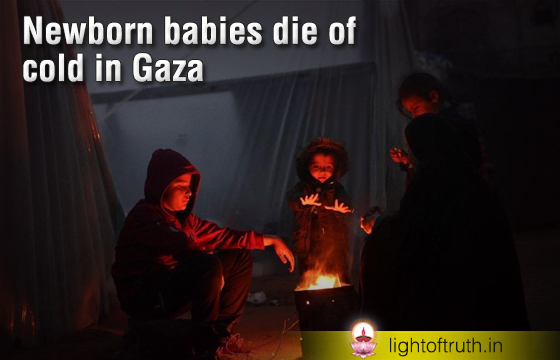
Newborn babies die of cold in Gaza
The UN children’s agency Unicef says that in addition to Israeli attacks, children are now dying from the cold and lack of adequate shelter. Edouard Beigbeder, UNICEF Regional Director for the Middle East and North Africa, said, ‘These preventable deaths reveal the desperate and worsening situation in which families and children in Gaza are living.’
Elsewhere, media in Israel is reporting that Israeli health authorities have completed a report to be submitted to the UN on the health of Israeli prisoners released by Hamas.
Reports suggest prisoners have suffered numerous problems, including losing 10-17 per cent of their body weight while in captivity due to malnutrition, being beaten and kept in isolation. Children were also beaten and women subjected to sexual violence.
In addition, the hostages did not have proper medical care. As a result, some elderly hostages, for example, developed thrombosis when forced to remain in place for long periods of time.
Meanwhile, the Israeli army has ended a military operation at Kamal Adwan Hospital in northern Gaza. The hospital was put out of service as a result of the raid. Reports suggest the Israeli army arrested 240 people, whom it claims are members of the extremist groups Hamas and Islamic Jihad, in the operation. The army also says it has arrested the director of the hospital. The World Health Organization (WHO) has repeatedly called for healthcare to be protected in Gaza.
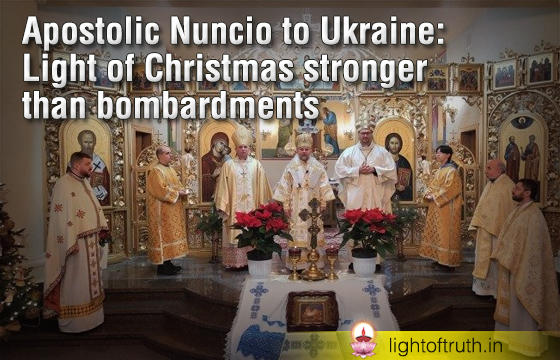
Apostolic Nuncio to Ukraine: Light of Christmas stronger than bombardments
“The light of Christmas is so intense and so great that it rises above all difficulties, above any aggression and any bombing.” The Apostolic Nuncio in Ukraine, Visvaldas Kulbokas, offered this reflection after the Christmas Eve Mass at the Latin Cathedral in Kharkiv, where he stood alongside the Pope’s almoner, Cardinal Konrad Krajewski, who serves as the Prefect of the Vatican’s Di-castery for Charity, as they celebrated the Christ Child’s birth despite the intense shelling end-ured by the city. This marks the second year that the Ukrainian Greek Catholic Church and the Orthodox Church of Ukraine cele-brated Christmas on December 25th.
But most importantly, as the Nuncio noted, “Jesus was present, born for us. And when Jesus is born in a place under constant attack and bombardment, His light becomes even more visible, it shines brightly.” The Lord, he suggested, was still their light shining in the midst of darkness, as the readings from the Prophet Isaiah proclaim. “These,” Archbishop Kulbokas continued, “are words that resonate power-fully in these war-torn places, because it is precisely the light of joy and hope that Christmas brings us. Moreover, he stressed, “It prepares us for the Jubilee of the Holy Year, as we knew that, at that same moment in Rome, the Holy Father was opening the Holy Door.”
It was a beautiful and intense celebration, but also a night of attacks, with missiles and drones exploding near the Ukrainian Greek Catholic Cathedral. Yet, as the Nuncio noted, “Thanks be to God, the church remained intact for the Christmas Day Divine Liturgy. The glass and everything else was in place.” Despite the bombing of Ukrainian energy infrastructure, which left over 500,000 people without heating and water, Christmas was still celebrated.
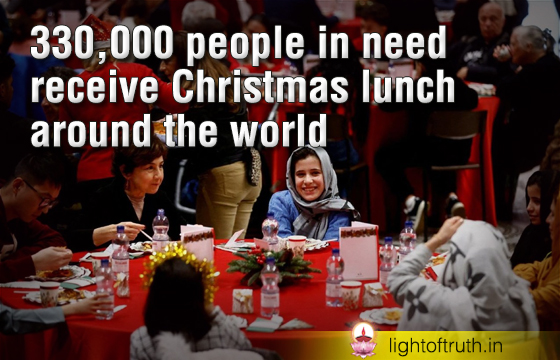
330,000 people in need receive Christmas lunch around the world
For 80,000 people in Italy and 250,000 others around the world, Christmas Day lunch was prepared by the Community of Sant’Egidio and the Italian police, the Carabinieri. This year, the police delivered presents for the children and desserts for the meals organized around Rome.
On the first full day of the Jubilee Year of Hope, the Community of Sant’Egidio prepared meals on Christmas Day for the homeless, elderly, and families struggling to provide. The meals came together through the support of volunteers, whose aim was to spread the message of hope to those facing challenges and “to everyone in a time marked by deep crises in various parts of the world and too many wars.” For everyone who came to the lunch, distinctions between class, pay, social status, or heritage all disappeared and everyone received a personalized gift.
A tradition dating back to 1982, when the first Christmas meal with the poor was held, the celebration began at the Basilica of Santa Maria in Trastevere. The event did not only take place in Rome but in 70 other countries. In the Trastevere neighbourhood of Rome, the Basilica was filled with people from all walks of life, including refugees who came to Italy using the humanitarian corridors. The menu for the lunch included lasagna, meatloaf, lentils, and traditional Christmas desserts.