
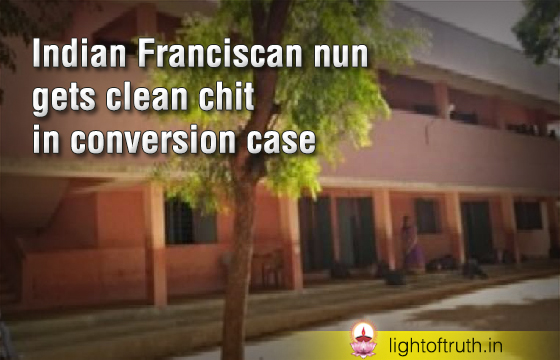
India’s premier investigation agency has exonerated a Franciscan nun in a case that accused her of causing a 17-year student’s suicide by attempting to convert her in a southern state. The Central Bureau of Investigation (CBI), in its report, ruled out religious conversion as the cause of the January 2022 suicide by the student of Sacred Heart Higher Secon-dary School in Michaelpatti under Kumbakonam Diocese in Tamil Nadu. The federal agency informed the Ma-durai bench of Madras High Court on Sept. 18 that it had interrogated 141 individuals and scanned through some 265 documents in connection with the case. It found no substantiating evi-dence to support the allegation of religious conversion and urged the court to dismiss the charge, it added. The CBI, however, said that the girl may have taken the extreme step as she was made to do domestic chores in the school hostel. The girl’s Hindu parents alleged she was forced to commit suicide after nuns harassed her for not converting to Christianity. Tamil Nadu police disputed this, saying the girl had not made any such revelation either to the police or the magistrate who took her dying statement.
Daily Archives: October 4, 2024

Indian pastor, 4 others jailed for religious conversion
Five people, including a pastor, have been jailed for religious con-version in the northern Indian state of Uttar Pradesh. Police said Pastor Gerald Massey Mathews of the Dasna Church, and the others were arrested for converting people under the pretext of curing their illnesses and offering their children a quality education. Uttar Pradesh is ruled by the Bharatiya Janata Party, which enacted a sweep-ing anti-conversion law in 2020.”
The police arrested Pastor Ma-thews and others on Sept. 23 and kept them in custody for more than 24 hours and on Sept. 25 sent them to jail in Dasna without giving any details,” Christian activist Minakshi Singh told on Sept. 25. “The police have kept us in the dark,” said Singh, general secretary of Unity in Compa-ssion, a charity based in Uttar Pradesh. The Christian lay leader said the sweeping anti-conversion law was enacted by the right-wing government without “proper study.” According to news reports, the complaint against the pastor and the others was filed by Naveen Singh, coordinator of the Dharam Jagaran Samanvay Samiti (Forum for Hindu Awakening).
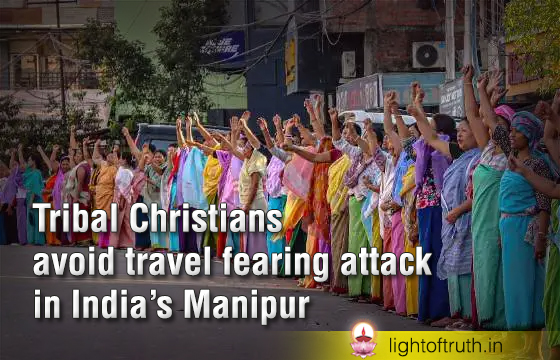
Tribal Christians avoid travel fearing attack in India’s Manipur
A tribal body in India’s strife-torn Manipur has announced a four-day travel advisory for Christians, cautioning them against an impending attack by their rival Hindu group. The Indigenous Tribal Leaders’ Forum (ITLF) on Sept. 24 urged Kuki-Zo tribal Christians in the hilly state in north-eastern India not to venture out of their areas as the Hindu Meitei commu-nity may launch an attack between Sept. 26 and 29. The ITLF has put all village volunteers on high alert, especially in its stronghold in Churachandpur district, where tribal students started a riot 16 months ago. The tribal body also announ-ced the closure of schools, other institu-tions and offices from Sept. 27-29 and a total shutdown on Sept. 28. In a statement on Sept. 24, ITLF said the Manipur gov-ernment recently accumulated highly advanced Medium Machine Gun (MMG) MK 2A1 weapons, and state security advi-sor Kuldiep Singh hinted at an impending “attack” on Sept. 28. “Previously, an assault on Kuki-Zo occurred shortly after the Manipur government issued a warning of an attack by 200 Kuki militants,” it noted. “This is their strategy to target us. They use the media to blame the Kuki-Zo for everything and Meitei militants attack us,” a Church leader who did not want to be named told on Sept. 25.
He said if the government has infor-mation about an impending attack by Kuki militants why not check them. “This announcement is a smokescreen to target us,” he added. We need to be cautious as the state government, led by the Bharatiya Janata Party is backing the Meiteis. “Mani-pur Chief Minister N Biren Singh is a Meitei himself,” added the Church leader. Singh has accused Christians of a role in the narcotic trade because many among them have ethnic and family ties in neighbouring Myanmar.

Catholic psychologists meet at Kolkata
A convention of psychologists has stressed the need for mental health workers caring for themselves while attending to other people’s mental health. As many as 75 Catholic psychologists from 12 Indian states attended the 25th annual convention of the Conference of Catholic Psychologists of India (CCPI) in Kolkata. Archbishop Thomas D’Souza of Kolkata presided over the opening of the September 20-22 convention at Seva Kendra that explored the theme, “Fostering Wellness – Innovative Approaches to Therapist Self-Care and Client Engagement.” Christian Brother Sunil Britto, the conference coordinator who introduced the theme: “Self-Compassion for Our Self-Care,” asked the participants to reflect on how they care for themselves while attending to the needs of their clients. Priya Puri, chief Clinical Psychologist and founder of “The Healing Space,” addressed the opening session on “The Therapist Dilemma.” She addressed the tension of being fully present for others while balancing one’s own needs. Shatabhisha Chatterjee, consultant Clinical Psychologist attached to Mental Health Foundation Kolkata who addressed trauma-informed care, introduced the therapists to Internal Family Systems theory, encouraging them to heal from vicarious trauma.
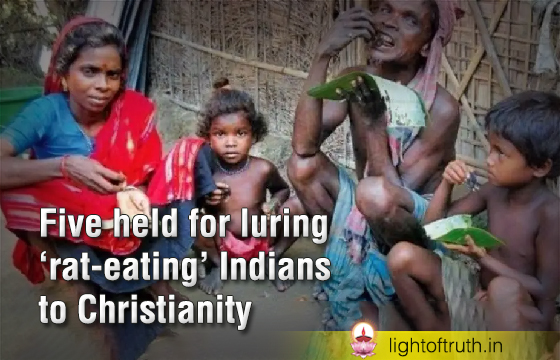
Five held for luring ‘rat-eating’ Indians to Christianity
Three Nepali nationals and two Indians have been arrested by police in the northern Indian border state of Uttar Pradesh for allegedly luring a “rat-eat-ing,” socially backward and marginalized community to embrace Christianity.
Police raided a Sunday prayer service in Bhedihari, a village on the Indian-Nepalese border and arrested Bhim Ba-hadur Gurung, his wife, Vishnu Gaya Devi, and Meena Ksha-triya, all Nepali citizens, and local residents Mangal and Ja-garnath on Sept. 22. According to news reports, Christian orga-nizations involved in religious conversion are active in the Musahar settlement area in Uttar Pradesh, India’s most populous and largest state. According to India’s national human rights commission, the Musahars, a declared schedu-led caste of Dalits (former untouchables) under the Indian constitution, are living in the northern Indian states of Bihar, Madhya Pradesh and Uttar Pradesh. They are reported to be the poorest among the Dalits. Musahar means “rat eater” in the Bhojpuri lang-uage, spoken in Bihar where they constitute 2.2 million of the state’s 104 million people. “We came to know about it through news reports and local sources. The matter is under investigation. Hence, it is too early to say anything,” said Pastor Jiya Lal, based in Sul-tanpur district in Uttar Pradesh. In February, the police arrested four Christians from the same locality, Lal added. “However, we have no updates in that case,” the pastor told.
on Sept. 23.
Religious conversion is banned in Uttar Pradesh, where Christians constitute a mere 0.18 percent of its 200 million people. Ruled by the Bharatiya Janata Party (BJP) since 2017, the Hindu-majority state enacted the Uttar Pradesh Prohibition of Unlawful Conversion of Religion Act in 2020 introduced by monk-turned-politician Yogi Adithyanad’s government. His right-wing government amended the draconian law in July this year which was passed by the state assembly in August. Under the amended legislation anyone will be able to file a police complaint, unlike before when only conversion victims, their parents and other close blood relatives could do so. Penalties will also get tougher with life imprisonment now a possibility in cases of forced conversions. The law will come into force once the state governor Anandiben Patel gives her nod, which is just a formality. “Since the [original] anti-conversion bill was passed in 2020, violence against the Christians has increased,” Uttar Pradesh-based Pastor Dinesh Kumar told UCA News on Sept. 23. Often allegations of religious conversion against Christians have proved false, he said. The BJP and its parent paramilitary outfit the Rashtriya Swayamsevak Sangh (RSS) are against missionary activities of the Indian Church among India’s Dalits and indigenous people who are currently grouped under Hinduism. Dalits and indigenous people make up more than 25 percent of the South Asian nation’s mammoth 1.4 billion people. Uttar Pradesh ranks second among states with regard to anti-Christian violence, according to the United Christian Forum, an ecumenical group based in New Delhi
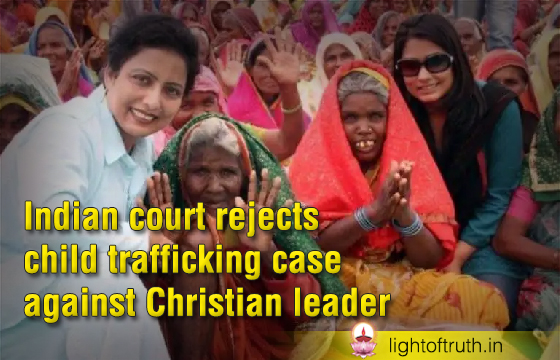
Indian court rejects child trafficking case against Christian leader
The top court of a central Indian state has quashed a cri-minal case of child trafficking against a Protestant leader, say-ing it was ill-intended and meant to damage his image. The Jabalpur bench of Madhya Pradesh High Court “quashed the false case on Sept. 23,” said Shashank Shekhar, a lawyer representing Ajay Lall, founder of the Central India Christian Mission. The high court noted that the case against “the petitioner is sugar-coated with ill-intention and made to belittle his image in the soci-ety,” Shekhar told. Police in Madhya Pradesh’s Damoh district charged Lall in August with committing various offen-ses under the Juvenile Justice (Care and Protection of Child-ren) Act. Lall was accused of not sharing details of two children who stayed at his orphanage 15 years ago, which led to the registration of a case of child trafficking. The bench of Justice Sanjay Dwivedi sla-mmed the police for registering the false case. He said the action was initiated against Lall without a complaint or obje-ction from any children or their parents. The high court also noted the arbitrary role played by the National Commission for Protection of Child Rights (NCPCR), a statutory federal body to protect the rights of children. “A well-orchestrated campaign and negative media coverage was carried out to malign the image of an insti-tution that extends a helping hand to poor children,” said Daniel John, a Catholic leader based in the state capital Bho-pal.

Nuns prioritize young Catholics to keep them in Church
Catholic women religious in India have enhanced their youth ministry, with the aim to bring young people closer to the church and their traditions. “This involves not only working on their faith formation, skills training or academic excellence, but [also] understanding and accepting them as they are with their dreams, weaknesses and strengths,” said Apostolic Carmel Sister Maria Nirmalini, who heads the women’s wing of the Conference of Religious India. Young people in India, she told Global Sisters Report, are losing their trust in an adult-dominated world and migrate to foreign countries in large numbers for freedom and growth, leaving their parents and their Christian heritage. Youth distancing from the church was first studied by the National Youth Commission of the Evangelical Fellowship of India in 2012, which found that church attendance had dropped during the teen and young adult years: Only 29 percent of youths continued attending church frequently while in college, and 40-50 percent of students in youth groups reportedly struggle in their faith after graduation. “It is high time we recognized this dangerous trend and be with the youth,” said Sister Nirmalini, who led the Conference of Religious India until May. “Youth are not going away from the church, but the church is moving away from them,” added the nun, who has spent decades as an educator. The women religious’ youth ministry received a boost in May at the conference’s triennial national assembly, which voiced concern over Catholic youths’ distancing from the church, as well as their mass migration. (According to the 2023 Indian Student Mobility Report, about 1.3 million students from India went overseas for studies in 2022, and the report’s authors predict that about 2 million students from India will be studying abroad by 2025.)
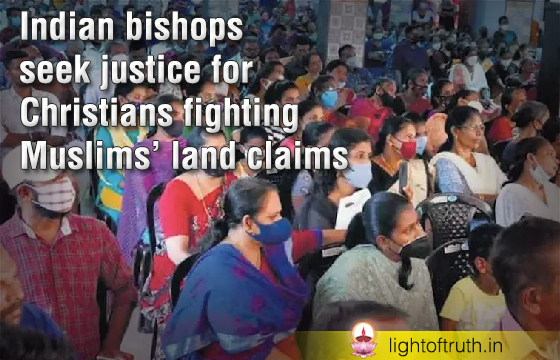
Indian bishops seek justice for Christians fighting Muslims’ land claims
Catholic bishops in southern Indian Kerala state have petitioned a parliamentary panel seeking justice for over 600 families, the majority of them Christians, after a Muslim body claimed that their land and homes were once donated as charity for Muslim welfare. Cardinal Baselios Cleemis, president of the Kerala Catholic Bishops Conference, petitioned the Joint Parliamentary Committee (JPC), which is studying amendments pro-posed to a 1995 law meant to manage donated properties of the Muslim community across India. Father Michael Pulickal, who heads the bishops’ Commission for Social Harmony and Vigilance, said the Waqf Board’s claim, first made in 2019, has caused “severe hard-ship” to hundreds of families in the coastal villages of Ernakulam district. The board claims an area covering some 1,000 land titles currently occupied by 600 families of various religious backgrounds was donated as Waqaf land for Muslim charity. These families face the threat of being vacated from the land “they have legally purchased,” the priest told on Sept. 25. “Our aim is to ensure that no one shall be displaced from their rightful properties,” Pulickal, who has conducted extensive study into this dispute, told on Sept. 25. “This situation has led to serious human rights violations, infringing on their constitutional rights to live and own property,” he said. The Cardinal in his Sept. 10 petition, a copy of which was made available on Sept. 25, said the government must “take immediate and decisive action to resolve this issue.” The Waqf Board’s claim has no legal validity and once such a claim is made on any land, “it will go through extremely complicated legal procedures. If necessary judicial and government inter-vention is not done in time, the land will be permanently vested in the Waqf Board,” Pulickal said.

Indian court dismisses petition against Missionaries of Charity
A petition seeking a special probe into shelter homes, including those run by the Missionaries of Charity (MC), in a central Indian state has been dismissed by the country’s top court. “Yes, we are aware of the case; but don’t want to comment on it,” said a nun from the Mother House, the headquarters of the congregation started by St. Mother Teresa, in the eastern Kolkata city, on Sept. 25. The petition was filed by the National Commission for Protection of Child Rights (NCPCR) in 2020, two years after MC sisters were accused of selling babies from their shelter homes in the central state of Jharkhand. In 2018, a raid was ordered by the then Bharatiya Janata Party (BJP) government in the state. That same year, Jharkhand police arrested a nun from the Kolkota-based congregation and sent her to jail for close to three months following a complaint from a couple over payment made while adopting a child. The NCPCR said it approached the top court after the new state government made continuous attempts to sabotage its probe. Its counsel said the child rights panel wanted a “court-monitored, time-bound” probe into all shelter homes in Jharkhand. The Supreme Court on Sept. 24 dismissed the petition saying it “is totally misconstrued.” “Don’t drag the Supreme Court into your agenda,” a bench of Justices B V Nagarathna and Nongmeikapam Kotiswar Singh told the child rights panel, which reports to the federal government of Prime Minister Narendra Modi.
The ruling BJP used the allegations against the MC nuns to target other shelter homes and sought scrapping of the congregation’s license to receive foreign funds. In 2019, the right-wing party lost power and a secular regional party came to power in Jharkhand.
“It is shocking to learn that a federal statutory body like the NCPCR can file a frivolous petition before the top court,” said A. C. Michael, a Catholic leader based in the national capital New Delhi. On the other hand, the court should appoint a special team to probe the NCPCR as it often oversteps “into areas beyond its jurisdiction to harass Christian institutions,” added Michael, a former member of the minority commission in the Delhi government. Christian leaders have accused the NCPCR under its current chairperson Priyank Kanoongo of conducting raids on their institutions in violation of the laid down norms and registering false cases against bishops, priests, and nuns.
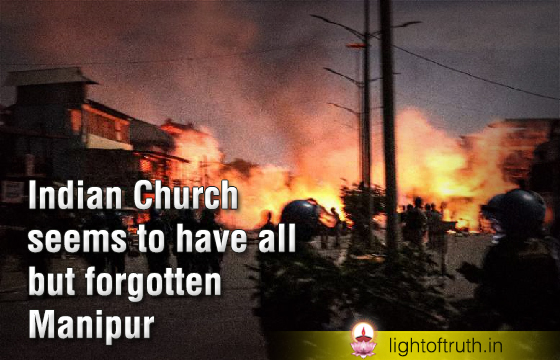
Indian Church seems to have all but forgotten Manipur
The sensitive border state of Manipur “is engulfed in violent anarchy,” says M.G. Devasaha-yam, a retired bureaucrat from India’s elite civil service cadre, who previously served as an army officer seeing action in war and engaging in internal security matters. Devasahayam, a guiding force of an exceptionally influen-tial group of retired civil servants and judges who have taken on the government of Prime Minister Narendra Modi, this week cau-tioned that the decision to arm police with mortars and machine guns is not the way to a “Manipur solution.” He quotes another retired army officer living in the state, Lieutenant General L. Ni-shikanta Singh, saying Manipur is now “stateless” where life and property can be destroyed by anyone at any time, “as it happens in Libya, Lebanon, Nigeria, Sy-ria.” “It seems that Manipur has been left to dissolve in its own juice. Is anyone listening?” he adds. Among those not listening is the Indian prime minister, who was in New York recently to add-ress the United Nations General Assembly. He attends such inter-national events regularly and torus other pasts of India but has not visited Manipur once. He has also failed to announce any action program on restoring peace and providing relief to the more than 60,000 people living in refugee camps in the state or scattered elsewhere in the country without any livelihood, and often with little food or medicines. The fact that most of the 250 or so dead are Christians and over 400 churches have been destroyed in the state has helped consolidate the argument that the persecution is both ethnic and targeted against Christians.
All the Kuki-Zo-Hmar are Christians, of Catholic and several Protestant denominations. The government says it is just ethnic strife. Amnesty International in a recent report on Manipur found “a picture of a state missing-in-action” despite the claims of “timely intervention” and a promise of financial aid. The London-based rights group accused the state government of a “violation of UN Guiding Principles on Internal Displacement.”