
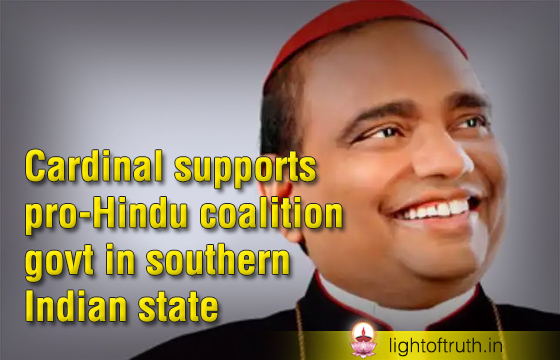
Indian Cardinal Anthony Poola has pledged the Christian com-munity’s support for the new government in southern Andhra Pradesh state that unseated a Christian-led government in the recently concluded polls.
N. Chandrababu Naidu was sworn in as state chief minister on June 12 for the fourth time. He heads a coalition government com-prising his Telugu Desam Party (TDP), regional Jana Sena party, and the pro-Hindu Bharatiya Janata Party (BJP). In a letter to the new chief minister, Cardinal Poola assured “support of the Catholic Church and the Christian com-munity” to make the state “inclusive and sustainable.” The 62-year-old cardinal, archbishop of Hyderabad in the neighboring Telangana state, also promised “prayers for prosperity, peace and harmony in Andhra Pradesh.” He was made a cardinal in 2022. His Telangana state was carved out of Andhra Pradesh in 2014. The cardinal heads the regional Telugu Catholic Bishops’ Council, which includes all the Catholic bishops of Andhra Pradesh and Telangana. Telugu is the official language of both the states.
“We hope the alliance partners will keep a check on the BJP,” said Father Anthony Thumma, advisor to the Telugu Federation of Churches. Nadu’s alliance came to power after defeating the YSR Congress, a regional party headed by Jagan Mohan Reddy, a Church of South India member. He led the state government for five years and kept friendly terms with the BJP. Both Naidu and Reddy “always worked for the welfare of the people, especially for minorities in the state,” said Fr Thumma, also secretary of the Indian bishops’ Office of Dialogue and Ecumenism.
Daily Archives: June 15, 2024
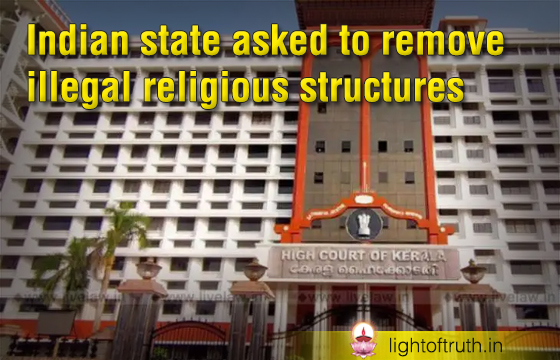
Indian state asked to remove illegal religious structures
The top court in southern Indian Kerala state has asked its communist-led government to remove illegal religious structures on public land. The Kerala High Court’s order “will have a widespread implication if implemented in letter and spirit,” said a Church leader who did not want to be named. He told that the forceful removal of illegal religious structures might lead to opposition. Encroachment on government land is prohibited under the Kerala Land Conservation Act. However, religious structures, including Christian crosses, can be seen across public lands in Kerala. “Nowadays, it is a trend to erect stones or crosses in public places and thereafter to start worshipping these stones and crosses with religious col-or,” said Justice P V Kunhikrishnan of the Kerala High Court. People need not encroach upon government land “to construct religious structures,” Justice Kunhikrishnan told the Kerala government, led by the Communist Party of India, in his May 27 order. Justice Kunhikrishnan has directed the state government to set a deadline for executing the order to re-move illegal structures from public land.
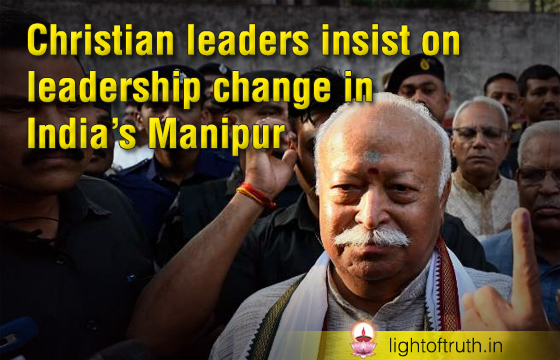
Christian leaders insist on leadership change in India’s Manipur
Christian leaders have urged India’s newly sworn coalition government to change the leadership in strife-torn Manipur where ongoing sectarian violence since May 3 last year has claimed around 220 lives and displaced over 50,000, mostly tribal Christian people. Their appeal came in reaction to the call by chief of the parent organization of Prime Minister Narendra Modi’s Bharatiya Janata Party (BJP), to find a solution to the escalating violence in the remote northeastern state. A C Micha-el, a New Delhi-based Catholic leader, said Mohan Bhagwat, chief of the Rashtriya Swayam-sevak Sangh (RSS or national volunteers’ group), holds considerable influence over the ruling BJP. Bhagwat addressed a gathering in Nagpur city, the RSS headquarters, on June 10 and said, “It is important to re-solve the conflict as a priority.” Michael said, “Merely saying so is not enough.” The Christian leader said Bhagwat should take steps to remove federal Home Minister Amit Shah and Manipur Chief Minister N Biren Singh from their offices. “They [Shah and Singh] are responsible for the current plight of the people of Manipur. If they continue to be at the helm of affairs, no justice could be expected for the suffering people,” Michael added. Tribal Christians and majority Meitei Hindus in Manipur have been fighting since May 3 last year over granting tribal status to the Meiteis to avail educational and job benefits under India’s affirmative action program.
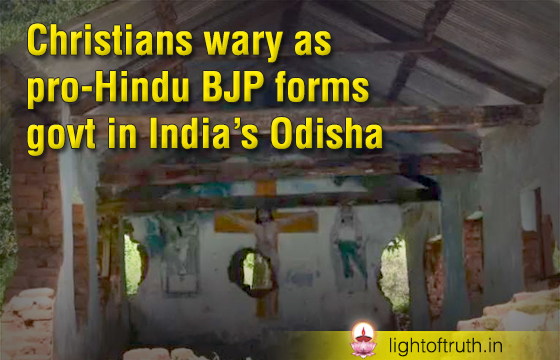
Christians wary as pro-Hindu BJP forms govt in India’s Odisha
The Christian community in an eastern Indian state has taken a cautious “wait and watch” approach after the pro-Hindu Bharatiya Janata Party (BJP) won a landslide in the state, where anti-Christian violence claimed around 100 lives over 15 years ago.
The BJP pulled off a stunning victory in the just concluded Odisha state elections. It defeated the Biju Janata Dal (BJD), a secular regional party that ruled the state uninterruptedly for 24 years. The BJP won 78 seats in the 147-member Odisha State Assembly and se-cured 20 of the 21 parliamentary seats in the simultaneously held state and parliamentary elections. The results were declared on June 4. Mohan Majhi, a four-time BJP legislator, was sworn in as the chief minister on June 12. The 52-year-old politician was a teacher in a school run by the powerful Hindu group Rashtriya Swayamsevak Sangh (RSS—National Volunteer Corps). The RSS is considered the mother organization of the BJP and an umbrella body of all hardline Hindu organizations in the country that are blamed for attacking religious minorities such as Christians and Muslims. “The change of guard is a matter of concern for us Christians as our people have not yet fully reco-vered from the shock of the 2008 Kandhamal riot,” said Father Ajay Singh, a priest from the Archdiocese of Cuttack-Bhubaneswar, based in the state capital Bhubaneswar. It is the first time the BJP has come to power on its own strength in the state. The new chief minister Majhi is regarded as “a strong and firebrand tribal leader” from the mineral-rich Keonjhar (now Kendujhar) district, which hit headlines in early 1999 for burning to death Australian missionary Graham Staines and his two sons. “We will wait and watch how the new government will run the state as we cannot judge a new government based on the record of a political party or its affiliate groups,” Singh, who is an activist-lawyer, told. The Catholic priest said the only relief was that the BJP failed to garner the 272 seats required for a majority in the parliament.
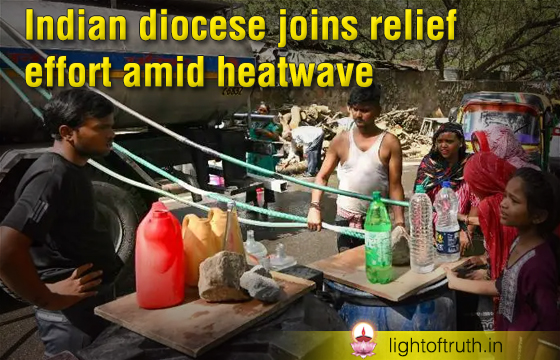
Indian diocese joins relief effort amid heatwave
A Catholic diocese in a northwestern Indian state has joined government agencies in providing relief to people reeling under severe heatwave conditions that have reportedly claimed over 120 lives. Local media reported 122 deaths in Rajasthan state due to the extremely hot weather, with nearly half of those occurring between May 23 and May 30.
The India Meteorological Department issued a red alert on May 30 for Rajasthan, Delhi, Punjab, Haryana, Chandigarh, and Madhya Pradesh in the northwest and central parts of the country. Experts cautioned against heat-related illnesses and suggested that state governments take adequate preventive measures to protect vulnerable people. The mercury surpassed 50 degrees Celsius (122 degrees Fahrenheit) in Rajasthan’s Churu town and neighbour-ing Haryana’s Sirsa town. A part of the national capital New Delhi recorded the country’s highestever temperature: 52.9 degrees Celsius (127.22 de-grees Fahren-heit). “It is very disturbing to learn that so many people have lost their lives in the extreme weather conditions,” said Emeritus Bishop Oswald Joseph Lewis of Jaipur diocese in Rajasthan. He told that volun-teers at the diocese’s social service wing are reaching out to people to help and guide them. “Our people are going house to house to make people aware of the extreme weather conditions, suggesting precautions to be taken and giving them medicines,” the prelate said. Lewis said most casualties were reported among daily wage laborers compelled to work under the hot sun. “Our volunteers are providing them free lunch and water” to compensate for the lost daily wages, he added. The prelate said theirs was a small effort to help the government agencies deal with the situation. Shashi Dharan, the public relations officer of the Delhi Archdiocese, said they have made arrangements for drinking water outside churches in the national capital.
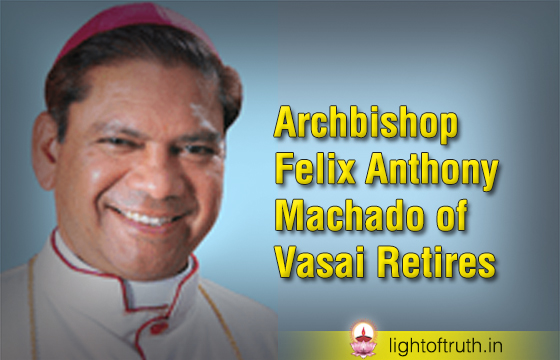
Abp. Felix Anthony Machado of Vasai Retires
His Holi-ness Pope Francis accepted the resignation of Archbishop Felix An-thony Machado (76) from the pastoral governance of the diocese of Vasai on June 6, 2024. He was the bishop of Nashik (2008-2009) and Vasai (2009-2024). He was the Secretary General of the CBCI (2020-2024). Archbishop Felix Anthony Machado was born on June 6, 1948, in the parish of Remedy, then Archdiocese of Bombay. He received priestly ordination on October 30, 1976; initially incardinated in the Archdiocese of Bombay; with the erection of the Diocese of Vasai, in 1998, it passed to the latter. From 2000-2008 he has been Under-Secretary of the Pontifical Council for Interreligious Dialogue. He was appointed Bishop of Nashik on 16 January 2008 and ordained Bishop on 8 March 2008. He was transferred to the diocese of Vasai on 10 November 2009. He was elected the Secretary General of the CBCI in 2020 and re-elected in 2022.
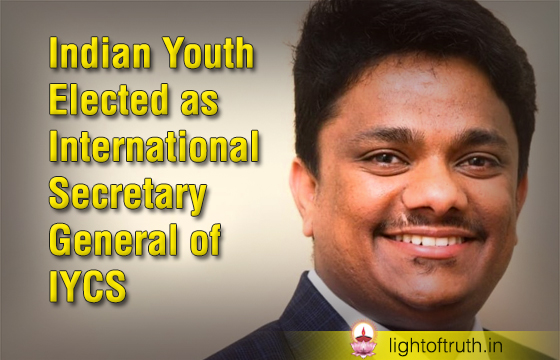
Indian Youth Elected as International Secretary General of IYCS
Adv. Roshan Melwyn Lobo from the diocese of Mangalore has been elected as Secretary General of the International Young Catholic Stu-dents (IYCS), a global Catholic action movement recognised by the Holy See and the United Nations. He will operate from IYCS headquarters in Paris. He was elected as the Secretary General in the 17th IYCS World Council, held from May 16 to 26, 2024, in Jordan.
Roshan, born on January 28, 1998, holds a B.Com. from St Aloysius College, an LL.B. from St Joseph’s College of Law, an MBA in International Business from Pondicherry Central University, and an LL.M. in Constitutional and Administrative Law from Christ University, Bangalore. He is currently an adjunct faculty member at St Joseph’s College of Law, Bangalore. He has extensive involvement in the Catholic youth movement, including roles such as President of the Diocesan Executive Committee (DEXCO) of the Young Students’ Movement, Member of the National Executive Committee of YCS/YSM India, Edi-tor of the National YCS YSM News-letter ‘The Search”, and representing India in international forums like World Youth Day 2016 in Krakow, Poland, and the World Youth Parliament 2017 in Beijing, China.

Indian Supreme Court: Anti-conversion law may be ‘unconstitutional’
Catholics in India expressed optimism following the Supreme Court’s recent co-mments that a draconian anti-conversion law may be found to violate the Indian Constitution. During a May 16 hearing concerning the anti-conversion law in northern Uttar Pradesh state, the Supreme Court noted that “some parts [of the law] may seem to be violative of the fundamental right to religion guaranteed under Article 25 of the Constitution.”
“This Supreme Court observation gives us great hope,” Archbishop Peter Machado of Bangalore in southern Karnataka state told CNA. “The court observation highlights the primacy of the fundamental right of freedom of conscience,” he said.
“The Supreme Court remark is a pleasant surprise and gives hope to us,” A.C. Michael, a Catholic and coordinator of the ecumenical United Christian Forum (UCF), told CNA. Appeals against the laws are pending in as many as nine states, Michael added. UCF has been monitoring incidents of anti-Christian violence and extending support to persecuted Christians, most of whom were arrested on fraudulent conversion charges. Michael point-ed out that anti-conversion laws, which were enacted mostly by Hindu nationalist Bharatiya Janata Party (BJP) governments, are being abused to target Christians. The Supreme Court made its observation while hearing a petition seeking the quashing of a conversion case registered against officials of Sam Higginbottom University of Agriculture, Tech-nology, and Sciences (a Christian university) in Uttar Pradesh. “The Supreme Court on Thursday orally commented that the Uttar Pradesh anti-conversion law [Uttar Pradesh Prohibition of Unlawful Conversion of Religion Act, 2021] in some parts may seem to be violative of the fundamental right to religion guaranteed under Article 25 of the Constitution,” the Institute of Legal and Management Studies reported.
Article 25 (1) of the Indian Constitution, which is known as the Magna Carta of religious freedom or “freedom of conscience” in India, guarantees: “Subject to public order, morality, and health and to the other provisions of this part, all persons are equally entitled to freedom of conscience and the right freely to profess, practice, and propagate religion.”
Indian Church official hails court order favoring minority schools
An Indian Church official has welcomed an order of the Delhi High Court allowing educational institutions run by minority communities to appoint their staff without government approval. “This is a great order,” said Father Maria Charles Antonysamy, the secretary of the Indian bishops’ Office of Education and Culture, indicating that government-funded minority institutions across the country experienced a lack of freedom in appointing staff members. Delhi High Court, in its May 28 order, said, “So long as the principals and teachers, who are appointed possess the prescribed qualifications and experience, there can be no restriction whatsoever on the right of the petitioner [a minority institution] to make appointments to fill in the vacancies in the schools run by it.” “No prior permission from the government is required for this purpose,” observed Justice C. Hari Shankar, ruling in favor of the petitioner Delhi Tamil Education Association, which runs seven senior secondary schools in India’s national capital region for the Tamil linguistic minority. Indian constitution allows linguistic and religious minorities to establish and run educational institutions to serve their communities. The government also pays for the salaries and maintenance of several such institutions as they contribute to the state’s educational service.
However, state governments increasingly began controlling staff appointments, and “because of this difficulty, in some cases, Church-run aided schools were closed down,” the priest said. The court’s order “definitely will help us to maintain our ethos and standards. Only when we have the freedom to appoint principals and teachers of our choice can we maintain our values for a better society,” said the Catholic priest. The New Delhi court’s order applies only to Delhi state, but the priest said it could be used as a guiding principle in asserting the rights of minority institutions across the country. “The order will help us to appoint staff members who understand us. It will make a big difference in our functioning. Appointing a vested interested person will lead to a clash of interest,” Father Antonysamy added. The priest said, “The high court order is a big relief not only in Delhi but also in other states where state-aided minority educational institutions faced similar problems. They can refer to this order in those states for relief.”

Indian bishops saddened over tragic fire mishap in Kuwait
Catholic bishops in a south-ern Indian state have expressed their condolences to the families of 49 expatriate workers, most of them Indians, killed in a fire mishap in Kuwait. A major fire broke out in a six-story building in the Mafreg area in southern Kuwait on June 12. Nearly 150 people were living in the block when the fire broke out on the ground floor. The cause of the fire is unknown but the presence of more than 20 cooking gas cy-linders in the overcrowded build-ing caused it to spread quickly. Kuwait’s interior ministry has reported 49 deaths. Among them, 42 are Indians and others are from Egypt, Nepal, Pakistan, and the Philippines. Most victims died due to suffocation while 50 others sustained injuries. “Twenty-four of them were from Kerala state and many of them are Christians,” Fr Jacob Palakkappilly, spokes-person of the regional Kerala Ca-tholic Bishops’ Council (KCBC), told on June 13. “It is really heartbreaking,” the KCBC said in a statement on June 13. The loss their families suffered is be-yond words, the bishops observed. “The Catholic Church shares the grief of the family members,” added the bishops. They were the breadwinners of their families, said Fr Palakkappilly, and added that we are waiting for more details. The Kerala government has announced compensation to each family and has sent its health minister Veena George to Kuwait. The Indian government has rushed federal minister Kirti Vardhan Singh to Kuwait. Prime Minister Narendra Modi expressed condo-lences and announced compen-sation for the victim’s families. “My thoughts are with all those who have lost their near and dear ones. I pray that the injured re-cover at the earliest,” he said. Low-paid, blue-collar workers from Asian nations live in over-crowded accommodations in the six Gulf Co-operation Council (GCC) nations. Kuwait relies hea-vily on foreign labor in industries like construction. Kerala is known for migrant workers. Among its 33 million people, close to 3 million people are expatriates, according to reports.