
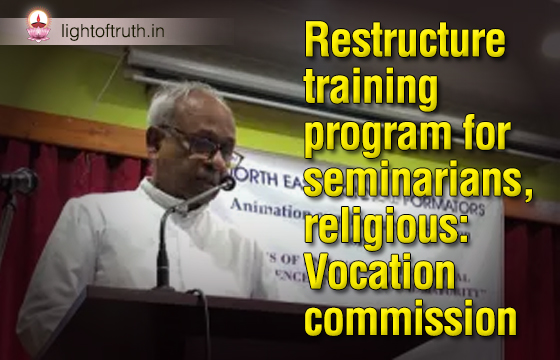
The sharp decline in the current standard of education has prompted the bishops of northeastern India to call for restructuring the initial forma-tion years for priests and reli-gious.
The all-promotion system in schools and making subjects like maths not compulsory to pass grade ten have adversely affected the reading, writing and numeracy skills of those entering minor seminaries and other formation houses, says a survey conducted by the Com-mission for Vocation, Seminaries, Clergy and Religious, North East India Regional Bishop’s Council.
The commission organized a meeting to address the current drawbacks in the training pro-grams.
Around 130 people engaged in training priests and nuns attended the August 17-18 meeting at Guwahati, the nerve center of northeastern India.
The meeting recommended increasing the initial formation to two years. Presently, the initial remedial education in formation houses is one year.
At the meeting, Bishop Thomas John Katrukuidyil, the commission chairman, presented a paper on the “Present Scenario of Formation” in north-eastern India.
The paper explained the results of an extensive survey the bishop undertook on the current vocation scenario in the region.
Daily Archives: August 30, 2022
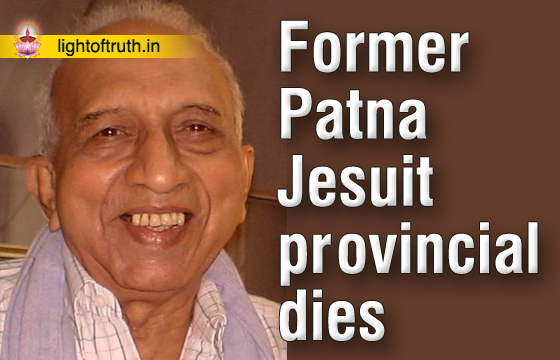
Former Patna Jesuit provincial dies
Father John D’ Mello, a former Patna Jesuit provincial and renowned spiritual director, died August 24. He was 89.
The death occurred at 7:30 am at Xavier Bhavan at Digha Ghat, a western suburb of Patna, where Father D’Mello was leading a retired life.

What does a charter draft by sadhus reveal about new India?
India’s constitution came into effect on Jan 26, 1950, completing the nation’s transition toward becoming an independent, democratic republic. But a self-appointed constituent assembly of 30 Hindu seers and scholars has come up with the draft of a “new constitution” for their proposed “Hindu Rashtra” (Hindu nation).
If the Hindu savants associated with the Shankaracharya Parishad of Varanasi, the northern city regarded as India’s spiritual capital, have their way then Muslims and Christians will be barred from voting in the Hindu Rashtra.
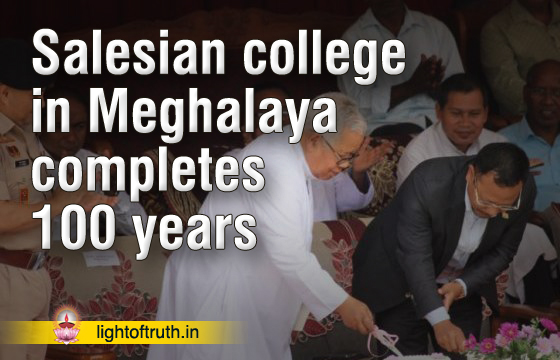
Salesian college in Meghalaya completes 100 years
A Salesian college in Meghalaya has completed 100 years of service in the northeastern Indian state.
The centenary of the Salesians entry into the region and Don Bosco college in Tura recently took place at the college on August 18.
Minister of Food and Civil Supp-lies James Pangsang K Sangma, the chief guest, hailed the Salesians’ contributions to northeastern India and Garo Hills in particular. He expressed gratitude and assured that the people of the region are also grateful to them.
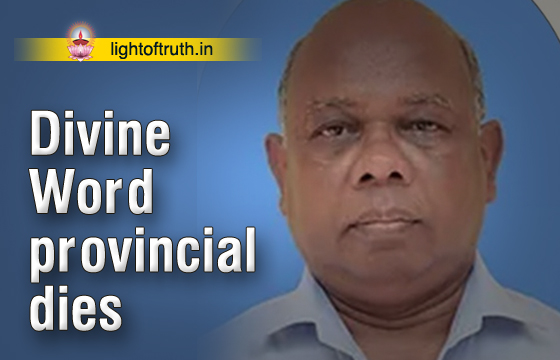
Divine Word provincial dies
Father Petrus Kullu, provincial of the Divine World Society’s Eastern Indian province, died August 18 of suspected Covid-19 infection. The death occurred at 4:15 pm in the Covid ward of Vikash Hospital, Bargarh near Sambalpur, a major town in the eastern Indian state of Odisha, according to a message from Father Victor Rodrigues on August 10.
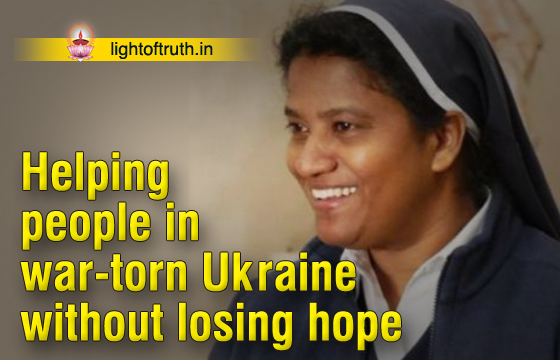
Helping people in war-torn Ukraine without losing hope
Sister Ligi Payyappilly, a native Indian, is worried that the Russia-Ukraine conflict continues, even after passing the six-month mark.
The member of the Sisters of St. Joseph of Saint-Marc has been serving war-hit people since Russia launched a full-scale invasion of Ukraine on February 24.
First, Sister Payyappilly help-ed evacuate hundreds of overseas nationals, mostly students, in Ukraine. The native Indian nun, who is now a Ukraine citizen, then turned her attention to Ukrainians who have become refugees in their own country.
Sister Payyappilly, superior of the congregation’s convent in Mukachevo, a town in western Ukraine, had followers across Ukraine as a renowned retreat preacher. She used this network in her rescue operations and refugee services.
“The crisis in Ukraine is worsening day by day. But the hopes of the people to get through the crisis too have increased.
Initially, everyone expected the war would end soon. But this is like the war between Goliath and David. Russians are mighty and powerful; Ukrainians are weak but determined. God is with us, and my mind says the final victory will be ours.” She said.
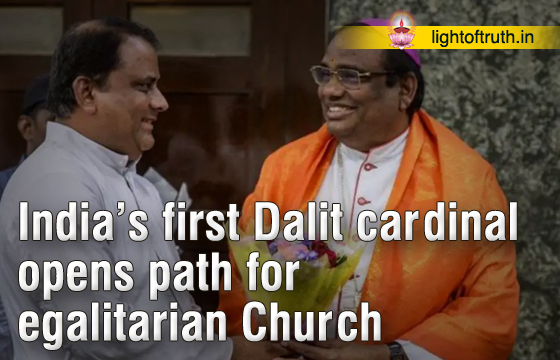
India’s first Dalit cardinal opens path for egalitarian Church
On Aug. 27, Pope Francis created 21 new cardinals at a consistory at the Vatican. The new cardinals include the first Indian cardinal from the socially poor Dalit community–Abp Anthony Poola of Hyderabad.
His appointment is seen as historical as it recognizes the Dalit Christian community, which continues to suffer caste discrimination within the Catholic Church.
The appointment of a Dalit as cardinal comes after three decades of public struggle by Dalit Christians against continuing caste discrimination and domination. For the past four years, they have been demanding to appoint Dalit bishops, especially in the Archdiocese of Pondicherry-Cuddalore. However, it has been prevented till now.
The struggles led by Dalit groups have been widely reported in recent times by some of the global Catholic media. And, this gesture of Pope Francis comes as a ray of hope for Dalit Christians. It also vindicates their struggle for justice and equality.
Caste discrimination against the Dalits started in the early days of Christianity in India. The early Provincial Councils of Goa in 1567, 1585, and 1606, forbade low castes and untouchables from joining seminaries.
The hierarchy continues that legacy even after several centuries.
“The appointment of a Dalit cardinal is a milestone in the history of the Church, particularly for Dalit Christians.”
For instance, when the first Dalit archbishop — Marampudi Joji of Hyderabad — was appointed two decades ago, several top Church leaders in India openly criticized the Vatican. “Rome is being taken for a ride. Rome does not know the ground realities,” said outgoing archbishop Samineni Arulappa of Hyderabad.
“If I say something, it will be interpreted as oppressing the oppressed, meaning the Dalits. Ninety-five percent of Hyderabad archdiocese’s priests oppose the appointment of Archbishop M. Joji. I give my successor less than five years in his new post. He has not remained more than three to four years in one place.” (UCA News, April 9, 2000)
Ironically, the first Dalit cardinal also comes from Hyderabad, where the first Dalit archbishop was installed 22 years ago.
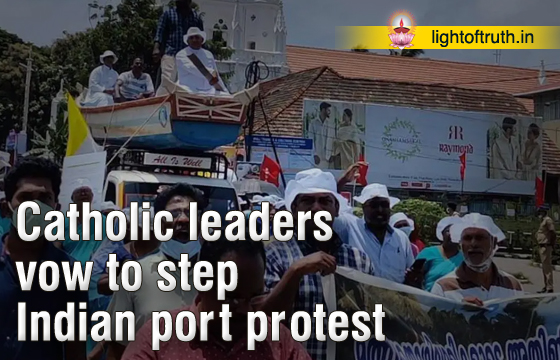
Catholic leaders vow to step Indian port protest
The protest by Catholic fishing communities seeking compensation from a multi-billion-dollar port project has entered its second month with their arch-bishop threatening to move his “stay and prayer” action to the protest venue in southern India.
“My stay and prayer will be moved to the protest venue from the archbishop’s house if required,” Archbishop Thomas Netto of Trivandrum said while addressing protesters in Kerala’s state capital on Aug. 23, as the protest entered its 34th day.
Thousands of fisherfolk under the leadership of archdiocesan bishops and priests have been protesting since July 20 against the multi-billion-dollar Adani Ports and Special Economic Zone on the coast of Vizhinjam.
They say the port endangers the livelihoods of fisher families, has displaced thousands of people and adversely affected the environment and caused coastal erosion.
The state government has ignored their demands which include suspending the project to study its environmental and social impact, rehabilitation of displaced people and employment for those who lost their livelihood and compensation for all who suffered damage.
“Fishermen and the Christian community believe Christ and the cross as everything in their lives. We know Christ died at the age of 33. His death brought liberation for humanity. We fight for justice trusting in Christ. We have nothing to lose,” said Arch-bishop Netto, a key figure in the protest who hails from a local parish.
“We are only asking the government to rehabilitate those who lost their houses.”
He announced the decision to intensify the agitation until the government accepts their demands. “I am ready to sacrifice my life for my people,” the arch-bishop said amid thunderous applause.
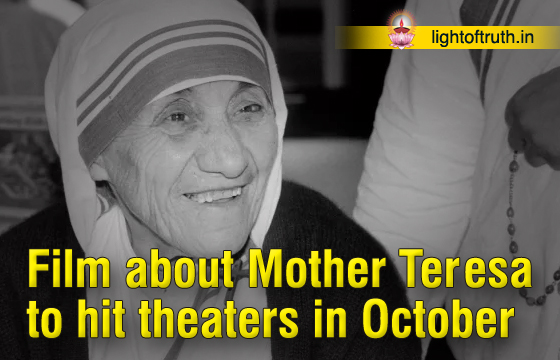
Film about Mother Teresa to hit theaters in October
A film presenting the life of St. Teresa of Calcutta, commonly referred to as Mother Teresa, will be premiering in theaters for two days in October.
In theaters Oct. 3-4, “Mother Teresa: No Greater Love” is airing in more than 960 locations across the United States. The film was produced by the Knights of Columbus, the world’s largest Catholic fraternal organization.
The film displays the life of the 20th-century saint and the impact both she and her Missionaries of Charity have had on the people they have served throughout the world. The Missionaries of Charity are a religious community dedicated to serving the poorest in society.
“The Missionaries of Charity are not publicity seekers,” David Naglieri, director of the film, told. “So, to have the opportunity to highlight the incredible work they do and the way that they live the Gospel, I think this story can positively impact people’s lives and draw them closer to their faith.”
Filmed on five continents, the documentary features “incredible access” to the apostolates run by the Missionaries of Charity, Naglieri said.
One of his favourite parts of the film includes footage in Kenya, where the Missionaries of Charity are caring for children with deformities and serious developmental disabilities.
The scene includes a Missionary of Charity sister feeding a baby with hydrocephalus, a condition in which fluid builds up in the brain.
“To see these children … and just the love and the care for that child was just something that deeply moved me,” he said.
“I think what sets this film apart is the fact that it comes 25 years after her death,” Naglieri said. “So it’s the first film that has had the chance to completely soak in her life, her legacy, and also deal with some of the information and revelations of Mother Teresa that came later.”
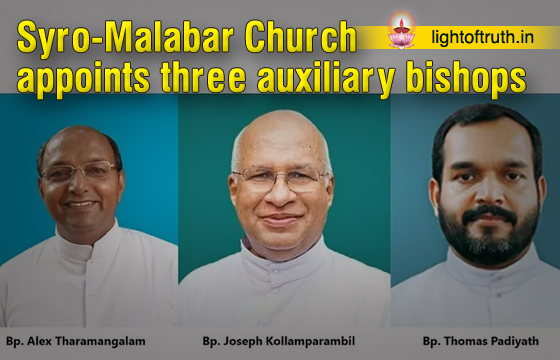
Syro-Malabar Church appoints three auxiliary bishops
The Syro-Malabar Church on August 25 announced the appointment of three auxiliary bishops for the larger of the two Oriental Catholic rites in India.
It also accepted the resignation of Auxiliary Bishop Jacob Muricken of Palai, who wants to lead an ascetic life.
Cardinal George Alencherry, who heads the Church as its Major Archbishop, appoint-ed Father Alex Tharamangalam as the auxiliary bishop of the eparchy of Mananthavady and Fathers Joseph Kollamparambil and Thomas Padiyath as auxiliaries of the eparchy of Shamshabad.
The announcement was made during the closing ceremony of second session of the Church’s 30th Synod of Bishops, after obtaining the assent of Pope Francis through the Apostolic Nuncio.
Since Tharamangalam is in Germany, he could not be present on the occasion. The other two were given the insignia by Cardinal Alencherry together with Bishop Raphael Thattil Shamshabad.
With the three new prelates, the Church has a total of 65 bishops, retired as well as active.
Bishop-designate Tharamangalam, a priest of the archdiocese of Thalassery, was born in 1958. He began his priestly forma-tion in the minor Seminary at Thalassery in 1973 and was ordained a priest on January 1, 1983. He holds a doctorate in philosophy from the Gregorian University, Rome.
Bishop-elect Kollamparambil, who was born in 1955, began his priestly training at the minor seminary of Palai diocese. He was ordained a priest on December 18, 198. He has served in several parishes of Palai diocese. Having secured a Master’s from St. Thomas College, Palai, he served as a lecturer, bursar and warden of the college hostel.
Bishop-elect Padiyath, a priest from the archdiocese of Changanacherry, was born in 1969. He entered the minor seminary in 1984 and was ordained a priest on December 29, 1994. He started his priestly ministry as the assistant vicar in Athirampuzha parish and secretary to Archbishop Joseph Powathil of Changnacherry. He has a doctorate in philosophy and a Master’s in theology from the University of Leuven, Belgium. He served as a professor at Good Shepherd Major Se-minary, Kunnoth in Kannur district. He has taught in several major seminaries and In-stitutions. He is currently serving as Syncellus in the Archeparchy of Changanacherry.