The National Commission for Protection of Child Rights (NCPCR) that made a surprise search of a girls’ hostel in the central Indian state of Madhya Pradesh has demanded action against Catholic nuns who manage it.
The nuns have appealed the district collector of Raisen district to conduct an impartial probe into the allegation.
The NCPCR is a statutory body established in 2005 with the mandate “to ensure that all laws, policies, programs, and administrative mechanisms are in consonance with the child rights perspective as enshrined in the Constitution of India and the UN Convention on the Rights of the Child. A child for the commission is all those under 18 years. It functions under the federal Ministry of Women and Child Development.
Priyank Kanoongo, the commission chairperson, led a team of officials on November 8 to inspect the hostel at Intkheri village in Raisen district, some 50 km northeast of Bhopal, the state capital.
The team entered the girls’ hostel without a female official and searched the dormitory and bags of the girl children.
They also found a copy of the Bible in the possession of Christian students and alleged the hostel was promoting religious conversion. The following day another team inspected the hostel and the students told them they were staying in the hostel on their free will as they did not have facility to attend school.
The officials also asked the students if they were being forced to learn Christianity or involved in Christian prayers.
The hostel houses 19 students who attend regular classes in a nearby government high school. Among them five are Christians, who came from northeastern India.
The commission’s November 9 letter to the district collector ordered sending the students to their homes alleging some serious lapses in their care at the hostel.
The students, however, certified to the officials that they were well taken care, with proper food and facilities for studies. The Christian children said they had brought the copies of the Bible from their homes and they read it as part of their routine life.
Meanwhile, the nuns also demanded the district collector to inspect the hostel, refuting the commission’s finding.
The commission chairman had shared the video of the raid on social media apparently to target the nuns for providing facilities to the poor girl children to get education.
Daily Archives: November 16, 2021

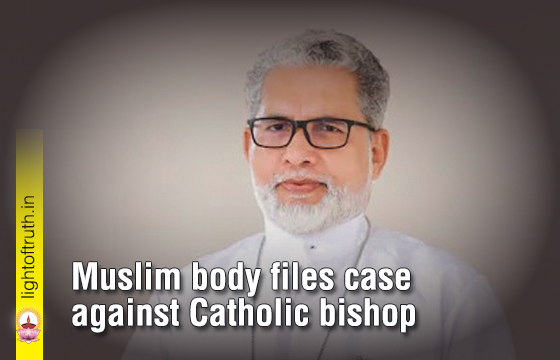
Muslim body files case against Catholic bishop
A Muslim body in Kerala has filed a case against a Catholic bishop for allegedly promoting disharmony, enmity and hatred between two religious communities in the southern Indian state.
The police in Kuravilangad town in Kottayam district November 1 registered the case against Bp Joseph Kallarangatt of Palai for his controversial remarks on “narcotic jihad” almost two months ago.
The Police said the case was registered following a complaint from the All India Imams Council. “The case follows a direction in this regard by the Pala [Palai] magistrate court,” said Shilpa Dyavaiah, district police chief in Kottayam. Palai is a major town in Kottayam district.
Abdul Asees Moulavi, district president of the Muslim council, alleged that the police had initially refused to register a case against the bishop, even after making formal complaints at the Kuravilangad station and to the district police chief.
So, he approached the Palai magistrate court that in turn ordered the police to register a First Information Report against the prelate and probe the alleged charges against him.

Minister of state for minority affairs meets Arunachal bishops
Minister of State for Minority Affairs John Barla has called on Arunachal Pradesh’s two Catholic bishops and dis-cussed crucial issues affecting Christians in the north-eastern Indian state and the country.
The minister was on a five-day tour that ended October 31. He met Bishop John Thomas of Itanagar on October 28 and Bishop George Pallipparambil two days later at their residences.
Bishop Thomas expressed happiness at the minister’s visit which he said was a recognition of the presence of minorities in the state.
The minister was apprised of the difficulties faced by the minorities, especially Christians, in various states of India.
Minister Barla with Arunachal children “We are happy that the minister gave us a patient hearing to our concerns and assured us that all our concerns would be addressed,” Bishop Thomas said.
Barla met Bishop Pallipparambil on the day when Prime Minister Narendra Modi met Pope Francis at the Vatican.
Welcoming the minister on his maiden visit to the state, the Salesian bishop said, “It is indeed a happy coincidence that our Honorable Minister, John Barla, is here with us in Miao diocese when our Prime Minister is making his maiden visit to the Holy Father.”
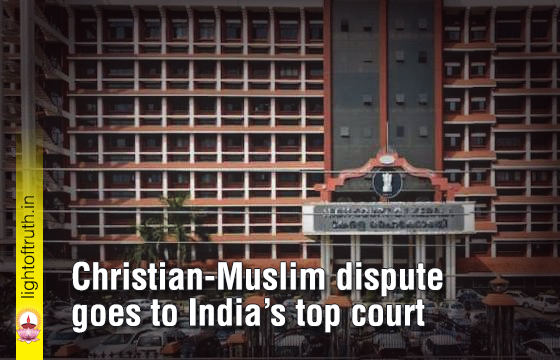
Christian-Muslim dispute goes to India’s top court
India’s top court has agreed to hear a dispute between Christians and Muslims over minority scholarships for students after accepting an appeal filed by Kerala’s state government. The Supreme Court bench of Justice L. Nageswara Rao and Justice B.R. Gavai on Oct. 29 ordered to serve notices on all the parties listed in the appeal as respondents. The communist-ruled Kerala government in southern India moved the top court challenging an order by Kerala High Court to quash the 80:20 ratio for distributing scholarships meant for minority communities.
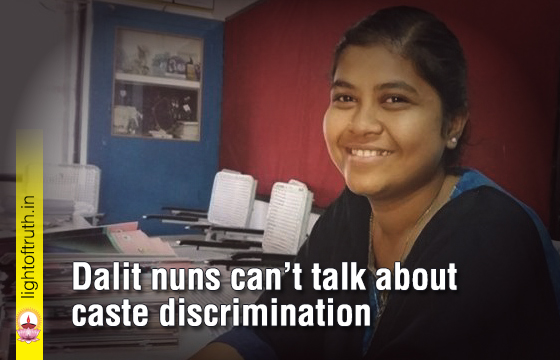
Dalit nuns can’t talk about caste discrimination
Christians of former low caste or Dalit origin face several forms of discrimination within the Catholic Church but they never abandon their faith in Christ, says Sister Robancy Amal Helen, who has been working for the community.
The 33-year-old member of Idente Missionaries (Religious Institute of Christ the Redeemer), a new form of consecrated life of pontifical right, has campaigned and advocated for equality and justice for Dalits in the Catholic Church in India, especially women. As part of her campaign, she coordinated Dalit programs for the community when she worked for the New Delhi-based Catholic Bishops’ Conference of India from 2014 to 2019.
Sister Helen assisted in drafting a policy for Dalit empowerment for the church in India. The policy was published by the bishops’ Office for Scheduled Castes (such as the Dalits) and Backward Classes.
Currently, Sister Helen is an executive editor of the Dalit Christian Digest, a news portal. She also edits and writes for Urimai, (which means “Right” in Tamil), a monthly magazine for Dalit Christians published by the Tamil Nadu Bishops’ Council. “The Indian bishops’ Dalit empowerment policy says, Dalits, although historically the daughters and sons of the soil, are today alienated from society and are silenced. India’s caste system treats Dalits as outcasts. They are robbed of dignity and the basic necessities of life. They are treated as children of a lesser God in Indian society. They are targets of discrimination and have been tortured and killed.
Some Dalits converted to Christianity hoping that they would find dignity and equality in the church. But sadly the caste system is practiced in Christianity, too. The Dalit Christians are deprived of opportunities in church leadership, education and employment. There are separate churches, cemeteries and hearse carts for the Dalits and upper-caste Christians.
But I have observed that the Dalit Christians are deeply rooted in their faith and they never abandon their faith in Christ, whatever the discrimination they face within the church.” She said the Church’s Dalit policy says Dalits account for 12 million among 19 million Catholics in India. But their representation in the hierarchy of the Church is not proportional.
Although Dalits are the majority in the Catholic Church, they are not treated equally. The Dalit Christian children are not allowed to serve the altar or to become lectors. Most so-called upper-caste priests do not visit the houses of Dalit Christians. We see this discrimination even in the appointment of bishops. Among India’s 174 dioceses only 11 bishops are from the Dalit Christian community.
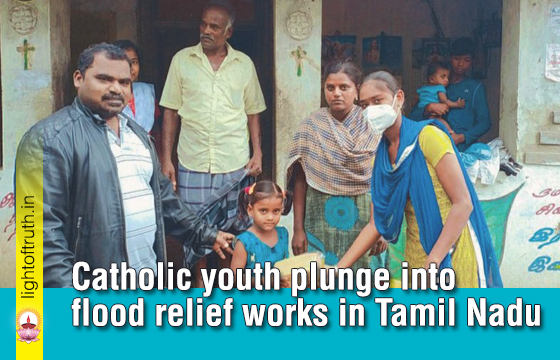
Catholic youth plunge into flood relief works in Tamil Nadu
Young Catholics in Tamil Nadu are in the forefront of rescue and relief operations among the flood victims in the southern Indian state.
Some hundred youth from various parishes of the Archdiocese of Madras-Mylapore “promptly swung into action” as the flooding affected reportedly more than 500 residential areas in Chennai, the state capital, Father Ronald Richard, secretary of the archdiocese’s youth commission told Matters India on November 12.
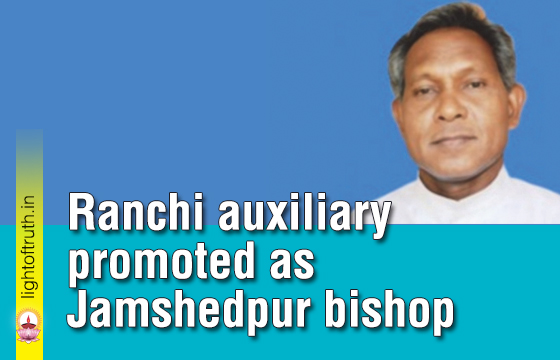
Ranchi auxiliary promoted as Jamshedpur bishop
Pope Francis on November 1 promoted Auxiliary Bishop Telesphore Bilung of Ranchi as the bishop of Jamshedpur.
The appointment was announced at 12 noon Rome time and its corresponding time 3:30 pm in India.
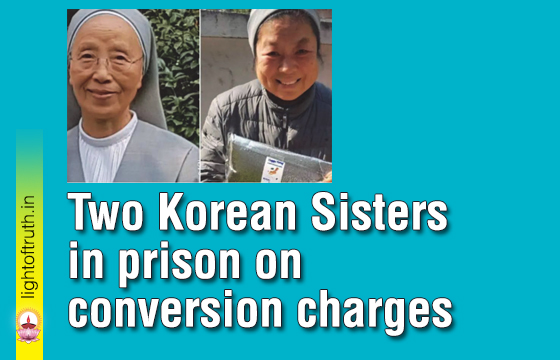
Two Korean Sisters in prison on conversion charges
Two Korean missionary women religious from the Congregation of the Sisters of Saint Paul of Chartres were arrested in Nepal on 14 Septem-ber and are still in detention.
The two, Sisters Gemma Lucia Kim and Martha Park, were charged with proselytising and conversion activities, and arrested at their mission in Pokhara, 200 kilometres from Kathmandu, where they run a facility for poor slum children.
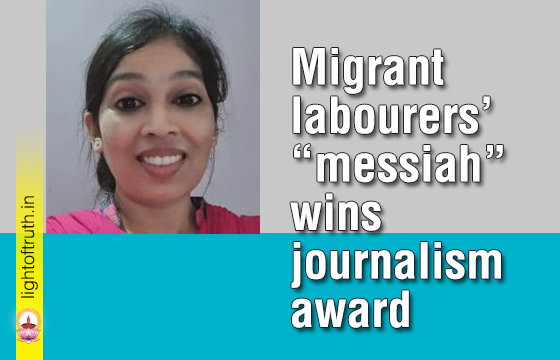
Migrant labourers’ “messiah” wins journalism award
A Catholic nun, who braved coronavirus pandemic and official apathy, to reach out to hundreds of stranded mi-grants labourers during lockdowns has won a prestigious award from the Indian Catholic Press Association.
The national body of Catholic journalists on November 5 chose Sister Sujata Jena for the best reportage on Scheduled Castes and Scheduled Tribes.