
Pope Francis said on November 12 that “the Gospel is the most humanizing message known to history.”
He made the remark in a video message marking the 75th anniversary of UNESCO, the United Nations’ educational, scientific and cultural organization.
“From my heart, I express my congra-tulations on the 75th anniversary of this United Nations agency. The Church has a privileged relationship with it,” the Pope said in the message released on Nov. 12.
“Indeed, the Church is at the service of the Gospel, and the Gospel is the most humanizing message known to history. A message of life, freedom, and hope, which has inspired countless educational initiatives in every age and in every place, and has inspired the scientific and cultural growth of the human family.”
“This is why [UNESCO] is a privileged partner of the Holy See in the common service to peace and solidarity among peoples, to the integral development of the human person and to the protection of the cultural heritage of humanity.”
The video message was played during a live-streamed 75th anniversary celebration attended by Ghana’s President Nana Akufo-Addo and artists including the actor and director Forest Whitaker and singer-songwriter Angélique Kidjo.
UNESCO, based in Paris, France, was founded on Nov. 16, 1945, in the immediate aftermath of the Second World War. Today, it has 193 member states and 11 associate members. The Holy See has permanent observer status. The first permanent observer of the Holy See to UNESCO was Angelo Roncalli, the then apostolic nuncio to France, who was elected Pope John XXIII in 1958 and canonized in 2013.
Daily Archives: November 16, 2021
‘Our Church is a place of serious crimes,’ France’s leading prelate says, as bishops adopt reforms
In his closing address at the French bishops’ meeting in Lourdes, Archbishop Eric de Moulins-Beaufort, the president of the episcopal conference, said that “our Church is a place of serious crimes, of frightening attacks on the lives and integrity of children and adults.”
“We must recognize and confess it: we have allowed an ecclesial system to develop which—far from bearing life and opening up to spiritual liberty—damages, crushes, tramples on human beings and their most basic rights,” he added.
The bishops met a month after the publication of a report that found that more than 200,000 children were abused by Catholic clerics over the past 70 years, and another 100,000 by lay church workers. The bishops adopted a number of resolutions to address the abuse crisis, including
• the establishment of an independent authority for financial reparations to abuse victims, led by Marie Derain, former president of the National Council for Child Protection.
• a request to Pope Francis to send a team of visitors to evaluate their efforts
• a pledge to sell diocesan properties to compensate victims
• an external audit of current efforts to address abuse
• criminal background checks on all who work with minors
• the participation of at least one woman in the administration of every seminary.
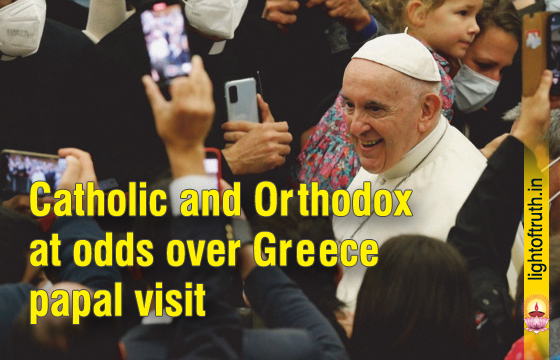
Catholic and Orthodox at odds over Greece papal visit
Catholic Church leaders in Cyprus and Greece have welcomed surprise plans for an early December visit by the Pope, as a chance to foster dialogue and improve links with the wider Catholic world. However, several Orthodox dignitaries have protested over the move, warning it would fuel scandal and division.
“The Pope’s visit to Greece will be above all a summons to faith, a call for openness to God and neighbour,” said Archbishop Theodoros Kontidis of Athens. “This country’s Catholics are made up of many different groups, Poles, Albanians, Filipinos and Africans, as well as native Greeks. They need the visit to strengthen their own unity and their links with the universal Church, and there will be a good atmosphere for it.”
The five-day pilgrimage, confirmed by Rome last weekend, will be the first by Francis since his April 2016 visit to Middle East refugees on Lesbos, and the first by a Pope to Cyprus since a stopover by Benedict XVI in June 2010. Pope John Paul II also paid a historic visit to Athens in May 2001, the first by a Roman pontiff since the thirteenth century.
However, several leaders of Greece’s predominant Orthodox church have protested plans for the visit, including the arch-con-servative Metropolitan Serafim of Pireus, who warned Greeks on Sunday the “immoral visit” risked “contamination by heretical evildoers, unrepentant in our sacred lands.”
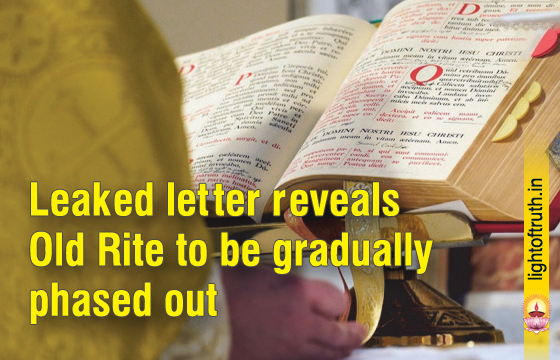
Leaked letter reveals Old Rite to be gradually phased out
Archbishop Arthur Roche, the leader of the Holy See’s divine worship office, has spelt out the Vatican’s position on the Old Rite. The liturgical celebrations which took place before the Second Vatican Council, he says, were legally abolished – “abrogated” – by Pope Paul VI. Although pre-Vatican II liturgies can continue as an “exceptional concession”, the reformed version is the norm. In other words, a new currency was adopted even though it’s still permissible to use old money.
The British archbishop’s remarks, revealed in a leaked letter sent to Cardinal Vincent Nichols, the Archbishop of Westminster and President of the Bishops’ Conference of England and Wales, are significant. It is often claimed by traditionalists that St Paul VI did not legally abolish the Old Rite and when he lifted restrictions on the pre-Vatican II Mass in 2007 Benedict XVI said that it was “never abrogated, as an extraordinary form of the Church’s Liturgy.”
All of this reflects the dominant line of thinking from the Holy See: the Old Rite is to be gradually phased out, although pastoral care has to be offered to those attached to these liturgies.
During Benedict’s papacy, an attempt had been made to allow the old and new liturgies to exist side-by-side. That experiment has been ended by Francis, whose approach is closer to that of Paul VI who only envisaged the Old Rite for sick and aged priests.

The Covid Mass effect – dropped by 14%
The number of Catholics who say they go to Mass in US every week has dropped by 14% since the COVID-19 pandemic, according to The Pillar’s new Survey on Reli-gious Attitudes and Practices.
That decline could explain a proportional decline in parish collections: In March, The Pillar found parishes experi-enced a 12% average decrease in collections during 2020 as compared to 2019, as a result of the COVID-19 pandemic and the shutdown orders implemented in many localities. New information about Mass attendance is available from The Pillar’s Survey on Religious Attitudes and Practices, which aims to better understand the religious perspecti-ves, identities, and perspectives of American adults. We’re reporting the results of that survey this week in a series of special reports.
In part one of this series, The Pillar looked at America’s changing religious landscape. In part two, we look at what factors influence lifelong Catholic religious practice, and why people say they leave the Church. In part three, we took a look at what can be learned about religiously dis-affiliated Americans.
In this installment, we look at the COVID-19 pandemic has begun reshaping parish life. If you’re interested in the technical details of our survey work, here they are: The Pillar worked with research firm Centiment to conduct the survey, which was conducted online with 2653 members of Centiment’s nationally repre-sentative research panel. This included a nationally repre-sentative sample of 1564 Americans and an oversample of 1089 additional respondents who had been raised Catholic, which we used in order to better understand those raised Catholic who still identify as Catholic, and those who now call themselves members of other faiths or of no faith at all. We’ll publish our full-data set later this week.

Pope: The Church should not be a servant of money, but cultivate trust in God who gives
Jesus invites us to “liberate the sacred from the bonds of money”, following the example of the widow who is not afraid to give all that she has “because she trusts in God’s plenty,” Pope Francis reminded the faithful at this Sunday’s Angelus in St Peter’s Square.
Commenting on the passage proposed by the liturgy today, the Pope noted that “the Gospel places before us a stark contrast: the rich, who give their surplus to be seen, and a poor woman who, without appearing, offers all the little she has. Two symbols of human behavoir”.
In this way he warns against the sin of “living the faith in duplicity”: Jesus invites us to “beware of hypocrites, that is, to be careful not to base our lives on the cult of appearance, of outward show, on the exaggerated care of our own image and, above all, not to bend the faith to our own interests”.
Those scribes,” said Francis, “used religion to take care of their business, abusing their authority and exploiting the poor. This is the evil of “clericalism, this being above the humble, exploiting them, ‘beating down on them’ them, feeling perfect”.
But,” the Pope added, “it is a warning for all times and for everyone, Church and society: never take advantage of one’s role to crush others, never make money on the skin of the weakest. Let us ask ourselves: in what we say and do, do we wish to be appreciated and gratified, or do we wish to render a service to God and neighbour, especially the weakest?”.
But Jesus also points out the way to heal from this illness, inviting us to look at the poor widow. He denounces “the exploitation of this woman who, in order to make the offering, must return home deprived of even the little she has to live on”. He recalls the importance of “freeing the sacred from bonds with money” which is “a master we must not serve”.
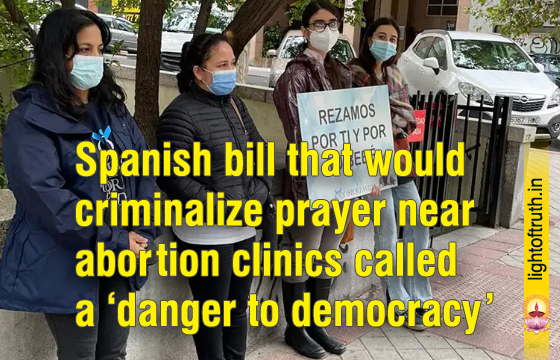
Spanish bill that would criminalize prayer near abortion clinics called a ‘danger to democracy’
An international 40 Days for Life director has said a bill proposed by the ruling Spanish Socialist Workers’ Party that would criminalize “harassment” of women entering abortion clinics is a “threat to democracy.”
Tomislav Cunovic, director of 40 Days for Life for International Affairs, told ACI Prensa, CNA’s Spanish language sister news agency, that “it’s a fundamental right that people can go out on the street, meet and express their opinion.”
“This new law criminalizes pro-life people who gather and pray peacefully in front of abortion clinics. This law interferes with these fundamental rights and freedoms that are guaranteed by the Constitution of Spain and by international conventions, such as the European Convention on Human Rights,” he pointed out.
“The people from 40 Days for Life pray peacefully, they don’t speak to pregnant women, nor to those who work in the clinics. We are outside praying, giving silent witness that each life has its dignity,” he explained, and pointed out that although with this bill “it seems they want to protect pregnant women, no one talks about unborn children, who must also be protected because they have the right to life, they have dignity.”

Many scientists are atheists, but that doesn’t mean they are anti-religious
Distrust of atheists is strong in the United States. The General Social Survey consistently demonstrates that as a group, Americans dislike atheists more than any other religious group. According to various studies, nearly half of the country would disapprove of their child marrying an atheist, some 40% of the public does not believe atheists share their view of American society, and only 60% of Americans would be willing to vote for an atheist in a presidential election.
There is one field, however, where atheism is often assumed: science.
These scientists espouse a frequently derisive rhetoric on religion and the religious public. Dawkins, for example, has argued that religion is a form of “mental illness” and one of the world’s “great evils” comparable to smallpox.
Drawing on quantitative surveys with 1,293 scientists who identified as atheists, 81 in-depth qualitative interviews conducted from 2013 through 2016 and context material collected since then, we found that scientists’ views of religion are much more diverse than the image conveyed by new atheists.
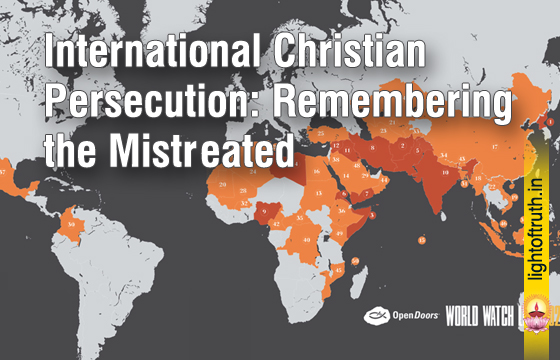
International Christian Persecution: Remembering the Mistreated
Today’s America is facing moral and political divisions that especially challenge our Christian communities. During these times of increasing uncertainty, we need to be aware of dangers that could affect our families and the future our faith.
However, a clear-eyed look beyond our American borders reveals another and even more urgent reality: internationally, Christians are facing immediate, dire, and dangerous circumstances.
“The Guardian,” a politically liberal British publication, published a worrisome statement in a January 2021 article:
“More than 340 million Christians—one in eight—face high levels of persecution and discrimination because of their faith, according to the 2021 World Watch List compiled by the Christian advocacy group Open Doors. It says there was a 60% increase over the previous year in the number of Christians killed for their faith. More than nine out of 10 of the global total of 4,761 deaths were in Africa.”
Of course, very few of those international Christians look like us, speak our language, or worship as we do. We may not immediately relate to them. Meanwhile, hidden in numerous Muslim countries, are millions of new converts to Christianity from Islam. Sadly, according to radical Islamism, their conversion is grounds for execution.
Random dictatorships and abusive regimes mistreat Christians for reasons of insatiable power and control. But today, surging dangers to Christians are due primarily to two specific causes: radical Islam and communism.
For example, consider the country that is listed by Open Doors as the worst persecutor of Christians in the world: North Korea.
North Koreans are required to “worship” the Marxist-Maoist Kim family in a peculiar, quasi-religious system. North Korean Christians—estimated at some 400,000 people—face particularly horrendous persecution. Torture. Starvation. Rape. Slave Labour. Public Execution. All this for simply possessing a Bible or otherwise practicing Christianity.
China is another serious persecutor, and it cooperates with North Korea’s oppression by sending fleeing Christians back across the common border, likely to torture and death. No higher authority–God–is permitted in either country.
Under Xi Jinping, China is increasingly abusive to Christians. Meanwhile, we see what’s happening to China’s millions of Uighur Muslims—either kept or killed in brutal concentration camps or barely surviving incapacitating surveillance, including facial recognition software, DNA identification, phone tracking, and a social credit system. These technologies are also used to track, capture, and abuse Christians and other religious minorities.
And speaking of global menaces to religious minorities, Iran is another danger-zone. Iranian Christians – particularly converts from Islam – are identified as enemies of Iran’s Shiite mullahcracy and as threats to national security. Arrests and behind-the-scenes violence against Christians are rampant.
Yet an underground movement comprised of converts from Islam is growing miraculously, even while severely repressed. These new Christians have zero rights, yet their courage is astonishing.
At the same time, as “The Guardian” reports, African believers are at high risk across that vast continent.
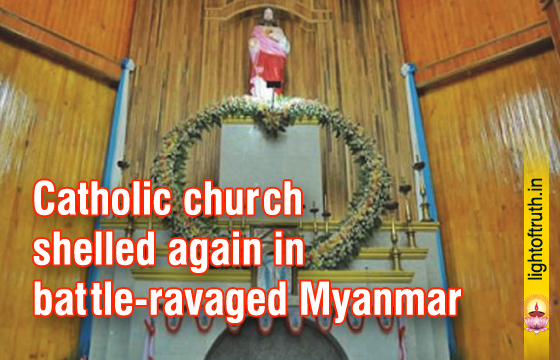
Catholic church shelled again in battle-ravaged Myanmar
Religious buildings including Catholic churches and convents continue to be the primary target of Myanmar’s military, which is reinforcing its troops to crush local militias.
Sacred Heart of Jesus Cathedral in Pekhon town, which belongs to the Diocese of Pekhon in Shan state, was hit by military artillery on Nov. 9.
There were no reported casualties despite the windows and pews being damaged, according to church sources.
The cathedral was also struck by artillery fire in June. The attack came three days after a convent in the same township was hit by military shelling on Nov. 6.
No casualties were reported at the convent of the Sisters of Zetaman, which is situated in Jeroblous Marian shrine in Pekhon township. Fighting between the military and the combined forces of the Karenni army and Karenni People’s Defense Force has intensified since Nov. 2.
More than 10,000 people from Pekhon township have been newly displaced due to the fighting and indiscriminate attacks with heavy weaponry by the military, according to aid workers.
A Catholic social worker said his family were forced to flee from their homes in Pekhon town as artillery shelling fell on his neighbours.
“It was intense fighting, so the majority of people have fled from their homes to safe areas,” he told.
He said the fighting has impacted their response to displaced people as church social workers have also fled their homes and taken refuge in safe areas.
Pekhon Diocese is one of the worst-affected areas along with Loikaw Diocese in Kayah state due to the escalating conflict since May.
More than 100,000 civilians have been forced to seek refuge in churches, convents and makeshift camps even while the military is targeting priests and pastors, bombing and vandalizing churches in the predominantly Christian region of Kayah and Chin states.