
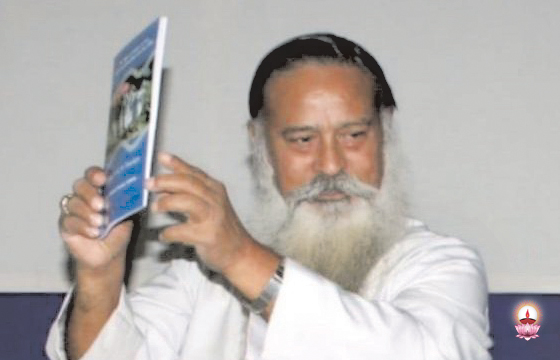
With the death of Archbishop Lucan Sirkar on April 18, the Church in Bengal lost a stalwart leader whose major concern was to build local leadership with local resources.
Archbishop Lucas succeeded Archbishop Henry D’Souza on April 14, 2000, and remained Archbishop until Feb 23, 2012.
During those 12 years his sincere efforts were to build local leadership, promoting local vocations for future mission. His efforts resulted in many local vocations from Santhal, Adivasis communities. Vocations came also from Odisha and Bengal states.
Many priests who serve the archdiocese now are basically from local grassroots. That’s certainly Archbishop Sirkar’s great contribution to the Church.
I am indebted to him for entrusting me with important offices in the archdiocese.
He appointed me the dean of Howrah-Hooghly and Kolkata city Deanery. I was appointed editor of The Herald, the dio-cesan weekly. He also encourag-ed me to promote Bangla Herald. Besides being pro vicar of the Cathedral of the Most Holy Rosary since May 1, 2002, I was one of the archdiocesan consulters and a member of the Arch-diocesan Finance Committee.
Daily Archives: May 1, 2021
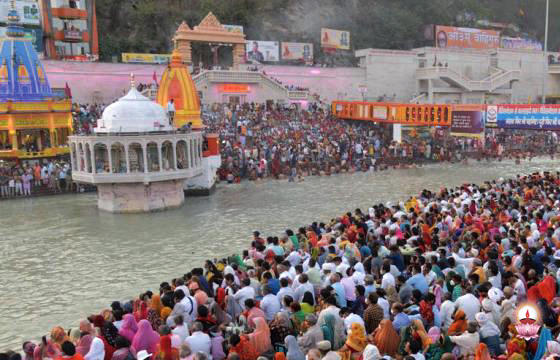
Christians in India accuse government of double-standard as millions attend Hindu festival
Devotees take holy dips in the river Ganges during Shahi snan or a Royal bath at Kumbh mela, in Haridwar in the Indian state of Uttarakhand, Monday, April 12, 2021. As states across India are declaring some version of a lockdown to battle rising Covid cases as part of a nation- wide second-wave, thousands of pilgrims are gathering on the banks of the river Ganga for the Hindu festival Kumbh Mela. The faithful believe that a dip in the waters of the Ganga will absolve them of their sins and deliver them from the cycle of birth and death.
Some Catholic leaders are accusing the government of India of a double standard for allowing millions of pilgrims to participate in a large Hindu ceremony, while strictly imposing COVID-19 rules on the worship of religious minorities.
The Kumbh Mela, or pitcher festival, is one of the most sacred pilgrimages in Hinduism. The faithful congregate in the northern city of Haridwar and take a dip in the waters of the Ganges, which they believe will absolve them of their sins and deliver them from the cycle of birth and death. The Kumbh Mela, which runs through April, comes during India’s worst surge in new infections since the pandemic began, with a seven-day rolling average of more than 130,000 new cases per day. Hospitals are becoming overwhelmed with patients, and experts worry the worst is yet to come.
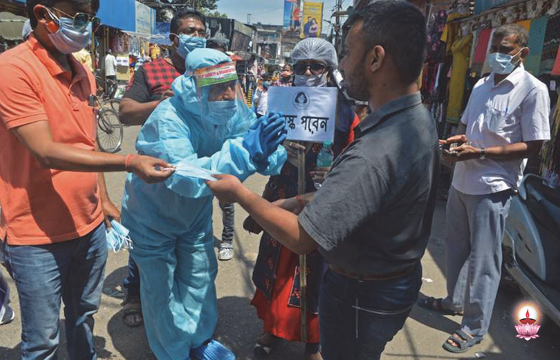
Bishops set prayer day as pandemic deaths spiral in India
Catholic leaders have urged their people across India to strictly follow Covid-19 restrictions as they dedicated a day of prayer to contain the infection spreading like wildfire.
Catholic Bishops’ Conference of India president Cardinal Oswald Gracias of Mumbai has written to bishops asking them to hold a day of prayer and fast on May 7 seeking divine intervention to save the country from the spreading pandemic.
“We are recording around 300,000 new cases of corona-virus every single day. The second wave has hit us like a tsunami and we are yet to reach the peak,” his April 22 letter said. “Added to this is the apparent lack of planning, resulting in a shortage of hospital beds, anti-viral drugs, oxygen and vaccines. It could get worse before it gets better.”
Cardinal Gracias urged people to follow Covid-19 protocols such as wearing masks, main-taining physical distancing and sanitizing hands as well as adhering to restrictions and curfews imposed to break the chain of infections.
The prelate also wants every-one to get vaccinated against the viral disease.
Sheshan’s shrine is closed but its amusement park is open, like other tourist spots
The Catholic diocese of Shanghai has announced that pilgrimages to the shrine of Our Lady of Sheshan will be cancelled in May due to the Covid-19 pandemic. On the other hand, the amusement park on Sheshan Hill has been open for some time, as have many mass tourist spots in the country.
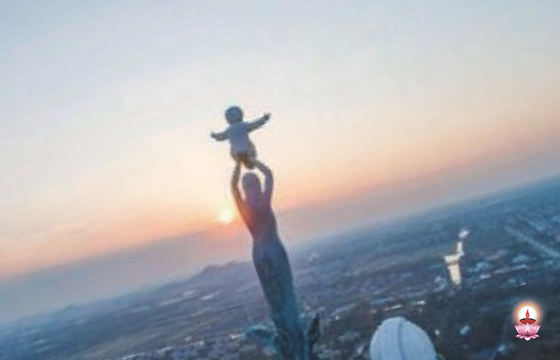
The shrine of Sheshan is a national Marian shrine and in the month of May there is a tradition from the various Chinese dioceses to go on pilgrimage walking up the hill on which the basilica stands, stopping in the intermediate chapels and marking the stations of the Cross, up to the summit where the church stands, crowned by the statue of Mary presenting her Son to the world.
According to the diocesan announcement, “as the pandemic at home and abroad is still not under control, and measures for the prevention of the pandemic are still in place in the nation, to comply with the demands and regulations of the [Shanghai] municipal government … The annual May pilgrimage to Sheshan has been cancelled”.
The announcement explains that the Sheshan basilica, the intermediate chapels and other areas are closed and there will be no pilgrimages and religious activities. The presence of groups of pilgrims and individuals are not allowed. Catholics are advised to stay home and pray asking for an end to the pandemic, so that they can return to normal life.
Throughout China, places of worship have been gradually reopened in many provinces since March and community religious practice has resumed. Despite strict health measures, many Catholic churches have also reopened and masses are again being celebrated with the live participation of faithful. In Beijing, Shanghai and other provinces, the reopening was enthusiastically announced, although the closure continues in some parts of the country.
In many dioceses – for example in Zhejiang, Jiangxi and Inner Mongolia – the reopening coincided with the celebrations of Holy Week: the mass in Coena Domini with the ceremony of the washing of the feet; the Via Crucis; baptisms of catechumens at Easter; the distribution of Easter eggs.
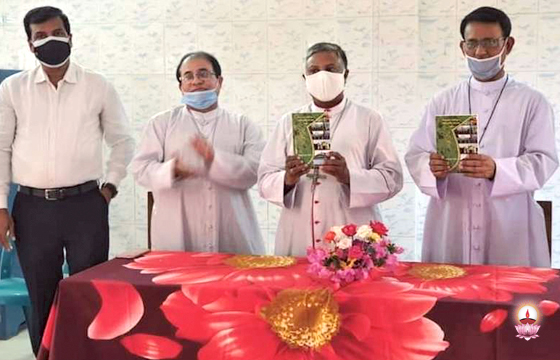
Priest’s book documents history of Christianity in Bangladesh
A senior Catholic priest has authored and published a book that documents the history of Christianity in Bangladesh spanning over five centuries with an aim to inspire young Catholics to better understand the advent and growth of Catholicism amid various challenges. Father Albert Thomas Rozario’s Bangla-language book Bangladeshey Christodhormo and Christomondolir Etikotha (Christian Religion and Christianity in Bangladesh) was launched by Oblate Archbishop Bejoy N. D’Cruze of Dhaka on April 12. Father Rozario, 61, is a diocesan priest and pastor of St. Joseph’s Church in the Savar area covered by Dhaka Archdiocese. The priest, who is a Supreme Court lawyer, also teaches civil and criminal law to students at Holy Spirit National Major Seminary in capital Dhaka.
The 300-page book is the third Bangla-language book on the history of Christianity and the Catholic Church in Bangladesh after Bangladeshey Catholic Mondoli (The Catholic Church in Bangladesh) by Canada-based Catholic writer and journalist Jerome D’Costa in 1986 and Bangladeshey Christomondoly Porichiti (Introduction to Church in Bangladesh) by Father Dilip Stephen Costa in 2020.
Father Rozario earlier authored a Christian introduction to practical law for Christians and Shadhu-Shaddhy Der Jibon Kotha (The Life of Saints).
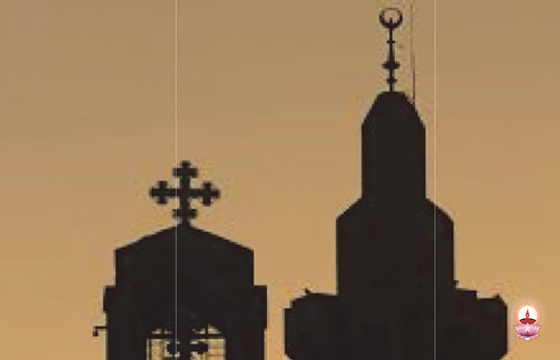
Vatican issues message for Ramadan: Christians and Muslims as witnesses of hope
The Pontifical Council for Interreligious Dialogue released a message addre-ssed to Muslims today titled ‘Christians and Muslims: Witnesses of Hope’ on the occasion of Ramadan and ahead of the feast of Id al-Fimr, the Festival of Break-ing the Fast, which marks the end of the holy month.
Signed by the president of the Pontifical Council, Card Miguel Ángel Ayuso Guixot, MCCJ, and its secretary, Fr Indunil Kodithuwakku Janakaratne Kankanamalage, the statement stresses the meaning hope has for believers, based on the “belief that all our problems and trials have a meaning, a value and a purpose, however difficult or impossible it may be for us to understand the reason for them or to find a way out of them.”
“During these long months of suffering, anguish and sorrow, especially during the lockdown periods, we sensed our need for divine assistance, but also for expressions and gestures of fraternal solidarity: a telephone call, a message of support and comfort, a prayer, help in buying medicines or food, advice, and, to put it simply, the security of knowing that someone is always there for us in times of necessity.
“The divine assistance that we need and seek, especially in circumstances like those of the current pandemic, is manifold: God’s mercy, pardon, providence and other spiritual and material gifts.”
“While optimism is a human attitude, hope has its basis in something religious: God loves us, and therefore cares for us through his providence. He does this in his own mysterious ways, which are not always comprehensible to us.”
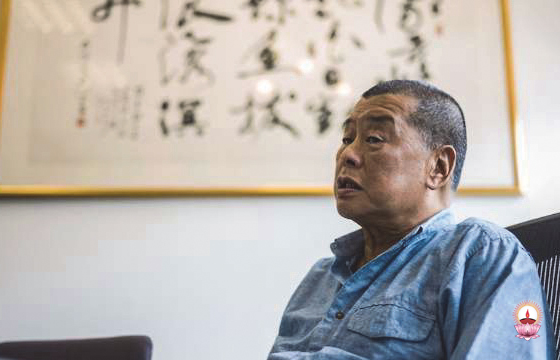
Catholic media tycoon jailed in Hong Kong
Catholic media tycoon and philanthropist Jimmy Lai has been jailed for 14 months in Hong Kong after being found guilty of unauthorized assembly.
He was among nine activists in court on April 16 who were earlier found guilty of charges relating to pro-democracy de-monstrations in the Chinese territory in 2019.
Lai, 72, has donated millions of dollars to Catholic causes and has been retired Cardinal Joseph Zen’s biggest financial backer.
He made his fortune through mid-market fashion chain Gior-dano before putting his wealth into media companies Next Media and the city’s leading anti-Beijing newspaper Apple Daily.
Lai’s jailing comes as the Chinese Communist Party inten-sifies its crackdown on Hong Kong’s rights and freedoms.
Earlier this week, Apple Daily published a handwritten letter by Lai, sent from prison, which read: “It is our responsi-bility as journalists to seek justice. As long as we are not blinded by unjust temptations, as long as we do not let evil get its way through us, we are fulfilling our responsibility.”
Speaking to the BBC before the hearing, Lai said that even if he were to be imprisoned, he would still be “living my life meaningfully.” “I came here with one dollar. I got everything I have because of this place. If this is the payback time, this is my redemption,” he said.
China, North Korea ‘worst for religious persecution’
Religious persecution in China and North Korea, restrictions on religious freedom in dozens of countries and the continuing threat of violence at the hands of religious fundamentalists belonging to a variety of faiths all have worsened since 2018, said Aid to the Church in Need, a papal foundation and Catholic charity.
The problems “have been exacerbated by the Covid-19 pandemic. States have used the insecurity to increase control over their citizens, and nonstate actors have taken advantage of the confusion to recruit, expand and provoke wider humanitarian crises,” said an analysis publi-shed with ACN’s annual report, “Religious Freedom in the World.”
The report, released April 20, said outright persecution exists in “26 countries which are home to 3.9 billion people or just over half — 51% — of the world’s population.”
In addition to China, North Korea and Saudi Arabia, the list includes a dozen African countries, such as Somalia, Libya, Nigeria, Congo and Mozambi-que, as well as Myanmar because of its treatment of the Rohingya, a Muslim minority in the predominantly Buddhist nation.

Bishop Bätzing Opens Path to Protestants Receiving Catholic Communion in Germany
In his latest salvo to challenge Rome’s authority, the president of Germany’s bishops’ conference has said that any German Protestant who wishes to receive Holy Communion in a Catholic Church on Öku-menischen Kirchentag — a day of Christian unity in May — may do so.
“Anyone who is Protestant and attends Communion can receive Communion,” Bp Georg Bätzing told an online discussion in Frankfurt on April 22 about the May 15 event that usually brings thousands of Christians to the city for ecclesial events.
“We want to take steps towards unity,” he said, adding that “whoever believes in conscience what is celebrated in the other denomination will also be able to approach [the altar] and won’t be rejected.”
According to the German bishops’ news site Katholisch.de, the bishop of Limburg went on to say that the practice “has been maintained up and down the country” and is actually “nothing new.” Perhaps what is new is that it is being discussed, he continued, adding that he does not expect “an objection from Rome.”
He noted the existence of Vatican reservations about the Church in Germany, saying: “For many officials in Rome, the German Catholic Church has a Protestant smell.” He claimed this is “not the case at the highest level of prefects,” but with officials who have no experience with the Church in Germany.
Bishop Bätzing went on to note “fear” in Rome about the Synodal Path in Germany, and the challenge of preserving unity, but added: “You can also endanger unity by nurturing it with instruments that are unsuitable for the time and world in which we live with its cultural diversity.”
Pope Francis, he added, has repeatedly said that “the Church cannot be controlled centrally” and that decentralized decisions have to be made within the framework of Catholic doctrine and canon law. “This is the way that we’re trying,” Bishop Bätzing said.
The bishop was alluding to a passage in the Pope’s 2013 apostolic exhortation Evangelii Gaudium in which the Pope wrote that the Second Vatican Council called for a “concrete realization of the collegial spirit,” and that he regretted that this desire “has not been fully realized, since a juridical status of episcopal conferences which would see them as subjects of specific attributions, including genuine doctrinal authority, has not yet been sufficiently elaborated.”
Why Americans are abandoning the church
According to an ancient Chinese proverb, “A journey of a thousand miles begins with a single step.” Very often, we focus not on those initial small steps but on giant leaps, often undertaken by government. Think, for example, of Franklin D. Roosevelt signing Social Security into law in 1935, a giant step that changed the lives of the elderly. Or Lyndon B. Johnson’s signature on the Medicare law 30 years later that did the same. Or the big steps contained in the just-passed American Rescue Plan, which, among other things, aims to reduce childhood poverty by 50 % . Each of these big steps impacts all of our lives.
But sometimes it’s the small steps we take that change the country in profound ways. In 2008, 56% of Americans believed that gay marri-ages should not be recognized as valid. That same year, 52 % of California voters voted to ban gay marriage, even as 61 percent backed Barack Obama Four years later, Vice President Joe Biden endorsed gay marriage during a memorable appearance on “Meet the Press.” A few days later, Obama declared his position had “evolved.” Today, 67% say gay marriages should be recognized — an all-time high. Millions of first steps led to profound change.
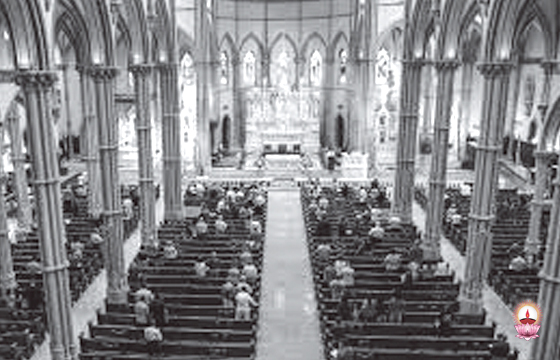
Today another series of small steps are altering how we live and act. For the first time, the Gallup Organization reports that membership in a Christian church, synagogue or mosque has fallen from 61% in 2010 to 47%. Meanwhile, those who profess no religious preference grew from 8% to 21% over the last decade. And among those who do express a religious preference, the number of congregants has declined from 73% to 60%.