
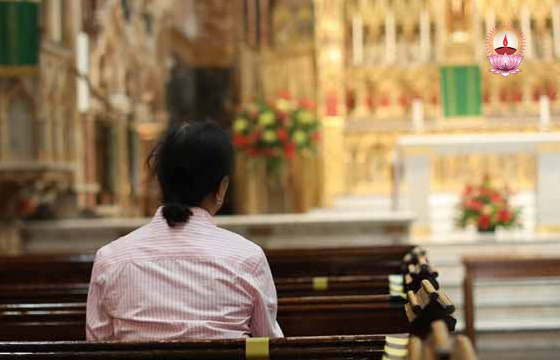
Only a small minority of British Catholics said they would not return to worship in church when the coronavirus pandemic is fully over, according to a new survey. Just 4% of people interviewed in the study, conducted between May 19 and July 26, said they would abandon going to church when restrictions are finally lifted. The findings of the poll of 2,500 people by Catholic Voices, a group set up in the U.K. in 2010 to improve communications between the church and the media, contradict the predictions of some Catholics that the COVID-19 crisis would irrevocably accelerate the decline of collective worship among the faithful. Brenden Thompson, CEO of Catholic Voices, said he was “pleasantly surprised by many of the findings.”
“Catholics miss their parishes and church buildings and seem eager to return, not just content with ‘virtual church,’” he said in a statement.
Daily Archives: September 16, 2020
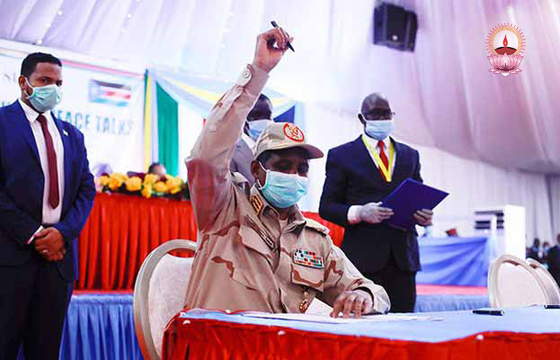
Sudan Agrees with Rebels to Remove Islam as State Religion
In signing successive peace deals with entrenched rebel movements, Sudan drew upon the legacy of Thomas Jefferson.
“The constitution should be based on the principle of ‘separation of religion and state,’” read the text of an agreement between the North African nation’s joint military-civilian transitional council and the Sudan People’s Liberation Movement–North (SPLM–N).
“The state shall not establish an official religion.”
The declaration of principles further cements Sudan’s efforts to undo the 30-year system of strict sharia law under President Omar al-Bashir, during which Islam was the religion of the state.
The agreement was signed in Addis Ababa, Ethiopia, four days after a more inclusive peace deal was signed with a coalition of rebel groups in the Sudan Revolutionary Front in Juba, South Sudan.
The Juba agreement established a national commission for religious freedom, which guarantees the rights of Christian communities in Sudan’s southern regions. Sudan’s population of 45 million is roughly 91% Muslim and 6% Christian. Open Doors ranks Sudan at No.7 among the 50 nations where it is hardest to be a Christian.
The US Commission on International Religious Freedom (USCIRF) interpreted the agreement even more widely: to protect the rights of all Sudanese people to practice their religion of choice. With a stronghold in the southern Nuba Mountains within the South Kordofan region, an area with a significant Christian population, the SPLM–N held out of the initial peace deal specifically because it did not guarantee the separation of religion and state.
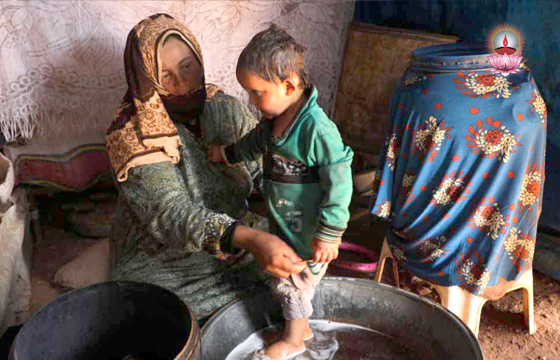
Christians, others warn Turkey is ‘weaponizing water’ in northeast Syria
Parts of Syria’s north where Kurds, Christians and Yazidis have practiced religious freedom in recent years are reportedly again under attack by mainly Turkish military and their allied Syrian Islamist fighters.
The Syrian Democratic Council, which oversees the autonomous northeast of Syria, condemned Turkey’s cutting off the water supply to the area’s main city, Hassakeh, for nearly four straight weeks. Humanitarian groups have repeatedly accused Turkey of “weaponizing water” since its military takeover of the region in October 2019.
The council warned that Turkey is risking hundreds of thousands of lives in the midst of the coronavirus pandemic and soaring temperatures.
“Turkey has cut off water from reaching the city of Hassakeh and the surrounding country side, which is home to more than a million people. This is a crime against humanity,” Gabriel Shamoun, the council’s vice pre-sident, told Catholic News Ser-vice. A Syriac Christian, Shamo-un is also Syriac Union Party official.
One resident, who only provided his first name, George, said wells on the outskirts of the city required about 12 days to fill up the reservoir, and only then could water be distributed. The man said he had already lost several relatives to COVID-19.
Withholding water is a similar tactic used by Islamic State militants in northern Iraq, when they cut water supplies to Qaraqosh and other towns of the Ninevah Plain before their 2014 invasion.
The Al-Himme pumping station nearer to the city only covers less than one-third of people’s needs, according to UNICEF.
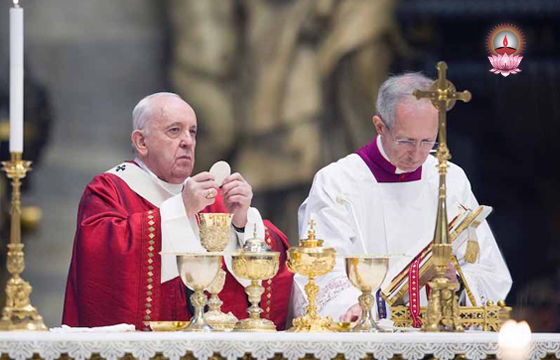
How the new Italian missal points to the Francis reforms
Just two words – but they say everything about the direction of the reforms of the Francis era.
The words are contained in the new Italian translation of the Mass texts, approved by Pope Francis, and will be used from Easter Sunday 2021.
In the prayers said over the bread and wine, the priest says – as he always has – that Jesus’ blood was poured out per tutti (“for all”) and not per molti (“for many”).
The Italian bishops have, in reality, changed nothing, simply keeping the translation of the Latin phrase pro multis that has been widely used since the liturgical reforms mandated by the 1962-65 Second Vatican Council.
But that is what is so significant. The translation of pro multis has been the subject of intense debate over recent decades.
Following the Council, many countries used the equivalent of “for all” in their translations, although this began to change in 2001, after the Liturgiam Authenticam instruction called for a more literal translation of Latin texts.
In 2006, Rome ruled that pro multis should be translated as “for many” with Benedict XVI insistent on this point.