
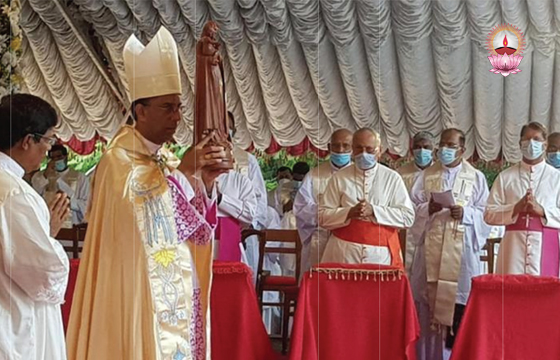
Religious and ethnic parties must be banned: they do nothing but divide the country, says Cardinal Malcolm Ranjith, Archbishop of Colombo, in his homily for the National Day of the Sick, delivered in the basilica of Our Lady of Lanka in Tewatte.
Referring to the Easter attacks last year, and to the slow progress in investigations to find the culprits, Cardinal Ranjith recalled that religion must not divide or kill people: “If one religion destroys another, what is its meaning? Show me where such a God is!”
According to the Archbishop, religious extremism has spread dangerously in the country. He wonders if religious leaders are responsible for the attacks. The suicide bombers targeted three churches – two Catholic and one Protestant – and three hotels. The explosions caused about 280 deaths, including 45 foreigners, and nearly 600 victims.
After more than a year, justice has still not been done. “The investigation is underway – under-lined Cardinal Ranjith – but the authorities have not found out who planted the bombs, who the organizers are and who financed the raids.”
He continued that it is of serious concern that those politicians and officials who failed in their responsibilities have yet to be identified: “We ask and hope that the government will keep its promises to the Church, punishing those responsible.”
Daily Archives: September 16, 2020
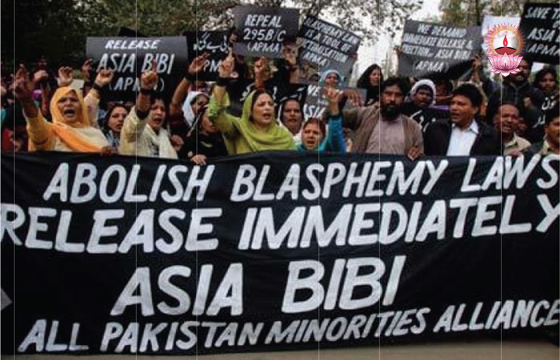
Khyber Pakhtunkhwa, another Christian arrested for blasphemy. The 42nd in a month
On 30 August a Pakistani Christian was arrested on charges of blasphemy in Nowshera (Khyber Pakhtunkhwa). It is the 42nd case of its kind recorded in August in the country, a real record according to the Naya Daur (New Era) website.
David Masih’s arrest occurred three days after a video – which went viral – was posted on social media showing pages of the Koran being thrown down a drain. Reported to the police by some Muslim inhabitants of his neighbourhood, he allegedly confessed to having torn the pages “to practice witchcraft.”
The Pakistani Penal Code states that “anyone who intentionally defiles, damages or desecrates a copy of the Holy Quran or an extract from it, or uses it in a derogatory manner or for any illegal purpose, will be punished with life imprisonment.” In the case of defamation of the Prophet Muhammad (section 295-C), the death sentence is foreseen.
Since 1987, when Pakistan added sections 295-B and 295-C to the blasphemy law, the number of arrests for this crime has increased. According to the National Commission for Justice and Peace of the Pakistani Bishops’ Conference, between 1987 and 2018, 776 Muslims, 505 Ahmadis, 229 Christians and 30 Hindus were accused of blasphemy.
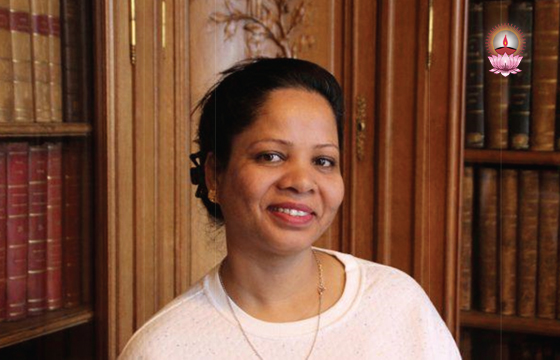
Activists shocked after Asia Bibi dissociates herself from autobiography
Human rights activists were shocked after Asia Bibi dissociated herself from her autobiography, due out later in September. Bibi, the Catholic woman acquitted of blasphemy in 2018 after spending eight years on death row in Pakistan, sparked controversy with an Aug. 31 interview with Voice of America Urdu, reported ucanews.com. “I wasn’t involved in its drafting. I don’t know when she wrote it, whose story is it and who guided her for the book. I absolutely do not agree with this book because it’s not my autobiography,” she said, referring to French writer Anne-Isabelle Tollet, the only reporter to have met her during her stay in Canada. In February, Bibi confirmed that she was seeking asylum in France to live closer to Tollet, who played a key role in her fight for freedom and helped write her autobiography, “Enfin Libre!” (“Finally Free”).
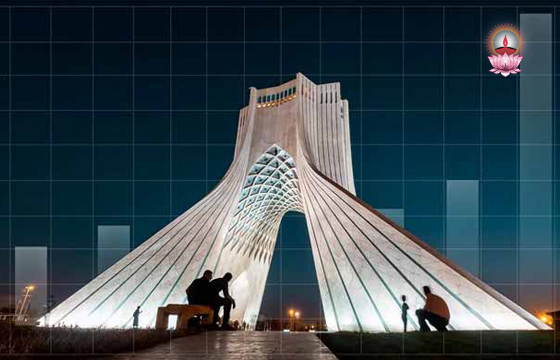
Researchers Find Christians in Iran Approaching 1 Million
Missiologists have long spoken of the explosive growth of the church in Iran.
Now they have data to back up their claims—from secular research.
According to a new survey of 50,000 Iranians—90 percent residing in Iran—by GAMAAN, a Netherlands-based research group, 1.5 percent identified as Christians.
Extrapolating over Iran’s population of approximately 50 million literate adults (the sample surveyed) yields at least 750,000 believers. According to GAMAAN, the number of Christians in Iran is “without doubt in the order of magnitude of several hundreds of thousands and growing beyond a million.”
The traditional Armenian and Assyrian Christians in Iran number 117,700, according to the latest government statistics.
Christian experts surveyed by CT expressed little surprise. But it may make a significant difference for the Iranian Church.
“With the lack of proper data, most international advocacy groups expressed a degree of doubt on how widespread the conversion phenomenon is in Iran,” said Mansour Borji, research and advocacy director for Article 18, a UK-based organization dedicated to the protection and promotion of religious freedom in Iran.
“It is pleasing to see—for the first time—a secular organization adding its weight to these claims.”
The research, which asked 23 questions about an individual’s “attitude toward religion” and demographics, was run by professors associated with the respected Dutch universities of Tilburg and Utrecht. “The Iranian authorities lost oversight of it,” said Nicolai. “There was nothing they could do to stop the spread of the gospel.”

Salvadoran imprisoned for 1989 killings of 5 Jesuit priests
A former colonel of the Salvadoran military, Inocente Orlando Montano Morales, has been convicted in a Spanish court for is participation in the murder of five Jesuit priests in 1989. Montano has been sentenced to more than 133 years in prison. The former colonel was El Salvador’s vice-minister for public security during the civil war that divided El Salvador in the 1980s. He was convicted on September 11 of planning and ordering the killing of five Jesuit priests, all of whom were Spanish, at the Central American University in San Salvador.
A Salvadoran Jesuit priest, their housekeeper, and her daughter were also killed, but the former colonel was convicted in Spain only of the killings of the five Spanish Jesuits.
Montano maintained his innocence, though witnesses testified that he believed the Jesuits were collaborators of the Marxist guerilla Farabundo Marti National Liberation Front, which El Salvador’s military junta fought in a bloody civil war that spanned more than a decade.
The Jesuits in El Salvador were active proponents of peace talks and a negotiation between the government and the Farabundo Marti National Liberation Front. One of the priests killed, Father Ignacio Ellecuria SJ, was an outspoken critic of El Salvador’s government, according to Reuters. The killings took place on Nov. 16, 1989, during a battle being waged across the city of San Salvador. Ellecuria served as rector of the Central American University, which was occupied by an elite battalion of the Salvadoran army.
A unit of the Salvadoran Army dragged from their beds the six Jesuits and shot them.
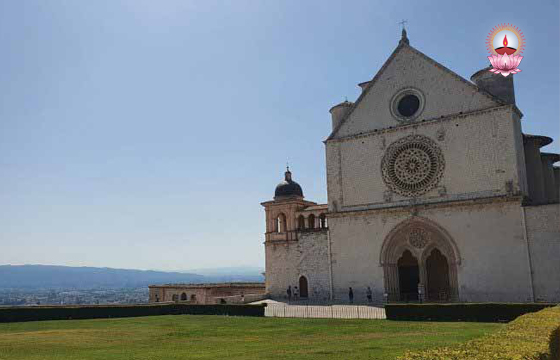
Pope ready to sign new encyclical for post-Covid age
Pope Francis is to release a new encyclical which is expected to focus on what the world should look like following the Covid-19 pandemic. The 83-year-old Roman Pontiff will travel to Assisi to sign the document, in what will be his first trip outside of Rome since the Coronavirus struck Italy.
His visit to the small Umbrian town is highly symbolic as it is taking place on the feast of his namesake, St Francis of Assisi, the saint of poverty, peace and care for creation. The Vatican said on 5 September that the encyclical will be titled Fratelli tutti, or Brothers all, and will be on “fraternity and social friendship”. The Pope will sign it after saying Mass at the tomb of St Francis, but due to the virus, he will celebrate the liturgy privately, and without anyone present.
Although the encyclical will offer a framework for a more just post-pandemic world, The Tablet understands it has been in preparation since before the emergence of Covid-19.
The encyclical is expected to build on the themes of human fraternity found in the joint declaration signed in Abu Dhabi by the Pope and the Grand Imam of Al-Azhar, which calls on religions to work more closely together.
The Pope has made dialogue with other religions a hallmark of his pontificate and has sought to build up relations within the Muslim world.
By travelling to the United Arab Emirates in 2019, he became the first Pope to visit the Arabian Peninsula and has made efforts to channel the spirit of St Francis, who 800 years ago sought to broker a peace with the Sultan of Egypt during the Crusades.
The encyclical, the highest form of papal writing, is likely to cover a broad canvas of issues such as war, globalisation, populism and economics. At a time of growing polarisation in politics, the document could well examine how to tackle fragmentation and inequality.

Mark Galli, former Christianity Today editor and Trump critic, to be confirmed a Catholic
Mark Galli will stand before Bishop Richard Pates in the Cathedral of St. Raymond Nonnatus in Joliet, Illinois, to hear these words:
“Francis, be sealed with the gift of the Holy Spirit.”
Pates will then dab Galli’s forehead with anointing oil (using a cotton ball instead of his thumb due to COVID-19). And with that, Galli — who has chosen his confirmation name after St. Francis of Assisi— will become a Roman Catholic.
Galli’s journey to Catholicism is notable, in part because of the nation’s political climate. A former Presbyterian pastor, Galli spent seven years as editor-in-chief of Christianity Today, the premier publication for evangelicals whose founder was the legendary evangelist Billy Graham.
But for a few days last December, Galli was perhaps the most well-known evangelical in the country – after penning an editorial calling for Donald Trump’s impeachment and removal from office and arguing he was “profoundly immoral.”
It went viral, earning a rebuke from Trump on Twitter, and bringing Galli — who retired from the magazine in January — a tsunami of publicity. Some of his fellow evangelicals praised the editorial as courageous, given their movement’s overwhelming support for the president.
Trump’s evangelical supporters labeled it misguided and out of touch.
Now, two months before the election, with evangelical allegiance to Trump polling as strong as before, Galli is leaving the fold.
As with most conversions, however, Galli insists his is personal, not political.
Now 68, he had already decided by the time he wrote the 2019 editorial that he would quit the Anglican Church he had attended alongside his wife, Barbara, for 20 years.
“I’m not joining this holy institution that has it all right. I want to be one with these Christians who I think represent the true church in some sense.”
Women take to pulpits in German diocese: “It is not enough to give testimony only in the family or at work”
Women are to take to pulpits in a German diocese, saying “it is not enough to give testimony only in the family or at work.”
– The time has come “to broaden the framework so that women, with their charisms, can be seen and heard more strongly in liturgy and preaching”
– Building on the success of May’s “Day of the Women Preachers”
Sermons are usually given by priests, but that’s about to change in the Diocese of Osnabrück, where for a week at least – from September 13 to 20 – women will proclaim and interpret the word of God in a series of special church services.
It all started with an invitation from the Office for Women’s Pastoral Care of the German Bishops’ Conference for Catholic women to celebrate the International Year of the Word of God by sharing their perspectives on the Bible in their respective communities and by sending in their sermons and catecheses, a selection of which will be published in a book.

German Catholic bishop criticizes ‘Synodal Way’ draft text on role of women
A Catholic bishop has sharply criticized a text produced by the German Church’s “Synodal Way” forum on the role of women. In an open letter published Sept. 2, Bishop Rudolf Voderholzer said that a draft text prepared by the forum on “Women and Offices,” also known as Forum III, “lacks any theological level.”
The bishop of Regensburg was referring to a document produced by a working group on the “Participation of women in leadership under the current conditions of canon law.”
Voderholzer, a professor of dogmatics, expressed concern about the document’s presentation of the establishment of the sacraments, reported CNA Deutsch, CNA’s German-language news partner.
“The fact that the sacraments of the time pertain to the post-Paschal Church is obscured. That there is, however, in theology a very differentiated reflection on the question of the institution of the sacraments is ignored,” the bishop said.
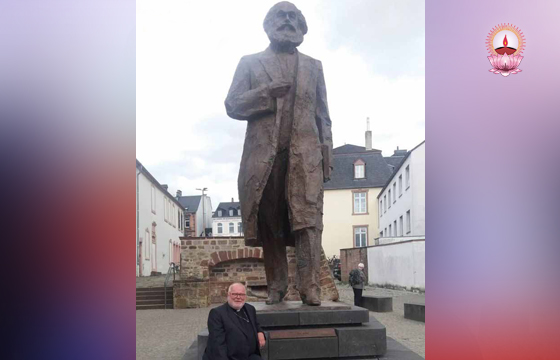
German Catholics Slam Marx Photo-Op
The German Bishops’ Conference is facing backlash for a post about Karl Marx. There was backlash to the post on social media, with many Catholics slamming the German bishops for calling Karl Marx a “great thinker.” One of the comments, from a German conservative, asked rhetorically, “And Karl Marx is a role model, huh? So is socialism, that has cost millions of people worldwide?”
“A mockery to all victims of socialism!” said one commenter in German.” Mr. Cardinal Marx should be ashamed of himself!”