
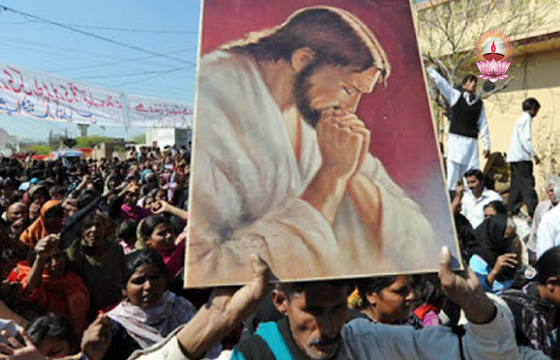
A video posted on TikTok in July shows a Christian man being pressured to reject his faith and convert to Islam. Despite threats, he can be heard saying that “for nothing in the world” will he abandon the Christian faith. The video, posted by bilalmaher479, went viral, but also sparked a strong reaction from Christians and members of other religious minorities.
Hitherto, non-Muslims have to had to witness the forced conversions of girls and young women, compelled to marry Muslim men. The forced conversion of boys and young men is something relatively new.In the video in question, the Christian man is seen being pressured to recite the shahada, the Islamic creed, surrounded by people who are not seen. Despite everything, he refuses, saying that for nothing in the world would he recite the Muslim creed and reject the Christian faith.
His tormentors then begin to threaten him, saying that he will face serious consequences. Even then, the victim says no, stating that it is his right to keep his faith and that he is ready to suffer all the consequences, that he would not give up his religion.
In a statement, the Pakistan Telecommunication Authority (PTA) said that it has received many complaints about the immoral, obscene and vulgar contents in social media, especially TikTok and Bigo, for their negative impact, especially on young people.
After contacting the two companies, the PTA said that their response was unsatisfactory and that it blocked Bigo under the Prevention of Electronic Crimes Act.
Taskeen Khan, a Glory TV presenter and human rights activist, came to the victim’s defence, posting the video on his official page and slamming the forced conversion attempt.
“Will the Pakistani authorities find the offenders through their TikTok account and punish them according to the law?” he asked.
For his part, Rev Irfan James of Peshawar said that “Pakistani Christians suffer many challenges and [endure] persecution. They face difficult situations every day.” “It is sad that young Muslims, the majority community, constantly threaten Christians and our faith. Time and time again, they make fun of our faith, but neither the government nor law enforcement do anything about it.”
Daily Archives: August 31, 2020
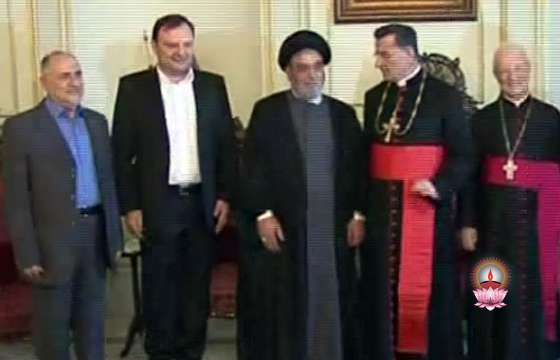
Beirut, Maronite Church and pro-Hezbollah newspaper in unprecedented clash
Following an unprecedented “paid and planned” attack on Patriarch Raï, carried in the ne-wspaper al-Akhbar, the Episco-pal Commission for Social Co-mmunications has stated that information on “hidden weapons and explosives in residential areas and among civilians” revealed in his Sunday Homily are “without any doubt.”
“Instead of abusively accusing the patriarch, whose sources of information leave no doubts of any kind, we advise this newspaper to verify and investigate the statements that reveal that weapons and explosives are being hidden and stored in residential areas and among civilians. Otherwise – affirm the bishops – in reality, the enemy is hiding, among them.”
In his homily, considered the first direct attack on Hezbollah’s military strategy, Patriarch Raï had asked the leaders to “consider the explosion at the port of Beirut as a warning signal.” The Cardi-nal called on authorities “to search all the weapons depots illegally located in the heart of residential districts, in cities and villages.” The head of the Maronite Church added that “certain Lebanese regions have become minefields, which could blow up at any moment. The presence of these hidden weapons depots represents a real threat to the life of the Lebanese, which does not belong to anyone, any party or any organization.” “It is time – concluded the cardinal – to unearth these weapons and these explosives, so that citizens can truly feel safe.”
Furthermore, the patriarch, who has been promoting and relaunching the principle of Lebanon’s ”active neutrality” for several weeks, stressed.
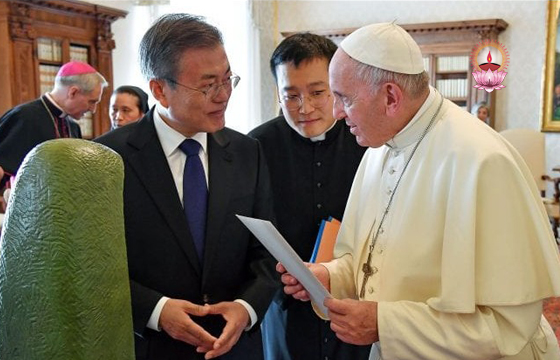
South Korean president turns to Catholic bishops to help fight coronavirus
S. Korean President Moon Jae-in, who is facing increased pressure over some of his policies, hosted a luncheon for Catholic leaders, asking for their cooperation in tackling the COVID-19 coronavirus.
“We must overcome the coronavirus (and) we will do our best to overcome the crisis quickly and minimize economic loss,” Moon said during the meeting, adding that he plans to meet with other Christian leaders in the near future.
Once seen as a model in dealing with the pandemic, South Korea has seen a spike in cases of coronavirus that has led to a fresh suspension of public Masses and could even throw the nation into a second lockdown.
In attendance at the presidential luncheon were Cardinal Andrew Yeom Soo-jung, Archbishop of Seoul; Archbishop Hyginus Kim Hee-jong of the Gwangju Diocese; Archbishop Thaddeus Cho Hwankil of Deagu; Bishop Peter Lee Ki-heon of Uijeongbu; Bishop John Chri-sostom Kwon Hyok-ju of Andong; and Bishop Lazarus You Heung-sik of Daejeon.
According to the presidential office, Moon praised the Catholic Church for its swift action in obeying government quarantine restrictions during South Korea’s first wave of COVID-19 in February.
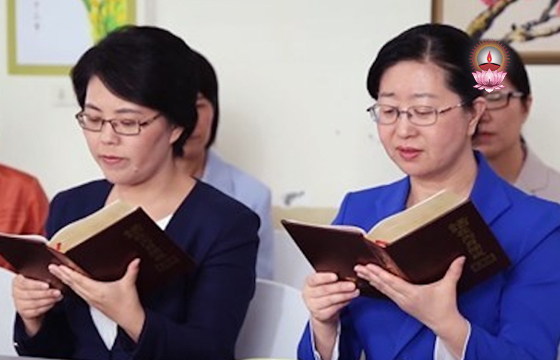
Chinese female Jesus worries Baptists in Indian state
Church leaders in north-eastern India’s Nagaland state are concerned about a Chinese Christian cult misleading thousands of their young people with faulty doctrines.
The Church of Almighty God, which emerged in China some three decades ago, teaches that a woman named Yang Xiangbin is the second Christ.
The cult is “reportedly making inroads into our land,” said Reverend Zelhou Keyho, general secretary of the Nagaland Baptist Church Council (NBCC), in a letter to all church bodies and Baptist leaders in the state.
It has reportedly attracted thousands of young people through social media, church leaders say.
Yang Xiangbin, also called Lightning Deng, and cult founder Zhao Weishan fled China in 2000 after the Chinese government banned it, mainly because of its direct opposition to the Chinese Communist Party, published re-ports show.
The cult “is a well-organized group, aggressively moving for-ward with publication and creat-ing many Facebook pages and colourful artwork that appears biblical and enticing,” said the letter of Reverend Keyho.
The council is the top body of nearly 1,500 Baptist Churches in Nagaland, where Christians form 90 percent of two million people. The majority of Christians are Baptists. The cult’s Facebook page has some 137,000 followers. They claim to have offices in the US, UK, South Korea, Canada, Australia, New Zealand, Hong Kong, Germany and France.
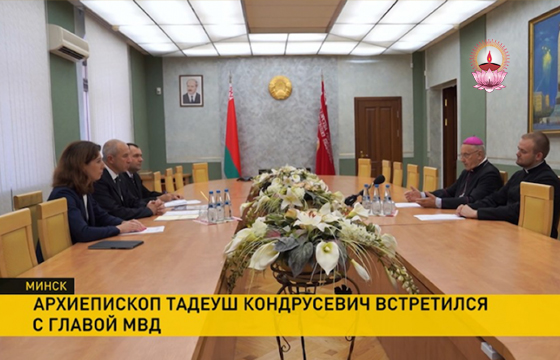
Archbishop Kondrusiewicz meets a minister; Lukashenko threatens the churches
After several denials, it has been officially confirmed: last August 21 a meeting was held between Yuri Karaev, Belarusian Interior Minister, and the head of the country’s Catholics, Metropolitan Tadeusz Kondrusiewicz. The meeting had been requested by the archbishop to assess the prospects for a peaceful resolution to the conflict between the president and the opposition.
Archbishop Kondrusiewicz reminded the minister of the unsustainability of violent repression, implemented by the local militia, denouncing at the same time the presence of no less violent provocateurs in various demonstrations. He also proposed the formation of a mixed commission, which would carry out checks on the conditions of arrest and detention of people. The state-owned television channel ONT said the parties reached an agreement on the formation of such a commission.
On the official website of the Belarusian Catholic Church it is specified that Kondrusiewicz has placed the emphasis mainly on the protection of “the weakest and the defenceless.”

Cardinal Cleemis offers churches to beleaguered Jacobites
Cardinal Baselios Cleemis, head of the Syro-Malankara Church, has come to the aid of the Jacobite faction of the Syrian Orthodox Church that has lost its places of worship in a legal battle.
“With great joy, we are offering you the Syro-Malankara places of worship to conduct services until you have made your own alternative arrangements,” says a letter from the cardinal addressed to Joseph Mar Gregorious Metropolitan, the metropolitan trustee of the Malankara Jacobite Syrian Church.
The August 24 letter began by expressing the Catholic Church’s respect and love for the Jacobite Church, its leaders and the faithful.
“We are painfully aware of the recent anguish the Malankara Jacobite Church. We also pray for the Church before the Lord,” Cardinal Cleemis says.
The Jacobites’ decades-old feud with the Syrian Orthodox faction reached the climax on August 17 when the Kerala government took over the Jacobites’ mother church, the ancient Cathedral in Mulanthuruthy near Kochi, Kerala’s commercial capital.
The Mulanthuruthy Church, built in 1200, has been managed by Jacobite faction, but the Supreme Court verdict of July 3, 2017, gave its ownership to the Orthodox Church. The church is a fine example of Gothic architecture. The carvings, sculptures, symbolic icons and wall paintings, are a blend of Indian, West-Asian and European architecture. Most parishioners belong to the Jacobite faction.
The takeover was part of implementing a 2017 Supreme Court order that granted possession of more than 1,100 Jacobite churches to their rival.
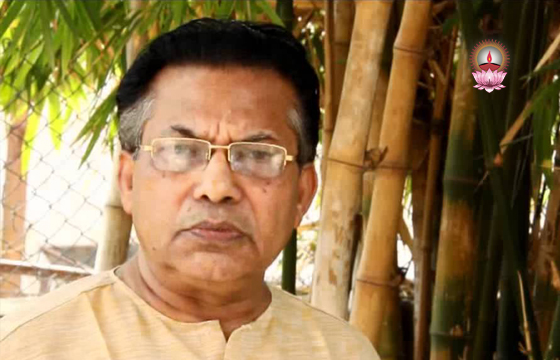
India’s first Catholic priest lawyer continues to empower poor
Jesuit Father P D Mathew, the first Catholic priest to become a lawyer in India, has recently celebrated the golden jubilee of his religious life as a Jesuit. His is an inspiring story of empowering thousands of our citizens through his mission of legal aid.
Father Mathew says a short stay with a group of bonded labourers in early 1960s made a drastic change in his life. During his training to become a Jesuit priest, his superiors had asked him to study chemistry so that he could become a teacher in their college in Ahmedabad, the commercial capital of Gujarat.
But the stay with the tribals in the Bharuch district of Gujarat during 1962-1965, helped him realize the way they were oppressed by powerful people. “Their cries for human rights and justice challenged me as a priest to respond to them in an effective way,” the lawyer priest recalled.
According to him, becoming a lawyer as “a vocation with his choice vocation” where his main mission was to listen to the plight of the simple and suffering people.
“It was in that situation that I first thought of studying law in order to liberate them from the bonded system prevalent at that time in Gujarat. My later studies in social work at the M S University, Baroda, (passed with distinction and gold medal) also inspired me to take up the legal profession as a means of liberating the oppressed people.”
Father Mathew says not all supported his idea of becoming a lawyer. His Jesuit superiors and companions considered law as a “lier’s profession” of those exploiting the poor litigants, who helplessly seek justice through courts. “As a result, no priest in India ever thought of studying civil laws to take up the legal profession as a mission to serve the poor,” he explained. “Consequently I struggled a lot to get permission from my superiors to acquire a degree in law. After a year-long dialogue with my superiors… I got the LL.B. degree with distinction and gold medal which prompted the university authorities to ask me to continue my law studies to take an LL.M. degree and to teach in the Law Faculty of the University.”
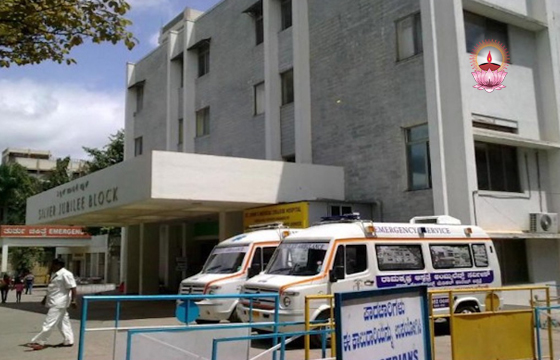
Indian archbishop blesses Catholic Covid-19 centre
The first Catholic medical facility in India fully equipped to serve Covid-19 patients has been inaugu-rated in Bengaluru in Karnataka State.
The Covid care centre at St John’s Medical College, which has 48 isolation beds, a 24-bed intensive treat-ment unit (ITU) and a 24-bed intensive care unit (ICU), was blessed and inaugurated by Archbishop Peter Machado of Bangalore on Aug. 17.
“The Church is always at the fore-front to help the poor and the needy, whether in the education or health fields, and it is an opportunity to give our selfless service to our society and nation,” Archbishop Machado told UCA News.
“Our hospital has taken a leading step to provide healthcare to people during these crucial times. It is a first in the country and I salute and thank people who made this possible.”
He said the medical college has given free treatment worth over 5 million rupees (US$67,000) in the last five months in tackling pandemic cases.
By the end of July, it had screened more than 5,000 fever patients, 2,000 patients in the emergency department, treated more than 600 patients on the wards and taken care of some 500 critically ill patients in the ICU.
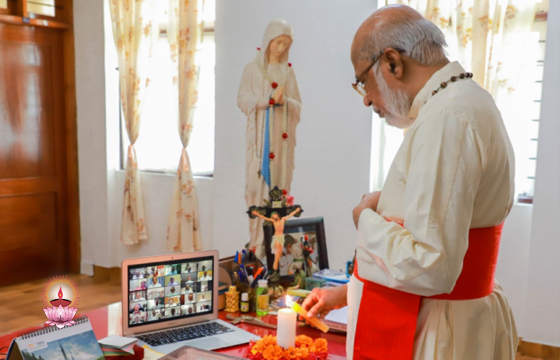
Syro-Malabar Synod pledges to help Covid-19 poor
The Syro-Malabar Church ended its 28th Synod calling upon its people to help the nation increase its productivity and encourage agricultural and industrial activities.
As many as 61 bishops from around the world attended the August 19-21 Synod held through videoconference because of the health regulations to control the coronavirus pandemic. The second Synod of the year Synod addressed the Church’s commitment to the poor at time of the Coronavirus pandemic. The Syro-Malabar Church, the larger of India’s two Oriental Catholic rites, has spent some US$ 7.3 million to help the poor since the country imposed a nationwide lockdown on the midnight of March 24.
The bishops urged their faithful to cooperate with the authorities to help society’s poorest, irrespective of caste or creed. The Synod’s first session was held on January 7 to 15 at Mount Thomas, the Church’s headquarters at Kakkanad, a Kochi suburb. The Church has total 64 bishops heading dioceses all over the world.
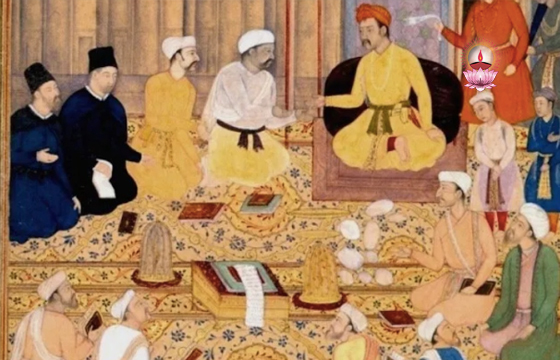
When Emperor Akbar encouraged Christian art
Portuguese India during the 16th century – that is, the colonial enclaves of Goa, Bassein, Cochin and the Pearl Fishery Coast – was blessed with the presence of the Jesuits. They built monumental churches, colleges and residences.
The Portuguese Jesuits lavishly decorated these buildings with paintings, statues and church furnishings, and they commissioned numerous artists, painters, builders and sculptors.
Indeed, the Jesuit Church was designed to represent a particular image of Catholicism in the East: a triumphant Church.
Most of these artists were Hindus. They created ivory and wooden statues and furnishings in a subtle hybrid style, merging the late Renaissance influence of Europe and elements of local Hindu temple art.
While the pictures of Mary, the saints and the angels were derived from Italian and Iberian originals, most of them were usually adapted to Indian sensibilities.
One example of such hybrid art can be found in the courts of the great Moghuls – Akbar, Jehangir and Shah Jehan. They were the result of the early Jesuit missions to the Moghul court in Fatehpur Sikri, near Agra.