
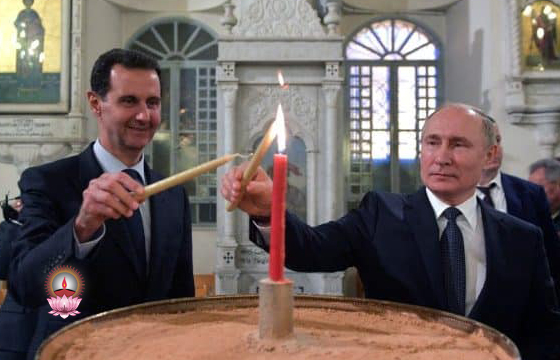
The Syrian government has announced that it will build a replica of the Hagia Sophia, according to Lebanon’s Al-Modon media.
This in opposition to the Turkish regime’s conversion of Hagia Sophia into a mosque.
A leader of the pro-Syrian government National Defence Forces militia, Nabeul Al-Abdullah, obtained the approval of Bishop Nicola Baalbaki, the Metropolitan of Hama and its dependencies to build a new church in the city of Suqaylabiyah in Hama province. More than 17,000 residents of Suqaylabiyah are overwhelmingly Greek Orthodox. Al-Modon said that the funding for the construction of the church is the first practical and indirect response from Russia to express its anger against Turkey for converting Hagia Sophia.
Russian MP Vitaly Milonov stated that “unlike Turkey, [Syria] is a country that clearly shows the possibility of peaceful and positive interfaith dialogue,” adding that “Orthodox Christians in Russia can help Syria with construction.”
The talk of creating a replica of Hagia Sophia in northern Hama had started in mid-July when Abdullah announced his donation of a plot of land for the implementation of the project.
He presented the idea to the commander of the Russian controlled Hmeimim military base in Latakia province, and there he got the initial support for the project. This was followed by visits of Russian leaders and officials to the headquarters of the Abd Allah militia in northern Hama, who have been on the front line fighting against Turkish-backed jihadists.
Russian support for the construction of a Syrian Hagia Sophia was confirmed by the visit of a large military delegation from the Hmeimim base to the city of Suqaylabiyah, where they were received by a number of “national defence” leaders north of Hama, bishops and church officials, according to the Lebanese newspaper.
The delegation visited a number of religious sites and schools in the city, examined the project site and promised to help in setting detailed urban plans and secure the necessary support to start work.
Daily Archives: August 31, 2020

Nigeria is becoming world’s ‘biggest killing ground of Christians’
Nigeria is becoming the “biggest killing ground of Christians in the world” due to attacks by Boko Ha-ram and Fulani militants, says a leading charity.
International Christian Concern (ICC) estimates between 50,000 and 70,000 Christians have been killed in the last decade in the West African nation, the most populous on the continent.
Nigeria’s 206 million people are almost evenly divided between Muslims and Christians. Islam is the dominant faith in the North, and Christianity in the South – but most of the killings take place in Nigeria’s Middle Belt, where the halves of the country meet. Attacks by Fulani herders in particular have had a devastating effect on Christian farmers -thousands have fled, leaving behind fertile farmlands.
“Without the access to their land, they no longer have the ability to grow food to sustain themselves and their families. It is also hurting the larger community as a whole as there are known food shortages throughout northern Nigeria,” Nathan Johnson – ICC’s Regional Manager for Africa – told Crux. “The three biggest terrorist organizations in the world today are ISIS, Boko Haram, and al-Shabaab. Boko Haram has been operating in Nigeria since 2009, and ISIS started a splinter group there in 2015 called Islamic State West Africa Province (ISWAP). Al-Shabaab operates out of Somalia and mainly in East Africa.
There is also another lesser known group which we at ICC term “Fulani militants.” This is a hostile group of individuals who attack Christian farming communities throughout the Middle Belt of Nigeria. We do use the term militants because there are many Fulani who are peaceful, but there are also violent groups amongst their population who use it as a disguise. Between these three groups, an estimated 50,000 to 70,000 Christians have been killed in Nigeria since 2010. This persecution has several different drivers, based on groups and location.
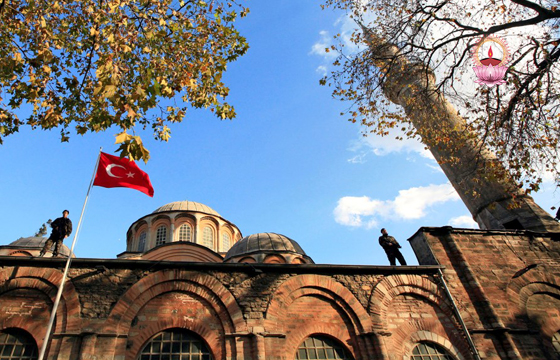
Turkey Converts Chora Church Into Mosque
Turkey has issued a presidential decree ordering the conversion of the nation’s best-known Byzantine monastic church into a mosque. President Recep Tayyip Erdogan published the executive order sealing the fate of the Church of the Holy Saviour in Chora, Istanbul, a month after Turkey’s top court delivered a unanimous verdict declaring the basilica of Hagia Sophia a mosque.
The decree, printed in the National Gazette, transfers “the administration of the Kariye Mosque [Chora Church] to the Directorate of Religious Affairs [Diyanet].”
In accordance with Article 35 of law No. 633 on the Presidency of Religious Affairs it orders the opening of the “mosque for [Islamic] worship.” Erdogan’s diktat over-turns an earlier ruling of the Council of Ministers from April 23, 1945, which had directed the ancient monastic church to be used as a museum and warehouse.
The executive order formally implements the change in the church’s status, which was passed in Dec. 2019 by a decision of Turkey’s Council of State. Speaking to Church Militant, renowned Islamic historian Robert Spencer stressed that the conversion of Hagia Sophia and now the Chora Church into mosques demonstrated the “signal failure” of Pope Francis’ pact with the world’s highest-ranking Sunni Muslim leader Ahmad al-Tayyeb.
“Anyone could have predicted this monumental fiasco from the moment Pope Francis and al-Tayyeb signed the deal in February 2019,” Spencer asserted.
On May 29, Ottoman soldiers found their way to Chora and hacked the icon to pieces.
Muslim ruler Hadim Ali Pasha converted the church to a mosque between 1495–1511, adding a mihrab (a niche that indicates the direction of the Kaaba in Mecca, facing which Muslims are required to pray) in the main apse and replacing the belfry with a minaret. Chora is an increasingly popular tourist destination known for its best-preserved examples of stunning Byzantine mosaics and frescoes. The interior is covered with biblical scenes and portraits of Jesus and the saints dating back to the 14th century.

Five faith facts about Kamala Harris
Few, if any, vice presidential candidates have had as much exposure to the world’s religions as Kamala Harris, the 55-year-old senator from California whom Joe Biden just picked as his running mate.
Harris’ ethnic, racial and cultural biography represents a slice of the U.S. population that is becoming ascendant but that has never been represented in the nation’s second-highest office.
Here are five faith facts about Harris:
She was raised on Hinduism and Christianity.
Her mother, Shyamala Gopalan, was from Chennai, India; her father, Donald Harris, from Jamaica. The two met as graduate students at the University of California, Berkeley.
Her name, Kamala, means “lotus” in Sanskrit, and is another name for the Hindu goddess Lakshmi. She visited India multiple times as a girl and got to know her relatives there.
But because her parents divorced when she was 7, she also grew up in Oakland and Berkeley attend-ing predominantly Black churches. Her downstairs neighbor, Regina Shelton, often took Kamala and her sister, Maya, to Oakland’s 23rd Avenue Church of God in Oakland. Harris now considers herself a Black Baptist.
She is married to a Jewish man.
Harris met her husband, Los Angeles lawyer Douglas Emhoff, on a blind date in San Francisco. They married in 2014. At their wedding, the couple smashed a glass to honour Emhoff’s upbringing (a traditional Jewish wedding custom).
It was Harris’ first marriage and his second. An article in the Jewish press described her imitation of her Jewish mother-in-law, Barbara Emhoff, as “worthy of an Oscar.”
She was criticized for not proactively assisting in civil cases against Catholic clergy sex abuse during the years she served as a prosecutor.
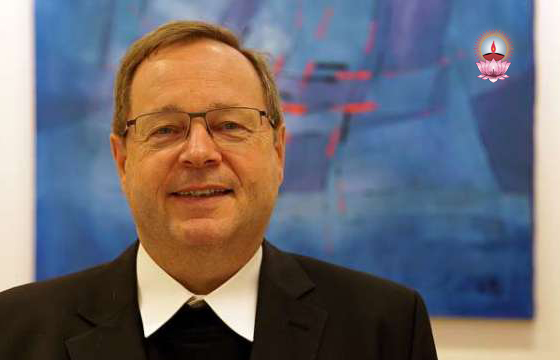
German bishops to accept Vatican offer of ‘clarifying discussion’ on parish instruction
The German Bishops’ Conference has said it will accept the Vatican’s invitation to discuss the new instruction on parishes at a meeting in Rome, suggesting that it will be accompanied by laymen representing the “Synodal Process” under way in Germany.
At the conclusion of their meeting in the Bavarian town of Würzburg on August 24, the permanent council, comprising the diocesan bishops of the 27 Catholic dioceses in Germany, announced the decision that Bishop Georg Bätzing of Limburg would “accept the offer of conversation made by the Prefect of the Congregation for the Clergy, Cardinal Beniamino Stella.”
Furthermore, as CNA Deu-tsch, CNA’s German news partner, reported, the German Bishops’ Conference announced that Bätzing “will suggest to the Congregation that the conversation be conducted with the Presidium of the Synodal Way, since bishops, priests, deacons and laity are equally addressed in the instruction.” If and when the meeting is scheduled to take place is still unclear.
Cardinal Beniamino Stella, prefect of the Congregation for the Clergy, said on July 29 that he would be happy to receive the bishops in order to “remove doubts and perplexity” voiced by German prelates.
Stella said that the meeting could take place “in due course” if the bishops wished to present their objections to the instruction, issued by his congregation on July 20. He reportedly declined to respond to specific criticisms ahead of the potential meeting.
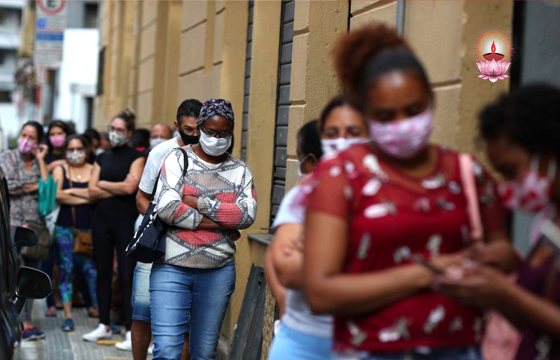
In openly criticizing Brazil’s president, 152 bishops spur anger, controversy
A letter signed by 152 Brazilian Catholic bishops harshly criticizing President Jair Bolsonaro’s administration and his unsuccessful handling of the COVID-19 pandemic has been spurring intense controversy among the country’s Catholics since its release in late July.
As various groups expressed their support or disapproval of the document, backed by about a third of the country’s bishops, some in the church began to fear that Brazil’s sharp political polarization could be affecting its episcopate.
Titled “Letter to the People of God,” a draft of the document was first leaked to the newspaper Folha de S. Paulo on July 26. The letter says Brazil is facing “an unprecedented health care crisis” and a “devastating economic collapse,” which are the results of “the Federal Government’s inability and incompetence to coordinate its actions.”
The document generated strong reactions, especially on social media, but also in the church. “There has been an outraged reaction from some bishops,” Fr Antônio Manzatto, a professor at the Pontifical Catholic University of Sao Paulo, told NCR.
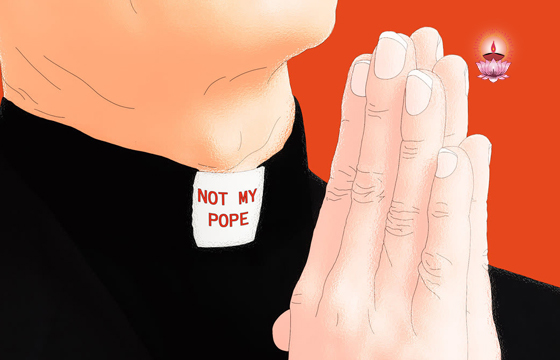
This Secret Society of Priests Still Won’t Recognize Pope Francis
Since the election upon Benedict’s retirement of Jorge Bergoglio, now Pope Francis, Leatherby has shunned the new pontiff and continued to only refer to Benedict as the church’s true leader in mass. After several warnings, he was charged with schism, defrocked and excommunicated from the Catholic Church.
“I continue to regard Benedict as retaining the Office of Peter, as mysterious as that might be,” he wrote in an open letter to the Sacramento diocese, referring to the belief that all new Popes replace the original Pope Peter. “Therefore, I do not regard Bergoglio as the Supreme Pontiff of the Roman Catholic Church.”
Leatherby’s story is somewhat complicated by allegations of a breach of his vow of celibacy through romantic affairs with at least two adult women, one of whom he publicly confessed his love to in a now rather embarrassing video that has been widely circulated. In it, he begins by addressing an unidentified woman: “Hey, Baby Doll. I love that without mascara that you are still strikingly beautiful,” the priest says into his phone camera as he drives his car at night. “I love that. I love it, like, a lot. A lot a lot. I loved it earlier when I saw you, and you didn’t have it on, and I loved it all night long.”
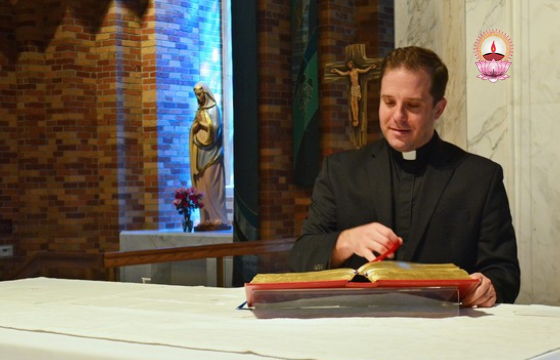
‘’Unbaptised’ US Catholic priest ordained again
Detroit archdiocese ordained a Catholic priest for a second time on Aug. 17 after learning that his infant baptism was void, making his ordination invalid.
Father Matthew Hood, ordained in 2017, has been working in the diocese for the past three years, just like any other Catholic priest. However, his priestly ordination was found invalid as his Catholic Baptism proved to be invalid, reported Catholic News Agency.
Father Hood thought he had been baptized as a baby. But this month, he read a notice issued by the Vatican Congregation for the Doctrine of the Faith on Aug. 6. It said altering the words of Baptism can render it invalid.
For example, if the minister says, “We baptize you in the name of the Father and of the Son and of the Holy Spirit,” instead of “I baptize you,” the Baptism is not valid, it said.
Father Hood remembered a video of his Baptism where the deacon said: “We baptize you….” He suddenly realized his Baptism wasn’t valid.
The Church presumes a sacrament valid unless there is proof to the contrary. Father Hood’s Baptism could have been passed as valid unless he had a video showing the opposite.
Father Hood informed this to his archdiocese. He received Baptism, Confirmation, and Eucharist again. He made a retreat and was also ordained a deacon. He was validly ordained a priest on Aug. 17. One must be ordained a Deacon before validly ordained a priest.
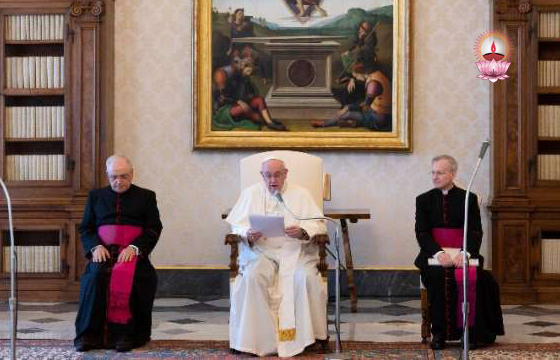
Pope Francis: Make coronavirus vaccine available to all
A potential coronavirus vaccine should be made available to all, Pope Francis said at the general audience Aug. 19.
“It would be sad if, for the vaccine for COVID-19, priority were to be given to the richest! It would be sad if this vaccine were to become the property of this nation or another, rather than universal and for all,” Pope Francis said on August 19.
The Pope’s comments followed a warning by the head of the World Health Organization that some countries may hoard vaccines. Speaking in Geneva on August 18, WHO Director-General Tedros Adhanom Ghebreyesus appealed to world leaders to avoid what he called “vaccine nationalism.”
In his address, the Pope also said it would be a “scandal” if public money were used to bail out industries “that do not contribute to the inclusion of the excluded, the promotion of the least, the common good, or the care of creation.”
Church selling the Eucharist ‘short’ says professor
The Catholic Church is selling “the Eucharist” and people short and is making a mistake by turning Mass into a YouTube experience, according to a UK theologian. Thomas O’Loughlin, emeritus professor of Historical Theology at the University of Nottingham and Director of Studia Traditionis Theologiae, said: “There are some things Zoom and YouTube just won’t do because real experiences are whole human experiences.”
“Can you send an apple by email?” he asked.
He said he will accept doing Mass online when people give up going out to dine with others and when people dine alone at home with pre-packaged food and say it is as rich an experience as it is eating and drinking with friends.
People wanting to have Mass on their TV or computer at home and priests supplying it sounds a warning about the real nature of the community, he said.
“Eucharist makes little sense without a community.”
Challenging the meeting, O’Loughlin posed the question as to whether the Church had stopped being a real community and is being reduced to religious ideology.