Police remove Hindu Idol from Indian church

Police have removed the idol of a Hindu deity that a group of Hindus forcefully installed inside a Protestant church in India’s Haryana State. Some 100 state police personnel in two buses arrived at the Assembly of God Church in Faridabad town and removed the idol on June 27, a week after its installation. No one opposed the police move, said Pastor Uday Pillai, associate pastor of the church. “We are relieved and happy that police have cleared the encroachments from our church and returned it to us,” Pastor Pillai told UCA News on June 29.

The police came with a Hindu priest who offered prayers at the site before removing the idol. The police took away the idol of a Hindu monkey-headed god. “Now, our site is free and we will continue our work,” the pastor said.

He said the church had been under the custody of some Hindu fanatics since June 21 when they installed the idol and conducted daily prayers to it.

Youtube channel, ‘Sacred Music’ for liturgical music released

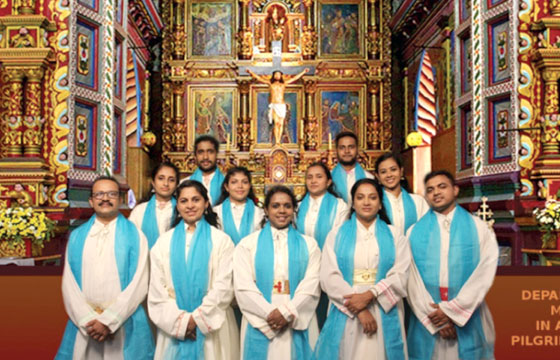
Ernakulam-Angamaly Archdiocese of Kerala is opening a YouTube chanel to bring devotional music nearer to liturgical music; through its latest YouTube channel, ‘Sacred Music.’ It’s a new venture of the Sacred Music department of the archdiocese which recently published its first song and got viral.
Hundreds of devotional songs are released every year in Malayalam language. However, only a few among them can be used for Holy Mass and other sacraments. In this context the Archdiocese has come up with the great venture to coordinate its efforts to differentiate liturgical music from devotional music on a popular platform like YouTube. The activities and uploads are being coordinated by the Sacred Music department of the archdiocese.

In July, 2020 the channel released its first song, a choral singing as its main attraction. Church singing groups are usually called choirs, as are small, professionally trained groups. All efforts will be taken to keep the choral singing simple with no compromise on its standardsm, said Fr Ebey Edassery, the present director of the Sacred Music channel. After all, such music complements the liturgical celebration as per all the Catholic Church documents regarding liturgical music, including Sacrosanctum Concilium.

Pope: in an era of divisions, media must build bridges and break down walls

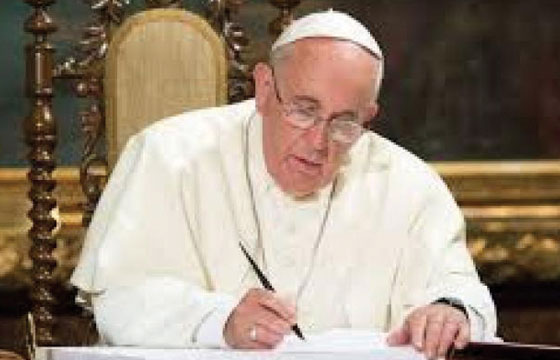
Pope Francis sent a message to this year’s Catholic Media Conference (30 June-2 July), organised by the Catholic Press Association. The event was held via teleconferencing for the first time, centred on the topic ‘Together While Apart.’

In his message, the Pontiff notes that the pandemic is evidence of how essential the media are in keeping people united, but only if they are “capable of building bridges, defending life and breaking down the walls.”

The theme of the conference “expresses the sense of togetherness that emerged, paradoxically, from the experience of social distancing imposed by the pandemic. Indeed, the experience of these past months has shown how essential is the mission of the communications media for bringing people together, shortening distances, providing necessary informa-tion, and opening minds and hearts to truth.”

What is more, “our communities count on newspapers, radio, TV and social media to share, to communicate, to inform and to unite. E pluribus unum– the ideal of unity amid diversity, reflected in the motto of the United States, must also inspire the service you offer to the common good.”
“We need media capable of building bridges, defending life and breaking down the walls, visible and invisible, that prevent sincere dialogue and truthful communication between individuals and communities.”

Tamil Nadu bishops launch online career guidance for Dalits

Catholic Bishops in Tamil Nadu have started an online program to provide career guidance to Dalit students in the southern Indian State.
Although the Tamil Nadu Bishops’ Council have conducted many career guidance programs in the past this is the first online career guidance program for Dalit Christians, said Bishop P. Thomas Paulsamy of Dindigul while launching the program on July 5.

The bishop is the chairperson of the council’s Commission for Scheduled Castes and Scheduled Tribes that conducts the program.

As many as 150 students from the state’s 18 Catholic dioceses attended the first-day program. The students will be guided in their desired area of study once a week, said Father Kulandainathan Adaikalasamy, the organizer and the secretary for the commission.

The program, he told Matters India, aims at providing “the best education possible for all the poor and the marginalized children.”

The commission hopes to instill new ideas and thoughts in Dalit students, to create new goals, and to make their dreams come true. No student would be deprived of higher education because of poverty, untouchabi-lity, and ignorance, he added.

The students sat in groups in villages maintaining the distance while attending the online pro-gram.

Archbishop, nuns among India’s spiralling Covid-19 cases

A Catholic archbishop and 12 nuns are among thousands of persons who have tested positive for Covid-19 in India in the past days.

The nuns work at a church-run hospital in the north-eastern State of Assam. State officials sealed off their hospital and moved them to a government facility for treatment.
Retired Archbishop Bernard Moras of Bangalore in southern India tested positive for Covid-19 on July 3 during a routine check-up at church-run St John’s Medical College. His condition is stable, the hospital said.

The prelate and nuns are among some 700,000 Covid-19 cases reported in India as of July 5. Some 24,000 people tested positive on July 5 in the worst single-day spike in the country. Close to 20,000 have already died.

India has been struggling to flatten the coronavirus curve since cases began to increase in mid-March. Since July, the country has been adding more than 20,000 infections each day, with more people testing positive even in villages.

Covid-19: Mission hospital in Assam sealed, nuns infected

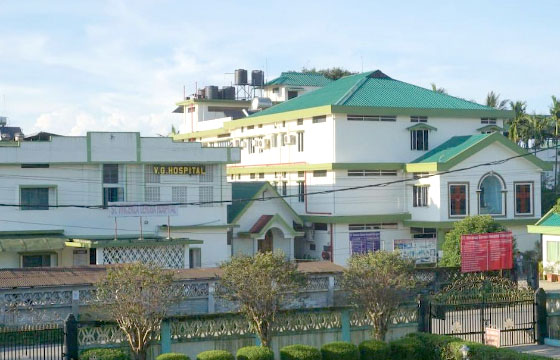
A mission hospital in Assam’s Dibrugarh town was sealed after 12 Catholic nuns, including a doctor, was tested Covid-19 positive. The nuns and a domestic support working in the St Vincenza Gerosa (VG) Hospital were on July 4 found to be infected with the coronavirus.

The first to test positive was the superior of the VG hospital community, who had traveled to Guwahati, Assam’s commercial capital, some 445 km southwest of Dibrugarh. On July 31, she showed mild symptoms of fever and a bad stomach. This led to the testing of all residents of the community.
Although four others have tested negative, the local administration has declared the entire hospital area a contaminated zone.

Samples of all other inmates, staff, primary contacts and regular visitors are being collected and sent for testing at Regional Medical Research Centre, Dibrugarh.

Four of the nuns are senior citizens – Sisters Antonia Mampilly, 85, Eileen Almeida, 72, Michael Serrao, 82, and Martha Kochuparambil, 83.

Expressing shock over the developments, Bishop Joseph Aind of Dibrugarh said, “It is sad that the lifeline hospital of people in Assam and Arunachal Pradesh has now been sealed. My heart goes out to all the Sisters and the inmates of VG Hospital and I invite everyone to pray for their quick recovery from the disease and for the reopening of the hospital.”

In a note to the people in his diocese, Bishop George Pallipparambil of Miao in Arunachal Pradesh has asked them to pray for the sisters and advised everyone to take extreme care to avoid the virus and comply with the lockdown restrictions.

Asian bishops condemn China security law

The federation of Asian Bishops conferences has conde-mned China’s imposition of a new security law in Hong Kong, arguing that it “destroys” the city’s autonomy.

Cardinal Bo, Archbishop of Yangon in Myanmar, and president of the Federation of Asian Bishops’ Conferences, issued a statement on 1 July 2020, condemning the new law and calling for Christians to pray for the people of Hong Kong and China.

The new National Security Law, introduced by the Chinese government on 30 June, introduces new crimes with severe penalties, such as life imprisonment, and allows security personnel from the Chinese mainland to operate in Hong Kong without oversight or restriction from the local government.
Some critics have claimed that the unpreced-ented expansion of central government powers over Hong Kong means that the city’s relative autonomy from the mainland has been effectively abolished. The law’s significant penalties for crimes such as “subversion” has led many Hong Kong residents to see it as an attack on human rights and democracy activists in the city. In his statement, Cardinal Bo attacked the law as “destroying” the region’s “healthy mix of creativity and freedom.” He added that the new law was “offensive to the spirit and letter of the 1997 handover agreement.”

The handover agreement, signed by the governments of the United Kingdom and of China when Hong Kong ceased to be a British possession, guaranteed for “at least 50 years” the city-state’s right to a democratic government and relative political autonomy from the mainland. The UK government has argued that the new security law violates the 1997 agreement, ending the “two systems, one country” model proposed in the document.