Asian Cardinal calls for global ceasefire to fight Covid-19

President of the Federation of Asian Bishops’ Conference Cardinal Charles Maung Bo of Myanmar has joined the call of the United Nations Secretary General, Antonio Guterres and Pope Francis, for a global cease-fire to fight the Covid-19 pandemic.

In a statement released in Yangon on 22 April 2020 Cardinal Bo addressed the situation in his own country, Myanmar, and called for an end to hostilities worldwide.

“Without cessation of fighting everywhere,” he says, “the suffering of many will be prolonged the world over and healing delayed indefinitely.”

“The whole planet is in crisis. Every initiative now taken by our leaders will shape our nation and our world for years to come. The pandemic’s consequences are catastrophic for public health and for social and economic life,” the cardinal warned.

Making a passionate appeal to the nation’s leaders the cardinal said, “If we truly wish Myanmar to emerge a united, peaceful, prosperous people, now is the time for speedy, aggressive, respectful decision. Now is the time for wise, coherent, future oriented action. This is no time to escalate conflict.”

“I am convinced that continued military operations, precisely when the whole nation is suffering a crisis, will have catastrophic consequences for our nation,” the cardinal mourned.

The cardinal who is also archbishop of Yangon exhorted Myanmar leaders, “Now is the time for decisions that will build Myanmar as a united, peaceful, prosperous nation and member of the family of nations. Conflict makes Myanmar especially vulnerable.”

Land disputes imperil Bangladeshi Christians

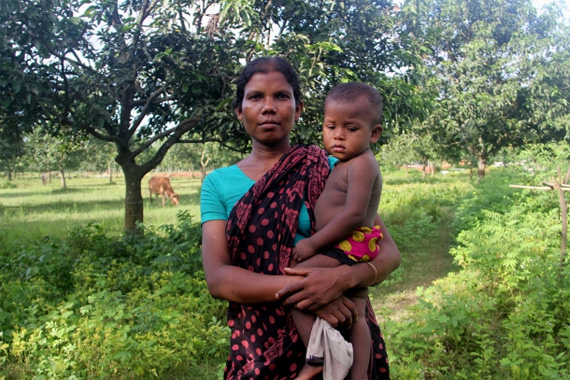
For nearly a decade now, Sumon Gomes has seen how his family’s peaceful coexistence with paternal uncles and cousins has come to an end over a land dispute.

Gomes, 35, is a Catholic father and private jobholder in Bangladesh’s capital Dhaka. He hails from Nawabganj, about 40 kilometers from Dhaka, where his grandfather owned 20 bighas (6.66 acres) of ancestral land.

Trouble brewed between his father and three uncles as they sought to divide the land after their father’s death.

“My father wanted an equal share of land for each brother, but he found one of my uncles was occupying more land than he was entitled to. When he objected, my uncle filed a case against him. It soured our relationship,” Gomes told UCA News.

While the court case is ongoing, Gomes’ family has stopped talking to his uncle’s family.

“I feel sad when I see joint families living happily and peacefully, but our relationship has worsened over a land dispute. I am not sure we will ever have a better relationship,” he lamented.

Catholic couple Mintu N. Rozario and Ruby T. Rozario migrated to Libya in 2008 as expatriate workers. They are now based in Tajura near Libyan capital Tripoli with their four children.

Mintu is employed at the International Committee of the Red Cross and Ruby is a staff nurse in a hospital.

Pakistan condemned for violations of religious freedom

A US government watchdog has recommended the State Department designate Pakistan as a “country of particular concern” for engaging in systematic, on-going and egregious violations of religious freedom.

After documenting developments during 2019, the commission pinpointed 14 countries. These include nine that the State Department designated as of particular concern in December 2019 — Myanmar, China, Eritrea, Iran, North Korea, Pakistan, Saudi Arabia, Tajikistan and Turkmenistan — as well as India, Nigeria, Russia, Syria and Vietnam.

“In 2019, religious freedom conditions across Pakistan continued to trend negatively,” it said, noting there were some high-profile acquittals including that of Asia Bibi, a Catholic woman who spent eight years on death row after being wrongly accused of blasphemy.

“The systematic enforcement of blasphemy and anti-Ahmadiyya laws, and authorities’ failure to address forced conversions of religious minorities — including Hindus, Christians, and Sikhs — to Islam, severely restricted freedom of religion or belief.” The USCIRF sad it is aware of nearly 80 individuals who remain imprisoned for blasphemy in Pakistan, with at least half facing a life sentence or death.

A mob also attacked a Christian community in Punjab after a mosque claimed over its loudspeaker that the community had insulted Islam. In another incident, nearly 200 Christian families in Karachi were forced to flee their homes due to mob attacks after false blasphemy accusations against four Christian women, according to the report.

Pay Workers Full Salaries For March-April: Cardinal Gracias

Cardinal Oswald Gracias, Archbishop of Bombay, has urged his priests to pay full salaries of March and April to those working in archdiocesan institutions.

“After consulting our bishops and the Finance Office, I am directing that the March and April salaries be paid in full even though our workers have not been coming due to the lockdown. We will review the situation in May,” Cardinal Gracias said in an April 27 video message to all the priests in the archdiocese.

The cardinal told the priests that he was addressing them during an “extraordinary period” when the government-imposed nationwide lockdown to contain the coronavirus pandemic. “The end of the lockdown is approaching, but please prepare yourself for a possible extension,” said the prelate who has been leading the Indian Church’s efforts to bring relief to people affected by the coronavirus pandemic and the lockdown.

Indian Prime Minister Narendra Modi first imposed the lockdown from March 25 to April 14, then extended it to May 3. Many say it could be further extended as pandemic shows no sign of abatement.

“Looking at the number of reported cases in our Archdiocese and the number of containment zones, it does not seem likely that the restrictions will be lifted. And even after these are lifted, I would expect that permitting of religious assemblies will take more time,” the cardinal said.

Bombay archdiocese covers Mumbai, the capital of Maharashtra that tops the number of Covid-19 cases in India.

Cardinal Gracias urged the priests to be prepared for “an extended period” of church closure. Even after the lockdown is lifted, it would be several months before the country would overcome the coronavirus.

He reminded the priests that funeral is the only religious service they are allowed to perform in the lockdown period.

Indian Nuns Spark In Covid-19 Darkness

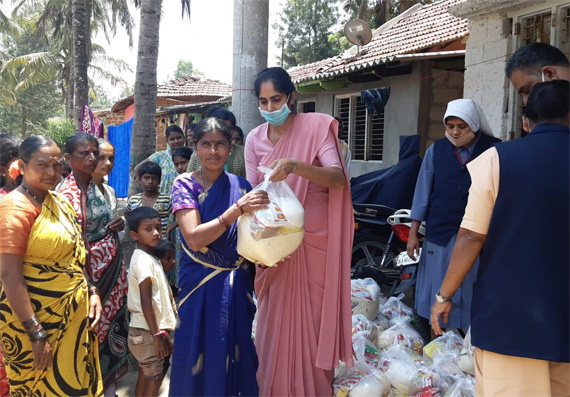
A large number religious women is in the forefront of the Catholic Church’s humanitarian works among those affected by the nationwide lockdown.

Amrat Talitha Kum India, or just Amrat, is one of the largest networks of women religious engaged in anti-human trafficking activities. It has members from 76 women religious congregations working in various parts of India.

Its members have left no stone unturned to reach out to the people at this time of unexpected and ill-equipped lockdown.

They went to serve the poor and the needy without any hesitation.

They told the local administration that they are part of the Church, which is in forefront of relief works among people caught in the lockdown.

Indian Prime Minister Narendra Modi on March 24 announced a 21-day nationwide lockdown from that midnight. When the time was over, he extended it further until May 3.

The Amrat members, who work in 23 Indian states, risked their lives to rush out to help the needy. “What will happen to our people, if we do not launch out to help them at this precarious juncture,” was the uppermost thought in all of them.

US religious freedom commission highlights India in annual report

Abuse of Muslims, Christians, and other minorities in India drew the attention of a federal religious freedom watchdog in its annual report released on April 28 by U.S. Commission on International Religious Freedom (USCIRF).

USCIRF is a bipartisan federal commission that studies religious persecution and adverse circumstances facing religious minorities around the world, and makes policy recommendations to the State Department.

India’s Hindu nationalist BJP party won elections in 2017 and again in 2019 to gain a majority in the national legislature. The government then “used its strengthened parliamentary majority to institute national-level policies violating religious freedom across India, especially for Muslims,” USCIRF said.

USCIRF released its annual report on Tuesday, documenting progress and setbacks for religious freedom in 29 countries around the world during the previous year. The commission recommended that India be designated by the State Department as a “country of particular concern” (CPC)—a designation reserved for the worst violators of religious freedom or the countries where the worst abuses are taking place and the governments do not stop them. USCIRF has not recommended India for the CPC list since 2004. Of concern is the country’s new policy of fast-tracking citizenship for non-Muslim migrants from neighboring countries which, combined with a National Register of Citizens, could leave many Muslims without legal protections and saddled with burdens of having to prove their citizenship.

Church Distributes 10,000 Milk Packets To Poor In Punjab

Catholics in a Punjab city have taken the lead to help the poor and needy during the nationwide lockdown. On April 17, the top police officer of Muktsar district launched a Church project to distribute 10,000 milk packets and vitamin tablets to people in their neighborhood

S Raj Bachan Singh Sandhu, the district’s Senior Superintendent of Police who opened the program in front of the Catholic church in the city, commended local Christians for reaching out the poor by following government norms for the lockdown.

Odisha Church mourns renowned Catholic poet’s death

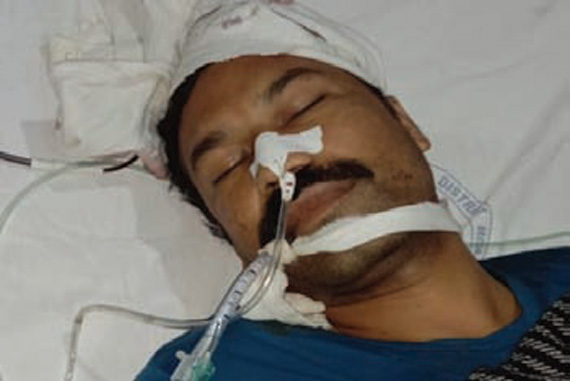
Catholics in Odisha have mourned the death of Malakias Nayak, a renowned poet who wrote Odiya liturgical hymns and prayers.

Nayak died on April 24 in his residence at Bodopada of Gajapati district of Odisha. He was 75.

He hailed from Aligonda parish of Berhampur diocese.

The writer had under-gone a brain surgery a few months ago and was undergoing treatment since January.

The poet was survived by his wife Jahida Khan, a Muslim-convert to Catholicism, four sons and three daughters. His second son, Jesuit Father Mahesh Nayak, conducted the funeral Mass at 4 am on April 25 in their parish church.

“It is heart breaking news for me because he was my favorite teacher in all respect,” says Martin Pradhan, a student of Nayak. “He was not only a teacher but also a good writer, poetics and dramatist,” Pradhan told Matters India over phone on April 25.

Persecution Relief: 187 cases of hate crimes against Christians

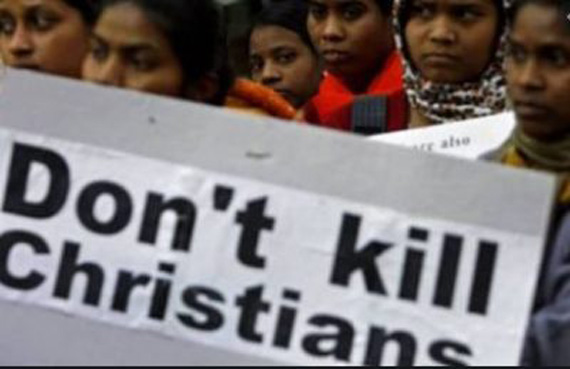
As many as 187 cases of hate crimes against Christians in India in the first quarter of this year (January to March) are recorded, according to data gathered by Persecution Relief.

Persecution Relief, an ecumenical Christian group, released its much-awaited ‘1st Quarter Report – 2020 of Hate Crimes against Christians in India’ on April 26.

From January 2016 to March 2020, 1961 cases of hate crimes against Christians have been recorded across India.

“Amid coronavirus challenges and situation, the attacks on Christians have not stopped, but it has been reduced to a certain extent, said Shibu Thomas, founder, Persecution Relief.

Indian Christians, a religious minority, amount to 2.3% of the country’s total population. However, they have never faced a situation as hostile as the current one since independence.

Between 1st quarter of 2016 to 1st quarter of 2020, there has been a rise of 128.04% of hate crimes against Christians all across the country. In the 1st quarter of 2016, Persecution Relief recorded 82 cases, in 2017 – 134, 2018 – 117, 2019 – 130, and in 2020, it recorded 187 cases of Christian persecution.

Persecution Relief is an organization that creates a global awareness about Christian persecution in India by reporting authentic information and advocating on behalf of the persecuted Christians by providing them with comprehensive support.

Its reports are trusted and utilized by various Governments and organizations across the globe.

“Our reports are logical and all-inclusive about the atrocities faced by the Christians in India,” said Thomas.

Uttar Pradesh, a state in northern India with roughly 200 million inhabitants and the most populous state, continues to be on top with 47 cases followed by Tamil Nadu 20 and Karnataka with 16 cases.

Andhra Pradesh to give 5,000 rupees to places of worship

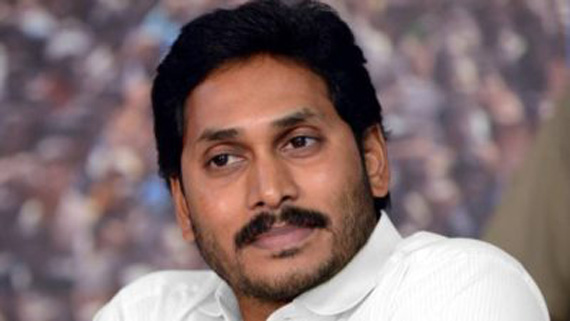
Amravati, April 22, 2020: Andhra Pradesh Chief Minister YS Jagan Mohan Reddy, on April 20 announced that all places of worship in the state would be given 5,000-rupee assistance.

He made this announcement during a video conference with the District Collectors and Muslim religious leaders on the measures being taken to contain COVID-19. He thanked the religious leaders for accepting his request to urge the community to offer prayers at homes during the holy month of Ramadan.

Reddy said despite the financial constraints — loss of 1.5 billion rupee revenue a day — due to the COVID-19 pandemic and the lockdown, the government would provide 5,000 to every mosque, covered during Ramadan last year.

The mosques not covered last year, and churches and temples would also be provided with the aid.

The chief minister said his government belonged to all sections of people and had been implementing schemes for the welfare of people irrespective of religion, caste and region.

He said despite the financial issues the government had given Rs 1,000 to each family and providing ration thrice a month.