Germany’s synodal assembly a step to rebuilding church’s credibility

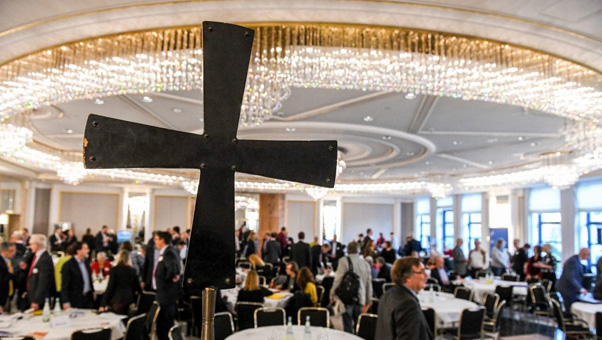
Catholic leaders in Germany have compiled responses from lay Catholics in areas related to who holds power in the church, sexual morals, the role of priests and the place of women in church offices in preparation for an upcoming Synodal Assembly to debate church reforms. More than 940 suggestions and questions had been submitted by early January in advance of the Jan. 30-Feb. 1 assembly in Frankfurt, reported KNA, the German Catholic news agency.

The Synodal Assembly is one segment of the synodal path, which the German bishops agreed to stage at their annual meeting last March.

The Synodal Assembly will include 230 members. It is the highest decision-making body of the synodal path, an effort by the bishops’ conference and lay Central Committee of German Catholics to restore trust following a September 2018 church-commissioned report that detailed thousands of cases of sexual abuse by Catholic clergy over six decades.

Comments will continue to be accepted through Jan. 23 at the website of the German bishops’ conference. The bishops and the lay group are collaborating in planning the Synodal Assembly. During a September plenary meeting, the bishops approved statutes to guide discussions at the assembly.

The bishops’ conference and the committee each will send 69 members to the assembly. Decisions of the assembly must be passed by a double two-thirds majority: two-thirds of all participants as well as two-thirds of all members present from the bishops’ conference.

German church officials say the Synodal Assembly is not meant to be a Synod in the classic sense.

In describing the synodal path, KNA reported that the inclusion of the term synodal in the name of the reform process reflects that the dialogue, initially limited to two years, is more than a nonbinding conversation. As with a Synod, each respective local bishop will determine whether the decisions reached will be implemented.

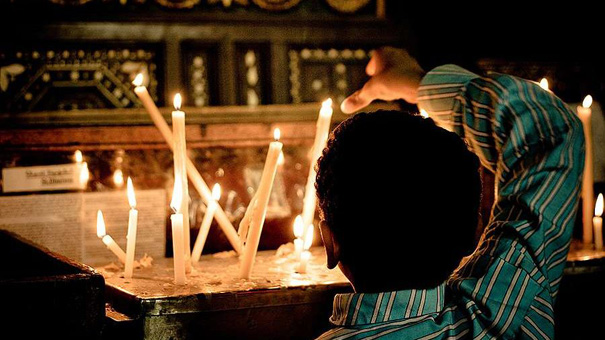
Around the world, 260 million Christians face persecution 

Christian persecution around the world is a growing problem, says a new report from an agency that documents abuses against Christians across the globe.

Worldwide, the report states, 260 million Christians are facing persecution. This marks a 6% increase from the previous year.

The annual report from Open Doors, released on Jan. 15, rank-ed North Korea first on its list of 50 most dangerous countries in which to be Christian, the 18th straight year that the country has received that designation.

There are an estimated 300,000 Christians amidst the total population of 25.4 million in North Korea. Open Doors reports that if North Korean Christians are discovered, the government will deport them to labor camps as political criminals or even kill them on the spot. Meeting other Christians to worship is nearly impossible unless it is done in complete secrecy.

Following North Korea on the World Watch List Top 10 are Afghanistan, Somalia, Libya, Pakistan, Eritrea, Sudan, Yemen, Iran, and India.

Christians in China experienced, among other things, an increase in attacks on churches in the past year. Open Doors reports that 793 churches were attacked within the reporting period for the 2018 World Watch List, compared with 1,847 attacks reported on churches world-wide in 2019. In 2020, the numb-er is conservatively estimated to be at least 5,576 in China alone, the report states.

People of faith also suffer from continual surveillance by the government. Open Doors cites a CNBC report that says there are nearly half a billion surveillance cameras in China, a number only expected to grow.

Pope Francis condemns clerics who engage in simony

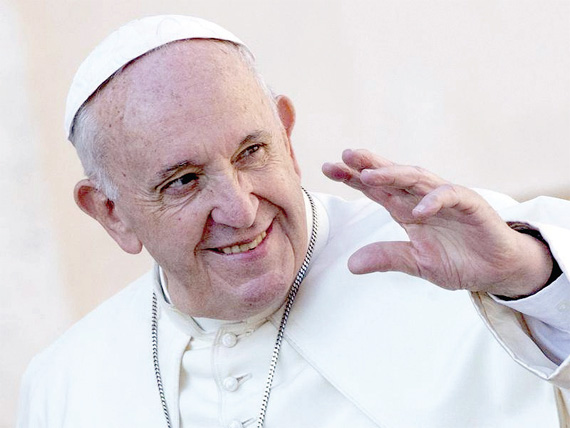
In a homily on January 21, Pope Francis condemned priests and bishops who use money to advance their careers.

To be a priest or bishop, like being a Christian, is a free and undeserved gift of God, not something to be bought, he said on Jan. 21 during Mass in the chapel of the Vatican’s Santa Marta guesthouse.

“We have paid nothing to become Christians. We priests, bishops have paid nothing to become priests and bishops,” he continued, “at least I think so.”

Francis went on to note there are those who try to move upward in their “so-called ecclesiastical career,” who “look for influences to get here, there…” as well as those “who behave in a simoniac manner.”

He said that anyone who does that “is not a Christian. Being Christian, being baptized, being ordained priests and bishops is pure gratuitousness. The gifts of the Lord cannot be bought.” The same thing can happen in “ordinary life,” he said, such as in business, when people try to get ahead at their work by asking for favours.

He recalled that it is by the Lord’s free anointing that someone is a Christian, rejecting the argument that one’s Christian identity comes from being from a Christian family or coming from a Christian culture.

“Many people from a Christian family and Christian culture reject the Lord,” he noted. “But how come we are here, elected by the Lord? For free, without any merit, for free.”

“What is the great gift of God?” he continued. “The Holy Spirit! When the Lord elected us, He gave us the Holy Spirit. And this is pure grace, it is pure grace. Without our merit.” We must have an attitude of humility in the face of this gift, Pope Francis urged. “This is holiness. The other things are not needed.”

Three churches reportedly burned down in Sudan

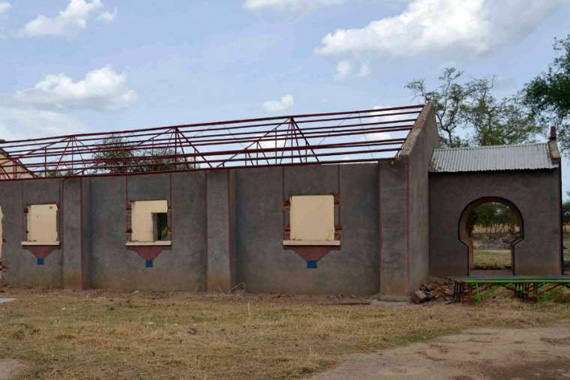
According to a local rights group in Sudan, three churches in a town were burnt down in December 2019 and quickly rebuilt, only to be burnt down again earlier this month.

Human Rights and Development Organization said that a Catholic Church, an Orthodox Church, and a Sudan Internal Church in Bout were burnt down on both Dec. 28 and Jan. 16; the church buildings had been rebuilt in the interim. Bout is the capital of Tadamoun district in Blue Nile state, more than 300 miles south-east of Khartoum.

According to HUDO, the alleged arsons were reported to Bout police each time, “but police did not investigate further or put preventive measures.”

The human rights organization has decried the attack and criticized the government for negligence of religious freedom.

But the Sundanese religious affairs minister, Nasr al-Din Mufreh, has claimed that only one church had been attacked twice.

The Sudan Tribune reported that Mufreh stated “Sudan’s full commitment to protecting religious freedoms.”

Church leader executed by Boko Haram

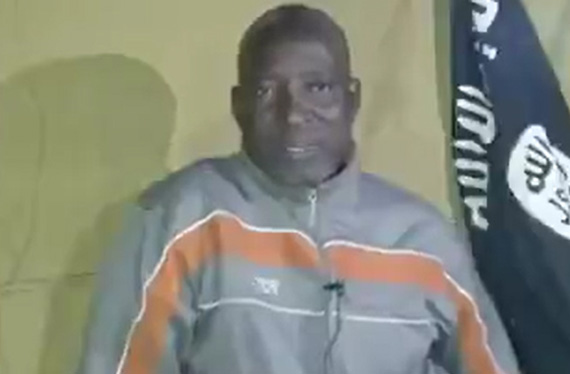
A senior church leader in Nigeria, who was abducted in early January, has reportedly now been killed.

Reverend Lawan Andimi, a state chairman of the Christian Association of Nigeria (CAN), was taken during a raid in Michika, a town in Nigeria’s Adamawa State.

A video was later released by a group linked to extremist Boko Haram showing him in captivity.

In it, he said: “I have never been discouraged because all conditions that one finds himself is in the hand of God.

“I still believe that God who made them to act in such a way is still alive and will make all arrangements.

“By the grace of God, I’ll be together with my wife, my children and all my colleagues. Don’t cry. Don’t worry, but thank God for everything. Thank you.”

Investigative journalist, Ahmed Salkida, now says he’s seen a video of his beheading.

Pope Francis appoints woman to senior Vatican position

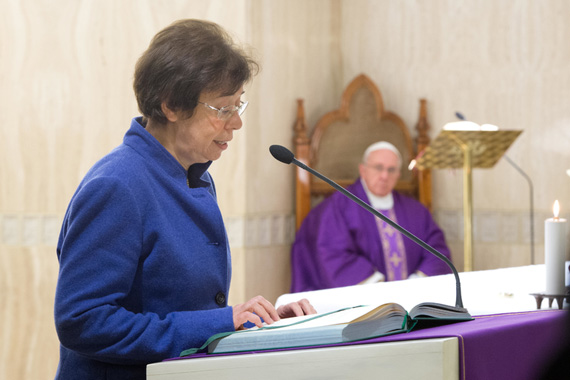
Pope Francis has announced that he is appointing a woman for the first time to a managerial role in the Secretariat of State, one of the most important departments in the Vatican.

Francesca Di Giovanni, who has worked at the Secretariat for 27 years, will be elevated to the position of undersecretary for the section for relations with states. She’ll manage the Vatican’s relationships with multilateral organizations such as the United Nations.

The Catholic Church’s leadership is almost completely male-dominated, and women are not allowed to be ordained as priests. In recent months, how-ever, Pope Francis has expressed a desire to include more women in decision-making roles.

Di Giovanni, who specializes in migrants and refugees and international law, says she was surprised to be appointed as undersecretary. “I sincerely never would have thought the Holy Father would have entrust-ed this role to me,” she said in an interview with Vatican News.

The Secretariat of State deals with the city-state’s operations and diplomatic affairs. Di Giovanni will be the first person to hold this particular position.

Former prostitutes among ex-nuns at Vatican shelter: Cardinal

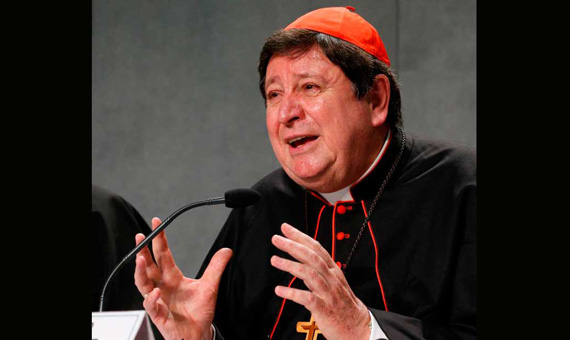
Former nuns “abandoned” by the Catholic Church, including some who became prostitutes to survive, have been sheltered at a Vatican residence for more than a year, a Brazilian cardinal said.

Cardinal Joao Braz de Aviz confirmed the house’s existence at an undisclosed location in the Vatican City during an interview for the February issue of the Vatican’s magazine Women Church World.

In the wide-ranging interview about women’s roles in the Church, Cardinal Braz said existence of the home underscored Pope Francis’ desire to rectify abuses within the Church, such as nuns who are expelled from their convents with nowhere to go. “At times they are completely abandoned,” the cardinal said, according to an advance copy of the issue released on January 23.

“But things are changing. The most significant example is precisely the Pope’s decision to establish in Rome a house to welcome in from the street nuns who were sent away by us, or by the superiors, especially if they are foreigners.”

Cardinal Braz said he had visited the home, and had found “a world of wounds there, but also of hope.” In some cases, mother superiors had withheld documents from nuns who wanted to leave the convent, and in others nuns were just told to depart.

Rebecca Long-Bailey: ‘My faith keeps me going’

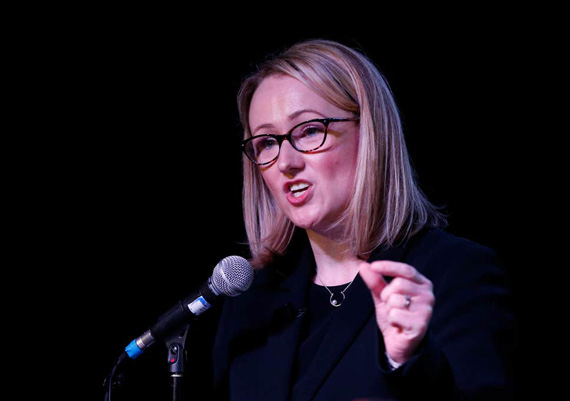
Rebecca Long-Bailey MP, the current shadow business secretary and a practising Catholic, has become the sixth candidate to enter Labour’s leadership contest in Briton.

Long-Bailey struck a strongly left-wing note in her article that announced her campaign, pledging to rebuild Labour “as an insurgent force.” Linking constitutional reform with left-wing economic policy, she argued that her party must “go to war with the political establishment,” positioning herself clearly to the left of her competitors in the contest.

The former solicitor and one-time pawn shop employee has referenced her faith publicly on several occasions.

A graduate of The Catholic High School, Chester, Long-Bailey was elected to parliament in the 2015 election for the Salford and Eccles Constituency. A close ally of the outgoing labour leader, Jeremy Corbyn, she was one of 36 MPs to nominate him in his 2015 leadership bid. She afterwards served in the Shadow Cabinet as Shadow Minister for the Treasury and Shadow Secretary of State for Business. A mother of one, Long-Bailey sends her child to a Catholic school, and is a supporter of Catholic education. If victorious in the leadership contest, she would become only the second Catholic Leader of the Opposition in British history, the first being Iain Duncan Smith, who led the Conservatives from 2001 to 2003.

In an interview at Salford Cathedral for the 2019 Election, General Election, Long-Bailey cited her Catholic faith as a major inspiration: “The teachings I have based my life around drive the work I do every day and the policies I help to create as a politician.”

Papal visit to Indonesia, Papua New Guinea, and East Timor possible in 2020

A visit from Pope Francis to Indonesia, Papua New Guinea, and East Timor may happen in September, according to an Indonesian Muslim leader who met with the pontiff mid January. Sheikh Yahya Cholil Staquf leads the 50 million member Nahdlatul Ulama movement, which calls for a reformed “humanitarian Islam” and has developed a theological framework for Islam that rejects the concepts of caliphate, Sharia law, and “kafir” (infidels).

Staquf met with the Pope, while in Rome for a meeting of the Abrahamic Faiths Initiative, which gathers Christians, Muslim and Jewish leaders to discuss the promotion of peace and fraternity. U.S. Ambassador-at-Large for International Religious Freedom Sam Brownback attended the meetings.

Pope Francis met with the group on Jan. 15. After that meeting, Staquf told CNA that the Pope said he plans to visit Indonesia, East Timor, and New Guinea in September.

The Vatican has not yet confirmed such a trip. Indonesia is home to the largest population of Muslims in the world. The country’s 229 million Muslims make up more than 12% of the global Muslim population. Nearly all of Indonesia’s Muslims are Sunni.

There are 24 million Christians living in Indonesia, 7 million of them are Catholic. Pope St Paul VI visited the country in 1970, and Pope St John Paul II traveled there in 1989.

East Timor is a small country on the island of Timor. It gained independence from Indonesia in 1999, following decades of bloody conflict as the region vied for national sovereignty.

The country’s second president, Jose Manuel Ramos-Horta, shared the 1996 Nobel Peace Prize with East Timorese Bishop Ximenes Bolo, for their efforts to reach a peaceful and just end to fighting in the country. Bishop Belo is now a missionary in Mozambique.

More than 1 million people live in East Timor; more than 98 percent Catholic. It is one of few majority Catholic countries in Southeast Asia. Pope St John Paul II visited East Timor in 1989.

Catholic population of S. Korea grows by 50% in 20 years

The Catholic Church in South Korea has steadily grown over the past two decades according to a study by the Catholic Pastoral Institute of Korea (CPIK) of the Catholic Bishops’ Conference of Korea (CBCK). 11.1% of South Korea’s population.

The number of Catholics has increased by 48.6 per cent, from 3.9 million in 1999 to 5.8 million in 2018 and today they make up 11.1% of South Korea’s some 51 million population.

A copy of the study report sent to the Vatican’s Fides news agency shows the Diocese of Suwon leading with an increase of 89.1 per cent. It is followed by Daejeon (79.6 per cent) and Uijeongbu (78.9 per cent).

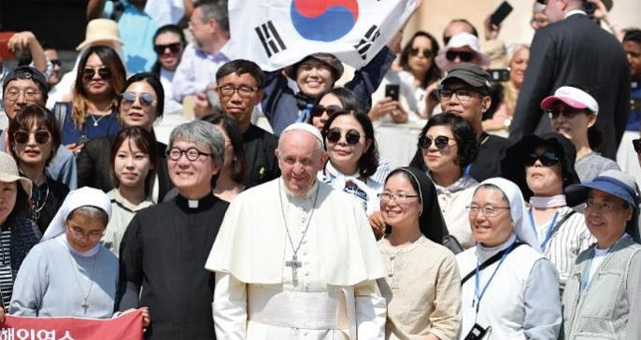
However, the year-to-year growth rate in the Catholic population has gradually slowed to below 1 per cent. In 2000-2001, the Catholic population grew 3.2 per cent and 3.9 per cent, respectively, before falling to the 2 per cent range until 2009. The growth rate dropped to 1.7 per cent in 2010 and briefly rebounded to 2.2 per cent in 2014 due to Pope Francis’ visit to South Korea. It then levelled off at around 1% per year.

As for the ratio of Catholics in the nation’s population, it rose from 8.3 per cent to 11.1 per cent in the 1999-2018 period.

Declining church attendance However, Sunday Mass attendance, considered a key indicator of faith life, has declined by about 10 points, from 29.5% to 18.3% during the past 2 decades.