Erdoðan claims to be a defender of Christians, but Christians in Turkey and Syria are afraid

Assyrians and Chaldeans in Turkey and across the border, in north-eastern Syria, are increasingly victims of violence despite proclamations by Turkish President Recep Tayyip Erdoðan that he is a defender of minorities, a claim also relayed by Catholic media.

In reality, repression and attacks have increased in recent weeks in connection with the sultan’s offensive against the Kurds in Syria, which has turned into softer version of ethnic cleansing that has crushed even Christians.

In the 1960s, several hundred Christian families lived in Diyarbakir, the most important (and mostly Kurdish) city in south-eastern Turkey. Today only four are left, two of whom live inside the parish Church of the Virgin Mary in Sur district.

For 43-year-old SalibaAcis, the others “left for different reasons: economic pressure, political pressure”. Some moved to Istanbul, but most fled to Europe, Australia or America.

There are many reasons that have generated the Christian diaspora from Middle East, from the war in Syria to the violence of the Islamic State group,

But what the members of the parish of the Virgin Mary fear the most is President Erdoðan’s war on the Kurds and the destruction by the Turkish State of their living heritage (Christian history and culture).

Last August, in Istanbul, Erdoðan took part in the laying of the foundation stone of a new Assyrian church in the Yesilkoy district. On that occasion, he said that “the true target of terror groups is our common homeland” and the best way to fight them is to “see our differences as our most important richness.”

Recently, after he met US President Donald Trump, Erdoðan said that the Turkish government is not indifferent to the condition of Christians, and pledged a “contribution” to the reconstruction of churches and shrines. Ankara, he added, was drafting plans for communities in the border areas, starting with “health care and humanitarian aid”.

Such words sound hollow in Diyarbakir, where the congregation says it has very little reason to thank the Turkish president. “We get no support from the state,” said Acis. “This church is alive thanks to the community.”

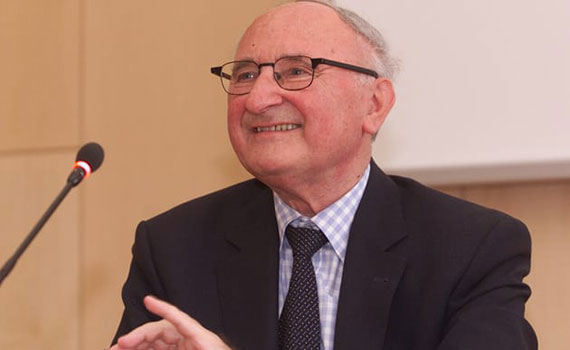
Catholic theology loses a giant with a sense of humor in Metz

Catholic theology lost a giant on December 2 with the death of German Father Johann Baptist Metz, a disciple of famed Jesuit theologian Karl Rahner and the father of what was known as “new political theology,” at the age of 91.

“In 1998, I covered a story centering on Metz, who was celebrating his 70th birthday. A number of friends in the theological guild had organized a symposium in Ahaus in Metz’s honor, and to the surprise of many, a star guest had agreed to be the featured speaker: Then-Cardinal Joseph Ratzinger, at the time the Vatican’s doctrinal czar and a sort of love-to-hate figure for many in Metz’s circles.” writesJohn L. Allen Jr.

Ratzinger’s appearance raised eyebrows, and not only because he and Metz frequently had crossed theological swords over the years. (Among other things, Ratzinger saw the roots of Latin American liberation theology, and the distortions of it he faced during the 1980s, in Metz’s work. As a point of fact, the Brazilian Franciscan Leonardo Boff, perhaps the most pugnacious of the liberation theologians, studied under Metz.)

The animus between Ratzinger and Metz was also personal. In 1979, when Ratzinger was the Archbishop of Munich, he denied Metz permission to accept a teaching appointment at the local university.

Later, Metz was among the signatories to a statement criticizing Vatican attempts under Ratzinger to erode academic freedom, and Metz also signed the famed “Cologne statement” in 1989 Complaining that the collegiality called for by Vatican II was “being smothered by a new Roman centralism,” and predicting: “If the pope undertakes things that are not part of his role, then he cannot demand obedience in the name of Catholicism. He must expect dissent.”

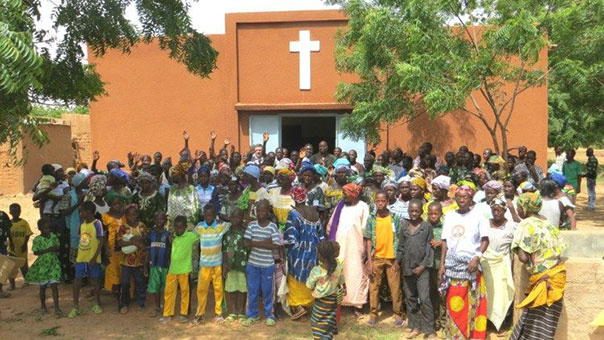
Burkina Faso bishop: ‘the West is ignoring the plight of Christians in West Africa’

He told of how the group of attackers crossed the border from Niger with motorcycles. Of how they separated the men from the women, told the men to lie down on the ground, covered their heads with a cloth, then killed them one by one.  Several of those murdered were children.

Bishop Justin Kientega of Ouahigouya decried the violence and said that Western governments have a responsibility to stop the flow of weapons to militants in the region.

Speaking to the charity Aid to the Church in Need, he voiced his belief that the attack is part of an attempt by radical Islamists to provoke a religious conflict in a country where Christians and Muslims have always lived peaceably side by side, and he argued that the Western world has been ignoring the plight of Christians in West Africa.

“There is an ongoing persecution of Christians. For months, we bishops have been denouncing what is happening in Burkina Faso,” Bishop Kientega said,  ”but nobody is listening to us.”  ”Evidently,” he concluded, “the West is more concerned with protecting its own interests.”

Religious congregation of blind contemplates face of Christ

In Turin, Italy, the Daughters of Jesus the King is a religious community of blind and visually impaired sisters who aim for holiness, and to be a sign that in Christ, there are no barriers that cannot be overcome.

Sister Lorena Logrono, superior of the Daughters of Jesus the King, told ACI Prensa, CNA’s Spanish-language news partner, that the origin of the congregation traces back to the Poor Daughters of Saint Cajetan, which was founded by Blessed Giovanni Maria Boccardo 135 years ago.

“When Blessed Giovanni Maria Boccardo became ill, he left the Congregation of the Poor Daughters of Saint Cajetan in the hands of his brother Luigi, who was also appointed head of the institutes for blind girls in Turin,” she explained.

“There a young woman asked Fr. Boccardo about becoming a religious, but she couldn’t be admitted because she was blind. Some time later, he received the inspiration to found a congregation for blind people, which would have the charism of the Poor Daughters of Saint Cajetan but be dedicated to contemplation.” “And then, in 1932, the contemplative branch, the Daughters of Jesus the King, began,” the sister said. There are eight members of the Daughters of Jesus the King, and they are between 38 and 100 years of age.

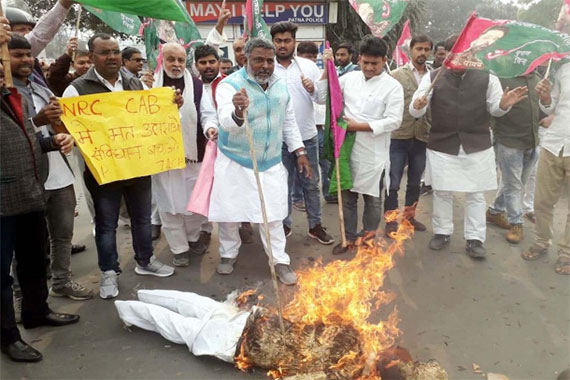
Protests spread over India’s controversial citizenship law

Church leaders have appealed for peace in northeastern India, where police shot dead two people as violent protests spread against the federal government amending the law on citizenship. The Citizenship (Amendment) Bill, passed by the national parliament on Dec. 11, is seen as discriminatory on religious grounds. It gives citizenship to migrants from Afghanistan, Bangladesh and Pakistan if they are not Muslims.

The bill also reduces the requirement of residence for these migrants from 11 years to six years if they arrived in India on or before December 2014. Street protests against the law turned violent in several northeastern states. Police fired at thousands of people who defied a curfew in Assam’s State capital Guwahati, killing two.

Indigenous groups in the region believe the law gives citizenship to millions of immigrants who came from neighboring Bangladesh following its independence in 1971. Regardless of religion, they believe the move will change the demographics of their region.

Church leaders such as retired Archbishop Thomas Menamparampil of Guwahati say the controversial law was needless.

“It was passed discriminating some groups,” said the prelate, who is a member of Assam Citizens’ Forum. “We, along with the people of Assam, regardless of faith, call for calm and peace during these difficult times. We want all to be united.”

The Salesian bishop said political leaders should have taken the people into confidence. He said the law threatens small ethnic groups in the region “who have lived here for centuries.”

The Congress party, which opposes the ruling pro-Hindu Bharatiya Janata Party (BJP), said the situation in the region was “extremely disturbing.”

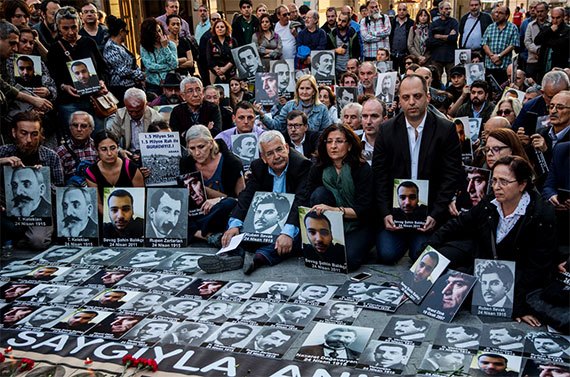
Senate passes resolution recognizing Armenian Genocide

The Senate on Dec 12passed a resolution recognizing the Armenian genocide, after several previous attempts to do so were blocked at the direction of the White House.

Senate Resolution 150, introduced by Sens. Bob Menendez (D-N.J.) and Ted Cruz (R-Tex.), expresses “the sense of the Senate that it is the policy of the United States to commemorate the Armenian Genocide through official recognition and remembrance.”

It was passed with unanimous consent by the chamber on Thursday.

From 1915 to 1923, the Ottoman Empire killed an estimated 1.5 million Armenians in eastern Anatolia in systematic fashion, with reports of forced displacement, torture, mass killings and mass graves in the region.

Thursday’s Senate resolution recognizes the empire’s “campaign of genocide against Armenians, Greeks, Assyrians, Chaldeans, Syriacs, Arameans, Maronites, and other Christians.” It comes after the House passed a similar resolution in October recognizing the genocide.

Turkey has long denied that the genocide took place, claiming that the number of those killed was far less than is commonly estimated and that many deaths were due to the ongoing First World War.

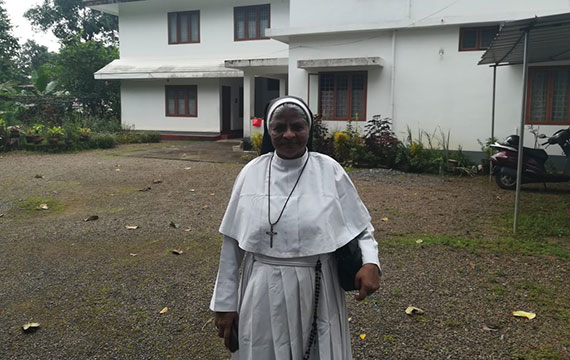
Nun rape case: Pressure on witness to retract statement

Sister Lissy Vadakkel, main witness in the case of Bishop Franco Mulakkal, accused of sexually abusing a nun at a convent in Kerala, said pressure is being budged on her to retract her statement. She said they are forcing her to withdraw her statements over phone and in person. Sister Lissy said that she is living in the midst of stress and isolation and some are trying to make her a mental patient. She said that she is firm in her statement against the former bishop and will not change it. She said that is to a TV news channel.

Sister said that the trial of the case should be conducted as early as possible. Some are trying to influence me saying that if I say anything against the bishop it will harm the church. She said that some from her evangelization team are budging pressure on her to retract the statement. Some nuns of the convent are trying to make me a mental patient, she said.

Cardinal Alencherry elected Kerala Catholic Bishops Council president

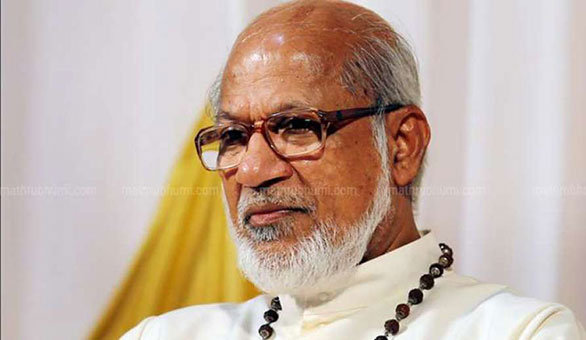
Cardinal  George Alencherry was on Dec 6 elected the president of Kerala Catholic Bishops’ Council (KCBC), an association of the Catholic bishops of all three rites in the state.

The head of Syro Malabar Catholic Church succeeds Abp Maria Calist Soosa Pakiam of Trivandrum Latin archdiocese. Bishop Varghese Chakkalakal of Calicut (Latin) will be the new deputy chairman of the council.  Bishop Joseph Thomas of Bathery (Syro-Malankara) is the new secretary general.

The KCBC meet regretted an increase in the vested interests in governance and the politicization of the education sector. KCBC has also reiterated that it will continue to try to resolve disputes between Orthodox and Jacobite Churches.

However KCBC’s move has drawn flak from a section of believers in the Catholic Church. Archdiocesan Movement for Transparency (AMT), a collective that have been functioning as a corrective force within the Church, has criticized the KCBC decision to appoint Cardinal Alencherry as its new leader.

Christian women demand making India safer for women

An ecumenical group of Christian women has condemned increasing incidents of violence against women in India and demanded making society safer for them. “In this dreadful situation of unbridled gender violence and sexual crimes, we demand a country that is safe and peaceful for Indian women and girls,” the Indian Christian Women Movement said in a press release on December 9.

The appalling manner in which women are subjected to horrendous sexual violence in India seems to be proving over and over again that this country is the most unsafe place for women in the world, the movement regrets. The perilous conditions in which Indian women live and the dismal record of steps taken to create a society where women and children are secure, explains why sexual crimes have become an everyday event.

What is very evident is the increasing climate of impunity against perpetrators; submerged in the deafening silence of those in power, the movement noted.

The movement listed recent incidents of attacks on women.

The horrific gang rape of a young woman veterinarian in Hyderabad.