Hypocrisy of ‘spiritual tourism’ destroys the church, Pope says

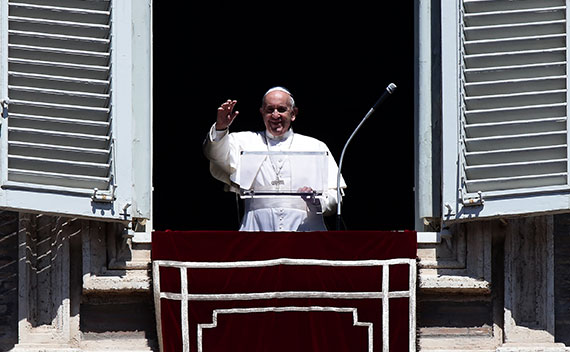
Christians who focus more on being superficially close to the church rather than care for their fellow brothers and sisters are like tourists who wander around aimlessly, Pope Francis said.

People “who are always passing by but never enter the church” in a fully communal way of sharing and caring engage in a sort of “spiritual tourism that makes them believe they are Christians but instead are only tourists of catacombs,” the Pope said Aug. 21 during his weekly general audience.

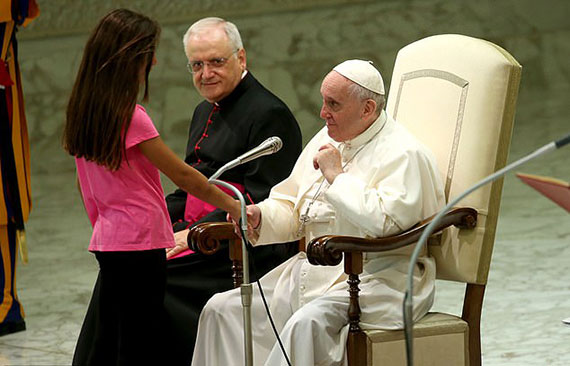
“A life based only on profiting and taking advantage of situations to the detriment of others inevitably causes inner death,” he said. “And how many people say they are close to the church, friends of priests and bishops yet only seek their own interests. These are the hypocrisies that destroy the church.” During the audience, Clelia Manfellotti, a 10-year-old girl from Naples diagnosed with autism, walked up the steps to where the Pope was sitting.

The Pope told his security detail to “let her be. God speaks” through children, prompting the crowd to erupt in applause. While greeting the Italian-speaking pilgrims at the end of the audience, Pope Francis reflected on the young girl who is “a victim of an illness and doesn’t know what she is doing.”

“I ask one thing, but everyone should respond in their heart: ‘Did I pray for her; looking at her, did I pray so that the Lord would heal her, would protect her? Did I pray for her parents and for family?’ When we see any person suffering, we must always pray. This situation helps us to ask this question: ‘Did I pray for this person that I have seen, (this person) that is suffering?’” he asked.

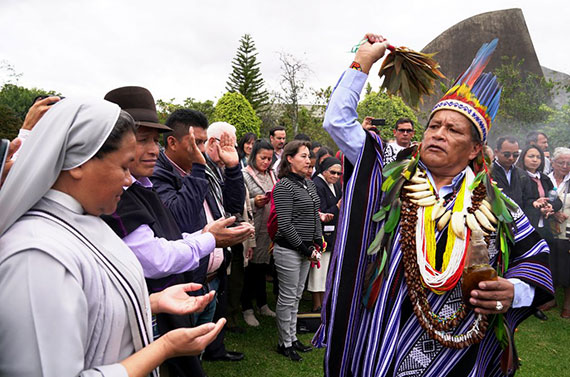
Update: In Colombia, bishops, religious listen to Amazonians before synod

Bishops, nuns, priests and residents of the Amazon basin met in Colombia’s capital city in mid-August to prepare for a special Synod of Bishops for the Amazon this fall at the Vatican.

The meeting gave bishops who will be attending the Synod a chance to develop proposals and listen to residents of the Amazon region, before they head to the Vatican in October for the gathering. Similar pre-synod meetings have been held recently in Peru and Brazil.

Pope Francis “wants to give visibility to the people of the Amazon and listen to their concerns, their teachings, their spirituality,” said Bishop Joaquin Pinzon Guiza of Puerto Leguiza-mo-Solano, a vicariate deep in the world’s largest rainforest. “As bishops we don’t just want to take our thoughts to the Synod, but also what lies within our peoples’ hearts.”

The Synod, announced by Pope Francis in October 2017, will focus on how to improve the church’s work in the vast but sparsely populated Amazon biome, which sprawls across nine South American countries and is largely inhabited by indigenous groups. Approximately 110 bishops that lead church juris-dictions in the Amazon will attend as well as representatives of continental episcopal conferences and 32 observers, including indigenous leaders.

Vatican official: Church must be prudent judging Medjugorje apparitions

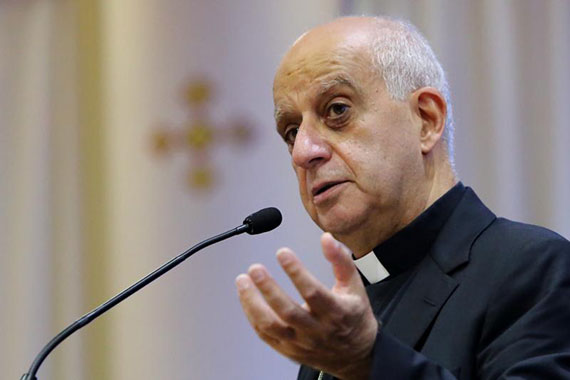
Medjugorje, Bosnia-Herzegovina, is a place of prayer, con-version and pilgrimage for millions of people, but the church must be prudent and not rush to any judgment on the alleged Marian apparitions there, said Archbishop Rino Fisichella, president of the Pontifical Council for Promoting New Evangelization. Speaking to Catholic News Service at Knock Shrine in County Mayo on August 15, the feast of the Assumption, Arch-bishop Fisichella spoke of attending the first officially approved church festival at Medjugorje in early August.

“I confess the experience was very beautiful, seeing about 70,000 young people praying and living together and listening to catechesis,” he told CNS, describing it as a mini-World Youth Day.

The presence of so many young people there was, he suggested, “one of the fruits” of the pastoral efforts of Medjugorje.

Visionaries claim to have seen than 40,000 Marian apparitions since June 1981, when six teenagers first claimed they first saw an apparition of Our Lady while herding sheep.

As always, when confronted with an apparition, the church “is always prudent,” Archbishop Fisichella said.

In May 2018, Pope Francis named Polish Archbishop Henryk Hoser as apostolic visitor to the shrine, after a papal commission recommended that Medjugorje, which attracts up to 3 million visitors annually, be designated a pontifical shrine with Vatican oversight. A ban on pilgrimages organized by dioceses and parishes was then lifted by papal decree.

Christians in northeast Syria appeal for prayer for safety

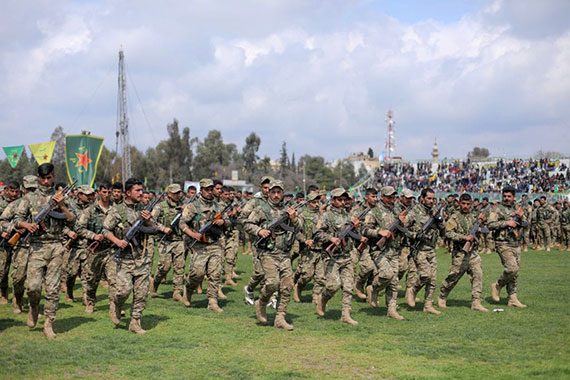
Groups representing Christians in northeast Syria are appeal-ing for prayer, fearful that Turkey plans to make good its numerous threats to invade the region with its military forces.

Since November 2018, Turkish President Recep Tayyip Erdogan has threatened to launch a large military operation east of the Euphrates River to “clear Kurdish terrorists” from the area. Syriac Christians view it as a pretext to enter more of Syria in a bid to change the Northeast’s demographic of Kurds and Christians, just as Turkey did in Afrin, Syria, in March 2018.

The Christians’ appeal was issued by the Syriac National Council of Syria, the Syriac Union Party, and the American Syriac Union. It was made available to Catholic News Service on August 15.

Turkey has “massed its army and allied jihadists along the border. Even though the U. S. and French armies are present in northeast Syria, we know that Turkey will attack and destroy us,” the three Syriac Christian groups said. They are appealing to U. S. leaders to intervene on their behalf to aid the 100,000 Christians in the region who they say are at risk.

They warned that Turkey and its jihadist allies, including fighters from al-Qaida and Islamic State, could carry out “a massacre just as they did in Afrin (northwest Syria) in 2018, when the churches of Afrin were burned and the Christians and Yazidis there were hunted down. In northeast Syria, it would be much worse and destroy many more people.”

German archbishop in Auschwitz: Stand up against hubris of the politically powerful

On the eve of the 80th anniversary of the German invasion of Poland, a German archbishop has called for a stand against hubris and arrogance of those in political power.

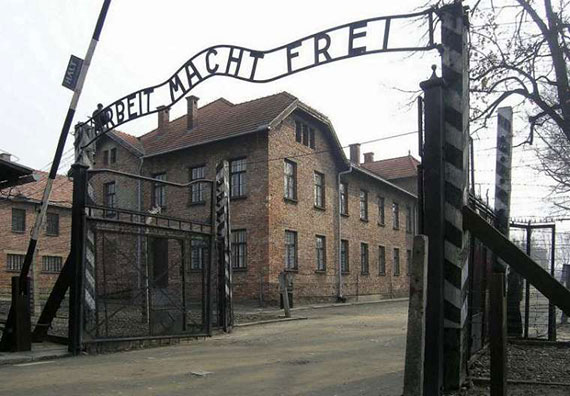
Speaking on the occasion of a Mass in the former Nazi concentration camp in Auschwitz on August 14, Archbishop Ludwig Schick of Bamberg recalled the witness of the Polish martyr and saint Fr Maximilian Kolbe.

“On the anniversary of the beginning of the Second World War, Maximilian Kolbe reminds us to profess that God is the Almighty to whom all must submit for peace and unity in our world today,” Archbishop Schick said.

“No person can put themselves above God, and no nation can put itself above another, the German prelate stressed, adding that the most important contribution of Christians to peace and unity among peoples and nations was “to profess the one and only benevolent God, the Father of all creation.”

God gives equal dignity and rights to all people, peoples and nations, and imposes the same duties of charity on all, Schick said, adding that St Maximilian Kolbe had deeply committed himself to the obligation of charity.

The Polish priest resisted the totalitarian terror of Nazi ideology and was incarcerated in Auschwitz concentration camp. In 1941, he gave his life for a fellow prisoner. He was brutally executed after suffering starvation in a hunger bunker.

Jesuit superior general: Satan is a ‘symbolic reality’

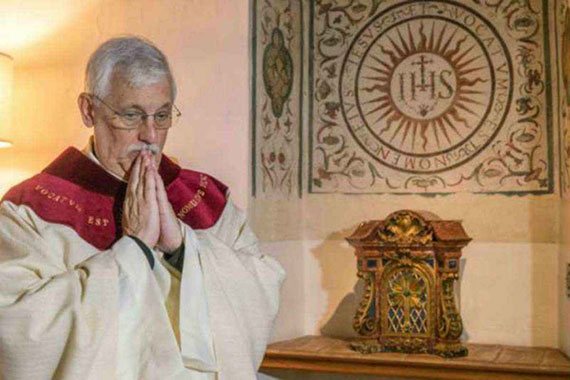
The superior general of the Society of Jesus said on August 21 that the devil is a symbol, but not a person.

The devil, “exists as the personification of evil in different structures, but not in persons, because is not a person, is a way of acting evil. He is not a person like a human person. It is a way of evil to be present in human life,” Fr Arturo Sosa, SJ, said on August 21 in an interview with Italian magazine Tempi.

“Good and evil are in a permanent war in the human conscience and we have ways to point them out. We recognize God as good, fully good. Symbols are part of reality, and the devil exists as a symbolic reality, not as a personal reality,” he added.

Sosa’s remarks came after he participated in a panel discussion at a Catholic gathering in Rimini, Italy, organized by the Commu-nion and Liberation ecclesial movement.

The Catechism of the Catholic teaches that ”Satan was at first a good angel, made by God: ‘The devil and the other demons were indeed created naturally good by God, but they became evil by their own doing. ’”

Angels, the Catechism says, are “spiritual, non-corporeal beings.”

“They are personal and immortal creatures,” it adds, who “have intelligence and will.”

Fight fires to save the Amazon, pleads Pope

Pope Francis has called for a joint effort by the international community to stop the fires raging in the Amazon rainforest and protect a region he describes as a “vital lung” of the world.

Speaking after praying the Angelus in St Peter’s Square, the 82-year-old Latin American Pope pointed to the global concern for the “vast fires” in the Amazon praying that through a cross-national commitment they “might be contained as soon as possible.”

Leaders of the world’s major democracies are discussing how to contain the wildfires during their G7 gathering in Biarritz, France. Ireland and France have both threatened to block a free trade agreement between the EU and Latin American Countries if Brazilian President Jair Bolsonaro does not change his Amazon policy. Experts believe that the populist leader’s removal of rainforest protections, allowing for deforestation, have fuelled the fires.

For his part, the Pope will host a landmark Synod of bishops gathering on the Amazon in Rome from 6-27 October 2019, which will focus on how the Church can help protect region’s environment and indigenous peoples.

The Pope’s Amazon appeal came after one by the Latin American Bishops.

Retired Pope responds to criticism of his reflection on abuse crisis

Responding to criticism of notes he published about the roots of the clerical sexual abuse crisis, retired Pope Benedict XVI said the fact that the critiques barely mentioned God proved his point.

“As far as I can see, in most reactions to my contribution, God does not appear at all,” which is “exactly what I wanted to emphasize” as the central problem, he wrote in a brief note to Herder Korrespondenz, according to KNA, the German Catholic news agency.

In April, the retired Pope sent a compilation of what he described as “some notes” on the crisis to Klerusblatt, a German-language Catholic monthly journal for clergy in Bavaria.

Seeing the crisis as rooted in the “egregious event” of the cultural and sexual revolution in the Western world in the 1960s and a collapse of belief in the existence and authority of absolute truth and God, the retired Pope said the primary task at hand is to reassert the joyful truth of God’s existence and of the Church as holding the true deposit of faith.

Most of the criticism, though, focused on Benedict seeming to blame the cultural and sexual revolution of the ’60s, especially when many cases of priests sexually abusing children occurred before that time even if the public found out only recently.

The Real Presence: What do Catholics believe and how Church can respond

Do Catholics believe that the Eucharist is truly the body and blood of Christ? A Pew Research Centre survey released on Aug. 5 found that nearly 70% of Catholics believe that the bread and wine used for Communion during Mass are “symbols of the body and blood of Jesus Christ,” while about 30% believe that the bread and wine “actually become” Christ’s body and blood.

The findings clearly touched a nerve as commentators jumped to analyse the data, questioning the language that Pew had used in its survey questions.

Mark Gray from the centre for the Applied Research in the Apostolate wrote in a blog post that replacing the word “actually” with “really” might have led to different results. In previous surveys on the Real Presence, CARA used “Jesus is really present in the bread and wine of the Eucharist” vs. “Bread and wine are symbols of Jesus, but Jesus is not really present.” Others found the results an affirmation of their belief that catechesis in the Church is in a sorry state.

“It represents a massive failure – and I include myself in this, we’re all guilty – a massive failure on the part of Catholic educators and catechists, evangelists, teachers,” said Los Angeles Auxiliary Bishop Robert E. Barron in a “Word on Fire” YouTube video. “If on this central matter of our belief and practice there is this much deep misunderstanding, something has gone substantially wrong.”

Pew’s finding “certainly shows a failure in catechetics, but I think the Church faces a greater problem,” Jesuit Father Thomas Reese wrote in a column for Religion News Service. “Catholics have an impoverished idea of what the Eucharist is really about.”

Madras High Court agrees to withdraw remarks

Days after he stoked a controversy by insinuating that Christian education institutions were unsafe for women and that they indulged in forcible religious conversion, a judge of the Madras High Court on August 21  agreed to withdraw the remarks from his order.

Justice Vaidyanathan had made the controversial remarks while dismissing a petition filed by a professor of the famed Madras Christian College challenging a notice issued to him by the college following charges of sexual harassment filed by girl students.

The Tamil Nadu Bishops’ Council, Tamil Nadu Latin Bishops’ Council, Indian Christian Association of Tamil Nadu, All India Democratic Women’s Association and MDMK leader Vaiko had taken exception to the comments saying it was “unwarranted” and unrelated to the case at hand.

The National Commission for Minorities Vice Chairman George Kurian had also issued a statement expressing anguish over the judge’s observations.

On 27th August the counsel for Madras Christian College represented to the judge saying the remarks could be withdrawn. Following this the judge said he would remove those observations from the order.

The contentious remarks read: “Before parting with the judgment, this Court feels it appropriate to point out that Christian missionaries are always on the source of attack in one way or the other and in the present era, there are several accusations against them for indulging in compulsory conversion of people of other religions into Christianity.

Now, there is a general feeling amongst the parents of students, especially female students that co-educational study in Christian institutions is highly unsafe for the future of their children and though they impart good education, the preach of morality will be a million dollar question.