For 3 months, no girls were born in 132 Indian villages

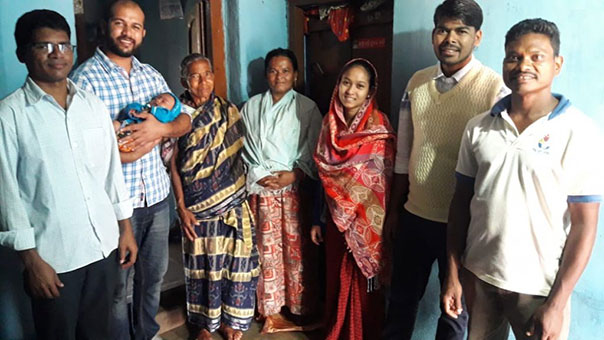
A northern Indian district has launched an investigation into a region in which the birth rate of baby girls is in dramatic decline. Government data has revealed that among 216 babies born across 132 villages in the last three months, not even one of them was a girl. The district administration of the Uttarkashi region has announced that it will form a task force to examine the reason why no girls have been born in the region.

But some experts in the area say the reason is clear. “No girl child was born for three months in these villages. It cannot be just a coincidence. This clearly indicates female foeticide is taking place in the district. The government and the administration are not doing anything,” social work Kalpana Thakur told NDTV.

The region’s district magistrate, Ashish Chauhan, told reporters that the matter is “suspicious, and has highlighted female foeticide.”

“We have identified areas where the number of girl childbirth is zero or in single-digit numbers. We are monitoring these areas to find out what is affecting the ratio. A detailed survey and study will be conducted to identify the reason behind it,” Chauhan said.

Chauhan added that health workers in the area have been told to be vigilant.

In 1994, India outlawed sex-selective abortion. However, some experts say that the practice persists because male children are perceived to be more able to contribute financially to a family’s needs, and marriage customs require that the parents of girls pay a substantial dowry. In Hinduism, India’s predominant religion, male children perform the funeral rites of their parents.

A 2011 census found that there were 943 females for every 1,000 males in the country, and recent statistics suggest that the ratio of women to men is moving further from even.

Government officials claimed in 2015 that as many as 2,000 girls are killed in India daily, through both abortion and infanticide.
Concern grows as Mother Teresa nun remains in Indian jail

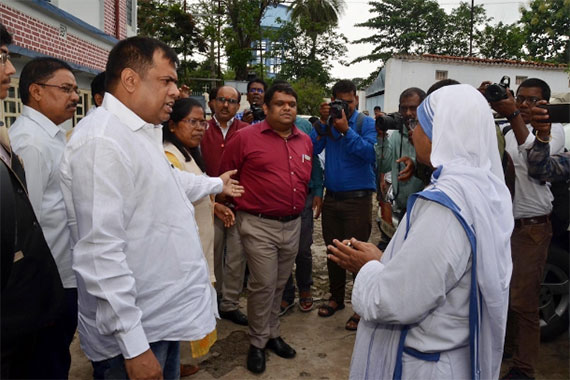
Church activists suspect political interference and sectarian hate in the continued incarceration of a Missionaries of Charity nun who was arrested a year ago accused of child trafficking in eastern India’s Jharkhand State.

Sister Concelia Baxla filed a fresh bail application in the state’s High Court on July 12. Her bail was rejected by several courts including India’s Supreme Court early this year.

The nun, now 62 and a diabetic, was arrested on July 4 last year along with Anima Indwar, a staff member of the home for unwed mothers that the Missionaries of Charity managed in state capital Ranchi. The arrest followed a complaint that Indwar took money to provide a baby but failed to keep the promise. They were accused of having already sold three babies from the home. The Supreme Court rejected her bail application on Jan. 29 on grounds that police had not yet completed the investigation of the case.

Spate of lynching incidents worry church people in India

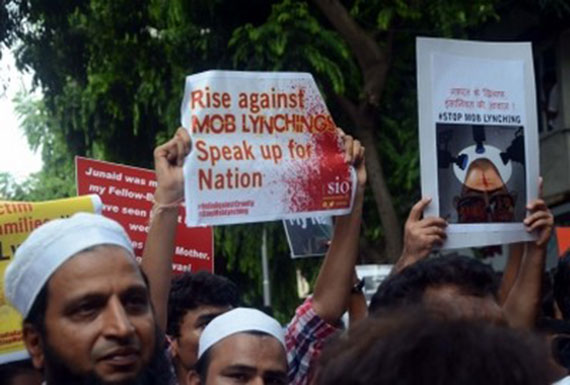
Church leaders in India have concerns of further civilian unrest after mob attacks killed eight people in three separate incidents over the weekend.

In the latest incident on July 20, a group of more than 10 men beat and killed four people, two men and two women, in the Gumla district of Jharkhand State.

The four deceased, all aged between 60 and 65, came from three different families.

Local media, quoting unnamed sources, said the fatal beatings were handed out after leaders of the local village assembly met and found the victims guilty of practicing black magic.

In a similar incident the day before, three people were beaten to death by a mob in the Saran district of the neighbouring State of Bihar.

Police said the perpetrators claimed that they had attempted to steal a buffalo, something denied by the victims’ families.

Two of the three died at the scene while the third died on the way to hospital, said Police Superintendent Har Kishore Rai.

Archbishop Leo Cornelio of Bhopal, the capital city of Madhya Pradesh, said mob lynching was evidence of “a dangerous path” to which the nation was being pushed. “It is not people generally,” Archbishop Cornelio said. “In most cases it is local goons and fanatic Hindu groups who are involved in such violence,” he said.

Visakhapatnam Police circular on churches irks BJP leaders

A circular from the office of the Visakhapatnam police commissioner asking police stations to take steps to prevent attacks on Christians and churches has led political uproar and protests.

The Bharatiya Janata Party leaders objected to the circular’s choice of words. They say the police should not have mentioned any community or place of worship by name.

The BJP leaders include former federal minister D Purandes-wari and legislator PVN Madhav.

The commissioner’s office issued the circular after a local pastor submitted a memorandum to the Andhra Pradesh State government, seeking protection for churches and Christians in the south-eastern Indian state. He alleged that right wing activists targeted Christians and their places of worship.

The police chief reissued the circular without referring to any community, but the BJP leaders remain unsatisfied.

Visakhapatnam police commissioner Rajeev Kumar Meena issued the circular on July 4 in response to a petition by B Daniel Shyam through the CM’s Praja Darbar and Spandana portal. The petition was sent to all the districts for necessary action.

The circular instructed station house officers in Visakhapatnam to conduct intensive patrolling by covering all churches and provide protection to them. He also instructed ACPs to visit all churches in their jurisdiction once a month, discuss with church elders on such activities and take preventive measures.

The memo irked BJP workers. “We will meet the chief minister on July 22 and tell him about the feelings of people of different religions. We will not leave this issue,” Madhav said.

Missionary bishops pray for unity, plead for peace

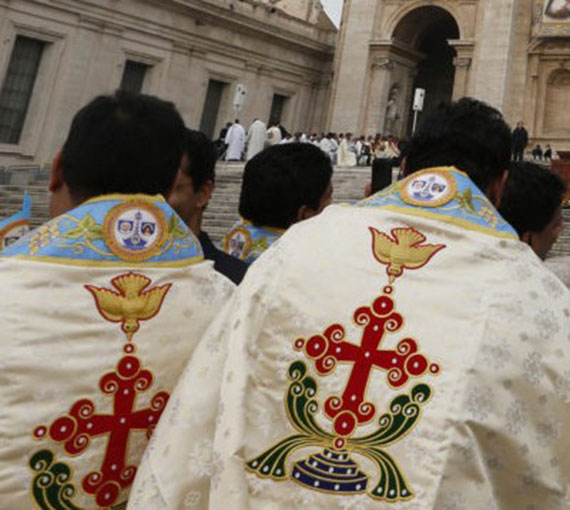
Missionary bishops and other missionaries from the Syro-Malabar Church working in Northeast India have decided to pray for Peace and Unity in their Mother Church and urge especially other missionaries of the same background to do the same.

They have also decided to make an earnest appeal to every section of the Syro-Malabar Church, Hierarchy, clergy, religious and faithful to forget all differences, whatever they be, and sincerely work for peace and Unity among the children of St Thomas.

They said they were proud of the heritage of the Great Apostle of India, their common Father, and of the immense contribution the sons and daughters of this Church had made to the growth of God’s Kingdom, especially in recent years. They said, they also rejoiced at the recent recognition that their Church had received at the World level.

However, they said, they were greatly pained at the recent incidents that have threatened the Unity of the Church which they love so much, and whose missio-nary zeal they would like to see growing daily.

“Human needs are growing and Christian anxieties are multiplying over the face of the earth,” Archbishop John Moolachira of Guwahati said.

“This is not the time to allow little differences to divide us and make our work ineffective.” He foresees common enemies taking advantage of their lack of Unity. The decision to make this humble appeal was made in Guwahati in a gathering of bishops, priests, and religious at the service of Ecumenism in Northeast India after they had reflected on July 12, under the guidance of Fr Gilbert Aranha, the CBCI Secretary of the Office for Ecumenism, on the causes of historical divisions in the Church.

They were very emphatic that they did not want to be judge-mental with regard to anything about which there are differences of opinion.

Bengaluru observes 800th anniversary of Francis-Sultan encounter

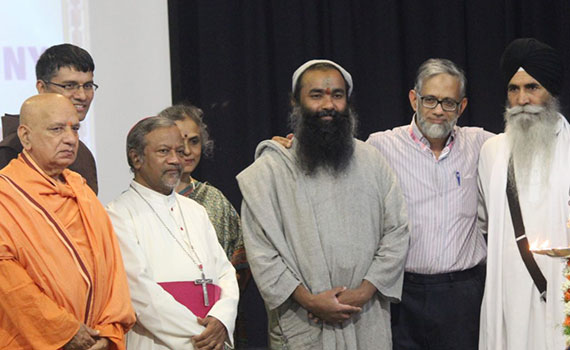
Heads of various religions in Bengaluru have commemorated the 800th anniversary of an encounter between Saint Francis of Assisi and Sultan al-Malik al-Kâmil of Egypt.

Although all religions aim at the same holy and spiritual aspects to lead a good life, unfortunately people do not follow even 10 percent of their tenets and teachings,” regretted Archbishop Peter Machado of Bangalore at the interreligious meet held on July 27 St Joseph’s Boys’ High School Auditorium, Bengaluru.

The archbishop joined Franciscans, the followers of Saint Francis of Assisi who work in the archdiocese to observe the anniversary.

Saint Francis was one of the greatest champions and advocates of harmony and it took tremendous courage for him to go to the sultan in the days of crusade. Sultan al-Kamil was also a good man. Francis’ resemblance of the poor and his approach towards all creatures attracted “the Sultan,” the archbishop said in his presidential address.

Representatives of other religions were Swami TattwarupanandaAdhyaksha of Ramakrishna Order, Mahamunivandaru Sritha Mahagatha, Giani Kewal Singh, M T Matheen, Shreya Vakil and J Bhavani.

Archbishop Machado spoke on Islam to highlight the relation Francis had with the sultan. The prelate said he likes the five pillars of Islam –Faith (Shahadah), Prayer–five times each day (Salat), Charity or alms-giving (Zakat); Fasting during the month of Ramadan (Sawm) and Pilgri-mage to Mecca (Hajj).

Archbishop encouraged all to visit pilgrim centers to increase one’s faith in God. He urged those present to become ambassadors of peace and harmony. “Ultimately, whatever be one’s religion, we all believe in one God,” he said and added, “Let make in India be translated into take from India – Peace and Harmony.”

Supreme Court grants bail to two of “Innocent Seven”

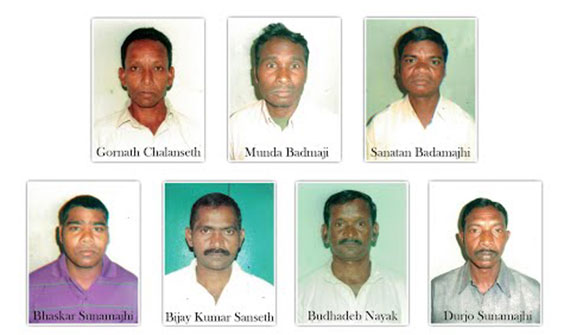
The Supreme Court of India on July 23 granted bail to yet another of seven people, who have been languishing in jail for more than ten years in connection with the murder of a Hindu religious leader in Odisha, eastern India. India’s Supreme Court has ordered the granting of bail to the second of seven Christians convicted over the murder of a Hindu swami 11 years ago. Bijaya Sanaseth is the second of the seven to get bail from the country’s apex court in Lakshmanananda Saraswati case.

The Supreme Court read: “Considering the fact that the accused-appellant (Bijay Kumar Sanaseth s/o salei Sanaseth) had undergone ten years of his sentence and taking an over-view of the matter, we are of the opinion that the above mentioned accused appellant should be released on bail on such conditions as may be imposed by the learned Additional Sessions Judge, Phulbani in ST No16/18of 2013-2009.

Christian organisation raises concern over ‘missionary cell’ in the northeast

A Christian organisation in the northeast, has questioned the motive behind the creation of a ‘Christian missionary cell’ at a time when the Centre is pushing an education policy to “homogenise Indian society.”

The BJP in Mizoram had, a few days ago, formed the cell to collect data on the community and connect with Mizos beyond the State. The church leaders felt that little respect was being shown to the autonomy of individual States.

“Those who work for the dominant party are formed into a Christian Missionary Cell, whose mission will be to collect data about Christian activities and pass it on to their opponents who wish to undermine the unity of the Christian service in the northeast,” the Assam Christian Forum said in a statement issued by its spokesperson Allen Brooks.

Pakistan province offers funds for cathedral renovation

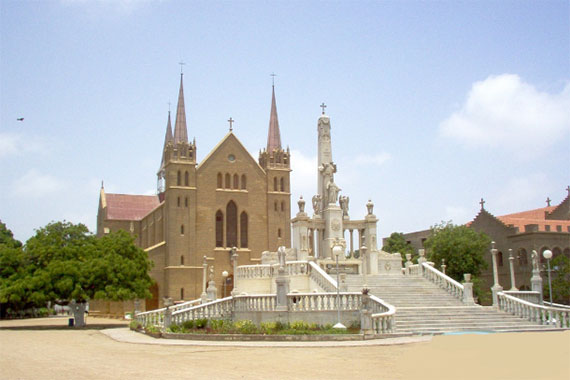
More than US$1.5 million is being provided by Pakistan’s Sindh provincial government for the renovation of iconic St. Patrick’s Cathedral.

The foundation stone of the cathedral in Karachi, the province’s capital, was laid in 1845 and the building is known for the richness of its stone, glass and timber craftsmanship.

The cathedral’s rector, Father Mario Rodrigues, notes that it can accommodate 1,500 people for prayer services and he is proud of its Gothic revival architecture.

Father Rodrigues, heading a July 27 church delegation, talked to Sindh Chief Minister Murad Ali Shah about the contribution of local Christians to the development of Karachi.

Shah responded that provi-ncial administration heritage experts would be involved in the cathedral’s restoration “to its original glory.”

The funding is to be provided for the work to be done over three years, starting with the interior.

Chief Minister Shah, an alumni of the St Patrick’s high school in Karachi, hailed the Catholic Church’s good works within the province, especially in providing educational and health services.

Living with Kandhamal survivors strengthens faith: Theology students

Kandhamal, the land of martyrs, continues to inspire pilgrims, religious, faithful, theologians, young and old.

“My faith is strengthened and enriched after spending four meaningful days with the victims of Kandhamal,” said Divine Word Hanson D’Souza from Mangalore, who studies theology at Kristo Jyoti Mahavidyaloyo, Sambalpur, Odisha.

The seminarian told Matters India that he was proud to be with those who have suffered for the sake of Christ.

Dominic Nayak from Kandhamal’s Tiangia, who survived the 2008 anti-Christian persecution, said the survivors “are grateful to many people who come to us to share solidarity with us.”

Tiangia saw the highest number of deaths in the Kandhamal religious persecution.

“We are encouraged and empowered when people come and share with our pain and agony,” Nayak told Matters India. A team of 15 theology students lived with the survivors during July 18-21. They split into groups of three and lived in the most affected villages — Nandagiri, Pirigoda, Mondakia and Gudriguda, besides Tiangia.

“Our students were moved seeing the strong and firm faith in Christ among the Kandhamal people despite persecution, threat and killing,” said Father Florence Ranasingh, principal of Khristo Jyoti Mahavidyaloyo who led the pilgrimage tour.