Purging silence: Vatican expands abuse prevention to lay movements

Millions of Catholics live their faith through their association with lay movements and Catholic groups, but some also have lost their faith when they were sexually abused in those groups and felt they had nowhere to turn. While much of the Church’s recent focus has been on clerical sexual abuse and the accountability of diocesan bishops, the Vatican is making child protection a priority for new movements and lay associations, too.

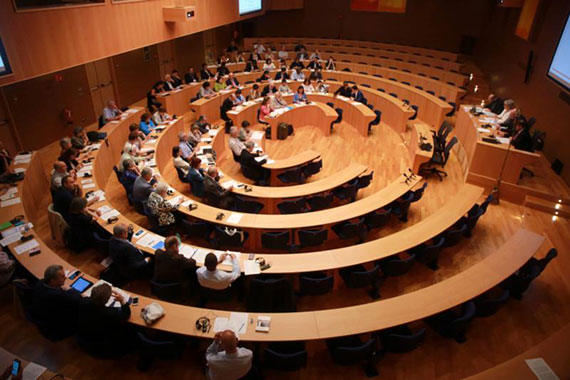
The Dicastery for Laity, the Family and Life brought together close to 100 representatives of Catholic associations and movements for a meeting on June 13 on abuse prevention and procedures for reporting and handling allegations.

Cardinal Kevin J. Farrell, prefect of the Vatican office, told the representatives that by the end of December every movement and association in the Church must turn in formal guidelines and protocols for reporting and preventing cases of abuse.

Catholic movements and associations for laypeople, which are given official recognition through the cardinal’s office, were told in May 2018 to draft abuse guidelines. Too many of the groups either did not respond or submitted inadequate protocols, he said.

Farrell said some Catholics in some parts of the world think holding another meeting about the abuse crisis shows that the scandal has become “a fixation,” “an unhealthy obsession” or “a pesky exaggeration.”

Report says nearly half of child deaths in Africa due to hunger

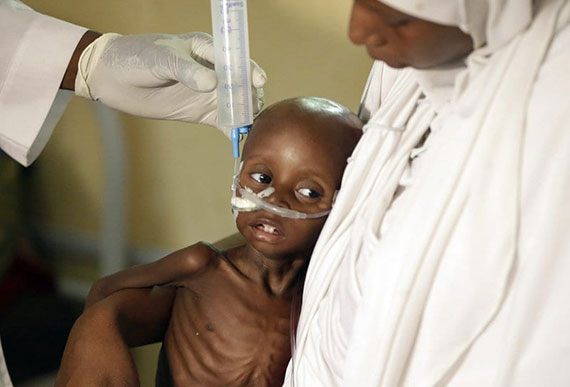
A new study says 45% of child deaths in Africa is due to insufficient food, and officials from Caritas fear the situation is not getting better.

The report from the African Child Policy Forum says child hunger “is the most extreme form of child deprivation.”

“Hunger kills, often silently and slowly. It affects and damages children’s health, hinders their capacity to learn, and reduces their ability to earn as much as their better-off peers,” it continues. The study says nearly 60 million children in Africa do not have enough food despite the continent’s economic growth in recent years.

“It is completely unacceptable that children are still going hungry in Africa in the 21st century. The statistics are truly alarming. Child hunger is driven by extreme poverty, uneven and unequal economic growth, gender inequality and a broken food system. Although Africa now produces more food than ever, it hasn’t resulted in better diets,” he said.

German bishop says only a new theology can save the Church

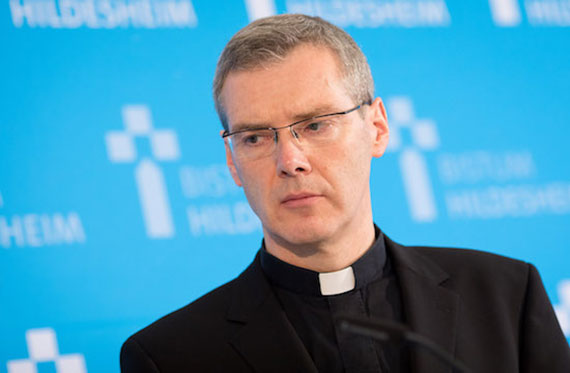
One of Germany’s most recently named bishops has raised eyebrows by calling for a “new theology” as an urgent response to revelations of the clerical abuse of power. “We still haven’t fully realized that the crisis of confidence is charging into the Church’s timberwork with unmitigated force,” warned Bishop Heiner Wilmer SCI in a recent interview in the German daily Süddeutsche Zeitung.

Although the 58-year-old has headed the Diocese of Hildesheim in Northern Germany only since last September, this is not the first time he has made head-lines with his outspoken views.

Wilmer, who was superior general of the worldwide missionary and teaching order known as the “Dehonians” (Congregation of the Priests of the Sacred Heart) before becoming bishop, drew criticism just three months into his new job when he told the Kölner Stadt Anzeiger that abuse of power was in the Church’s DNA.

Eritrean Regime Seizes all Catholic-Run Health Services

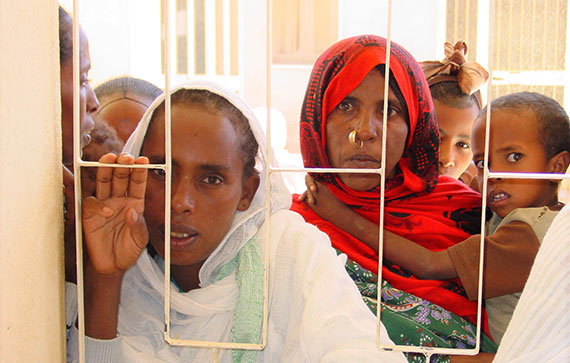
Thousands of sick people across Eritrea are being deprived of vital medical care after the government seized three hospitals, two health centres, and 16 clinics.

Government soldiers forced patients from their beds and out of the clinics and seized religious houses as they confiscated the 21 health institutes run by the Catholic Church, serving at least 170,000 people every year.

Sources close to the Catholic Church told Aid to the Church in Need that – unless the services were quickly resumed – people could die, with some walking up to 16 miles to access some of the clinics.

With the last of the week-long confiscations taking place on Tuesday (18th June), Eritrea’s four bishops condemned the action in a letter to Eritrea minister of health Amna Nurhusein.

The letter vows to refuse to cooperate with the confiscation program – which in a stroke has closed down all the Catholic Church’s health service premises, some of them dating back more than 70 years.

Calling the move “deeply unjust,” the letter states: “To deprive the church of these… institutions is to undermine its very existence, and to expose its workers, men, and women religious and lay people to persecution…

Update: U.S. bishops join pope reacting to photos of drowned migrant father, child

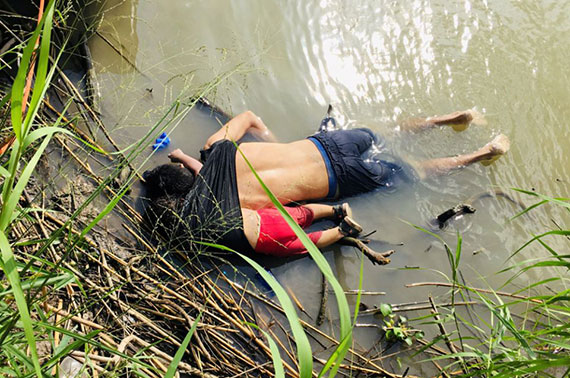
U.S. bishops joined Pope Francis in expressing sadness after seeing photos of the lifeless bodies of a migrant father and his daughter who drowned near the U.S. border with Mexico.

“This image cries to heaven for justice. This image silences politics. Who can look on this picture and not see the results of the failures of all of us to find a humane and just solution to the immigration crisis?” the bishops said in a June 26 statement.

“Sadly, this picture shows the daily plight of our brothers and sisters. Not only does their cry reach heaven. It reaches us. And it must now reach our federal government,” said the statement, issued by Cardinal Daniel N. DiNardo, president of the U.S. Conference of Catholic Bishops, and Bishop Joe S. Vasquez of Austin, chairman of the USCCB Committee on Migration.

The photos of Salvadoran migrant Oscar Alberto Martinez Ramirez and his 23-month-old daughter, Valeria, lying face down in the shallow waters of the Rio Grande sparked outrage against the U.S. government due to squalid conditions at migrant facilities as well as increasingly harsher policies against immigrants, many of whom are from Central America, fleeing their countries due to violence, poverty and corruption.

“We can and must remain a country that provides refuge for children and families fleeing violence, persecution and acute poverty,” the bishops said. “All people, regardless of their country of origin or legal status, are made in the image of God and should be treated with dignity and respect.”

In response to journalists’ questions on June 26, Alessandro Gisotti, interim Vatican spokesman, said Pope Francis saw “with immense sadness” the photos. “The Pope is profoundly saddened by their death and is praying for them and for all migrants who have lost their lives while seeking to flee war and misery,” Gisotti said.

Pope: Theology begins with sincere dialogue, not ‘conquering spirit’

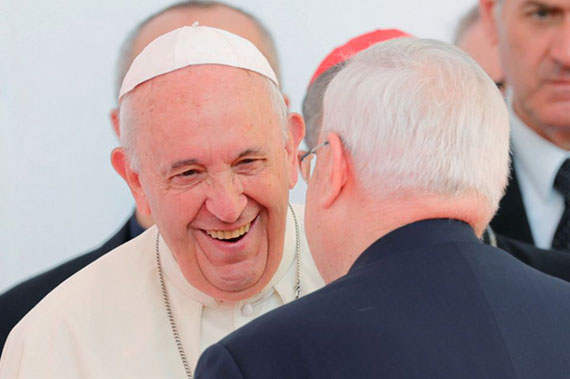
Theology develops through dialogue, not an aggressive defense of doctrine that seeks to impose its beliefs on others, Pope Francis said. Like Charles de Foucauld and the slain Trappist monks of Tibhirine in Algeria, fidelity to the Gospel “implies a style of life and of proclamation without a spirit of conquest, without a desire to proselytize and without an aggressive intent to refute,” the Pope said on June 21 in a speech at the Pontifical Theological Faculty of Southern Italy in Naples.

He also cited the writings of the Rev. Martin Luther King Jr. and Italian philosopher Lanzadel Vasto as examples of non-violent teaching and warned that opposing sides in theological debates may be prone to the “Babel Syndrome.”

While some believe the biblical story of the Tower of Babel is about “the confusion that comes from not understanding what the other says,” the “Babel Syndrome means not listening to what the other says and believing that I know what the other person is thinking and what the other will say,” the Pope said. “This is a plague.”

The Pope travelled to Naples to deliver the closing address at a two-day conference on the theme “Theology after ‘Veritatis Gaudium’ in the context of the Mediterranean.”

Paris archbishop hits back in first post-fire Mass in Notre Dame

Paris Archbishop Michel Aupetit took the occasion of the first Mass in Notre Dame cathedral since its 15 April fire to remind the French that the now closed building was a house of prayer and not just a national heritage monument.

Aupetit and about 30 worshippers wore white hard hats during Mass in the Chapel of the Virgin at the cathedral’s eastern end, where light streaming through the stained glass windows showed no damage there from the blaze that destroyed the cathedral’s roof.

Much of the cathedral’s fragile glass has been removed and its window frames bolstered by wooden supports. The fire prompted an outpouring of public support and President Emmanuel Macron has pledged to have it reopened in time for the 2024 Paris Olympics.

In his sermon, Aupetit pushed back against the overwhelmingly secular discourse about the cathedral, insisting that “the profound reason for which Notre Dame cathedral was built (was) to show the desire of man for God.”

Its only purpose was to be a house of worship and it “cannot be reduced to a national heritage monument,” he said, adding that France’s secularist policies had resulted in “the abysmal religious ignorance of our contemporaries.”

According to Culture Minister Franck Riester, total pledges to reconstruct the cathedral amount to about 850 million euros, of which about 80 million have been paid so far.

Vatican official praises Catholic media for coverage of sex abuse crisis

In a remarkably frank and detailed speech, the Vatican official heading the department charged with reviewing clergy sexual abuse allegations told an assembly of Catholic journalists on June 19 that his investigators and the press “share the same goal, which is the protection of minors, and we have the same wish to leave the world a little better than how we found it.” Msgr John Kennedy, who since 2017 has headed the discipline section for the Vatican’s Congregation for the Doctrine of the Faith, described the personal toll on the 17 people in his office as they have reviewed an ever-growing tide of cases involving clergy sexual abuse or related crimes.

“I can honestly tell you that, when reading cases involving sexual abuse by clerics, you never get used to it, and you can feel your heart and soul hurting,” Msgr Kennedy said. “There are times when I am poring over cases that I want to get up and scream, that I want to pack up my things and leave the office and not come back.”

More French Catholics officially renouncing their faith

Requests to officially renounce the Catholic faith, known traditionally as apostasy, have been on the rise in France, a sample survey by La Croixconfirms. And the survey suggests that the practice is linked to publicity over controversial issues such as clerical sex abuse.

But the numbers involved are relatively small compared to some media reports suggesting there had been a “flood” of requests by people to have their names removed from baptismal registers.

To measure the real extent of the phenomenon, it is necessary to solicit information directly from dioceses, since the French Bishops’ Conference (CEF) does not keep national records.

“We are sometimes accused over this, but we are not an association with membership lists,” said Father Olivier Ribadeau Dumas, spokesperson for the conference.

Among the 15 dioceses surveyed by La Croix, some did not respond or stated that they did not wish to provide figures.

All the others confirmed an increase in requests to renounce membership of the Catholic Church since August 2018, with a further acceleration since the beginning of 2019.

In Bordeaux, the counter is already at 40. In 2018, it totalled 57, including 35 in September-and October, says Marc Ruellan, an archivist in the archdiocese.

In Paris, last year’s figure of 76 requests was almost reached in the first five months of 2019 with 70 individuals seeking to leave the Church. In Strasbourg, with 174 requests in 2019, the previous figures have already been exceeded: the diocese had recorded 104 apostasies in 2018, and only 37 in 2017.

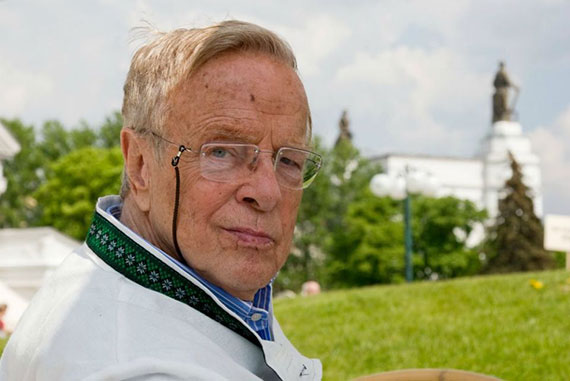
Franco Zeffirelli, enigmatic Catholic director of operas and film, dies

Franco Zeffirelli, the famed film director and film, television and opera producer, died on June 15, 2019, in Rome at the age of 96. He was born out of wedlock near Florence, Italy, in 1923. His mother, a widow, was not able to give him her married surname or that of his father, so she gave him the name “Zeffirelli.” The story of him being named after a word in a Mozart opera seems to be one of those myths that grows up around famous people.

Zeffirelli was raised by a close relative after the death of his mother when he was just 6 years old. He graduated from the Accademia di Belle Arti in Florence in 1941 and enrolled in the University of Florence to study architecture. He learned to speak English well. His education was interrupted by World War II when he fought as a partisan and then became an interpreter for the British army. After the war, he decided to study theater and became a scene painter and assi-stant director for Luchino Visconti’s 1948 “La Terra Trema.” He and Visconti had a long love affair and lived together for several years. Zeffirelli worked with directors Vittorio De Sica and Roberto Rossellini and continued to design sets for plays, some of which he directed. He then redirected his efforts to cinema.

Zeffirelli, a Catholic whose faith influenced his work, was an enigma. He was sexually abused by a priest at a young age but said, even though the priest asked forgiveness, he was unharmed by the abuse. He was also an active homosexual who rejected the term “gay” as vulgar. Notwithstanding his lifestyle, Zeffirelli was friends with Pope Paul VI and met with Pope Francis in 2016 to present a copy of his book Francesco with photos from the set of the film “Brother Sun, Sister Moon.” According to the Associated Press, Zeffirelli was “one of the few Italian directors close to the Vatican and the church turned to Zeffirelli’s theatrical touch for the live telecasts of the 1978 papal installation and the 1983 Holy Year opening ceremonies in St Peter’s Basilica.”