BISHOP JEROME TO BE MADE SERVANT OF GOD

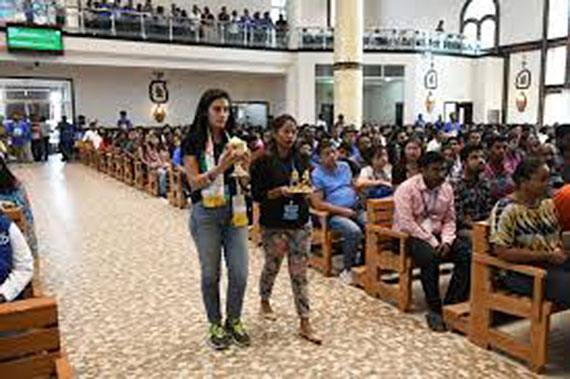
Bishop Jerome, the first native bishop of the Kollam diocese of the Catholic Church, will be elevated as Servant of God on February 24 at a function at Infant Jesus Cathedral, Thangassery. This will be the first step towards beatification and canonisation of the late priest.

Bishop Jerome had helmed the Kollam diocese, the first Catholic diocese in India, from 1937 to 1978. “An embodiment of Christian spirituality and a true visionary, he played an integral role in the overall development and progress of Kollam city. He also made key interventions in social and educational sectors, establishing a chain of institutions for the uplift of backward classes,” said Fr Julian.

GERMAN BISHOP SAYS CHURCH MUST EXAMINE EPISCOPAL POWER

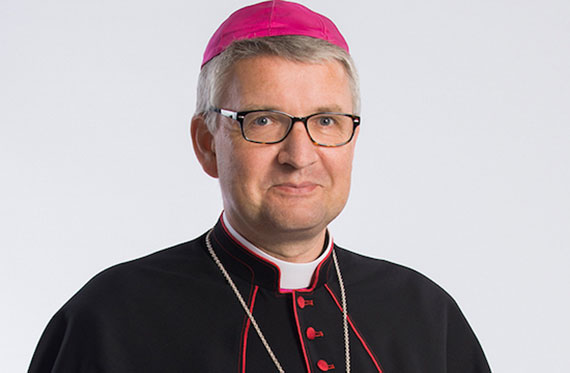
One of Germany’s youngest and more recently appointed bishops has called for a thorough examination of how Church leaders exercise their authority, saying too often it does not conform with the model St Paul demanded of early Christian leaders.

“We urgently need to have a new look at the question of episcopal power and responsibility,” said Bishop Peter Kohlgraf of Mainz in an article that appeared on Dec. 31 in the German daily Kölner Stadt Anzeiger.

“And we must, on no account, allow the importance of this question to be played down, since it already preoccupied early Christian communities.”

The 51-year-old Kohlgraf, who succeeded the late Cardinal Karl Lehmann as bishop of Mainz in August 2017, said power is a considerable temptation for bishops.

Bishop Kohlgraf also admitted that the issue of sexual violence in the Church had put his faith to the test in recent months.

“I have never experienced the human and dark side of the Church so closely as in the 16 months since I became a bishop,” he said.

“A few days ago, I came across the following reflection by Cardinal Christoph Schönborn: ‘Perhaps we are too much Church and too little Christ!’

“I have given his words a great deal of thought ever since. Christ and His Church have not seldom been equated. I can still hear the following words in a sermon when I was young: ‘The Church is Christ who lives on’.” But he said if the Church is identical with Christ, then it becomes unassailable, its traditions unshakeable and its ministers — “as they represent Christ Himself” — discharged from all liability.

ANGOLA: 2,000 UNREGISTERED CHURCHES FORCED TO CLO

More than 2,000 churches have been closed and over 1,000 more face closure after Angola’s cabinet approved a new law requiring them to register with the government, including presenting at least 100,000 signatures of followers, as reported by Nairobi-based news site The East African.

A local pastor told World Watch Monitor that it was impossible to collect the required 100,000 signatures from at least 12 provinces, given they had only received a month’s notice.

By introducing the new regulations, the southern African country has followed Rwanda and Cameroon, who earlier this year announced new religious directives that have caused thousands of churches to close.

“The number of illegal churches in the country has reached 4,000,” Francisco de Castro Maria, a government director for religious matters, told the state-owned Jornal de Angola newspaper, as quoted by The East African.

POPE TO U.S. BISHOPS: ABUSE CRISIS REQUIRES CONVERSION, HUMILITY

The clerical abuse crisis and the “crisis of credibility” it created for the U.S. bishops have led to serious divisions within the U.S. church and to a temptation to look for administrative solutions to problems that go much deeper, Pope Francis told the U.S. bishops.

Without a clear and decisive focus on spiritual conversion and Gospel-inspired ways of responding to victims and exercising ministry, “everything we do risks being tainted by self-referentiality, self preservation and defensiveness, and thus doomed from the start,” the Pope wrote.

In a letter distributed to the bishops at the beginning of their Jan. 2-8 retreat, Pope Francis said he was convinced their response to the “sins and crimes” of abuse and “the efforts made to deny or conceal them” must be found through “heartfelt, prayerful and collective listening to the word of God and to the pain of our people.”

“As we know,” he said, “the mentality that would cover things up, far from helping to resolve conflicts, enabled them to fester and cause even greater harm to the network of relationships that today we are called to heal and restore.”

The “abuses of power and conscience and sexual abuse, and the poor way that they were handled” continue to harm the church and its mission, he said, but so does “the pain of seeing an episcopate lacking in unity and concentrated more on pointing fingers than on seeking paths of reconciliation.”

Such a division, which goes well beyond a “healthy” diversity of opinions, is what caused him to recommend a retreat because, the Pope said, “this situation forces us to look to what is essential and to rid ourselves of all that stands in the way of a clear witness to the Gospel of Jesus Christ.”

The gathering be led by Capuchin Father Raniero Cantalamessa, preacher of the papal household. Pope Francis said church leaders must “abandon a modus operandi of disparaging, discrediting, playing the victim or the scold in our relationships,” and instead listen to the “gentle breeze” of the Gospel message.

AFRICA IS PRODUCING BAPTIZED PEOPLE, NOT CHRISTIANS

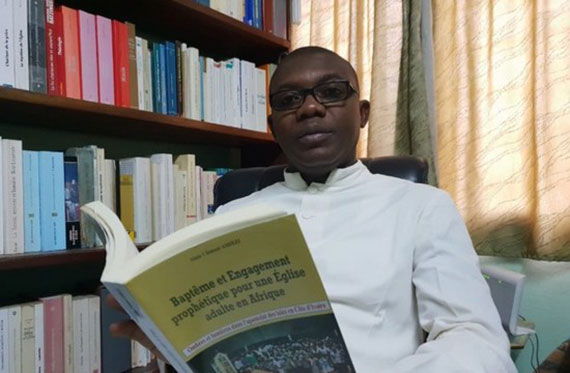
Father Alain Clément Amiézi is a doctor in dogmatic theology and professor at Sacred Heart of Mary Major Seminary at Anyama in Ivory Coast. In his new book, Baptêmeet engagement prophétique pour uneÉgliseadulte en Afrique (Baptism and prophetic commitment for an adult Church in Africa), he focuses on the meaning of baptism and its implications.

“The majority of our African churches have already celebrated the centenary of the beginning of their evangelization. Logically, we should now be talking about an adult Church. But at the qualitative level, it is clear that there is still a lot of work to be done. The percentage of those who continue and who complete their Christian initiation by confirmation after the great festivities that accompany the reception of baptism is very low in several African countries today.

The number of the faithful who are truly committed in the social and political fields on the basis of Gospel virtues is infinitesimal.

We are producing baptized people but not Christians. We provide them with the sacraments without evangelizing them. The responsibilities for this situation are shared.

On one hand, in my view, it is linked to the fact that certain catechumens are requesting baptism for the wrong reasons. On the other, it is linked to the quality of the formation received.”

On the impact baptism have on the life of African Christians he said: “Prophetic commitment involves three aspects.

First, there is Christian coherence which invites us to break with the dichotomy that often exists between the life of faith and everyday life at work, school and in the family.

Christian life is not an overcoat that one can leave at the parish door and collect again when leaving. The second aspect is courageous witness. Our African countries need Christians capable of breaking with the notion that “everyone acts like that” and who are capable of living out their faith through their Christian commitment at social, economic and political level.

The third aspect is to develop a spirituality that assumes and allows Christians to courageously face up to existential problems.

CARD. MARX, “JOURNEY TOWARDS SYNODAL CHURCH CAN HELP US OVERCOME SERIOUS CRISES”

The Archdiocese of Hamburg has celebrated the 24th anniversary of its foundation with a Eucharistic celebration on 7th January, presided over by Card. Reinhard Marx, President of the German Bishops’ Conference. According to a press release, the Cardinal in his homily “placed particular emphasis on the history of our intrinsic ecumenical bond: all Christian denominations are on a journey to serve each person,” since “Christianity is a religion that does not exclude anyone.” And when we celebrate the Eucharist, it is important for us to “constantly refocus and ask ourselves what the priorities are,” and then “look and act,” bearing in mind that “looking always means listening.” Referring to the anniversary of the founding of the Archdiocese, the cardinal asked: “How can we live together and listen to one another? How can we foster our joint responsibility and active participation in the Church?” And he referred to the “Synodal Church” often advocated by Pope Francis: “a new journey towards a synodal Church can help us to learn from one another and also to overcome serious crises,” the Cardinal concluded.

CATHOLICS FIND FLOURISHING FAITH LIFE IN MUSLIM UAE, WHERE POPE WILL VISIT

Catholics from around the world living in the United Arab Emirates are waiting with great anticipation for Pope Francis’s on Feb. 3-5 visit, the first papal trip to the Arabian Peninsula.

“Pope Francis is the ambassa dor of peace, courageously crossing borders and fostering personal encounters with religious leaders, heads of states and humanitarian organizations in the Arab world,” said Father Johnson Kadukkan, parish priest at Saint Joseph’s Cathedral in Abu Dhabi, where Francis will stop for a private visit on Feb. 5 before celebrating Mass at Zayed Sports City Stadium.

There are eight Catholic Churches throughout the seven emirates of the UAE, with a ninth church under construction. Each church offers an extensive schedule of “weekend” Masses, all of which are full. Since the UAE is an Islamic country and Friday is considered a day of prayer for Muslims, Catholics attend weekend Mass on Friday or Saturday; Sunday is a workday.

St Joseph’s Cathedral in Abu Dhabi, for example, has about 90,000 parishioners, with eight priests celebrating nearly 20 Masses during the weekend in various languages: Arabic, English, Tagalog, Spanish, French, Italian, German, Korean, Polish, Ukrainian, Urdu, Sinhalese and the Indian languages of Konkani, Malayalam and Tamil.

HISTORIAN ARGUES THAT CHURCH’S EMBRACE OF ART SAVED THE FAITH

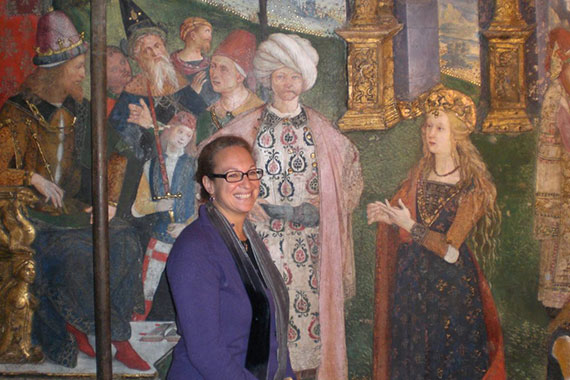
As the Catholic Church struggled to recover from the tumultuous effects of the Protestant Reformation, art historian Elizabeth Lev believes that it was the Church’s embrace of art that effectively saved the faith. Lev, an Americanborn, Rome-based scholar, is one of the most sought after guides in Rome who makes the treasures of the Eternal City more relevant than ever.

In her new book, How Catholic Art Saved the Faith: The Triumph of Beauty and Truth in CounterReformation Art, Lev chronicles how individuals such as Michelangelo and Caravaggio, and lesser known artists such Annibale Carracci and Lavinia Fontana, turned to stone and canvas to combat challenges to the faith.

Why after the Protestant Reformation, where language (95 theses, in fact!) had been used to contest Catholicism, did the Church turn to art to recapture the essentials of the faith?

“The printed word can be painful, as anyone who has been trolled on the Internet will tell you. In the wake of Martin Luther’s famous theses, a flood of printed pamphlets overwhelmed people with conflicting information, polemical statements, and sometimes outright name-calling. While the Catholic Church excelled at scholastic tomes, literary click bait was not its forte, so it turned to art, where it had 1300 years of experience of communication through images. While the Protestants were debating to clast or not to clast with icons, the Catholic were sponsoring beautiful images that would draw people together, gazing in the same direction at artwork designed to point to the divine. These paintings still attract millions of viewers today, even though many tourists no longer understand the teachings or the stories behind them. It was a brilliant PR coup, deploying artists as visual preachers to the public.”

THOUSANDS JOIN ANNUAL CATHOLIC PROCESSION IN MANILA

Hundreds of thousands of people have thronged the streets of Manila to fling themselves at a statue of Jesus Christ as it inched its way through the Philippine capital in an annual procession that is one of the world’s biggest shows of Catholic devotion.

The faithful gathered before dawn on Jan 9 to catch a glimpse of the statue as it was wheeled on a metal float along a seven kilometre route through the city.

They believe touching the religious icon known as the Black Nazarene, or simply being in its presence, can heal the sick or deliver good fortune. Police said at least 800,000 people were in the crowd.

“I survived a stroke because of him (God),” 70-year-old Joaquin Bordado, who has attended the procession for decades, told the AFP news agency. “I will do this every year until I am 100 years old.”

Around him, the crowd, mostly walking barefoot as a sign of penitence, chanted “Viva Nazareno” (Long live Nazarene) and jostled for a glimpse of, or selfie with, the statue cloaked in a maroon robe that is topped with a crown of thorns and cross.

DUTERTE CALLS PHILIPPINE BISHOPS ‘SONS OF BITCHES’

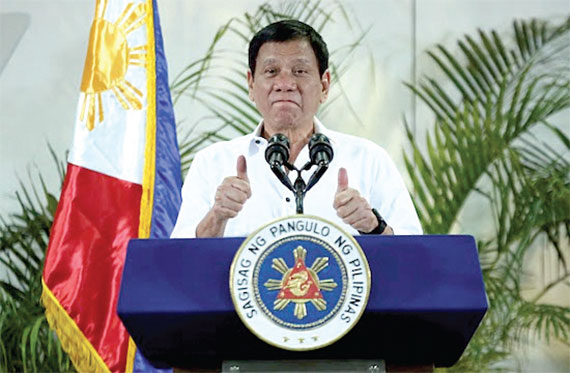
Philippine President Rodrigo Duterte has renewed his attacks on bishops in the Catholic majority country by describing them as “sons of bitches.”

The outspoken leader has been criticized by the Church for his war on drugs in which 5,000 people have been killed by police since 2016. “Only I can say bishops are sons of bitches, damn you. That is true,”

Duterte said in a speech during a groundbreaking ceremony for a school north of capital Manila on Jan. 10, Reuters reported. Duterte also suggested that most bishops are homosexual. “Most of them are gay,” he said. “They should come out in the open, cancel celibacy and allow them to have boyfriends.”

The president, who is not a regular churchgoer, said early in his presidency that he was sexually abused by a priest when he was a boy. Almost every time he addresses a crowd, he starts by acknowledging that his staff prepared a speech for him — but he never calls it his own. He always makes a point of putting some distance between him and his speechwriters.