SAY NO TO DIVISIVE FORCES: BISHOPS

The Catholic Bishops’ Conference of India (CBCI) and Odisha Bishops have urged people of Sundargarh district not to give in to divisive forces.

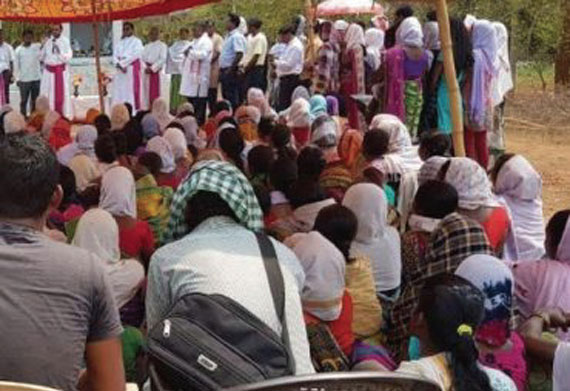
On 1, April 2018, in the late night of Easter Sunday, some miscreants vandalized a grotto outside the compound of St. Thomas Church, Salangabahal in Raurkela diocese, Odisha, mutilated the statue of Our Lady, and broke the head of the statue of Child Jesus in the grotto. They smashed a statue of Our Lady in another Grotto in Gyanpali village and attempted to burn the Church of the Victory of the Cross in Bihabandh.

The antisocial elements had also chopped off the head of a statue of a bull at the Shiva Temple in the vicinity.

On April 7, a delegation of Bishops which comprised of Bishop Theodore Mascarenhas SFX, the Secretary-General of the CBCI, Archbishop John Barwa SVD, Regional Chairman of the Odisha Catholic Bishops’ Council, Bishop Kishor Kumar Kujur of Rourkela, Bishop Telesphore Bilung SVD of the Archdiocese of Ranchi, Bishop Emeritus Alphonse Bilung of Rourkela, visited the affected areas.

PONTIFICAL COMMISSION FOR LATIN AMERICA PROPOSES SYNOD ON WOMEN

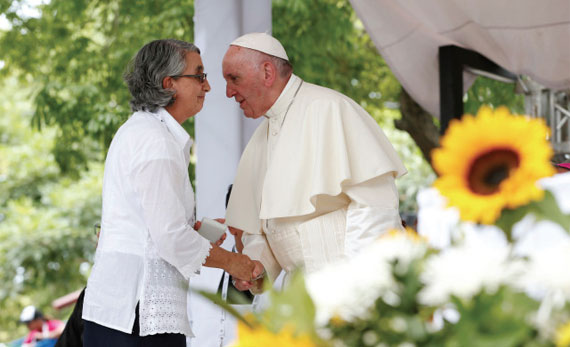
The Catholic Church in Latin America must recognize and appreciate the role of women and end the practice of using them solely as submissive labourers in the parish, said members of a pontifical commission.

In addition, at the end of their plenary meeting March 6-9 at the Vatican, members of the Pontifical Commission for Latin America proposed that the church hold a Synod of Bishops “on the theme of the woman in the life and mission of the church.”

“There still exist ‘macho,’ bossy clerics who try to use women as servants within their parish, almost like submissive clients of worship and manual labour for what is needed. All of this has to end,” said the final document from the meeting.

L’Osservatore Romano, the Vatican newspaper, reported April 11 that the theme of the four-day meeting, “The woman: pillar in building the church and society in Latin America,” was chosen by Pope Francis.

In addition to 17 cardinals and seven bishops who are members of the commission, the Pope asked that some leading Latin American women also be invited; eight laywomen and six women religious participated in the four- day meeting and in drafting its pastoral recommendations, the newspaper said.

OVER 80 PERCENTAGE OF CHRISTIANS HAVE DISAPPEARED FROM IRAQ

St Matthew Monastery, a Syriac Orthodox monastery overlooking the Nineveh Plains towns of Bashiqa and Bartella, in between the Kurdistan Region and Iraq. Christians in Iraq and other parts of the Middle East are being wiped out on an unprecedented scale due to ethnic cleansing campaigns by the likes of the so-called Islamic State (IS), the Gatestone Institute reports on its website.

It said the IS has killed over 1,130 Christians and destroyed 125 of their churches in recent times, with many of the murders apparently going unreported in Western mainstream media.

Eighty-one percentage of Iraq’s Christians have now disappeared from the war-torn country, according to a new report from the Iraqi Human Rights Society.

The society described the status quo as a “slow genocide” with minorities including Christians, Yazidis and Shabaks facing alarming levels of religious and ethnic persecution.

The Gatestone Institute quoted French Chief Rabbi Haim Korsia as likening the situation to the Holocaust as he appealed to Europe and other Western countries to defend non-Muslims in the region.

YOUNG ENGLISH ADULTS STILL VALUE CHURCH WEDDINGS, SURVEY SHOWS

Research conducted for the Church of England suggests that almost three quarters of unmarried adults under the age of 35 still dream of getting married. The figure is taken from a survey conducted by 9 Dot-Research for the C of E’s Life Events team. It would appear to contradict statistics for the actual number of weddings which show a continuing decline in both absolute numbers and in the rate: figures for opposite-sex marriage in 2015 show that there were 21.7 marriages per thousand unmarried men and 19.8 marriages per thousand unmarried women – the lowest rate on record.

The research company surveyed 1,085 unmarried people between the ages of 18 and 35 on 14th and 15th November 2017. Just 07% of this initial sample said that they “had no intention of ever being married.” They were excluded from the latter part of the survey on factors that would influence their wedding plans, giving a sample size of 1,012. Almost six in 10 (59%) said that they would like to marry at some point. Just over one in 10 (12%) said they were engaged and planning their upcoming nuptials. Significantly, the survey also suggests that millennials – a nickname given to people reaching young adulthood in the early 21st century – attach a special importance to church weddings, with more young people preferring to marry in a church or chapel (47%) than a register office or town hall (34%).

Those who would consider a church wedding were asked why it appealed to them from a list of options. Almost a third said that it felt like a “proper” wedding (31%). Marry- ing before God or receiving a blessing, was also in the top 10 (the seventh most chosen option). Millennials were also strongly drawn to “traditional / conventional” wedding venues (72%).

The research shows that for those considering marriage, almost one in six (17%) said that faith or religion had influenced their wedding ideas. The survey also shows that of those hoping to marry, just under half (43%) had thought about their wedding day by the time they reached 16. Women were more likely to have envisioned their wedding by that age (54%) than men (32%).

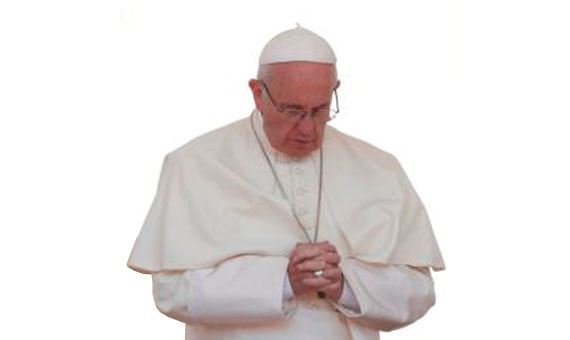
POPE APOLOGIZES FOR ‘SERIOUS MISTAKES’ IN JUDGING CHILEAN ABUSE CASES

In a letter to the bishops of Chile, Pope Francis apologized for under- estimating the seriousness of the sexual abuse crisis in the country following a recent investigation into allegations concerning Bishop
Juan Barros of Osorno.

The pope said he made “serious mistakes in the assessment and perception of the situation, especially due to a lack of truthful and balanced information.”

“I ask forgiveness of all those I have offended and hope to be able to do it personally in the coming weeks,” the pope said in the letter, which was released by the Vatican April 11. Several survivors apparently have been invited to the Vatican to meet the pope.

Abuse victims alleged that Bishop Barros — then a priest — had witnessed their abuse by his mentor, Father Fernando Karadima. In 2011, Father Karadima was sentenced to a life of prayer and penance by the Vatican after he was found guilty of sexually abusing boys. Father Karadima denied the charges;he was not prosecuted civilly because the statute of limitations had run out.

Protesters and victims said Bishop Barros is guilty of protecting Father Karadima and was physically present while some of the abuse was going on.

During his visit to Chile in January, Pope Francis asked forgiveness for the sexual abuses committed by some priests in Chile. “I feel bound to express my pain and shame at the irreparable damage caused to children by some of the ministers of the church,” he said.

However, speaking to reporters, he pledged his support for Bishop Barros and said: “The day they bring me proof against Bishop Barros, I will speak. There is not one piece of evidence against him. It is calumny.”

He later apologized to the victims and admitted that his choice of words wounded many.

FATHER, SON FOLLOW CALLING TO BECOME CATHOLIC PRIESTS

Andrew Infanger went to Mass every Sunday, studied at parochial schools and spent part of several summers at a camp run by Benedictine monks. He earned his bachelor’s degree in theology at a small Catholic university.

Still, he never really considered himself a model Christian or pious enough to become a member of the clergy. He made other career plans. “I sometimes think I was the last person you would’ve expected to become a priest,” he said.

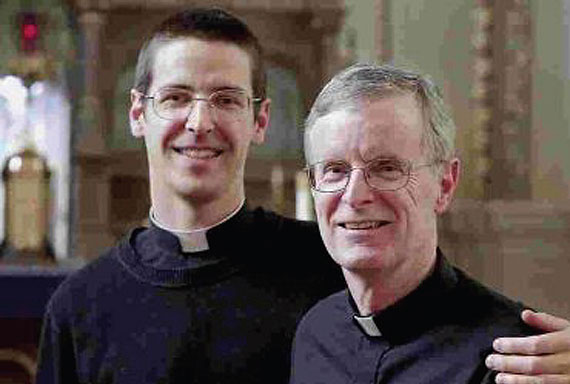
Yet today, Infanger is less than two months shy of ordination. Sitting in the chapel at St. Francis de Sales Seminary, the deacon is dressed in all black, except for a white clerical collar. Next to him sits his father, Peter. The two have an easy rapport and smile frequently at each other while they speak. When one pauses, the other often finishes the sentence. It’s clear they are close.

And there’s more than that. Peter Infanger is completing his fourth year at Mundelein Seminary just outside Chicago. In another year, he will be a deacon, and then — “God willing” — he expects to follow his son into the priesthood.

The Infangers know of only one other similar situation in the United States. Father Henry Wertin was ordained in 2016 in Pueblo, Colo., 12 years after the death of his wife in a car accident. He has 10 children, two of whom are also priests.

END OF CHRISTIANITY: PERSECUTION IS AT AN ALL-TIME HIGH – SHOCK WARNING FROM CATHOLICS

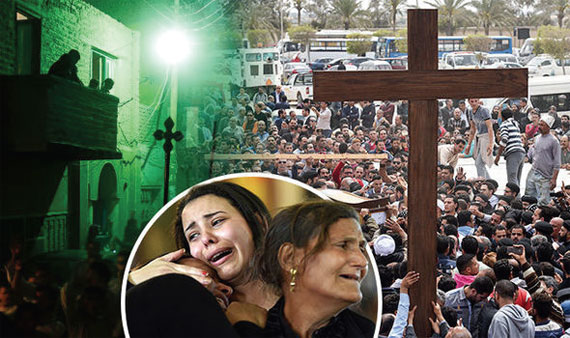
Christians are now the most persecuted religious group in the world and the religion could be wiped out in Iraq within three years, according to a report by a Catholic charity.

The European-based Aid to the Church in Need described the current level of persecution against Christians as being “worse than at any time in history.” Examining the plight of Christians in 13 countries over the past 12 years, the group found the number of Christians in the Middle East had dropped drastically in the past year.

The report entitled ‘Persecuted and Forgotten?’ claims the number of Christians in Syria had dropped to just 500,000 from about 1.5m five years ago, when the Syrian civil war was only just beginning.

In Iraq, more than half of the country’s Christian population became internal refugees and Syria’s second city of Aleppo, which until 2011 was home to the largest Christian community, saw numbers dropping from 150,000 to barely 35,000 by spring 2017 – a fall of more than 75%.

Researchers estimate as many as 600,000 Christians may have suffered some form of persecution for their faith around the world last year. Persecuted and Forgotten? found that members of China’s 127 million-strong Christian population have suffered increased persecution following new attempts to bring Christianity in line with Communist ideals.

More than 2,000 churches and crosses have been pulled down in China’s coastal Province of Zhejiang – and clergy are still being routinely detained by authorities.

POLAND: CBOS INSTITUTE, 25 MILLION PEOPLE GOING TO CONFESSION FOR EASTER. THE VALUE OF FASTING


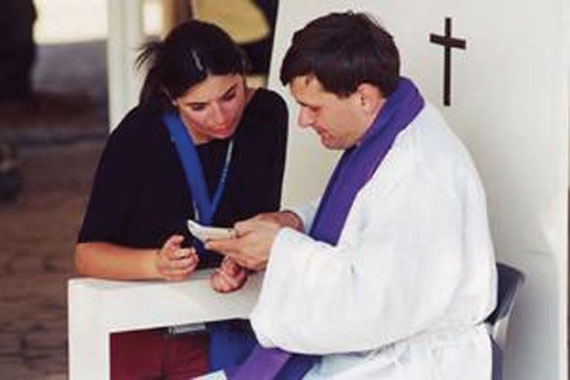
Over 25 million Poles will approach the Sacrament of Penance in preparation for Easter, according to the press office of the Bishops’ Conference in Warsaw, which cites data from Poland’s Opinion Polling Institute CBOS, according to which the Easter confession will be attended by over 67% of the population. The Church in Poland “does all she can to ensure that no one is deprived of the opportunity to be reconciled with God,” the Bishops’ spokesman, Fr Pawel Rytel Andrianik, said, stressing the scope of the programme “A Night at the Confessional,” under which churches will remain open for those who do not have time to visit them during the day. For Fr. Andrianik, greater participation in the initiative is expected on the night between Good Friday and Holy Saturday. According to the CBOS, Easter is “a religious event” for 44% of Poles, while the majority (67%) consider it a “feast to be celebrated in the family.” During the Lenten season, half of the population have given up some common leisure activities, such as watching TV, going dancing or to the cinema, listening to music. On Good Friday, 85% of Poles will abstain from foods made with meat. The observance of fasting on Good Friday is also common among non-practicing Catholics who “are fond of traditions” such as the blessing of foods in churches on Holy Saturday or the breaking of Easter eggs for the exchange of Easter greetings.

BOKO HAREM KILLS 15, WOUNDS 83 IN ATTACK IN NORTHERN NIGERIA

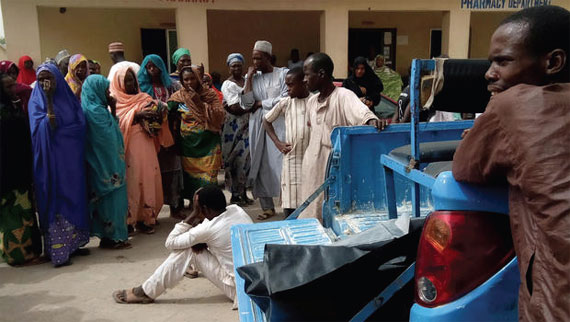
Nigeria’s Boko Haram extremists attacked two villages on the outskirts of the north-eastern city of Maiduguri late Sunday, killing at least 15 people, the military said Monday. The

militants tried to enter the centre of Maiduguri, the provincial capital of Borno state, but army soldiers repelled them, gunning down six armed insurgents and seven suicide bombers, said army spokesman Col. OnyemaNwachukwu.

At least 83 people were injured and are receiving medical attention, he said. Troops prevented the insurgents from entering the center of Maiduguri, but they detonated their bombs in the outlying villages of BilleShuwa and Alikaranti, with one soldier among the 15 casualties, said Nwachukwu. “Troops are still on the trail of the insurgents,” he said. “It is clear that the remnants of the Boko Haram terrorists are hell bent on remaining relevant by attacking soft and vulnerable targets and therefore we call for collective vigilance by all security stakeholders and members of the public.”

Boko Haram, which was formed in Maiduguri, has killed more than 20,000 people in its nine-year insurgency to establish Shariah law in Nigeria.

SRI LANKA WANTS TO MAKE SUNDAY SCHOOLS COMPULSORY

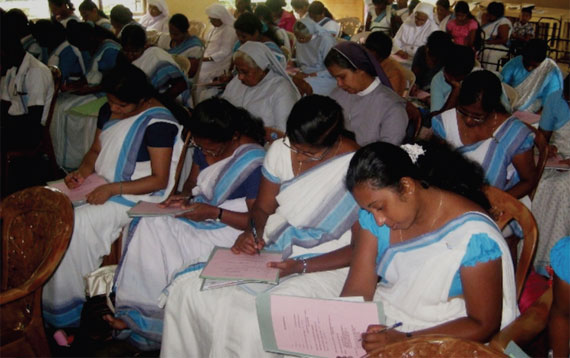
Sri Lanka is awaiting cabinet approval of a proposal to make Sunday school education compulsory for students aged 6-19 of all religions after the Christian Affairs Ministry sought feedback from Catholic priests about the idea earlier.

Father Piyal Janaka Fernando, institute director of the National Catechetical, Educational and Biblical Centre, forwarded their feedback to the government. Officials reportedly approached the priests based on their experience but plan to make Sunday lessons mandatory for Buddhists, Catholics, Hindus and students of other faiths, too. The issue was proposed in 2017 by Cardinal Malcolm Ranjith and chief Buddhist monks in the wake of a series of demonstrations against extra-curricular school-related teaching on Sundays.

Cardinal Ranjith even wrote to Sri Lanka’s president urging that tutorial classes be banned on Sundays from 6am to 2pm so they do not interfere with religious instruction.

Many private tutors work at weekends focusing on secular studies as this can result in a lucrative side income given the intensifying competition for the national school qualifying exams each year.

The Catholic Church has 1,155 Sunday schools, over 13,000 teachers and nearly 202,000 students in 12 dioceses across the country. A cabinet paper will be submitted at an as-yet-undecided date to the ministers in charge of all religions to implement a six-day study week with a focus on religious teaching on Sundays, said Buddhist Affairs Minister Gamini Jayawickrema Perera. He made the remarks while addressing a meeting in the North Western Provincial capital of Kurunegala on March 29. The move is aimed at installing more discipline in young people, he added. When Cardinal Ranjith called for the ban on tutorial classes, the argument he shared with other religious leaders was that these were detrimental to a child’s spiritual education as they preclude enrolment at Sunday school.