RELIGIOUS MINORITIES UNHAPPY WITH INDIA’S FEDERAL BUDGET

The annual federal budget of India’s pro-Hindu government has disappointed religious minorities as much of it was mere juggling of words, according to civil society groups and opposition  political parties.

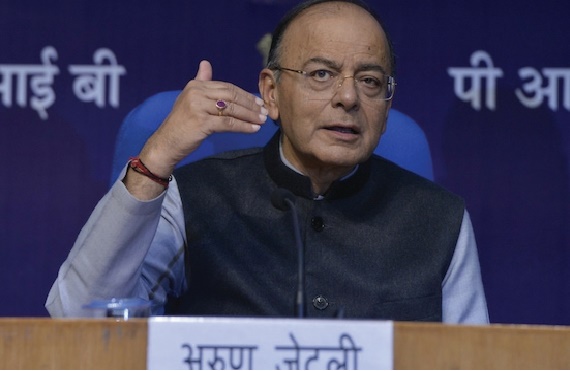
Finance Minister Arun Jaitley said the US$719 million allocated to the Ministry of Minority Affairs is a 62% increase, but critics say funding for minority development schemes has come down.

“The fact is that the allocation for minority development schemes has been sharply reduced” to one fourth from US$634 million to US$158 million, said Mamata Banerjee, the chief minister of West Bengal State who leads the Trinamool (grassroots) Congress, an opposition party.

“It is a budget which is neither here nor there. There is nothing new.” However, Minister for Minority Affairs Mukhtar Abbas Naqvi told reporters that the major chunk of the funding will go toward the education of Muslim women and their empowerment.

Rights activist Bezwada Wilson told that the budget carries no hope for marginalized groups such as the Dalits, ethnic minority groups and indigenous people.

“From that perspective, it is a big disappointment for the country’s poor people,” he said.

Wilson said government claims of increasing funding do not mean anything for the people.

“The issue is how the government will implement the schemes that it says are meant for minorities. It is well apprehended that tomorrow it [money] will be used to build a park, and it will be said that minorities can also can jog in it. This is the way things are going in this country,” he said.

LAND DEAL: POWER SHIFT ANNOUNCED IN ARCHDIOCESE

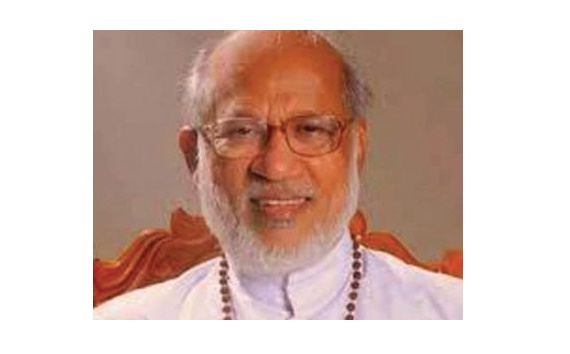
In light of the recent land transaction scandal of Ernakulam-Angamaly archdiocese in which Cardinal George Alencherry was implicated for causing serious financial losses to the diocese, he has delegated more powers to his auxiliary bishops.

Cardinal Alencherry made the announcement in a joint circular with auxiliary bishops Sebastian Adayanthrath and Jose Puthenveettil. The circular was read at all churches under the archdiocese on Sunday, February 11.

In the circular, the bishops acknowledge the distress caused to the members of the Diocese as a result of the recent land deal scandal. They added that the hectic responsibilities of the Cardinal have contributed to him not getting enough time to address the issues in his role as the bishop of the diocese.

Hence he has delegated the administration of the diocese to the current protosyncellus and auxiliary bishop Sebastian Adayanthrath. He would be supported in this role by present syncellus and auxilliary bishop Jose Puthenveettil.

They will also be responsible for convening and presiding over the canonical committees of the diocese. They are expected to submit regular reports to Cardinal Alencherry, but any major decisions will still need to be taken in discussion with him.

RISING INTOLERANCE IN INDIA IS CAUSING ANXIETY, SAYS CARDINAL

Cardinal Oswald Gracias, newly elected president of the Catholic Bishops’ Conference of India, has expressed “anguish” over increasing threats to pluralism in the country.

“Intolerance is causing a certain amount of anxiety to us,” Cardinal Gracias said in Bangalore, while addressing a news conference at the end of the assembly of Indian bishops.

“Diversity is one of the strengths of India. It is known world over for its diversity of culture, language and religion. Any attempt to divide people by certain sections will be harmful for the nation,” cautioned Cardinal Gracias, responding to a question on how the bishops’ assembly viewed the increasing threats to diversity in recent years.

Human rights groups have expressed concern over religious-based crime in India, and the government has confirmed an increase in violence based on religion.

Auxiliary Bishop Theodore Mascarenhas of Ranchi, secretary-general of the Catholic Bishops’ Conference of India, said attacks on pluralism were “not only against Christians, but all Indians.”

“You cannot allow a few rabid elements to spoil the harmony. It is a question of upholding constitutional values and rule of law,” the bishop added.

INDIA’S NOTED NUN PAINTER DIES

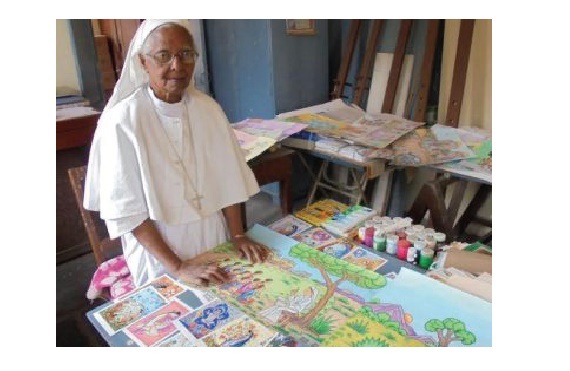
Renowned Christian artist, Salesian Missionaries of Mary Immaculate Sister Claire died on February 11 in Bengaluru. She was 82. The Hindu convert to Catholicism was unwell for the last few days.

The sister, who always wanted to be known as Sr Claire SMMI, had created more than 2,000 Christian paintings using water colour, enamel paints, posture colours and colour pens. She also drew more than 1,000 Christian and Easter greeting cards. The main focus of her paintings was Christian imagery rooted in the Indian soil. She drew inspiration to paint from the day-to-day life of the common people in India, she said in an interview last year.

The artist nun was born in a high caste Hindu family in Tirupati, a Hindu pilgrim centre in the southern Indian State of Andhra Pradesh. Her parents named her Meera, a Hindu mystic poet and a devotee of Lord Krishna. As a young girl, Meera sought spirituality.

COURT RULES AGAINST BAPTIST VILLAGE EXPELLING FOR FAITH DIFFERENCE

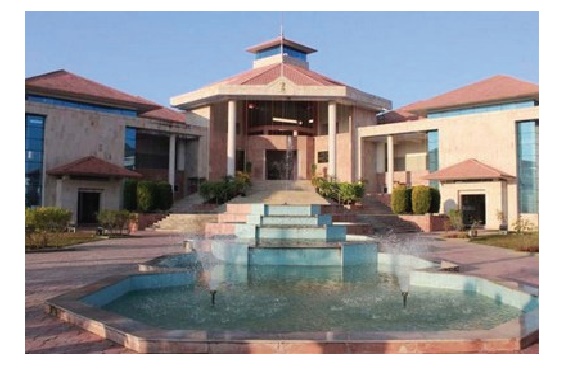
The Manipur High Court has struck down a village law of Sharkaphung/Leingangching that prevented inhabitants from any activity construed as ‘detrimental’ to Baptist Christianity.

Delivering a judgment on a plea by four residents expelled in 2009 for adopting Roman Catholicism, the high court ruled that the village authority’s action was illegal and unconstitutional. The village authority did not have power to order banishment/expulsion of any villager, ruled acting Chief Justice N.Kotiswar Singh.

“The villagers of Leingangching have every right to follow the Baptist Christianity and accordingly, also manage their affairs in tune with the Baptist principles and practices. However, it cannot come in the way of the petitioners professing a different religious denomination of Catholic faith as they have also similar Fundamental Right to profess and practise Catholic Christianity as guaranteed under Article 25 of the Constitution of India,” the High Court ruled.

INDIAN GOVT ADMITS RISE IN RELIGION-BASED HATE CRIME

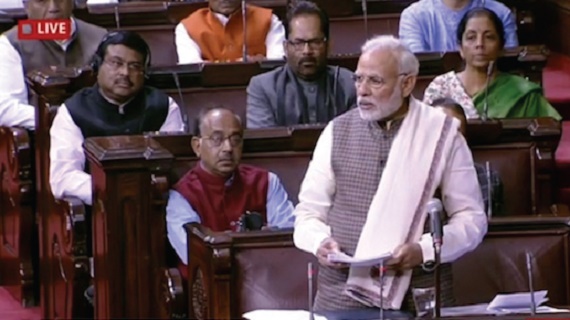
India’s pro-Hindu government has presented detailed data in parliament showing a surge in religion-based violence since it came to power four years ago. The statistics, revealed on Feb. 6, confirm a long-standing allegation by rights groups that the situation is worsening.

In 2017, 111 persons were killed and at least 2,384 injured in 822 cases of sectarian violence, the highest figure in the past three years. In 2016, 86 persons were killed and 2,321 injured in 703 incidents of religion-based violence.

Parliament was told that the highest number of sectarian incidents was reported in India’s most populous State, Uttar Pradesh, which has 200 million people, some 40 million of them Muslims.

The state, where the pro-Hindu Bharatiya Janata Party (BJP) swept to power in last year’s provincial elections, witnessed 195 incidents of religion-based violence in 2017, claiming 44 lives and injuring 452 people.

MADHYA PRADESH POLICE CHARGE FOUR CATHOLIC PRIESTS WITH RIOTING

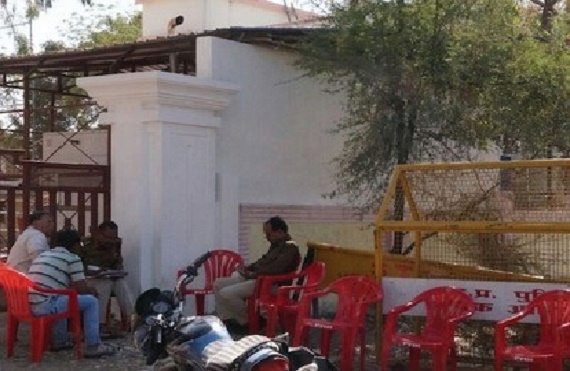
Four Catholic priests have been charged with rioting and criminal intimidation in India’s Madhya Pradesh State over a land dispute involving a hard-line Hindu group. The priests of Ujjain Diocese resisted an attempt by a Hindu group to take over a piece of land in front of a Catholic Church-run hospital in Ujjain, a city with a Hindu temple and a site for pilgrims.

“No one has been arrested yet,” an official of Madhav Nagar police station, where the case has been registered, told ucanews.com on Feb. 1.

The dispute revolves around a plot of land adjacent to Pushpa Mission Hospital, a 44-year-old facility with 200 beds. Hospital authorities say the local civic body gave the public land to the hospital for use as a parking area and to maintain its greenery. However, some members of the Bharatiya Janata Party (BJP), the pro-Hindu party that runs the state government, attempted to take over the land on Jan. 27, accusing the church of illegally occupying the site. However, the church obtained a “stay order” to maintain the status quo from the Madhya Pradesh State High Court.

Gagan Singh, who led the crowd and claimed to be the owner of the public land, is the assistant to the local BJP parliamentarian for the area. Church officials say charges against them were framed under political influence.

RAHUL SLAMS BJP FOR OFFERING MONEY TO MEGHALAYA CHURCHES

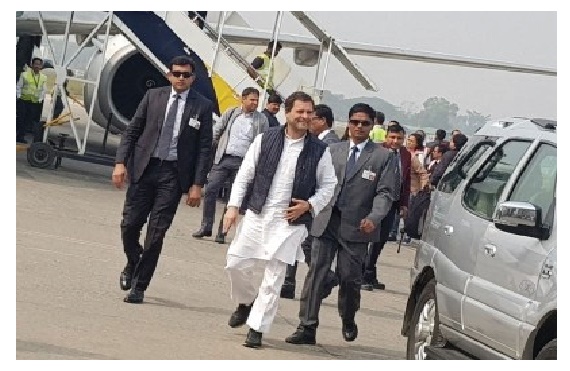
Congress President Rahul Gandhi on January 30 hit out at the BJP-led NDA government for offering money to churches in Congress-ruled Meghalaya ahead of the assembly elections.

“You will find the BJP has a lot of money. These days their leadership believes that everything can be bought,” he said drumming up support for his party candidates in the seven assembly  constituencies in Jaintia Hills district.

“I am very sad to hear that the BJP offered money to our churches in what I consider to be a huge sum…,” said Gandhi, who travelled 60 km to Jowai, the district headquarters of Jaintia Hills.

The Congress President is scheduled to meet Church leaders of various Christian denominations over breakfast on January 31 Chief Minister Mukul Sangma, state Congress President Celestine Lyngdoh, Lok Sabha member Vincent H.Pala and others accompanied the party leader.

On January 7, Union Tourism Minister K.J. Alphons announced a tourism package of Rs 70 crore to develop religious and spiritual circuits in the state.

But the Presbyterian Church and Catholic Church, besides the opposition Hill State People’s Democratic Party, raised their eyebrows on the offer.

Election to the 60-member Meghalaya Assembly will be held on February 27. “There is no price, there is no amount of money that can buy the people of Meghalaya. The BJP may buy a few leaders here and there as few leaders may defect to the BJP or their proxy the NPP (National People’s Party),” the Congress President said.

JESUIT SCHOLAR CALLS FOR DALIT CARDINAL

It is time the Church in India had a cardinal from the Dalit community, says a Jesuit scholar. It will be a great recognition for Dalits who form more than 60% of Christians in the country,  says Father A.Maria Arul Raja, a professor of Religious Studies at the Jesuit Theology Centre in Chennai.

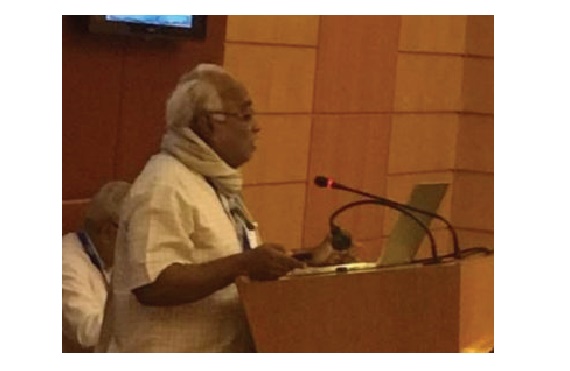
The priest spoke to Matters India after addressing more than 200 bishops who represent 174 dioceses in the country at the biennial plenary in Bengaluru, southern India. He spoke about the Church and Dalits.

According to him, a Dalit a cardinal would elevate one of the most socially suppressed communities. It would be a symbolic gesture to affirm the dignity and rights of the community that has lived in “the sub-human condition imposed by the caste system on the community for centuries,” said Father Raja.

India has 13 cardinals so far starting with Cardinal Valerian Gracias, Archbishop of Bombay, in 1953. They have represented various communities in the Indian Church: Goan, East Indian, Eurasian, Syro-Malabar, Syro-Malankara, Eurasian, Tamil and Tribal.

Fr Raja says a Dalit cardinal will give visibility to the community and highlight injustice done to them in society as well in the Church. “It will be powerful witness to Jesus who took a strong choice for the poor, outcasts, socially excluded, the priest said.

INDIA HAS 63 MILLION ‘MISSING’ WOMEN AND 21 MILLION UNWANTED GIRLS, GOVERNMENT SAYS

The Indian government said on January 29 that there were more than 63 million women “missing” from its population and that 2 million go “missing” across age groups every year because of abortion of female foetuses, disease, neglect and inadequate nutrition. There are also 21 million unwanted girls, the government said.

The 2017-18 estimate, released as part of the country’s annual economic survey, reinforced the work of researchers and social scientists, who have argued that decades of son preference in India and its parallel in China, the One Child policy, have produced a man-made demographic bubble of excess males — those now under 25 top 50 million — in the two countries and may have long-term impacts on crime, human trafficking, the overall savings rate and the ability of these excess males to find brides.

“We know that the sex ratio in India is highly skewed,” the government’s chief economic adviser, Arvind Subramanian, said at a news event, noting that the study further showed that Indians have a “meta” son preference, which means that if they have girls, they’ll keep on having children until they get a boy.