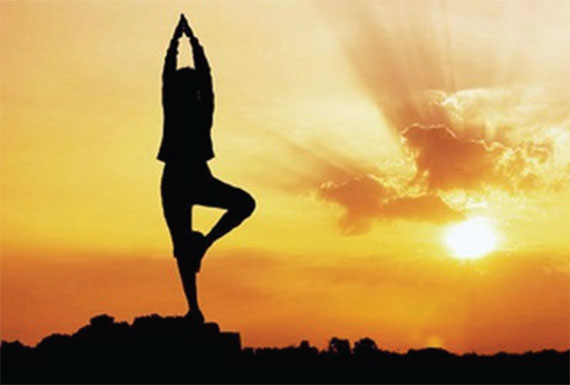
Nagaland Baptist Church asks Christians to refrain from practicing Yoga

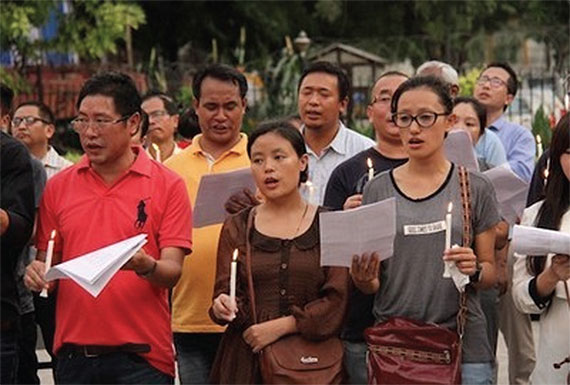
The Chakhesang Baptist Church Council (CBCC), a constituent of the Nagaland Baptist Church Council, has urged every Christian believer to refrain from practising Yoga, in line with the appeal made by the Nagaland BCC few months ago.

Declaring Yoga a spiritual discipline deeply rooted in Hinduism, the Nagaland Baptist Church Council had in August asked its associate Churches do not practise Yoga as it is not compatible with Christianity.

The CBCC reiterated its stand on anti-Christians ideologies recently and appealed to all concerned authorities not to impose yoga practises to Naga students to uphold the religious freedom envisaged in the Constitution.

This call was made during the 67th general council of CBCC held at CBCC Mission Centre, T.Chikri, Pfutsero hosted by Baptist Theological College (BTC) from January 19 to 20 under the theme “Knitted together in Christ.” Altogether 514 delegates repre-senting all the CBCC churches participated.

CBCC resolved to pray and fight against all exploitative and oppressive forces and ideologies that were found inimical and detrimental to Christian faith and practices.


Intolerance threat to peace in Garo Hills: Church

Growing intolerance and attacks on Christians in other parts of the country is a cause of concern for Church leaders here in Garo Hills.

“Church leaders here are apprehensive of the growing intolerance against Christians even as the current atmosphere in Garo Hills is peaceful and normal. People of different communities in Garo Hills have respected each other all these years,” Fr Theodore T.Sangma, Parish priest at the Sacred Heart Shrine in Lower Wadanang here told The Shillong Times.

Fr Theodore, who spared time for this correspondent in the middle of Soba, an annual conference of Catholics, also termed the trend of religious intolerance as “dangerous,” stating the fact that it has almost compelled people from the Christian community to be “subdued” and “affiliate with political parties.”

“It is unfortunate that people have been compelled to be lenient towards their religious faith and instead align themselves with political parties. This is a fallout of the growing levels of intole-rance against Christians in the country,” the parish priest said.

India asked to establish universities for Christians

India’s federal commission tasked with safeguarding religi-ous minorities has called for the establishment of government-funded universities primarily for Christians. But not all Christians support the proposal.

The National Commission for Minorities in its Jan. 13 annual report said such an initiative would be in keeping with the already existing state-funded Aligarh Muslim University and Jamia Millia Islamia University.

The commission sought a seven-year financial assistance program to establish new univer-sities for Christian communities, who already run their own edu-cational and health care facilities.

The commission said the government should collaborate with the Catholic Church in India, which runs some 400 colleges and 15,000 of 36,000 Christian-managed schools.

All-woman band smashes gender, caste stereotypes

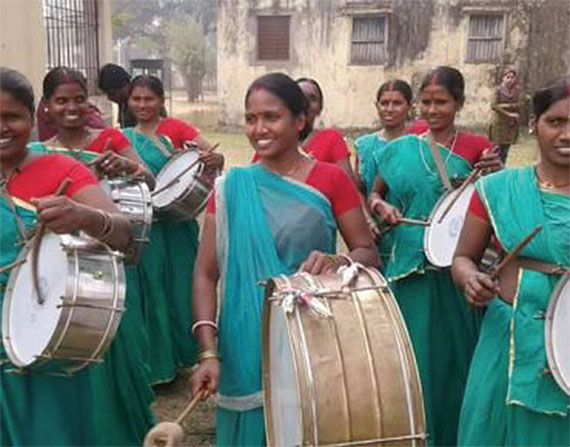
An all-woman band is shattering stereotypes of gender and caste in a village in the eastern Indian State of Bihar, among the poorest and least developed in the country. The Sargam Mahila (woman) Band in Dhibra village near State capital Patna, was set up about two years ago by Sudha Varghese, who runs a charity for women. After about six months of practise, they were ready.

Initially, the 10-member band was ridiculed by their families and other villagers, but they refused to be deterred, said Sabita Devi, a member.

“People used to laugh at us, but why should women sit at home?” she asked. “These days, women are flying in planes – why can’t we be in a band?”

It wasn’t long before the drumming group caught the ears of the community, said Varghese who heads the charity Nari Gunjan. “These women are Mahadalits, the most margina-lized among the Dalits. For them to receive bookings for weddings and company functions, and to perform in front of people is a very big deal,” she told the Tho-mson Reuters Foundation.

The women used to work in the fields for daily wages, but making a living by playing music has provided them with “inde-pendence and dignity,” said Var-ghese, a Catholic nun who has worked with lower-caste Dalit women for several decades.

Drama on Rani Maria enthrals Nagpur

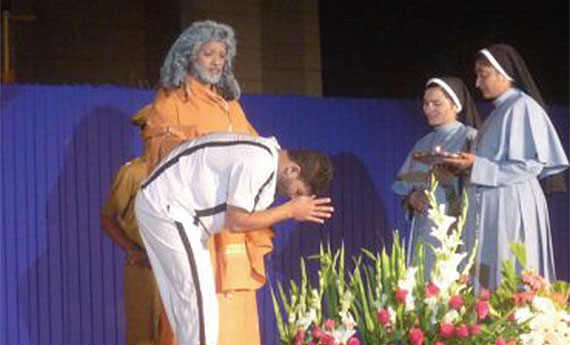
A dance drama on Blessed Rani Maria was the highlight of the feast of St Francis de Sales, the patron saint of the Arch-diocese of Nagpur. More than 2,000 people from the various parishes of the archdiocese attended the celebrations on January 24 along with Arch-bishop Abraham Viruthakulangara of Nagpur. The drama “Qurbani” (sacrifice) was prepared by Fathers M.L.James and Nitin Francis of Nav Chetna, Bhopal, capital of neighbouring State of Madhya Pradesh. About 200 children from five schools performed the dances while brothers from Pilar Niketan and Sisters from Alphonsa Sadan, Nagpur performed the drama.

The drama depicted the life of the Franciscan Clarist nun who was killed 28 years ago by a hired assassin near Indore, the commercial capital of Madhya Pradesh. The nun worked among poor landless agricultural labourers, which upset local landlords.

Christians refuse $10 million grant in Meghalaya

Christian leaders have rejected an offer from India’s tourism ministry of a US $10 million grant for the facelift and main-tenance of churches in the Christian-majority State of Meghalaya.

Catholic leaders in the state told that they will not apply for or accept the funding of 613 million rupees for illuminations, landscaping, construction of parking lots and toilets among other infrastructure work at 37 churches.

Federal tourism minister K.J. Alphons announced the grant on Jan. 8, just 10 days ahead of India’s Election Commission declaring Feb. 27 as the date of provincial elections in the northeastern state.

The minister, a member of the pro-Hindu Bharatiya Janata Party (BJP), has also announced another 86 million rupees for similar projects involving temples, mosques and important sites for 11 other religious groups including indigenous Khasi, Jaintia and Garo believers.

Catholic support is seen as crucial for an election victory in the state, where Christians account for about 80 percent of the three million people. The BJP holds only two seats in the 60-state house.

Alphons, a churchgoing Catholic from southern Kerala state, was made tourism minister on Sept. 3 last year, and four days later he was named the party’s election chief in Meghalaya state.

However, Alphons’ allotment ahead of the election has not enthused Christian leaders.

“First of all, we were never consulted on our needs, nor informed about the project. All these days after the announce-ment, no one from the government had contacted us on this, so there is no question of taking money from the government,” Bishop Victor Lyngdoh of Jowai Diocese told.

Bishop Lyngdoh said the church leadership “cannot take financial help now because it will give the wrong message to our people during this election time. It can create confusion,” he said.

Church decorated with Tagore motif inaugurated

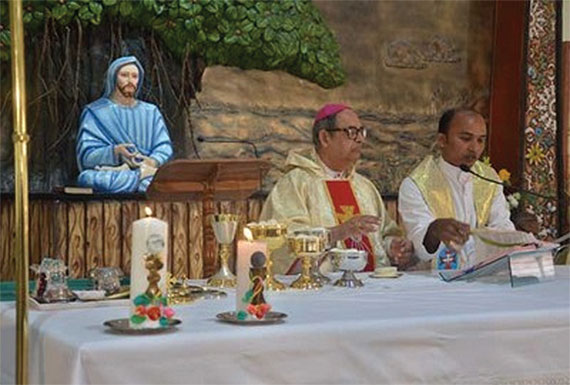
A church decorated with the style and motifs used by Rabindranath Tagore in his works was inaugurated on January 18.

The Infant Jesus Church at Makrampur here was formally inaugurated by Bishop Cyprian Monis of Asansol.

“We have incorporated local traditions of Santiniketan while trying to integrate the church decor with the artistic style of Tagore and popular traditions like open air classrooms which the poet had started,” an official of the Kolkata-based organisation that designed the Infant Jesus Church said.

The centre-piece in the church’s sanctuary is an imposing banyan tree under which Jesus is seated in lotus position imparting his teaching and blessings to all.

Above the banyan tree is the depiction of the Spirit of Wisdom and Enlightenment.

On the right side of banyan tree is the tabernacle enshrined in the traditional winnowing fan decorated with bamboo background and surrounded by conch shells. On the left side of the tree is Infant Jesus – the patron of the church.

The inside back wall of the church has a 40 feet mural depicting Jesus sitting under a huge banyan tree and holding a child.

Mizo Christians in India offer cash for babies

A Baptist Church in India’s north-eastern Mizoram State has announced incenti-ves to encourage couples to have more babies in an effort to check their dwindling numbers, disregarding a natio-nal policy to control the population.

The church in remote Lunglei town said it will pay families a one-time cash assistance of 4,000 rupees (US$ 63) for a fourth child and an additional 1,000 rupees for each new child.

Influential youth organization Young Mizo Association endorsed the move. “What the church has done is worth emulating. We Mizos are facing a serious challenge of dwindling numbers. We need to arrest the trend and if possible to reverse it,” president Vanlalruata (only one name) told.

The Christian-majority Mizoram has about 1.1 million people, 88 percent of them Christians. Mizoram is among the least populous states in the country of 1.3 billion people. India, currently the world’s second most populous nation after China, implements a national policy to check population growth.

Leading investigative journalist wins India’s “Booker Prize”

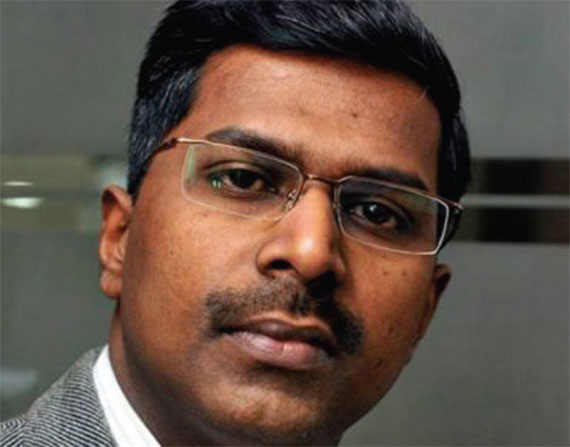
Josy Joseph, a leading investigative journalist, was among the winners of this year’s Crossword Book Awards, an Indian version of international literary wards. The Crossword Book Awards are considered as the Indian version of the Man Booker Prize and Commonwealth Writers’ Prize. It is currently in its 15th edition. This year the winners of both jury and popular choice awards for 10 categories were announced on January 18 at the Royal Opera House in Mumbai.