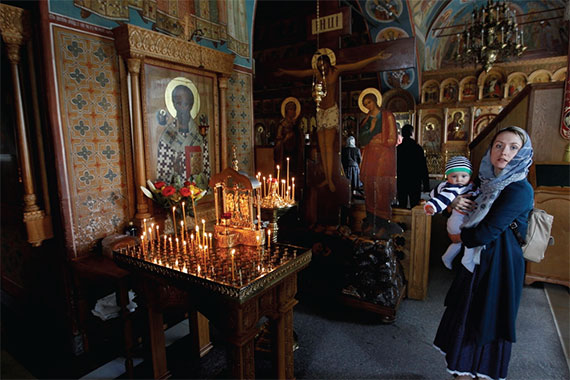
Russia’s Catholics recall their ‘gulag martyrs’ 100 years after Lenin’s revolution

When the centenary of the Bolshevik revolution falls this autumn, Christian com-munities across the former Soviet Union will comme-morate the persecutions it unleashed upon them.

But they’ll also recall the religious meditations born in the country’s prisons and labour camps, some of which deserve to rank with the best in Christian history.

Though often viewed as an epoch of cultural and spiritual emptiness, Soviet rule produced profound Christian works of prose and poetry, offering vital reflections on a resilient faith.

The revolution’s mastermind, Vladimir Lenin, had sworn to emasculate Russia’s Orthodox clergy — those “agents in cassocks” who had been used by the Tsar to “sweeten and embellish the lot of the oppressed with empty promises of a heavenly kingdom.”

To call it the “opium of the people” was too kind, Lenin had written in 1909, paraphrasing Karl Marx. It was rather “a kind of spiritual rotgut, by which the slaves of capital blacken their human figure and their aspirations for a more dignified human life.”

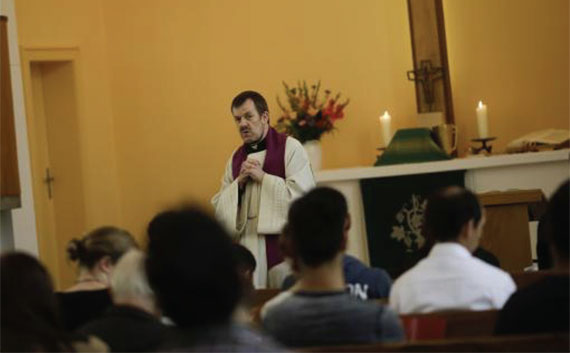
What’s driving Muslim refugees to Christianity?

Hundreds of Muslim refugees have converted to Christianity across Europe in recent years, according to church leaders, but motives vary. In Austria, the rolls of Catholic churches swelled with Muslim immigrants, leading to new guidelines for baptism to ensure sincere faith. Other churches in Lebanon, Germany, and England also report growing numbers of Muslim refugee converts from Afghanistan, Iran, Syria, Iraq, Bangladesh, and Eritrea.

Bishop George Saliba of Beirut, Lebanon, told PRI he has baptized about 100 Syrian refugees since 2011. In another Beirut church, a pastor meets with Syrian refugees to teach them “Christian doctrines” from Scripture. He requested anonymity out of fear of Islamist reprisals but said dozens of Bible study groups for Syrian refugees now meet in Lebanon.

No national statistics exist, but many local churches across Europe attest to the influx of Muslim refugees seeking to become Christians. Still, they remain a small fraction of the millions of Muslims in Europe.

According to The Guardian, European mosques turned away many homeless and impoverished Muslim refugees seeking assistance. They found help and a warm welcome in churches.

Reasons for conversion vary, from “heartfelt faith,” to gratitude to the Christians assisting them, to hope that it could boost their chances for gaining asylum, The Guardian reported. One Muslim in Germany admitted to NPR he might convert in order to avoid deportation back to Afghanistan, where his “life will be in danger.”

Bishop hopes Amazon Synod leads to married priests and woman deacons

A retired bishop who led Brazil’s largest territorial diocese for some 34 years says he’s hoping the 2019 special Synod for the Pan-Amazon region will lead to the ordination of married men to the priesthood and women to the permanent diaconate.

Bishop Erwin Kräutler, an Austrian-born missionary who headed the sprawling Diocese of Xingu in the Brazilian rain forest from 1981-2015, told Kathpress that the “horrend-ous” priest shortage has left the indigenous people of the Amazon deprived of the Eucharist.

The 78-year-old bishop, who is still secretary of the Brazilian bishops’ commission for the Amazon region, said in an October 19th interview with the Austrian Catholic news agency that this disastrous pastoral situation means 90% of the Catholic faithful in the region could not celebrate the Eucharist regularly.

Bishop Kräutler said Catholics in the Amazon were limited to celebrating…

Global Catholic population increases by 12.5 million

The number of Catholics in the world increased by 12.5 million in 2015 to a total of nearly 1.3 billion people. Figures reported by the Fides News Service show an increase on all continents, except Europe. Africa saw 7.4 million new Catholics, North and South America 4.8 million, Asia 1.6 million and Oceania 123,000. Europe’s Catholic population decreased by 1.3 million. Despite the rise, the world percentage of Catholics decreased by 0.05% to 17.72%, due to the total world population growing at an even faster rate. Oceania had the highest percentage increase at 0.24%, however the percentage of people in North and South America identifying as Catholic decreased by 0.08% despite a rise in the total number. The percentage of Europeans identifying as Catholic decreased by 0.21%.

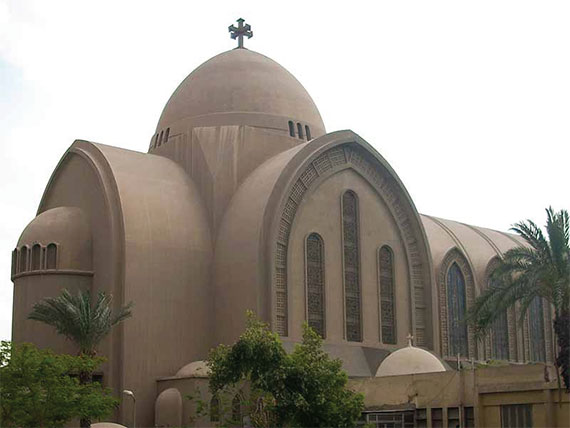
Unrelenting killing of Coptic Christians intensifies debate over martyrdom

As a little boy in Sunday school, Bassem Al-Janoubie was fascinated by the illustrated stories about the martyrs of Egypt’s Coptic Church.

“Even more than cartoon comic books, the dramatic events and details of the ordeal of each saint held my attention,” remembers the now-40-year-old graphic designer. “They were like superheroes – not accepting attempts to change their beliefs or efforts to get them to deny their Christianity despite torture and even death.”

The 2,000-year-old Coptic Church of Egypt has a long tradition of hallowing those who died affirming their faith in the face of violence.

The issue has been most recently punctuated by the deadly knifing of a Coptic priest in a poor Cairo neighbourhood on Oct. 12. A suspect was arrested but his motive is still unknown.

Recently, another Coptic priest — the well-known Rev. Boules George from the well-heeled Cairo suburb of Heliopolis — took to the television airwaves to “thank” the Islamic State terrorists who launched the Palm Sunday church bombings that claimed 45 lives, saying they provided “a rocket” that delivered victims straight to heaven.

Many Copts rejected that assertion. “This death doctrine is terrifying,” said Jacqueline Ezzat, 21. “Jesus died for a cause and a purpose. Those who die in violence are lost to us for no reason. Father Boules’ doctrine is insidious. It’s like he wants us Christians to be zombies.”

Comprising an estimated 10% of Egypt’s 90 million people, the Coptic Church is the largest Christian denomination in the Middle East and North Africa. This summer, Raphael imple-mented an Egyptian Interior Ministry directive to suspend church events in difficult-to-secure locations in order to minimize exposure to new attacks. “The fact that we receive death with a spiritual philosophy does not mean that our blood is cheap,” said the bishop.

Christian persecution reaches historic levels

The persecution of Christians are worse than at any time in history, according to a new report that was issued on Oct. 12, 2017. The “Persecuted and Forgotten?” report concludes that the perse-cution of Christians reached a high water mark in 2015-17—with growing attacks on the faithful by ISIS, Boko Haram, and other extremist groups.

The new report, produced by international papal charity Aid to the Church in Need, also identified growing problems in a number of Muslim-majority countries and authoritarian states, such as Eritrea and North Korea.

“Persecuted and Forgotten?” found that members of China’s 127 million-strong Christian population have suffered growing persecution following new attempts to bring Christianity in line with communist ideals. More than 2,000 churches and crosses have been pulled down in China’s coastal Province of Zhejiang—and clergy are still being routinely detained by authorities.

In Iraq, more than half of the country’s Christian population became internal refugees and Syria’s second city of Aleppo, which until 2011 was home to the largest Christian community, saw numbers dropping from 150,000 to barely 35,000 by spring 2017—a fall of more than 75%. Extremism has been a growing problem in Africa—particularly in Nigeria where ISIS affiliate Boko Haram has displaced more than 1.8 million people.

Abortion Rate Drops 25% Over Last 6 Years as More Babies Saved From Abortions

Pro-life advocates have made a lot of progress changing hearts and minds for life in the past decade. From 2008 to 2014, the abortion rate dropped a full 25%, according to a new report in the American Journal of Public Health.

Looking at data from the federal government and the Guttmacher Institute, the researchers found that abortions dropped from 19.4 abortions per 1,000 women of reproductive age (15 to 44) in 2008 to 14.6 per 1,000 in 2014, the Washington Post reports. Researchers said the biggest decline was in the 15 to 19 age group, at 46%. The abortion rate also dropped for the first time in 20 years for the poorest women in America – the demographic with the highest abortion rate, according to the group. The report found that abortion numbers dropped below 1 million in the United States for the first time in four decades.

The pro-abortion research group, considered to have the most comprehensive abortion numbers for the U.S., reported an estimated 926,200 abortions in 2014 and 958,700 in 2013. The abortion rate (the number of abortions per 1,000 women of childbearing age) also dropped to 14.6 per 1,000 in 2014, down 14% from 2011, according to the report.

The Least Religious Generation in U.S. History: A Reflection on Jean Twenge’s “iGen”

“Jean Twenge’s book iGen is one of the most fascinating—and depressing—texts I’ve read in the past decade. A professor of psychology at San Diego State University, Dr Twenge has been, for years, studying trends among young Americans, and her most recent book focuses on the generation born between 1995 and 2012. Since this is the first cohort of young people who have never known a world without iPads and iPhones, and since these devices have remarkably shaped their consciousness and behaviour.

Now there are many more insights that Dr Twenge shares, but I was particularly interested, for obvious reasons, in her chapter on religious attitudes and behaviours among iGen’ers. In line with many other researchers, Twenge shows that the objective statistics in this area are alarming. As recently as the 1980s, 90% of high school seniors identified with a religious group. Among iGen’ers, the figures are now around 65% and falling. And religious practice is even more attenuated: only 28% of twelfth graders attended services in 2015, whereas the number was 40% in 1976.

Vatican’s Diwali greeting to Hindus stresses mutual respect

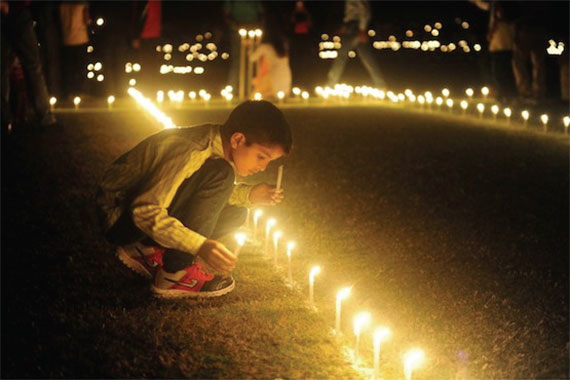
The Vatican has sent a greeting to Hindus celebrating the Diwali festival with a message focused on how mutual respect can be fostered to help create a healthy society. “May this festival of lights illumine your minds and lives, bring joy to your hearts and homes, and strengthen your families and communities,” said a statement from the Pontifical Council for Inter-religious Dialogue.

If Worshiping Jesus Is a Crime, I Will Commit This Crime Every Day’

Authorities in Chhattisgarh, India are forcing Christians to go back to Hinduism by imposing fines upon them and subjecting them to public humiliation. In the village of Junwani, for example, attending services last Easter was declared as illegal, and those who went to the services were fined $312, an amount equivalent to four or five months of wages, according to the International Christian Concern. The situation could get worse, according to a local pastor.