Christians safe since Narendra Modi came to power: Kannanthanam

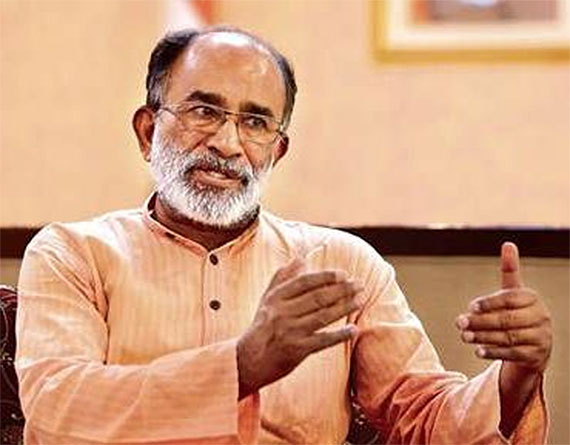
India’s Tourism Minister Alphons Kannanthanam met several Church leaders in the Garo Hills on October 11 on his maiden visit to Tura, where he spoke about the “inclusive” nature of BJP governance. The state goes to the polls early next year.

“There was some apprehension and fear about what was appearing on the social media. I clarified the issues with them because 99 percent of social media news is fake. When BJP came to power in 2014, there was an apprehension that churches would be burnt and Christians would be beaten to death. There has not been even one instance when a church was burnt or Christians attacked anywhere in the country after Modi came to power,” Kannanthanam told the media after interacting with church leaders.

Kannanthanam, who is also the BJP’s election in charge for Meghalaya, called on Bishop Andrew R Marak of Tura, at the Bishop’s House and later interacted with church elders from the Garo Baptist Convention and the Church of North India at the West Garo Hills circuit house.

Senior BJP leaders, including Nalin Kohli, Meghalaya State BJP president Shibun Lyngdoh and others accompanied the minister.

The president of A’chik Baptist Dalgipa Krima, Aloysius G Momin, ABDK general secretary reverend Janang R Sangma, pastor of Tura Baptist Church, reverend Wetter-field Marak and pastor of Hawakhana

Hundreds attend Nagpur Bible festival 

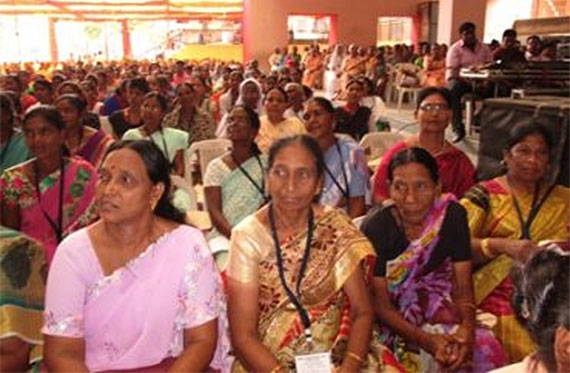
More than 1,350 people participated in the Bible Mahotsav organized by the Archdiocese of Nagpur.

The September 30-October 2 festival addressed themes such as Word-centred Families, Small Christian Communities as Church in the Neighbourhood, and Family-School of faith.

Bishop Raphy Manjaly of Allahabad reflected on the topic “Tomorrow’s Church is in the neighbourhood.” Looking back to the early Christian communities he said, the Church grew from a small group of Christians who suffered for Christ. “They were like a magnet. They lost everything in life, but their number increased day by day because people were attracted to them by their love for one another.”

They had gone through the crucible of suffering for Christ’s sake, but they were blessed with intense love for one another. They accepted one another, prayed together. They experienced inexplicable joy. And this was a point of attraction,” the bishop said.

“Joy attracts others like a magnet. And the mark of a Christian is joy,” Bishop Manjaly pointed out, and added, “Today our Small Christian Communities are called to radiate joy. And the future of the Church will be in SCCs.”

“A sad Christian is a contradiction. When Jesus is with you, you are filled with joy,” he said . “A persecuted Small Community is attractive. People came to them. There is great power in SCCs. It is a vehicle to proclaim Jesus.”

The Church is missionary by nature, and if it stops sharing Christ, it will not be true to her nature,” the bishop added.

Sr Christine Joseph of Holy Cross of Chavanod, who has worked with the Small Christian Communities for 26 of her 40 years of religious life, commended the Nagpur archdiocese for its 400 active SCC units.

Thousands protest jailing of Christians in Indian state

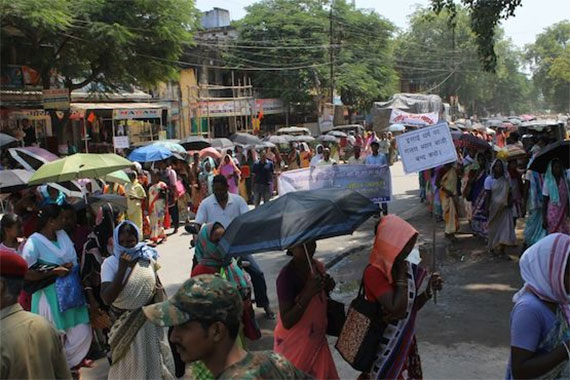
Some 5,000 Christians marched silently through India’s Jharkhand State demanding the release of six Christians jailed on complaints of offering money to villagers to attract them to Christianity.

The Sept. 25 ecumenical “silent protest” was organized after a local court on Sept. 21 rejected the bail application of six Pentecostals, who were arrested Sept. 15 from Tukupani village in Simdega district.

“We wanted them to be released because they are innocent people who gathered for a prayer,” said Gladson Dung-dung, a Catholic leader, who was among those who organized the protest in Tukupani.

The court in Simdega district rejected the bail application of five men and a woman “seemingly under pressure from higher ups. But we are appealing to a higher court,” said Dungdung, who works for the rights of indigenous people. The arrested were charged with upsetting the religious feelings of others, district police chief Rajiv Ranjan Singh was quoted in local Hindi language media as saying.

Bishop Vincent Bar-wa of Simdega said an “atmosphere of suspicion” exists after the state’s pro-Hindu government passed an anti-conversion law Aug. 12. In several areas Hindu groups “act as if they have a mandate to keep a check on others, especially Christians,” he said.

Indians protest attacks on Dalits for sporting mustaches

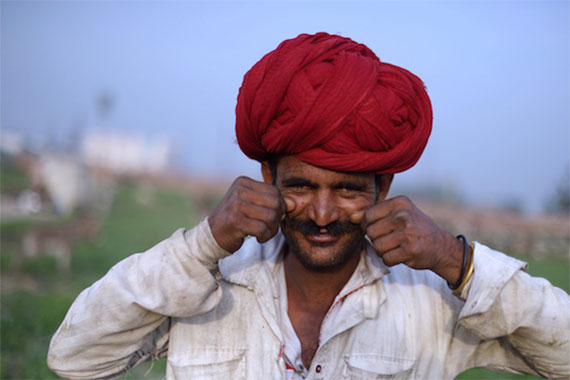
Indians belonging to socially poor Dalit groups are protesting upper caste men attacking their young men for issues such as watching a dance or sporting a mustache.

A 17-year-old Dalit boy was stabbed Oct. 3 for sporting a mustache in Limbodara village of the western Indian State of Gujarat.

Two days earlier, a Dalit youth was beaten to death for watching a folk dance at a temple in Borsad village of the same state. The event was organized by people belonging to the upper caste.

On Sept. 25, a Dalit youth in Limbodara village in Gujarat was also attacked for sporting a mustache followed by a similar incident on Sept. 29.

Jignesh Mevani, leader of the Rashtriya Dalit Adhikar Manch (National Forum for Dalit Rights) in Ahmedabad, the state’s commercial capital, told ucanews.com that they plan to widen the protest.

“If Dalits keep a mustache, buy new clothes or a bike, some feudal forces cannot tolerate it and try to suppress the community,” he said.

Convention released 10-year plan for Kerala Latin Church

The Latin Church of Kerala held a convention on the Mission Congress and Basic Christian Community.

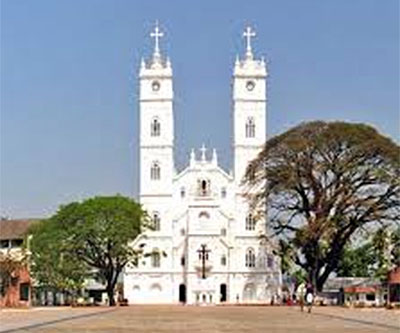
Apostolic Nuncio Archbishop Giambattista Diquattro and secretary of the Pontifical Congregation for the Evangelisation of Peoples Archbishop Protase Rugambwa were attended the three-day convention held at the famous Marian shrine at Vallarpadam in Kochi from October 6.

All bishops of the Latin Church in Kerala and Conference of Catholic Bishops of India president Cardinal Oswald Gracias were the other participants.

A 10-year plan of the Kerala Latin Church was be released at the convention. The convention was addressed various subjects related to the church in the southern Indian state.

Catholics castigated for opposing Muslim cemetery in Goa

A Catholic Church official in Goa cautioned against “increasing intolerance” in the coastal state, while also disapproving efforts of a section of lay Catholics to obstruct allocation of land for a burial ground for Goa’s Muslim community.

The statement issued on behalf of the Goa Archbishop Filipe Neri Ferrao, has also said that disposal of dead bodies is a basic right of every religious community, including Muslims, and appealed to Catholics to peacefully facilitate the setting up of a Muslim burial ground.

New Syro-Malabar Eparchies in Shamshabad and Hosur

Pope Francis has erected two new Syro-Malabar Eparchies, Shamshabad in Telengana and Hosur in Tamil Nadu.

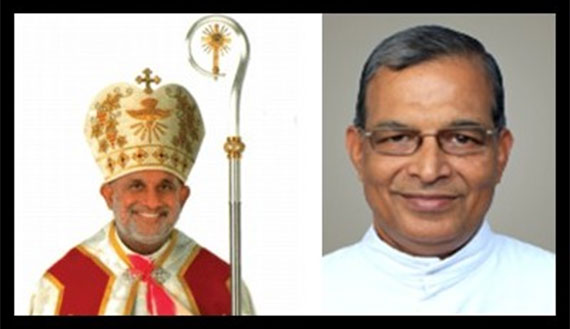
Bishop Raphael Thattil, at present the Auxiliary Bishop of Trichur, and Fr Sebastian (Jobby) Pozholiparampil of the clergy of Irinjalakuda has been appointed the first Bishops of Shamshabad and Hosur, respectively.

The Pope has also extended the boundaries of the Eparchies of Ramanathapuram and Thuckalay, both in Tamil Nadu.

US Senators ask new envoy to India to focus on human rights

US Senators have asked America’s ambassador designate to India, Kenneth Juster, to focus on human rights, ‘rise of Hindu nationalism’ and trade issues, apart from promoting security ties, during his stint.

Juster was repeatedly asked about religious freedom, minority rights and human trafficking in India during a confirmation hearing at the Senate Foreign Relations Committee on Oct 3.

The committee is expected to confirm Juster, a top economic aide of President Donald Trump and one of the key architects of the Indo-US civil nuclear agreement, as ambassador to India.

Both Republicans and Democrats recognise Juster’s experience and understanding of India. However, during the Senate hearing, he faced a barrage of questions and a flood of advice on how to deal with New Delhi.

VARIETY OF CATHOLIC RITES IN INDIA IS NOT THREAT TO UNITY, POPE SAYS

For centuries, Catholics in India have drawn support from and expressed their faith through the liturgies, traditions and spiri-tualities of three different rites; Pope Francis said it is time that all of them, no matter where they live in the country, have their own bishops.

The Vatican announced on 10 October that Pope Francis had created two new eparchies, or dioceses, for the Syro-Malabar Catholic Church and extended the boundaries of two others. A letter from Pope Francis to all the bishops of India explained the move.

Close to 20 million Catholics live in India; the Syro-Malabar Catholic Church has about 4.2 million members and the Syro-Malankara Catholic Church has about 450,000 faithful.

“In India, even after many centuries, Christians are only a small proportion of the population and, consequently, there is a particular need to demonstrate unity and to avoid any semblance of division,” Pope Francis wrote. But the different Catholic rites do not have to be a sign of division when they are, in fact, “a treasure” for the church.

“I have therefore authorized the Congregation for the Oriental Churches to provide for the pastoral care of the Syro-Malabar faithful throughout India by the erection of two Eparchies and by the extension of the boundaries of the two already in existence” Pope Francis wrote.

“I decree also that the new circumscriptions, as with those already in existence, be entrusted to the pastoral care of the Major Archbishop of Ernakulam-Angamaly and to the Synod of Bishops of the Syro-Malabar Church, according to the norms of the Code of Canons of the Eastern Churches.”

“This is a historic move,” said Fr Paul Thelakat, a senior priest of the church and its former spokesperson. “It removes administrative restrictions imposed on the church by Portuguese missionaries since the 16th century.”