Report: Christianity spreading among Iran’s youth

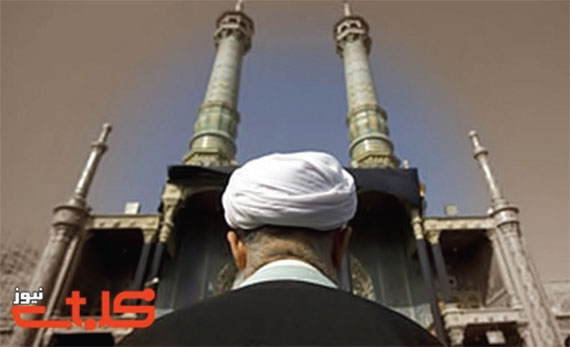
Mohabat News, an Iranian Christian news agency, said in a recent report that Christianity is spreading rapidly among youth in some cities. “This high rate of conversion of Iranian youth to Christianity is in spite of rigorous Islamic indoctrination of the youth in their families and educational system,” according to the report.

“The Islamic government of Iran dedicates massive budgets to the support of Islamic organiza-tions that promote Islam among the youth within and without Iran’s borders,” the report continued. “Regardless of such efforts, Iranian youth seem to become increasingly distant from Islam, which is a cause of great concern for the Iranian Islamic govern-ment.”

One of the most senior Islamic Shi’ite clerics who has repeatedly expressed his concern over the spread of Christianity among the youth in the country is Ayatollah Makarem Shirazi. He, as well as most of his colleagues blame the foreign influence for the conver-sion of young Iranians to Christia-nity. The question that comes up however, is that what could be the real cause for Iranian youths’ rejection of Islam and its princi-ples, despite the serious risks involved with conversion to Christianity in an Islamic country such as Iran?

Last year, after Ayatollah Makarem Shirazi expressed his deepest concern over the popula-rity of Christianity in the suburbs of Mashhad, the city’s religious and political officials immediately sent a vast number of Islamic tea-chers and preachers to Mashhad’s suburbs in order to turn the youth away from Christianity. The next phase in dealing with this matter was to crack down on the youth who refused to turn back following the efforts of Islamic teachers and preachers.

Salesian missionary in Ethiopia has baptized over 7,500 

A Salesian missionary priest has baptized more than 7,500 people in the Ethiopian village where he works. Father Giorgio Pontiggia has been stationed for years in a village outside Gambella. “When I arrived eleven years ago, I found about 40 Catholics,” he recalls. He began offering instruction, bringing residents into the Church, a few at a time. This year, the total number of baptisms reached 7,569, he says. He has been joined by another Salesian missionary, and together with their parishioners they have built several chapels around the village.

10,000 take refuge at cathedral in South Sudan

Ten thousand people fleeing the violence of the South Sudanese civil war have taken refuge in and near the nation’s largest church, St Mary’s Cathedral in Wau. “Space is at such a premium that some people even sleep next to the church’s altar,” the IRIN news agency reported. A priest at the cathedral told the agency, which reports on humanitarian crises, that “those who flee believe that even rebels still fear God and would not slaughter civilians in the backyard of a church. Many other churches have also taken in hundreds of people.”

Coptic bishop: Christians are denied freedom of worship in parts of Egypt

The Coptic Orthodox bishop of Minya, Egypt, criticized government officials for failing to allow for the reopening of 15 local churches that had been closed by security order.

“Every time we move to resolve the problems that cause these grievances we are met with the same lame excuse: the security situation does not allow it,” said Bishop Macarius, according to a Cairo newspaper. “Security officials explained that the sentiments of Muslim villagers should be respected, implying that Coptic sentiments yearning for a place to pray are not worthy of the same respect,” he continued. “It looks as though the great, sovereign State of Egypt is governed not by law but by those who object to Coptic prayers.”

The prelate added: Egypt’s Constitution guarantees the right to worship, but on the ground Copts are denied this right according to the personal whim of local officials. Worse, it has become customary for local security apparatuses to monitor the activity of Coptic communities so as to ensure that no Christian prayers are held, even if this implies official use of force against congregations or clerics.

Venezuelan bishops’ conference headquarters ransacked

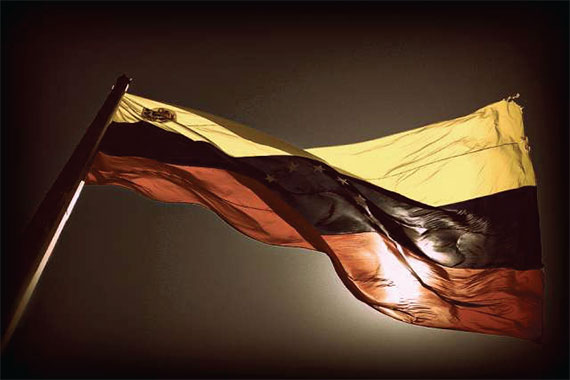
Unidentified persons attacked the headquarters of the Venezuelan bishops’ conference on August 25, stealing several items. The bishops’ conference reported in two tweets August 25 that “the headquarters of the Venezuelan Bishops’ Confe-rence were the victim of the mob that morning.”

Though details of what happened have not been given, the pictures show the damage was not insignificant, and that various items were stolen from the offices of the Venezuelan bishops in Caracas.

This is not the first time a place belonging to the Church in Venezuela has suffered such an attack. In fact the pressure and aggression have also come down on important church leaders such as Cardinal Jorge Urosa of Cara-cas who in April this year had to confront a Chavista mob which wanted to attack him after he had said a Mass.

The aggression is also of a religious nature. In March this year, unknown persons entered a church to steal the Consecrated Hosts. The thieves took nothing else.

On Jan. 1, a group of criminals entered the head-quarters of the Bishop of Maracay, and stole various equipment and cash kept in the administration’s safe.

Three days before, heavily armed unknown persons entered a Trappist monastery and stole everything they came across.

In July 2016, another group of thieves sacked an educational facility affiliated with the diocese and stole a large amount of equipment and other items and then went on to destroy everything in the place.

Frustration in Venezuela has been building for years due to poor economic policies, including strict price controls coupled with high inflation rates, which have resulted in a severe lack of basic necessities such as toilet paper, milk, flour, diapers, and medi-cines. Venezuela’s socialist government is widely blamed for the crisis. Since 2003, price controls on some 160 products, including cooking oil, soap and flour, have meant that while they are affordable, they fly off store shelves only to be resold on the black market at much higher rates.

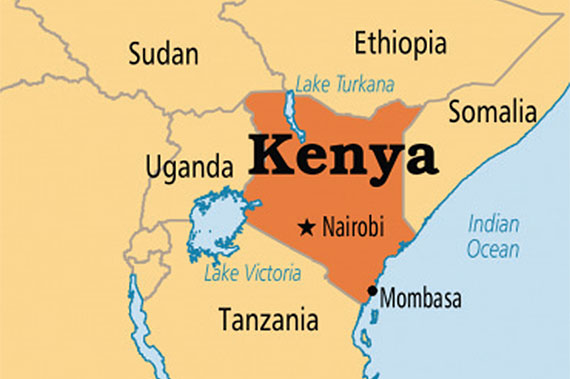
Kenyan Christians killed for refusing to recite Islamic creed 

Three Kenyan Christians were hacked to death by Al-Shabaab militants on August 18 after they refused to recite the Islamic prayer of faith. A fourth Christian – the mentally challenged older brother of one of the three – was also killed. At around 9 pm, Changawa Muthemba, who was in his forties, was dragged out of his home in Kasala Kairu, Lamu County, by a group of armed men and taken to the nearby home of his brother-in-law, Joseph Kasena, 42, where a 17-year-old neighbour, Kadenge Katana, also happened to be at the time. The three men were held at machete point and ordered to recite the Shahada. When none of them did, the attackers began to tie them up. When the men resisted, they were hacked to death. Then the attackers went to the home of Joseph’s older brother, Charo, who was in his late forties, and killed him.